What Acoustic Monitoring Is Revealing About Insect Population Collapse

Dr. Helena Cortez
July 9, 2026
The “insect apocalypse” headlines that periodically circulate — citing dramatic declines in flying insect biomass — have always faced a stubborn methodological problem: insects are extraordinarily hard to survey systematically compared to birds or mammals, given their sheer diversity, small size, and the labor intensity of traditional trapping and identification methods. I spent a decade running long-term insect field studies before moving into writing about the technology now changing that picture, and acoustic monitoring — using audio recording and machine learning classification instead of physical trapping — has become one of the more genuinely useful recent additions to how researchers actually measure what’s happening to insect populations, even though it comes with its own real limitations that are worth understanding clearly.
Why Traditional Insect Monitoring Has Always Struggled
Classic insect population monitoring relies overwhelmingly on physical trapping methods — malaise traps, sticky traps, light traps for nocturnal species — followed by manual sorting and species identification, a process that requires substantial taxonomic expertise and enormous labor investment per data point. The 2017 Krefeld study, one of the most widely cited pieces of evidence for dramatic flying insect biomass decline in German nature reserves, relied on this exact kind of trap-based methodology sustained over 27 years — an impressive undertaking, but also a clear illustration of how much sustained institutional commitment traditional methods require to generate genuinely comparable long-term data.
This labor intensity has meant that, historically, most regions and most insect groups have had essentially no systematic long-term population data at all, making it genuinely difficult to distinguish a real, widespread decline from natural population fluctuation, methodological artifacts in the handful of studies that do exist, or simply insufficient data to say anything confident about most insect groups in most places. Acoustic monitoring doesn’t solve every part of this problem, but it directly attacks the labor-intensity bottleneck for a meaningful subset of insects — the ones that make identifiable sounds.
Which Insects This Actually Works For
Acoustic monitoring is only useful for sound-producing insects — crickets, cicadas, katydids, and certain other Orthoptera and Hemiptera groups that communicate through calls, along with the wingbeat frequencies of flying insects like mosquitoes and bees, which produce a distinct, species-characteristic buzz that can be detected and, with sufficiently trained classification models, identified to species or species group. This is a genuinely significant limitation — it doesn’t help directly with silent insects like most beetles or many moth species — but the insects it does cover include some of the most ecologically important indicator groups for broader ecosystem health monitoring, and cricket and cicada populations specifically have well-established value as bioindicators in ecological research.
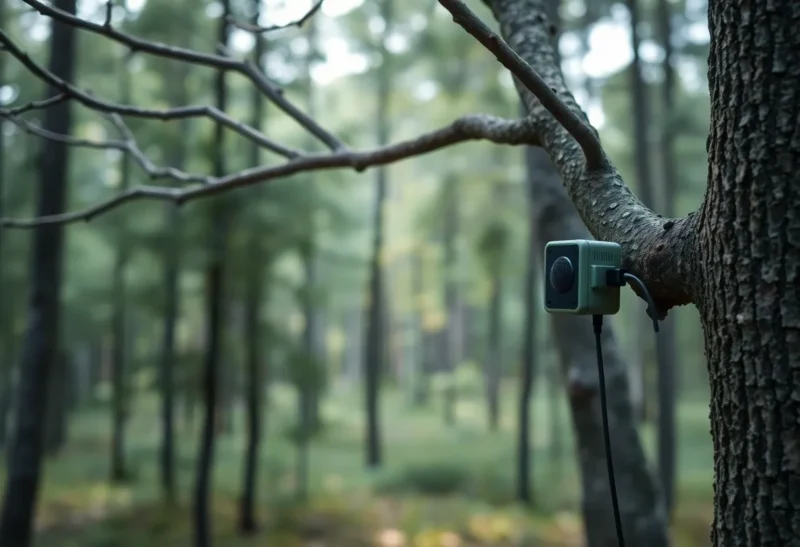
The core technical approach uses weatherproof, autonomous recording units — devices like the AudioMoth, an open-source, low-cost acoustic sensor developed by a UK research consortium, have become a particularly influential platform in this space specifically because their low cost (typically under $100 per unit) has made deploying dozens or hundreds of recording units across a study area financially feasible in a way that would have been unthinkable with more expensive specialized bioacoustic recording equipment from a decade earlier.

How Machine Learning Changed What’s Actually Possible
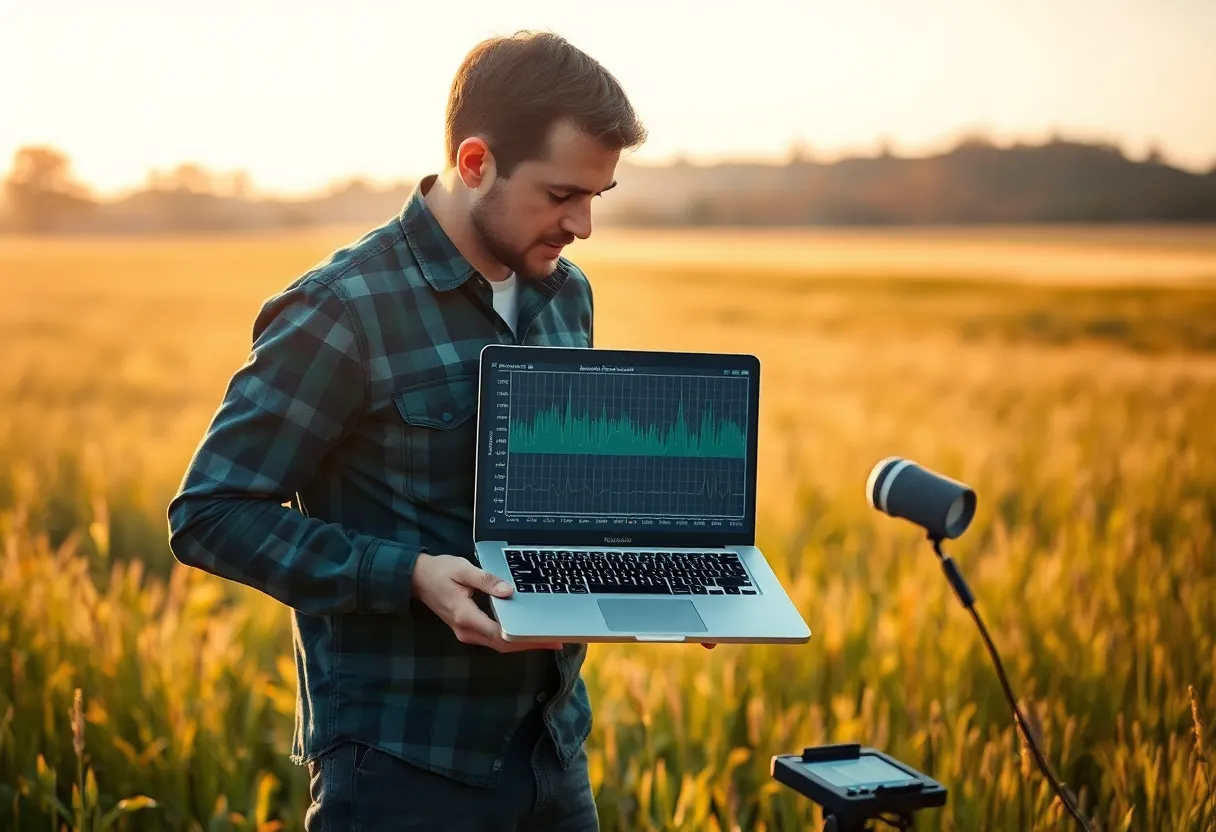
Recording continuous audio across a study area for weeks or months at a time generates a genuinely enormous volume of data that would be completely impractical for human researchers to manually review — this is exactly where machine learning classification became the enabling technology that made large-scale acoustic monitoring viable rather than a theoretical curiosity. Convolutional neural network models, trained on labeled reference recordings of known species’ calls, can now process large audio datasets and flag specific target species calls with accuracy that, for well-studied species with distinctive calls, approaches or matches expert human review, while processing orders of magnitude more data than manual review could ever cover.
This isn’t a solved problem for every species, though — classification accuracy varies substantially depending on how much labeled training data exists for a given species (well-studied, economically or ecologically significant species tend to have much better classifier performance than rare or under-studied ones), how acoustically distinct a species’ call is from similar co-occurring species, and how much background noise or overlapping calls from multiple species complicate a given recording. Projects like the Global Biotic Interactions network and various national biodiversity monitoring initiatives have been building out larger, more diverse training datasets specifically to improve classifier performance across a broader range of species, but this remains an active area of ongoing methodological development rather than a fully mature, universally reliable tool.
What the Acoustic Data Has Actually Shown So Far
Long-term acoustic monitoring projects have produced findings that both support and complicate the broader insect decline narrative. Cricket and cicada population studies using acoustic methods in several U.S. and European long-term ecological research sites have documented measurable population and phenological (seasonal timing) shifts consistent with climate change impacts — species emergence timing shifting earlier in the season, and range shifts as some species’ suitable habitat moves poleward or to higher elevation, findings that align with and add methodological rigor to concerns raised by other insect decline research.
But the acoustic data has also introduced useful nuance that pure biomass-decline headlines sometimes miss: population trends have proven meaningfully uneven across species and regions rather than showing a uniform decline everywhere, with some species and sites showing stability or even localized increases alongside others showing genuine, significant decline. This heterogeneity is scientifically important and somewhat underreported in popular coverage, because it suggests the insect decline story is less a single uniform global collapse and more a patchwork shaped by specific local land use, pesticide exposure, and climate factors that vary meaningfully by region and species — a more complicated, less headline-friendly picture, but a more scientifically useful and actionable one for actually designing conservation responses.
The Limitations That Still Matter
Acoustic monitoring’s core limitation — that it only covers sound-producing species — means it can’t be treated as a comprehensive replacement for broader insect biodiversity monitoring, and researchers in this field are generally careful to frame it as a complementary tool rather than a wholesale substitute for trap-based sampling that still remains necessary for the large majority of insect diversity that doesn’t vocalize or produce a detectable acoustic signature. Environmental noise — wind, rain, human activity, and overlapping calls from multiple species — genuinely degrades classifier accuracy in real-world field conditions compared to the cleaner reference recordings often used in initial model training, meaning field deployment accuracy in noisy or biodiverse environments doesn’t always match the accuracy reported in more controlled validation studies.
There’s also a standardization challenge across the growing number of independent acoustic monitoring projects worldwide: different recording equipment, different classifier models, and different deployment protocols make directly comparing results across studies and regions harder than it should be for what’s ultimately a shared scientific question about global insect population trends, and building the kind of standardized, interoperable acoustic monitoring network that would let researchers combine data across studies remains an active organizational challenge that the field hasn’t fully solved, even as the underlying sensor and classification technology has matured rapidly.
Where This Goes From Here
The realistic trajectory for acoustic insect monitoring is continued rapid expansion in deployment scale, driven by falling sensor costs and improving classifier accuracy, alongside growing efforts to standardize methodology and combine datasets across independent projects into something closer to the kind of coordinated global monitoring network that bird population science has benefited from for decades through eBird and similar large-scale citizen science and professional monitoring platforms. Getting insect monitoring to that same level of coordinated, large-scale data density would meaningfully improve confidence in answering the core question the “insect apocalypse” headlines raised in the first place — not by settling on a simpler, more dramatic story, but by replacing scattered, hard-to-compare local studies with the kind of systematic, sustained, comparable data that’s been the actual missing ingredient in this debate all along.