Why Urban Beekeeping Became an Unlikely Data Source for City Air Quality

Hannah Voss
July 9, 2026

Urban beekeeping’s popularity has grown steadily over the past fifteen years, largely framed around pollinator conservation and the appeal of hyperlocal honey. What’s gotten far less public attention is a genuinely useful side effect researchers have been quietly exploiting: honeybees turn out to be remarkably effective, low-cost environmental samplers, and a growing body of research has used urban hives as a distributed sensing network for tracking air pollution, heavy metal contamination, and pesticide exposure across cities in ways that conventional fixed-location air quality monitoring struggles to match at comparable cost. I’m an urban ecologist who has spent years studying how city wildlife interacts with the built environment, and this is one of the more genuinely elegant examples of found infrastructure I’ve come across — a monitoring network that already exists, doing double duty, at essentially zero additional deployment cost.
Why Bees Turn Out to Be Excellent Samplers
A single honeybee forages across a surprisingly large area, typically ranging one to three kilometers from the hive during normal foraging activity, and returns to the hive dozens of times per day, meaning a single hive effectively samples air, pollen, water, and surface particulates across a meaningful chunk of surrounding urban terrain continuously, simply through the bees’ normal foraging behavior. Airborne particulates, heavy metals, and various pollutants settle on bees’ bodies and on the pollen and nectar they collect, and residue from the hive itself — wax, honey, and even the bees’ own bodies when sampled directly — retains a measurable chemical signature of whatever pollutants were present in the surrounding foraging area during the sampling period.
This makes hive contents function almost like a passive, continuously-updating environmental sample that requires no active sensor deployment, no power source, and no ongoing equipment maintenance beyond normal hive care that beekeepers are already doing anyway — researchers essentially get environmental sampling as a byproduct of an activity that was already happening for entirely separate reasons, which is a large part of why this approach has proven so cost-effective compared to instrumented air quality sensor networks that require significant capital investment and maintenance to deploy at comparable geographic density.
What This Has Actually Been Used to Detect
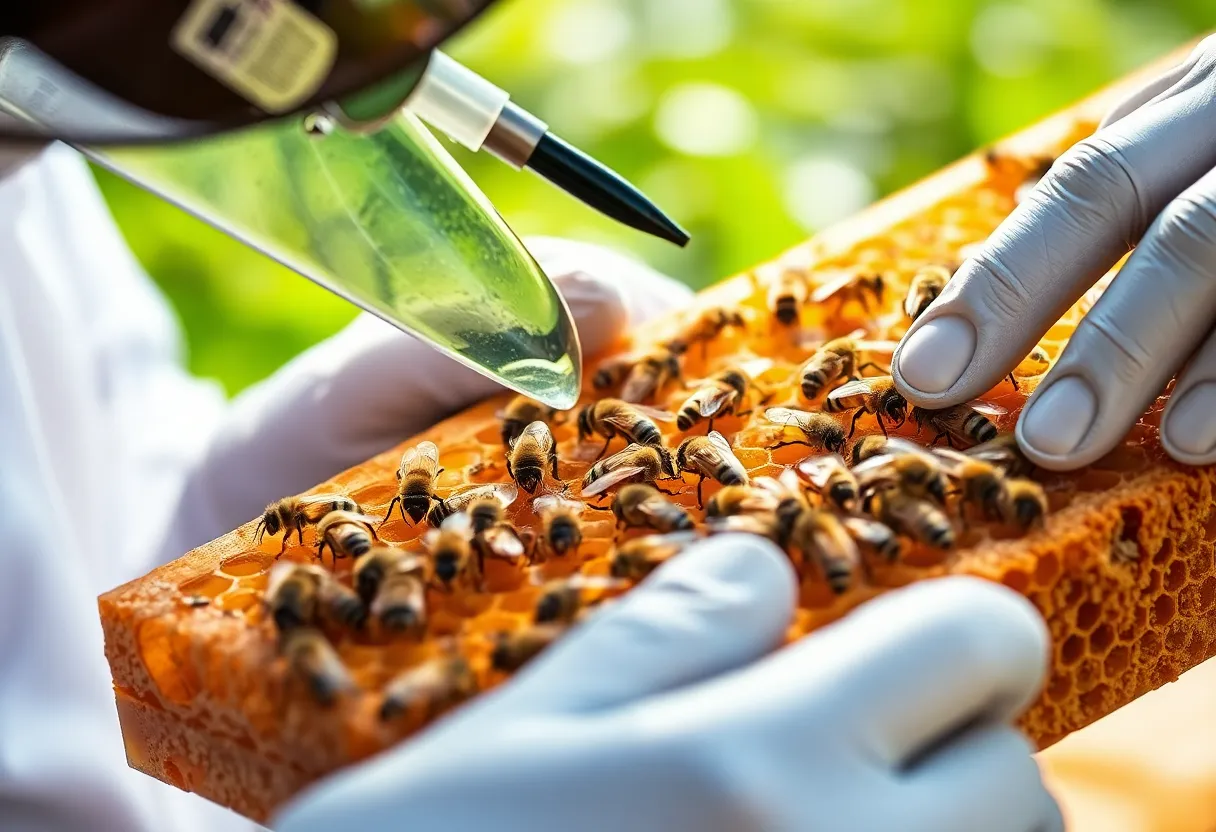
Heavy metal contamination has been one of the more productive applications of this technique — several published studies, including notable work from researchers in Italy, France, and the UK analyzing honey and beeswax samples from urban and industrial-adjacent hives, have successfully detected and mapped lead, cadmium, and other heavy metal contamination gradients across cities with a level of geographic resolution that would be prohibitively expensive to achieve using only conventional fixed monitoring stations, which are typically sparse enough that they can miss significant localized contamination hotspots between station locations entirely.
Pesticide residue detection has been an equally significant use case, particularly relevant given ongoing scientific and regulatory concern about neonicotinoid pesticides and their role in pollinator population decline — researchers have used hive sampling specifically to track real-world pesticide exposure patterns in ways that complement laboratory toxicology studies by showing what pesticide exposure levels bees actually encounter in real urban and agricultural-adjacent foraging environments, rather than only under controlled experimental conditions. Some research programs have extended this further to track particulate matter and even specific industrial pollutant signatures, using hive-based sampling to help identify and characterize pollution sources in areas where the specific origin of contamination wasn’t otherwise well understood from existing monitoring infrastructure alone.
The Real Limitations of This Approach
This method has genuine constraints that keep it a complementary tool rather than a wholesale replacement for conventional air quality monitoring. Bee-based sampling reflects an integrated, averaged exposure across the hive’s entire foraging range and across whatever time period the sample represents, rather than the kind of precise, real-time, specific-location measurement that instrumented air quality sensors provide — you can identify that contamination exists somewhere within a hive’s foraging radius, but pinpointing the exact source location within that radius generally requires supplementary investigation using other methods, since the bees themselves obviously can’t report exactly where within their range they picked up a given contaminant.
Seasonal foraging behavior also introduces real variability that complicates direct comparison across sampling periods — bees forage different plants and cover somewhat different areas depending on seasonal bloom availability, meaning what a hive’s honey or wax sample reflects in spring may not be directly comparable to a sample taken in late summer without careful methodological controls for this seasonal variation, an added layer of interpretive complexity that purely instrumented monitoring, which measures a fixed physical location continuously regardless of season, doesn’t have to account for in the same way.
How Cities Have Actually Started Using This
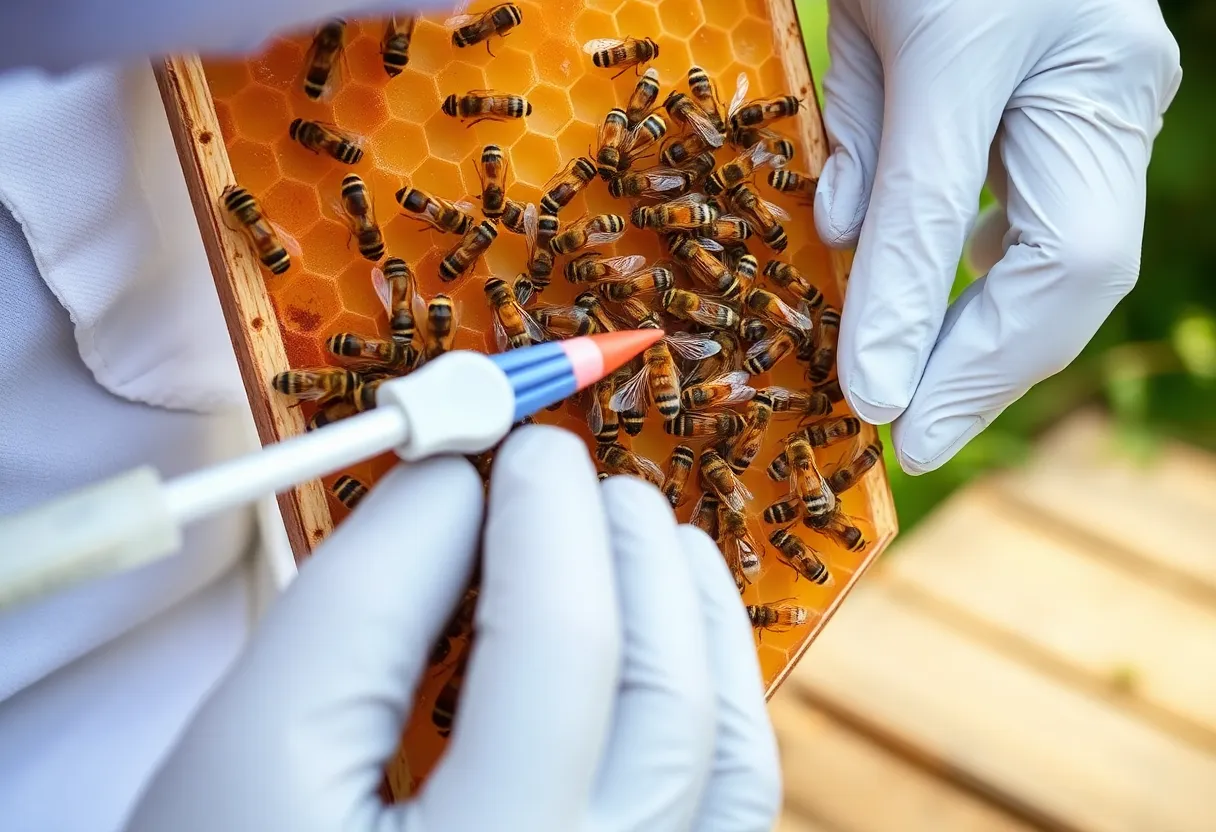
Several municipal environmental programs have moved beyond individual research studies into more systematic hive-based monitoring networks — programs in Paris, London, and a growing number of North American cities have partnered with urban beekeeping associations specifically to formalize periodic sampling protocols across networks of participating hives, treating existing urban apiaries as a distributed, low-cost supplementary layer within broader municipal environmental monitoring efforts rather than the primary monitoring method.
This kind of formalized partnership approach also solves a genuine practical problem that ad hoc individual research studies face: consistency. Individual beekeepers vary widely in hive management practices, and without some baseline coordination on sampling protocol, timing, and hive handling, comparing results across a large number of independently managed urban hives introduces exactly the kind of methodological noise that undermines confident interpretation of the resulting data, which is why the more successful municipal and research partnerships in this space have invested specifically in standardizing sampling protocol across participating apiaries rather than simply aggregating whatever samples individual beekeepers happen to provide.
Where This Fits Into the Bigger Environmental Monitoring Picture
The realistic value of bee-based environmental monitoring isn’t as a standalone replacement for instrumented air quality networks, satellite-based pollution tracking, or laboratory soil and water testing — it’s as a genuinely useful, low-cost supplementary data layer that adds geographic resolution and biologically integrated exposure data that purely instrumented approaches don’t naturally provide on their own. Given how widespread urban beekeeping has already become independent of any research application, this represents a rare case where an existing, already-popular urban activity turns out to double as meaningful environmental infrastructure, essentially for free, simply by adding a sampling protocol on top of hive management practices beekeepers were already doing anyway.
That combination — genuine scientific utility, near-zero marginal deployment cost, and a growing existing base of urban apiaries to draw on — is why this approach has moved from a research curiosity into an actual component of how a growing number of cities think about supplementing their environmental monitoring capability, even though it will likely never become the primary method any city relies on for core air quality regulatory compliance.