The Real Cost of Free Cloud Storage—And When Paid Plans Make Sense

Tom Reeves
July 7, 2026
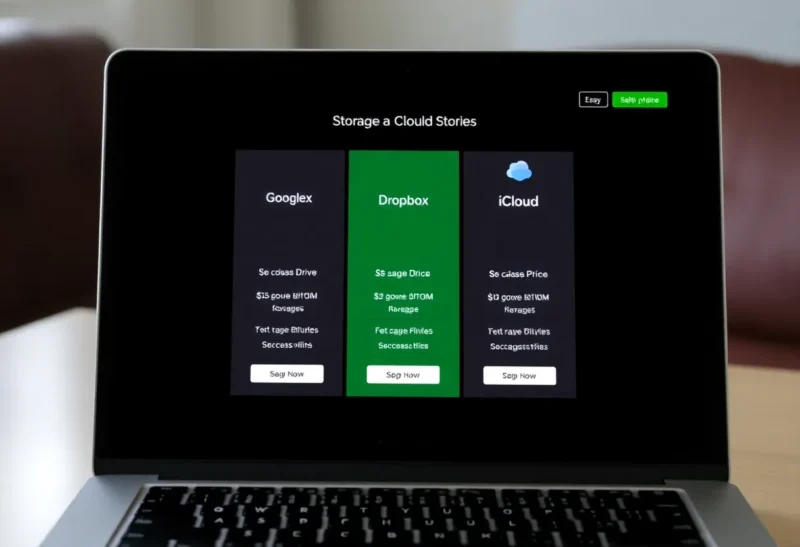
Every major technology platform offers free cloud storage as part of their ecosystem: 15GB from Google (shared across Gmail, Drive, and Photos), 5GB from Apple (iCloud), 5GB from Microsoft (OneDrive), 2GB from Dropbox, 10GB from Box. These free tiers are genuinely useful and have conditioned most consumers to expect cloud storage as a free service. The real cost of these free tiers isn’t monetary — it’s the combination of data use, ecosystem lock-in, and the constraints that arrive when you exceed the limit. Understanding what free cloud storage actually costs explains when upgrading to paid storage makes more sense than the $0 price implies.
What Free Cloud Storage Actually Costs You
Google’s free storage is the most consequential to examine because Google’s services are most widely used. Google Drive/Gmail/Photos sharing 15GB sounds generous until email attachments, high-resolution photos from a modern smartphone camera, and document storage accumulate over years. A modern smartphone producing 10–15MB per photo can fill 15GB with roughly 1,000–1,500 photos — less than a year of moderate photography. When Google storage fills, Gmail becomes unusable for sending or receiving attachments, Google Drive syncing stops for new files, and Google Photos no longer backs up new photos. The consequences of hitting the limit interrupt services that people have come to rely on as essential daily functions.
The non-monetary cost of free cloud storage is primarily data: your usage patterns, email contents (for providers that scan), photo content, and document data are available to the provider for advertising, product improvement, and in some cases aggregated analysis. Google’s business model monetizes user data to target advertising; free Gmail and Drive are products that generate advertising revenue. Apple’s iCloud has a more privacy-focused model — Apple explicitly does not scan iCloud content for advertising — but free iCloud is a device ecosystem retention tool rather than a separate business.
Ecosystem lock-in is the structural cost that accumulates over time and is hardest to quantify in the moment. Five years of photos backed up to iCloud Photos are in Apple’s format and ecosystem; migrating them to Google Photos or a local storage solution is technically possible (Apple’s Data Transfer Project and GDPR data portability rules ensure this) but practically friction-laden. The email stored in Gmail, the files in Google Drive, the photos in iCloud are all accessible to the user — but leaving requires effort proportional to how much you’ve accumulated. Free cloud storage is more accurately described as a long-term retention mechanism than a gift.
When Paid Plans Are Worth It
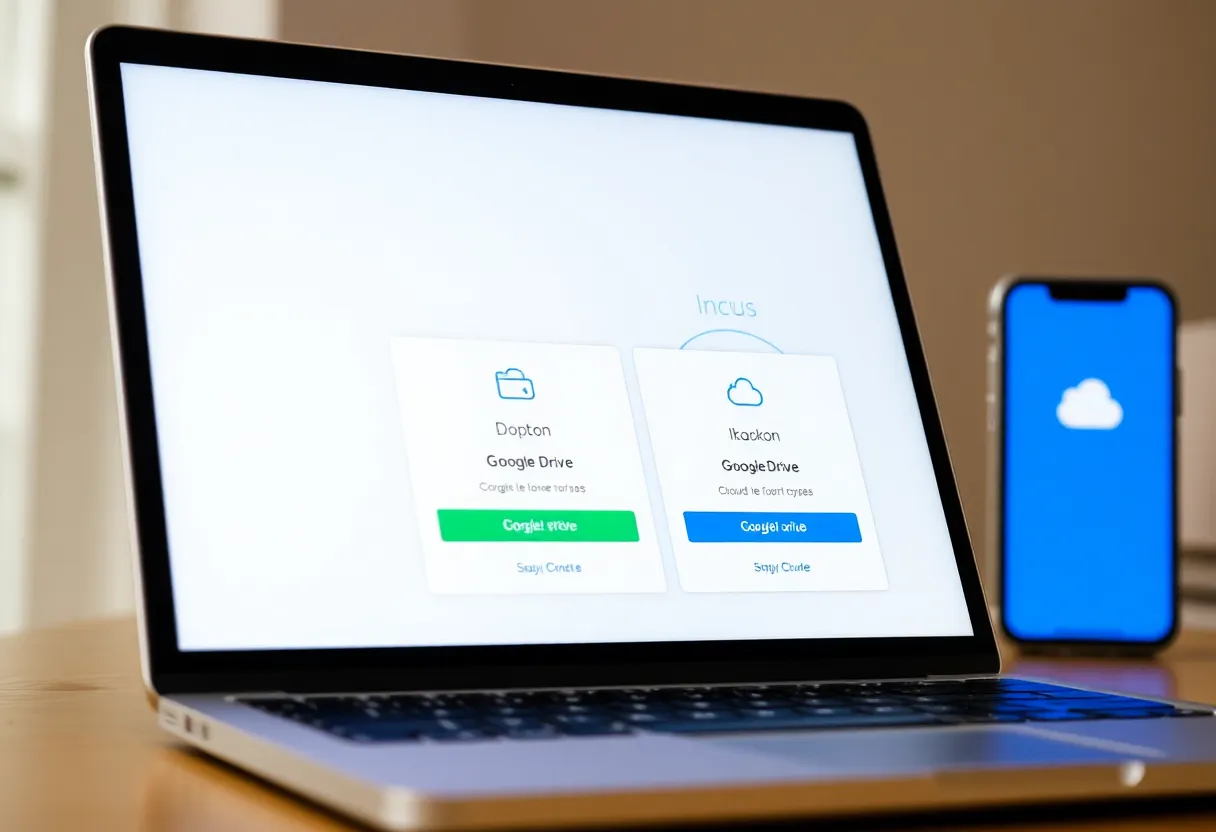
The economics of paid cloud storage are straightforward: Google One’s 100GB plan is $2.99/month ($36/year); the 200GB plan is $3.99/month; 2TB is $9.99/month. Apple iCloud+ 50GB is $0.99/month; 200GB is $2.99/month; 2TB is $9.99/month. Microsoft 365 Personal includes 1TB of OneDrive at $70/year (along with Office applications). Dropbox Plus is $120/year for 2TB.
The case for paid storage is clearest when: you use phone photo backup as your primary photographic backup (and the 15GB limit genuinely constrains your backup), you use a provider’s services so extensively that running out would significantly disrupt your workflow, or you have a privacy-motivated reason to prefer a provider whose business model doesn’t depend on data monetization (paying for iCloud signals that you’re the customer rather than the product in Apple’s model).
For Google One specifically, the ancillary benefits beyond storage are worth considering: Google One membership includes Google’s VPN at the 2TB tier, Google Workspace features (like Premium Meet features and extended Meet recording storage), and occasional Google Store discounts. These don’t always justify the cost on their own, but they improve the value proposition for users who would use them.
The Alternatives: Self-Hosted and Privacy-Focused Options
For users who object to the data monetization model of free cloud storage, the alternatives have improved substantially. Proton Drive ($3.99/month for 200GB) provides end-to-end encrypted cloud storage from the same provider as ProtonMail and ProtonVPN, with zero-knowledge encryption meaning Proton cannot access file contents. Tresorit ($10/month for 500GB) and Sync.com ($8/month for 2TB) offer similar zero-knowledge models. These services cost more than Google One per gigabyte but provide meaningful privacy properties that Google Drive does not.
Self-hosting is a more radical but increasingly accessible option. A Synology or QNAP NAS (Network Attached Storage) device running at home or in a home office provides local storage with optional cloud sync to offsite backup (Backblaze B2, Amazon S3), creates no dependency on any cloud provider’s pricing or data policies, and scales with the addition of drives rather than monthly subscription tiers. The upfront cost ($200–600 for a basic two-bay NAS plus drives) is higher than a year’s cloud subscription, but the total cost of ownership over five years typically favors self-hosting for users who store significant amounts of data. The tradeoff is operational responsibility — the NAS owner is responsible for hardware maintenance, backups, and availability rather than offloading these to a provider.
The Decision Framework
The practical question isn’t “is free cloud storage good or bad” — free storage is genuinely useful and the costs are genuinely real. The useful question is: for each cloud storage service you use, does the free tier adequately serve your needs, and if not, does the paid upgrade or an alternative provide better value than continuing to work around the limits?
Google’s free 15GB, once email and photo storage are counted, runs out for active users within a couple of years. For Google-ecosystem users, Google One’s 100GB at $3/month is one of the better value propositions in personal technology — it removes the service interruption risk and provides a comfortable buffer at a very low price. Apple’s 5GB free iCloud is aggressively minimal, and anyone who uses iCloud Photos as their primary backup on an iPhone should budget for at least the 50GB plan at $1/month to avoid the backup stopping. Microsoft’s OneDrive is more generous for Microsoft 365 subscribers (1TB per Microsoft 365 Personal subscription), making it the best per-gigabyte value among the major platforms if you’re already paying for Office applications.