How Wireless Charging Works and Why It’s Slower Than Wired

Helena Voss
July 7, 2026
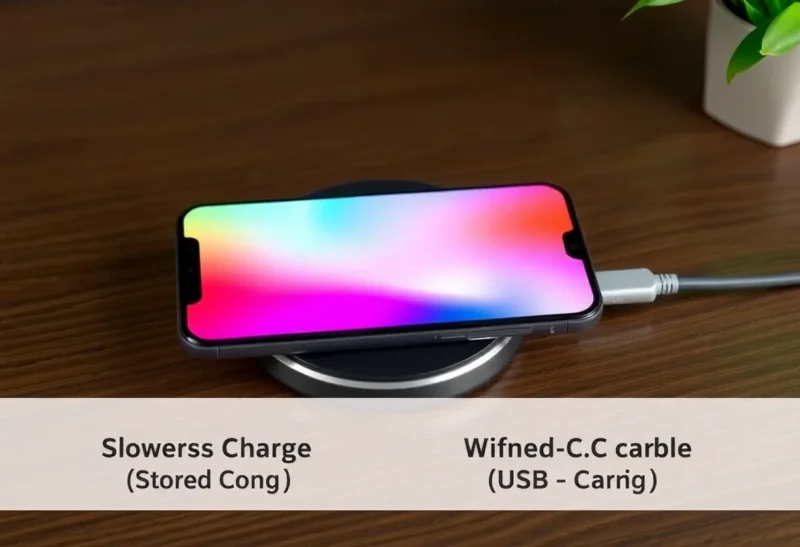
Wireless charging has become standard in the flagship smartphone tier and increasingly common in mid-range devices, eliminating the physical connection requirement for everyday charging. The convenience is genuine — dropping a phone on a pad rather than plugging in a cable is a meaningfully better daily experience for many people. What’s less clearly communicated in the marketing around wireless charging is that it comes with real tradeoffs: slower charging rates than wired at equivalent power, lower energy efficiency, and heat generation that has implications for battery longevity. Understanding the physics explains both why these tradeoffs exist and why they’re unlikely to fully close even as the technology improves.
How Wireless Charging Works: Inductive Transfer
Wireless charging (Qi standard, the dominant standard used by all major smartphones) uses electromagnetic induction to transfer energy without a physical electrical connection. The charging pad contains a transmitter coil that carries alternating current, which creates a fluctuating magnetic field. The phone contains a receiver coil that sits within this magnetic field; the changing magnetic flux induces an alternating current in the receiver coil (Faraday’s law of electromagnetic induction). This AC current is then rectified to DC and used to charge the battery.
The physical principles that make wireless energy transfer possible — electromagnetic induction — also introduce the key limitation: the transfer efficiency of inductive coupling depends on how closely aligned the transmitter and receiver coils are, how well their physical dimensions match, and how tightly the magnetic flux is coupled between them. A direct electrical connection transfers power at close to 100% efficiency (wire resistance losses are small); inductive transfer through an air gap achieves 80–90% efficiency under ideal conditions and lower in practice. The 10–20% energy loss appears as heat — both in the charging pad and in the phone — which is why wireless charging makes devices noticeably warm and why charging pads themselves generate heat that accumulates in the surface area near the phone.
Why It’s Slower: Power Limits and Thermal Management
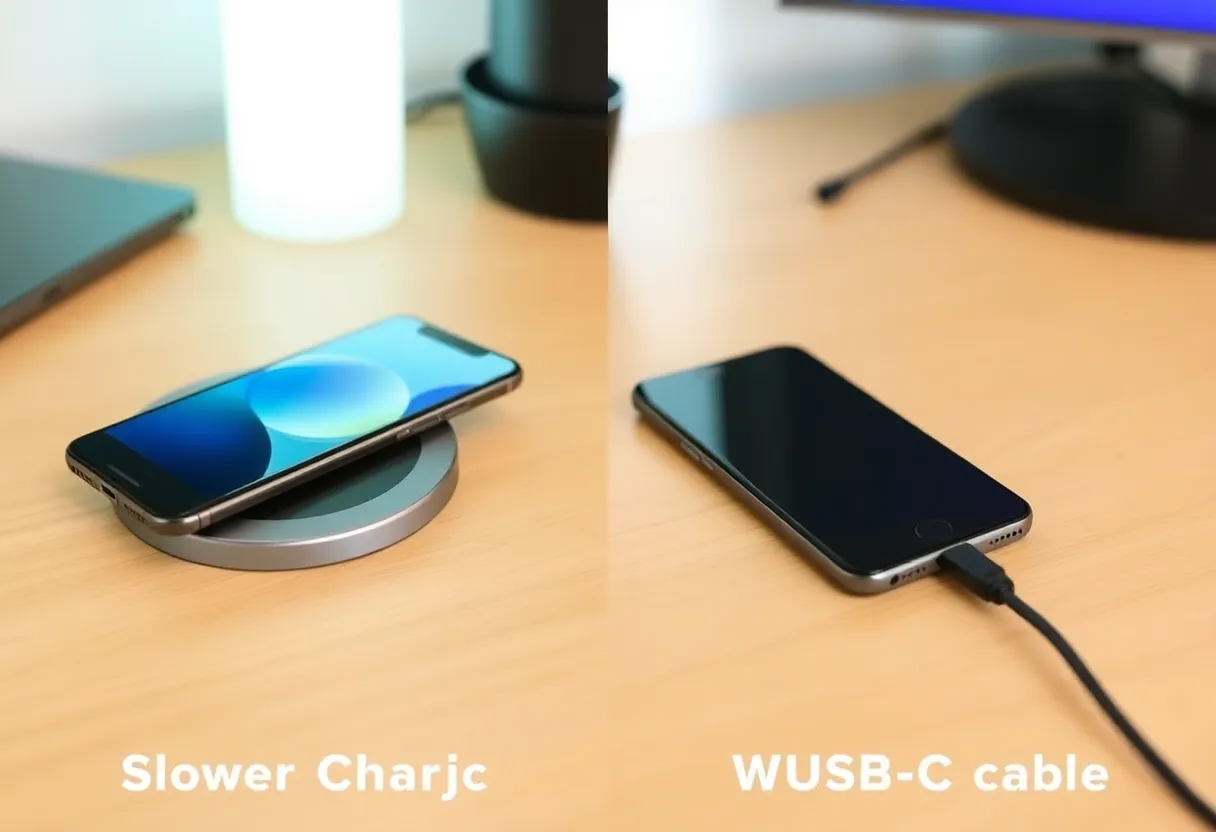
The power delivered to a smartphone during charging determines how fast the battery charges. Wired charging has advanced to 45W, 65W, and even 120W for some Android phones — delivering substantial power that allows a phone to charge from 20% to 80% in 20–30 minutes. Wireless charging at the same power level faces a fundamental problem: more power means more heat (both from inductive transfer inefficiency and from the charging electronics), and battery chemistry degrades faster at elevated temperatures. Wireless charging rates are therefore limited partly by the need to keep the battery and phone cool enough to avoid accelerated degradation.
Standard Qi wireless charging maxes out at 15W for MagSafe (Apple’s magnetic alignment system for iPhone 12+) and comparable Qi2 certified chargers; most standard Qi chargers without magnetic alignment deliver 7.5W or less for iPhone and 10–15W for compatible Android devices. Some Android manufacturers (Samsung, OnePlus, Xiaomi) have developed proprietary wireless charging standards reaching 50W, but these require brand-specific chargers and still generate significant heat. At 15W wireless versus 65W wired, the charging rate difference is substantial — a wired charger is charging at 4x the rate.
MagSafe’s magnetic alignment is specifically designed to address one of the efficiency losses in inductive charging: coil misalignment. The ring of magnets in MagSafe ensures the iPhone’s receiver coil aligns precisely with the charger’s transmitter coil every time, which maximizes coupling efficiency compared to free-placement Qi chargers where slight misalignment can reduce efficiency and increase heat. Qi2 (an open standard based on MagSafe’s magnetic alignment concept) extends this benefit to Android devices, improving wireless charging consistency and efficiency over earlier Qi implementations.
Battery Longevity Implications
Heat is a primary factor in lithium-ion battery aging. Charging a battery at elevated temperature consistently over its lifetime meaningfully reduces the total cycle count and capacity retention compared to charging at cooler temperatures. Wireless charging’s inherent heat generation means that using wireless charging as the primary charging method subjects the battery to more thermal stress than wired charging at equivalent power, all else equal.
This doesn’t mean wireless charging destroys batteries rapidly — it’s a marginal difference that compounds over years, not a dramatic effect visible over months. But for users concerned about maintaining battery capacity long-term (particularly relevant for phones without easily replaceable batteries), preferring wired charging for daily top-ups and reserving wireless for convenience situations is a rational choice. Apple’s own battery health guidance has historically noted that avoiding extreme heat during charging helps maintain battery capacity.
The MagSafe and Qi2 Evolution
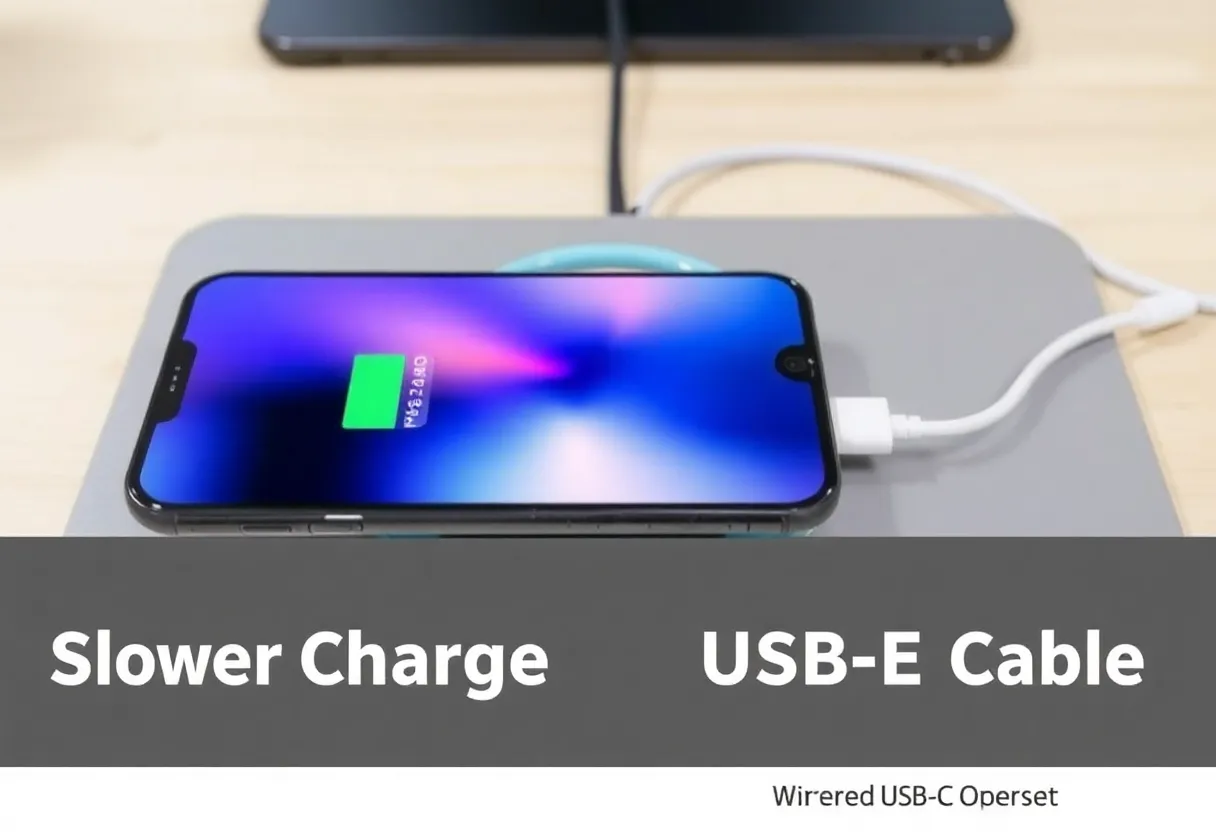
MagSafe for iPhone and the Qi2 open standard represent the current direction of wireless charging improvement: precise magnetic alignment that maximizes efficiency, ecosystem integration (Apple’s MagSafe accessories snap to the back of the phone), and reliable 15W speeds without heat issues that plague misaligned wireless charging. These improve the wireless charging experience significantly compared to early Qi implementations but don’t close the fundamental gap with high-power wired charging.
The longer-term trajectory for wireless charging — higher power, better efficiency, more robust heat management — is likely to continue improving. But the thermodynamic constraints of inductive transfer mean that the efficiency and speed gap with wired charging will persist; the heat generated by the physics of electromagnetic induction cannot be entirely engineered away. Wireless charging will continue to improve in convenience and in maximum achievable wattage, but for users who prioritize fastest possible charging and optimal battery longevity, wired will remain the better choice for those specific priorities.