How Urban Heat Islands Form and What Evidence-Based Interventions Actually Help

Isabel Carvalho
July 7, 2026
Urban heat islands—the phenomenon where cities are measurably warmer than surrounding rural areas—are one of the better-documented examples of how human modification of the built environment affects local climate. The effect is not subtle: large cities regularly measure air temperatures 2–5°C warmer than nearby rural areas, with surface temperatures on dark pavement and roofing reaching 30–50°C above air temperature during peak summer days. As climate change intensifies heatwaves and the global urban population continues to grow, the urban heat island effect is increasingly a public health concern rather than an atmospheric curiosity.
The physics of urban heat islands is well-understood, and several mitigation strategies have been implemented and studied. The evidence on what actually works—and by how much—is more differentiated than many popular treatments of the subject suggest.
The Formation Mechanisms
Urban heat islands arise from several interacting mechanisms, and distinguishing them matters for understanding which interventions target which causes:
Reduced albedo. Albedo is the fraction of incoming solar radiation that a surface reflects rather than absorbs. Dark surfaces—asphalt, dark roofing, much paved urban surface—have low albedo (5–10%), absorbing 90–95% of solar energy and converting it to heat. Vegetation and bright surfaces have higher albedo; urban areas have substantially lower average albedo than rural areas with vegetation, meaning they absorb more solar energy and convert more of it to sensible heat that warms the air above.
Reduced evapotranspiration. Vegetation releases water vapour through transpiration, which cools the surrounding air through evaporative cooling—the same mechanism by which sweating cools humans. Impervious surfaces in cities prevent this evaporative cooling: rain runs off rather than percolating through soil to become available for plant uptake, and the absence of vegetation eliminates transpiration. The replacement of vegetation with impervious surfaces removes a significant cooling mechanism.
Anthropogenic heat. Cities concentrate activities that generate waste heat: buildings heating and cooling, vehicles, industrial processes, and human metabolism. This additional heat load is typically smaller than the albedo and evapotranspiration effects in most cities but is significant in very dense industrial or commercial districts.
Altered wind patterns. Urban street canyons—narrow streets flanked by tall buildings—reduce wind speed at street level, which reduces convective cooling. Canyon geometry also traps outgoing longwave radiation (infrared heat), reducing the rate at which surfaces cool at night. The night-time urban heat island effect—cities remaining warmer at night than rural areas—is particularly relevant for health outcomes, because nights that don’t cool below threshold temperatures increase heat stress mortality.
Cool Roofs: The Best-Evidenced Intervention
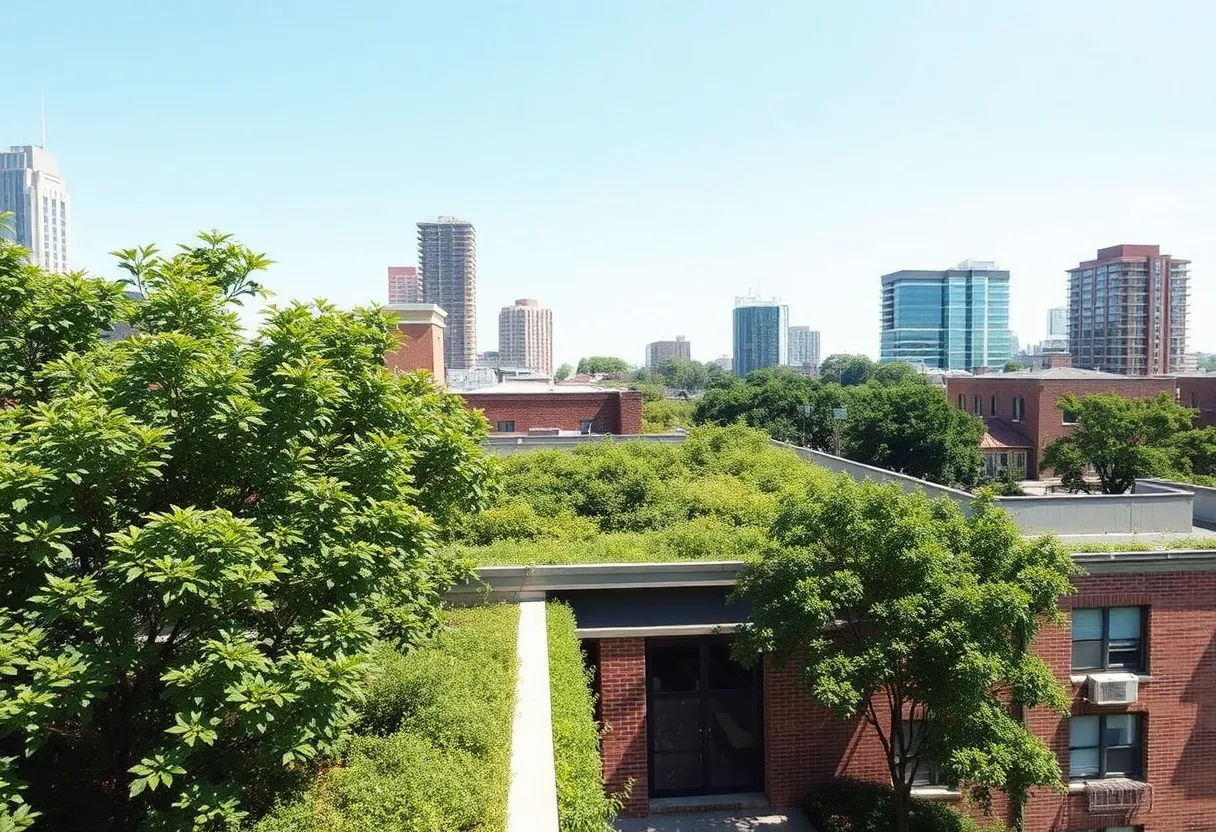
Cool roofing—applying high-reflectivity surface coatings or materials to rooftops—is the best-evidenced single intervention for urban heat island mitigation, with a strong body of modelling and observational research. White reflective coatings can increase roof albedo from 0.1 (typical dark roof) to 0.7–0.8, substantially reducing solar heat gain in the building below and reducing surface temperatures.
The cooling effect of cool roofs is well-quantified at the building level (reduced cooling energy demand) and moderately well-quantified at the city level (reduced ambient air temperature when deployed at scale). Studies modelling large-scale cool roof deployment in cities have found 0.5–2°C reductions in ambient air temperature—a meaningful effect for heat stress outcomes.
The main limitation of cool roofs is seasonal: they reduce heat gain in summer but also in winter, when heat gain in cold climates reduces heating energy demand. In winter-cold climates, the energy balance of cool roofs can be slightly negative on an annual basis; in predominantly hot climates, the energy savings are year-round positive. The climate-health benefit argument (reducing dangerous peak summer temperatures) is strongest in heat-vulnerable cities regardless of the energy economics.
Urban Tree Canopy: Significant But Heterogeneous
Urban trees provide cooling through both shade (reducing solar radiation reaching surfaces and people) and transpiration (evaporative cooling). The direct cooling effect of shade under a tree can be 3–7°C reduction in surface temperature relative to exposed asphalt; the ambient air cooling effect of urban forests at neighbourhood scale is estimated at 0.5–2°C in well-studied cases.
The evidence for urban tree canopy cooling is strong in aggregate, but the effectiveness varies substantially by tree species, placement, and urban context. Trees provide most cooling benefit when placed where shade reduces the most solar gain on hot surfaces: south- and west-facing building walls, parking lots, and pedestrian paths. Trees placed in locations where they don’t shade heat-absorbing surfaces or where pedestrian exposure is low provide less cooling benefit for the same investment.
Urban tree planting faces implementation challenges: urban soils are often poor, underground utilities constrain root space, irrigation requirements during establishment, and canopy conflicts with overhead utilities. Maintaining urban tree canopy over decades requires sustained investment in establishment, maintenance, and eventual replacement of trees that die or are removed. Cities that have achieved and maintained high canopy cover—Seattle, Melbourne, Singapore—have made sustained long-term investment rather than episodic planting campaigns.
Permeable Pavement and Blue Infrastructure
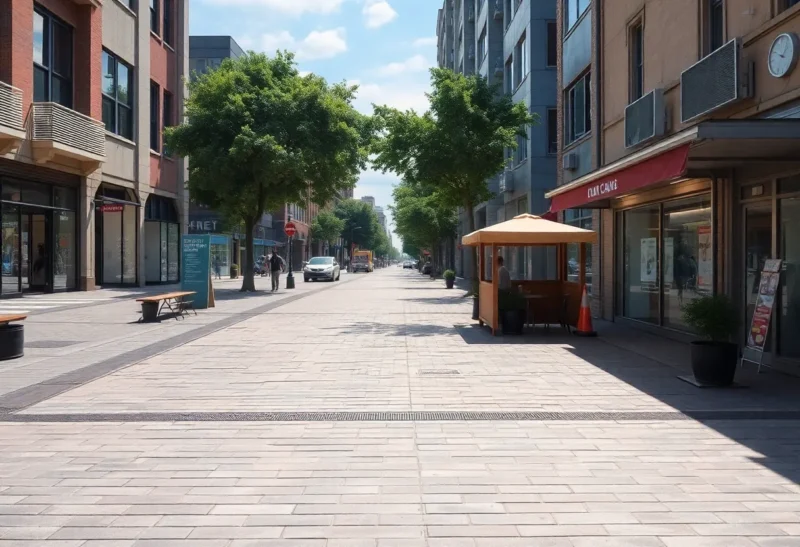
Permeable paving materials—porous asphalt, permeable concrete, interlocking pavers with gaps—allow water to penetrate to the soil below rather than running off. This serves stormwater management goals but also retains moisture that can support evaporative cooling. The cooling effect of permeable pavement is lower than transpiration from vegetation but non-trivial, and it addresses a primary mechanism of urban heat island formation (loss of evaporative cooling).
Blue infrastructure—retention ponds, urban wetlands, water features—provides evaporative cooling in the immediate vicinity. Studies of urban water bodies have found localised cooling effects of 1–3°C up to 30–50 metres from the water surface. The cooling benefit is real but spatially concentrated; large-scale urban heat island mitigation requires either many water features distributed across the urban area or integration with other cooling strategies.
What the Evidence Doesn’t Support Well
Some commonly proposed urban cooling interventions have weaker evidence than their promotional treatment suggests:
Cool pavements—applying reflective coatings to road surfaces—reduce surface temperatures but can increase the reflective solar radiation reaching pedestrians at ground level, potentially increasing heat stress for people walking on or near the surface. The net effect on human thermal comfort is mixed and depends on context; some researchers have found that cool pavements increase perceived heat for pedestrians even while reducing surface temperatures.
Green walls (vertical vegetation on building facades) have demonstrated cooling effects in studied cases but highly variable results depending on the plant species, the wall orientation, the irrigation system, and the climate. The evidence base is thinner than for green roofs or urban tree canopy, and the maintenance requirements are higher.
The most robust conclusion from the urban heat island mitigation literature is that effective cooling requires multiple combined interventions at meaningful scale—not a single technology applied in isolation. Cities that have made meaningful progress on urban heat typically combine cool roof requirements, tree planting programmes, and stormwater management improvements in coordinated policy packages rather than implementing isolated measures. The aggregate effect of these combinations is demonstrably larger than the sum of individual interventions tested in isolation.