How Streaming Services Decide What to Recommend—And What Their Algorithms Get Wrong

Rachel Stein
July 7, 2026
Netflix claims its recommendation system saves the company over $1 billion annually in reduced churn. Spotify’s Discover Weekly is cited as one of the most successful personalisation features in streaming. These systems have become central to how streaming services retain subscribers and compete against the infinite entertainment alternatives available online. Understanding how they work—and where they structurally fail—helps explain both why you sometimes find the perfect show and why the same tired genre keeps showing up on your home screen.
The Core Technology: Collaborative Filtering
The foundational algorithm behind most recommendation systems is collaborative filtering: the idea that users with similar viewing histories tend to like similar content. If you and 50,000 other users all watched and rated similar shows highly, the system infers that you have similar taste, and recommends content those users liked that you haven’t seen yet.
Collaborative filtering comes in two main variants. User-based filtering finds users similar to you and recommends what they liked. Item-based filtering finds items similar to those you’ve liked and recommends those. Modern systems typically use matrix factorisation—a mathematical technique that decomposes the large matrix of user-item ratings into latent factor representations, capturing the underlying features (genre, tone, pacing, character type) without explicitly defining them. These latent factors are learned from the data.
Netflix’s initial public research on their recommendation system (from the Netflix Prize era) used collaborative filtering extensively. The modern system is substantially more sophisticated—layering multiple models and using deep learning—but collaborative filtering remains at the conceptual core of most approaches.
What Else Goes Into Recommendations
Pure viewing history is not the only signal streaming services use. The mix of signals varies by platform:
Implicit feedback: What you watch matters, but how you watch it matters more. Did you watch to completion? Did you rewatch? Did you pause and abandon? Did you watch at 1.5x speed (some services track this)? These implicit engagement signals are often more revealing than explicit ratings, which most users don’t give. Netflix famously de-emphasised its star rating system partly because viewing behaviour was more predictive than stated ratings.
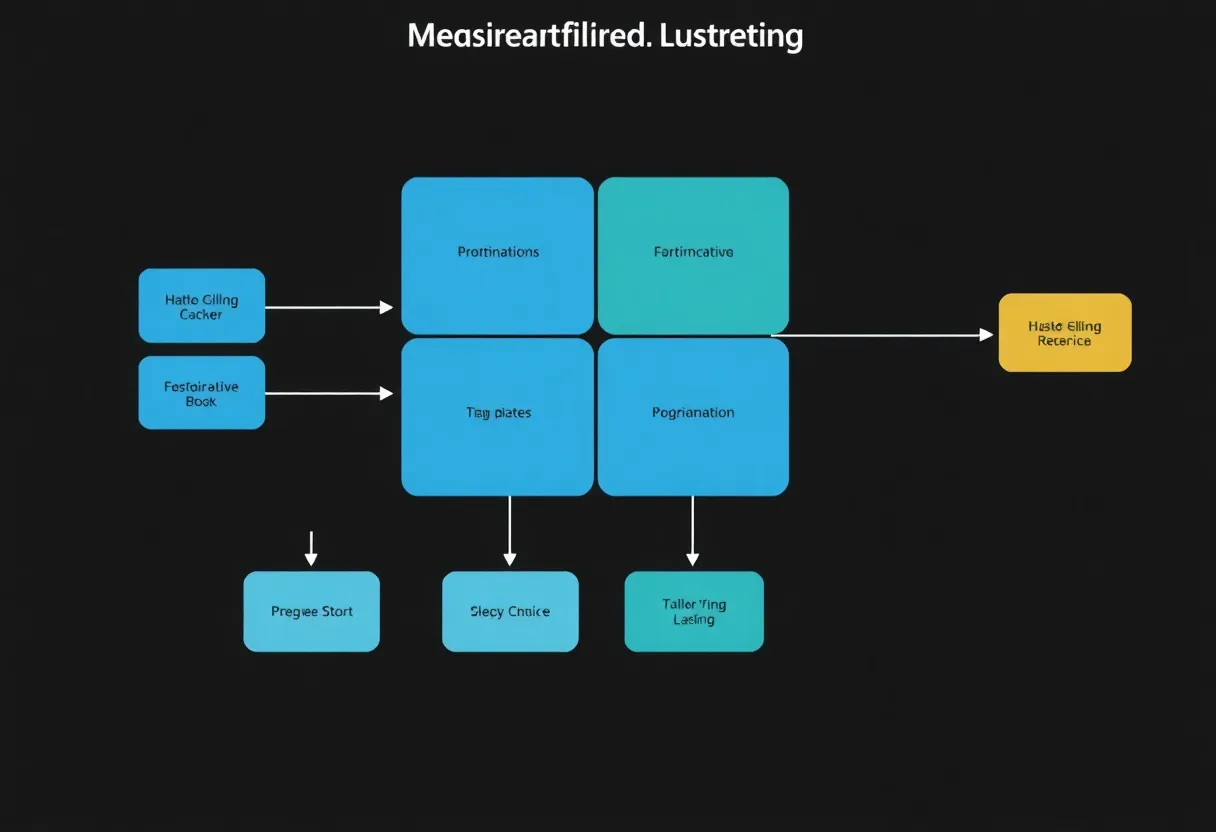
Content-based features: The algorithmic systems are trained against metadata about content: genre, director, cast, release year, tone tags, theme tags. Some services use automated content analysis (computer vision on thumbnails, NLP on synopsis text) to generate additional features. Spotify analyses audio characteristics of songs—tempo, key, energy level, speechiness—to find similar-sounding music independently of what other users have listened to.
Contextual signals: Time of day, device, day of week, and session context all modulate recommendations. Netflix research has indicated that recommendations should differ between a Tuesday evening browse (“what should I commit to watching?”) and a Saturday late-night session (“something light to put on”). Whether Netflix actually uses this contextual adaptation in production varies—their published research doesn’t fully describe their production systems.
Business signals: Recommendations are not purely algorithmic. Content that is newly licensed or produced is surfaced more prominently to drive viewership (amortising the licensing cost or justifying the original content investment). Content that is about to expire may be promoted to drive viewership before it leaves the catalogue. These business objectives are blended into the ranking that determines what actually appears on screen, which is not the same as the raw algorithmic relevance score.
What Streaming Algorithms Get Wrong
The failure modes of streaming recommendation systems are instructive because they’re not bugs in the usual sense—they’re predictable consequences of the objectives these systems optimise for.
Popularity bias: Collaborative filtering naturally recommends popular content more than niche content, because popular content has more interaction data and therefore better-modelled latent factors. The Netflix home screen is dominated by a relatively small fraction of the total catalogue because the algorithm has high confidence in predicting engagement with popular content. Niche, distinctive content that serves a specific audience well is systematically underrepresented relative to popular content that appeals broadly but not deeply.
Engagement vs. satisfaction mismatch: Algorithms optimise for the metrics they can measure—primarily completion rate and session length. These correlate with, but are not identical to, user satisfaction. A show that keeps you watching because of cliffhangers and anxiety-inducing plot points optimises completion rate while potentially leaving you feeling worse. Research on social media has documented this divergence between engagement and wellbeing; streaming systems may have analogous properties that are less studied.
Filter bubbles and genre lock-in: If you watch thrillers for three weeks, the algorithm builds a strong model that you like thrillers and serves you more thrillers. The system is good at finding more of what you’ve recently consumed but not at helping you discover that you might also like a specific documentary genre you’ve never tried. Serendipitous discovery of genuinely new-to-you categories is harder to optimise for than “more of the same.”

The household problem: Many streaming accounts are shared across households with very different tastes—partners, parents and children, roommates. Collaborative filtering on a shared account produces incoherent recommendations because the latent factor model is trying to represent multiple incompatible taste profiles simultaneously. Profile features (multiple user profiles per account) partially address this, but rely on users consistently using the correct profile, which most households don’t do consistently.
Why You Can’t Easily Beat the Algorithm
One frustration of streaming services is that users often feel they know what they want but the recommendation system keeps showing them the wrong things. Attempts to “teach” the algorithm—rating content, actively searching, consistently using your profile rather than the household default—do work over time, but the system is optimised for the average user and adapts slowly to edge-case preferences.
The deeper issue is that “what I want to watch” is context-dependent in ways the algorithm doesn’t fully model. The show that’s perfect for a tired Thursday evening is different from what’s right for an engaged Friday evening. What you want after finishing an emotionally heavy drama is different from what you want after a comedy series. Streaming algorithms approximate your preferences with a statistical model that averages over context—and that average is sometimes accurate and often not.
These limitations are not unique to streaming—they’re shared by virtually all recommendation systems. The practical response is treating streaming algorithms as useful starting points that surface good options, while accepting that active search and external recommendations (from friends, review sites, curated lists) will remain important discovery mechanisms for finding content that truly matches what you want, rather than what the algorithm predicts you’ll watch to completion.