Console Backward Compatibility: Why Microsoft and Sony Still Get It Wrong

Reese Dunn
July 7, 2026
Backward compatibility—the ability to play games from older platforms on newer hardware—has become one of the most politically charged topics in the console industry. Microsoft has made it a marketing pillar, regularly announcing that the Xbox Series X plays “thousands” of Xbox One, 360, and original Xbox titles. Sony took years to offer meaningful PS4 backward compatibility on PS5, and PS3 backward compatibility remains essentially absent without PlayStation Plus Premium’s cloud streaming workaround.
Both companies present their backward compatibility stories in the most flattering possible light. Both fall short in ways that matter to consumers who have invested decades in digital libraries. Here’s a clear-eyed look at what backward compatibility actually means in 2026, what’s genuinely working, and where the gaps between the marketing and reality are widest.
Microsoft’s Backward Compatibility Programme: The Real Numbers
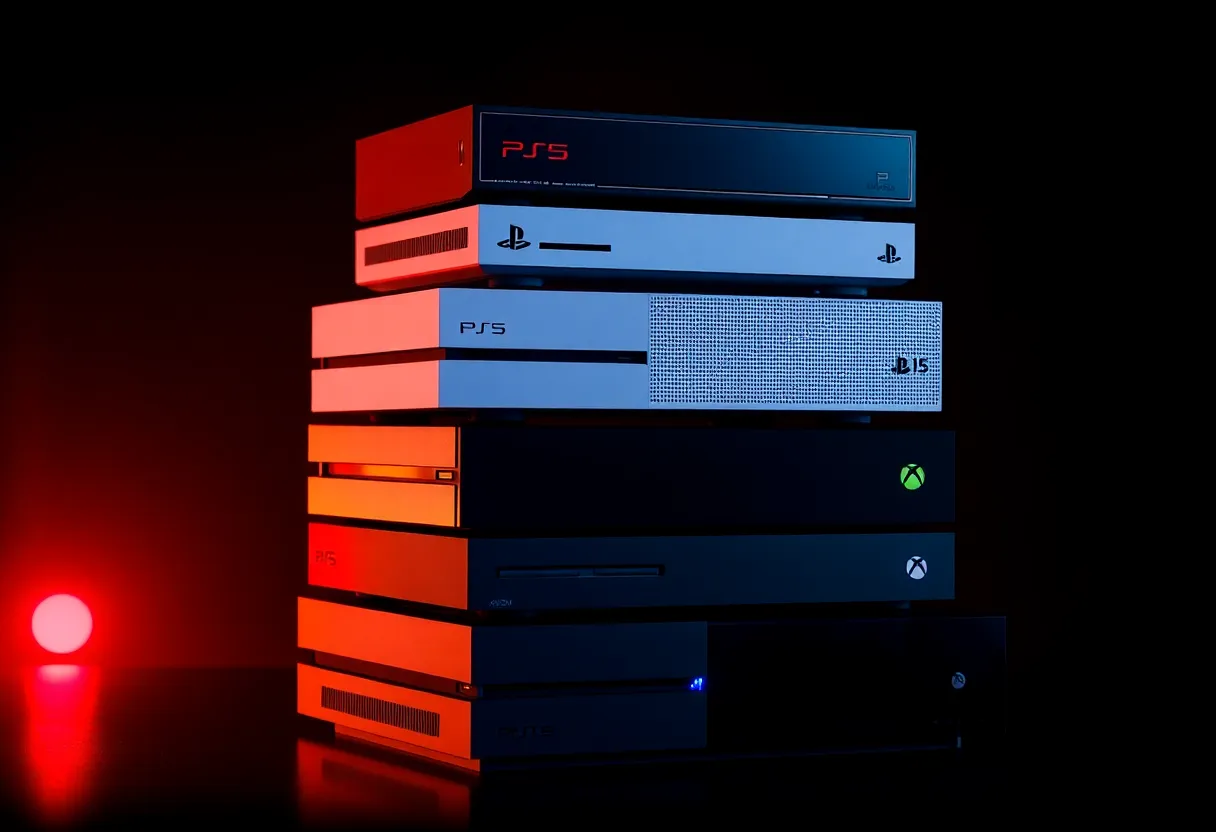
Xbox’s backward compatibility story is genuinely impressive in scope—no other major console manufacturer has invested as heavily in preserving access to older titles. The Xbox Compatibility team has reverse-engineered original Xbox hardware, Xbox 360 hardware, and layered software emulation to run titles from three previous generations on current Series hardware. The number of supported titles runs into the thousands.
Where the “thousands of games” marketing runs ahead of reality is in the distribution of which games are supported. The backwards compatible library heavily represents titles that were popular and commercially significant at the time of their original release—which makes sense as a prioritisation decision but means a substantial long tail of smaller, niche, or regional titles isn’t supported and likely never will be. The backwards compatibility team has not updated the list significantly since 2019, when Microsoft announced it was stopping additions due to “licensing, legal, or technical challenges.”
That 2019 freeze matters. Publishers whose titles are not already on the list cannot get them added through normal channels, regardless of player demand. A cult classic Xbox 360 JRPG with a passionate but small fanbase, a regional title that sold well in Japan but was never big in the US, an indie game released late in the 360’s life—these are essentially stranded on their original hardware or Xbox 360 emulators on PC.
There’s also the physical media question. While disc-based backward compatible games work on the Series X (which has a disc drive), the Series S—Microsoft’s budget entry point—has no disc drive at all. A player who bought the Series S and wants to play their collection of disc-based 360 games cannot do so. The “we support backward compatibility” message doesn’t apply equally to the console Microsoft sells to cost-conscious buyers.
Sony’s Awkward Position
Sony’s backward compatibility history is one of the more puzzling strategic stories in gaming. The original PS3 launched in 2006 with full PS2 backward compatibility via hardware emulation, then Sony removed it in later hardware revisions as a cost-cutting measure and has never fully restored it. The PS4 launched with essentially no backward compatibility. The PS5 added backward compatibility for PS4 titles—which works well and comprehensively—but PS3, PS2, and PS1 titles remain behind the PlayStation Plus Premium subscription wall, available only via cloud streaming (with the latency that implies) or emulation for a limited selection of titles.
The irony is that PS1 and PS2 emulation is a solved technical problem—PCSX2 and other open-source emulators run the vast majority of these libraries reliably on commodity PC hardware. Sony has the original code and hardware schematics; the challenge is almost entirely about licensing rights for the software, not technical feasibility. The decision to gate even basic PS1/PS2 backward compatibility behind a premium subscription tier rather than simply sell the titles or include access as a standard PS5 feature reads as a commercial decision dressed as a technical constraint.
The PS Plus Premium streaming approach has a fundamental problem that Sony acknowledges in its own literature but doesn’t foreground in marketing: it requires a consistent broadband connection, and the streaming adds perceptible input lag that is particularly noticeable in fast-action games, fighting games, and anything that demands tight timing. Playing Tekken 3 via cloud streaming on a PS5 at a 30-50ms latency addition is a meaningfully different experience than playing Tekken 3 would be on original hardware. The game is technically “available” but not in the form players who remember it would recognise.
What Neither Company Has Solved: Digital Library Portability
Both Microsoft and Sony have moved aggressively toward digital-first business models—selling games through their respective stores, encouraging subscriptions, eventually removing disc drives from entry-level hardware. Both companies have also maintained that purchased digital games will remain accessible through platform transitions.
In practice, digital library persistence is more fragile than the companies’ positions imply. Games that are removed from sale (for licensing reasons, publisher decisions, or platform policy changes) remain playable for users who purchased them—usually. But the language in both companies’ Terms of Service around digital purchases is explicitly not a guarantee of permanent access. You are purchasing a license, which can be revoked under circumstances both companies have reserved the right to define.
The closure of the PlayStation 3 and Vita storefronts in 2021 (which Sony initially announced and then partially reversed after significant community pushback) illustrated what happens when a company decides a digital storefront is no longer financially viable. The outcome—limited access through devices you already own, no ability to make new purchases—is not the permanent library ownership that “buy it and keep it forever” marketing implies.
Nintendo is the clearest case study. The Nintendo Switch Online + Expansion Pack subscription, which includes NES, SNES, N64, and Sega Genesis games, costs $50/year and provides access rather than ownership. When a subscription lapses, so does access to every game in the service. Games purchased on the Wii Virtual Console in the 2000s cannot be transferred to modern Nintendo hardware. Each platform generation is a fresh start; the historical library is available only through subscription and only as long as Nintendo decides to maintain the service.
The Technical Gaps That Matter
Even when backward compatibility works, the experience is frequently not equivalent to playing on original hardware. Several categories of issues persist across both platforms:
Online multiplayer for older titles. Backward compatible games that relied on online multiplayer infrastructure that has since been shut down don’t have their online functionality restored—the backward compatibility covers the local game, not the server-side components. Halo 2 on Xbox backwards compatibility means the campaign and local multiplayer; original Halo 2 online is gone forever. This affects a non-trivial number of games from the 360 and PS3 era.
DLC and expansion content. Not all DLC for backward compatible games remains available for purchase. Older DLC sometimes gets pulled from stores while the base game remains accessible, meaning players who didn’t buy the DLC at time of original release can’t get it now even if they want to pay for it. Some backward compatible games are available without the DLC that was arguably essential to their complete experience.
Performance enhancements are uneven. Microsoft’s FPS Boost feature, which targets select backward compatible titles to run at higher frame rates than the original hardware could manage, is genuinely impressive when it works. The list of supported titles is limited, and the games that received FPS Boost are mostly the ones with large current player bases—again, smaller or niche titles don’t get the treatment.
Display calibration for older games. Games designed for 4:3 CRT displays on 2000s-era hardware look wrong without pillarboxing, correct aspect ratio handling, and sometimes scanline filters that approximate the original display. Both consoles handle some of this but inconsistently—there’s no system-wide option to apply consistent CRT simulation or aspect ratio correction to older titles. Each game either has these options built in (rare) or doesn’t.
What a Genuinely Good Backward Compatibility Implementation Would Look Like
The template exists: Analogue produces FPGA-based consoles (Pocket, Duo, 3D, Mega Sg) that run original cartridges and ROMs with cycle-accurate hardware emulation—no lag, no rendering approximation, original audio and video output. This is obviously impossible at the scale or price point of a mainstream console, but it illustrates what “true” backward compatibility means versus the software emulation approach of Xbox and PlayStation.
For a realistic vision of what a console manufacturer could offer: comprehensive software emulation across all previous generations without subscription gating, explicit guaranteed access clauses in digital purchase terms backed by escrow arrangements for game executables, DLC bundled with base games rather than maintained as separate purchase lines, and honest marketing that specifies which titles are supported and which aren’t rather than headline “thousands of games” statistics that obscure the incompleteness.
The commercial reality is that none of this aligns with current business model incentives. Backward compatibility reduces the urgency of buying new games; robust access to the full historical library reduces the attractiveness of subscription services; and eliminating subscription gates on older content removes revenue streams that both companies are actively building. The current implementations are the result of those incentives, not genuine attempts to solve the backward compatibility problem as completely as the technology allows.
What Consumers Should Actually Expect
If you’re deciding between platforms with backward compatibility as a significant factor: Xbox Series X has the broadest implementation for Xbox-family titles, with real quality across a large (if bounded) library. PS5 handles PS4 titles well and essentially nothing before that without subscription. Neither company is a reliable steward of physical media access for disc-less hardware models.
For preserving access to older digital libraries long-term: be sceptical of any platform’s “your purchases are permanent” messaging, because the fine print doesn’t support that claim. Physical media remains the most reliable long-term access mechanism for games that matter to you—as long as you have hardware that reads it. And the open-source emulation community, running on PC hardware, has preserved access to games that manufacturers have allowed to become commercially inaccessible—a fact that the industry doesn’t advertise but that a significant number of gamers quietly rely on.