Why Graphene Keeps Winning Research Papers and Losing Real Products

Daniel Voigt
July 7, 2026
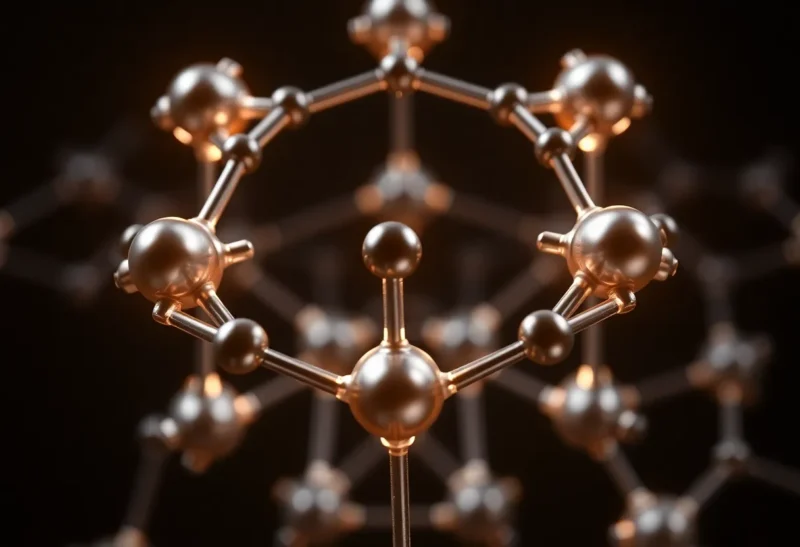
Graphene was supposed to change everything. When Andre Geim and Konstantin Novoselov isolated single-atom-thick sheets of carbon at the University of Manchester in 2004 and won the Nobel Prize in Physics in 2010, the materials science community and tech press alike entered something between serious scientific excitement and outright hype. Graphene was stronger than steel, more conductive than copper, transparent, flexible, and impermeable to nearly all gases. The implications seemed boundless: faster transistors, better batteries, composite materials with extraordinary strength-to-weight ratios, impermeable membranes for filtration and desalination.
More than twenty years after Geim’s Scotch tape experiment, graphene is still mostly winning research papers. Consumer products incorporating graphene in ways that meaningfully exploit its fundamental properties remain a rarity. The gap between the laboratory demonstration and the commercial application — which is wide for many advanced materials — has been particularly stubborn for graphene, and understanding why illuminates something important about how materials science actually translates to technology.
The Properties Are Real. The Production Problem Is Also Real.
Graphene’s properties are not hype. A single layer of carbon atoms arranged in a hexagonal lattice really is exceptionally strong — about 200 times stronger than structural steel by some measures. Electron mobility in graphene really is extraordinarily high, which is why it was studied as a candidate semiconductor material for post-silicon transistors. The thermal conductivity is among the highest of any known material. These are measured, reproducible properties of the material.
The commercial problem is that the graphene you can produce cheaply is not the graphene with those properties. The material world has a frustrating hierarchy here: single-layer, pristine graphene (often called “ideal graphene” in research) has exceptional properties. The multilayer graphite you get from a pencil on paper is also carbon atoms in the same hexagonal arrangement but stacked — it doesn’t have those properties. Between those extremes is a continuum of graphene quality: few-layer graphene, graphene oxide, reduced graphene oxide, graphene nanoplatelets — all with different properties and vastly different production costs.
Chemical vapor deposition (CVD) of graphene on copper foil can produce relatively high-quality single-layer graphene over large areas. It’s also expensive, slow, and the process of transferring the graphene from the copper substrate to wherever you need it tends to introduce defects that degrade the very properties you’re trying to exploit. Liquid-phase exfoliation of graphite into graphene nanoplatelets is much cheaper and scalable, but produces a powder of small, overlapping flakes rather than a continuous single layer, and the properties of that composite material depend on how those flakes are dispersed and what they’re dispersed in.
Where the Applications Actually Work
Some graphene applications have made it to market and do work, because they don’t require ideal graphene properties and the production quality achievable at scale is sufficient.
Graphene as a conductive additive in battery electrodes is one of the more mature applications. Adding graphene nanoplatelets or graphene oxide to lithium-ion electrode materials can improve conductivity, which improves charge/discharge rates and potentially extends cycle life. The graphene used for this doesn’t need to be pristine single-layer material; it needs to be conductive and dispersible. Samsung, CATL, and other battery manufacturers have incorporated graphene-derived additives into electrode formulations, though the marketing sometimes overstates the degree to which this represents a graphene revolution rather than an incremental improvement in electrode formulation.
Graphene-enhanced composites in sporting goods — tennis rackets, bicycle frames, skis — have been commercialized by companies including Head and Vittoria (for bicycle tires). The mechanism here is that graphene nanoplatelets dispersed in epoxy or rubber composites improve certain mechanical properties, primarily specific stiffness and some aspects of vibration damping. These applications work because the manufacturing process is compatible with existing composite production methods, the graphene quality required is achievable at commercial scale, and the performance improvements — while modest in absolute terms — are measurable and meaningful for high-performance applications. They’re also in a market segment where customers are accustomed to paying for marginal performance improvements.
Anti-corrosion coatings using graphene oxide have been developed and are in early commercial deployment. Graphene’s impermeability — it’s nearly impermeable to oxygen, water vapor, and most gases — makes it theoretically useful as a barrier coating for metals. Graphene oxide coatings applied over steel or aluminum can reduce corrosion rates measurably. The challenge is ensuring coating uniformity and adhesion over large areas; any defect in the coating creates a pinhole that undoes much of the barrier benefit. Industrial applications are progressing in controlled environments; consumer applications are harder to guarantee at scale.
The Transistor Dream That Ran Into Physics
The most anticipated graphene application was replacing silicon in transistors. Silicon transistors are approaching fundamental physical limits — you can only make them so small before quantum effects dominate and current leaks uncontrollably. Graphene’s electron mobility suggested that graphene transistors could switch faster and operate at lower voltages than silicon, potentially extending Moore’s Law.
The problem is a fundamental one that became apparent relatively quickly: graphene has no bandgap. A bandgap is what makes a semiconductor a semiconductor — the energy difference between conducting and not conducting that lets you turn a transistor cleanly on and off. Silicon has one. Graphene doesn’t, which means graphene transistors can’t switch off completely. A transistor that can’t switch off isn’t useful for digital logic, where you need clear binary states.
Materials scientists have developed workarounds — bilayer graphene under certain conditions opens a small bandgap, and graphene nanoribbons (thin strips of graphene) have bandgaps related to their width. Both approaches add significant complexity to fabrication and don’t yet produce transistors that compete with modern silicon on the metrics that matter for computing. The graphene transistor story has largely pivoted from “replace silicon” to “do things silicon can’t do at all” — particularly in high-frequency analog applications where a complete off-state isn’t needed and the high electron mobility is genuinely useful.
Why the Hype Outran the Reality
The graphene story is a specific instance of a general pattern in materials science and technology reporting: properties measured on ideal laboratory samples get attributed to the material as a category, applications become plausible in principle before they’re achievable in practice, and the timeline compression that happens in technology reporting (months instead of decades) sets expectations that the reality consistently fails to meet.
Graphene also attracted a secondary market of marketing claims that have no basis. “Graphene” as an ingredient in consumer products — phone cases, clothing, supplements (yes, really) — is often graphite powder or graphene oxide used in quantities too small and in configurations too poorly designed to provide any of the properties being marketed. The material’s name became a label that carried scientific cachet without necessarily representing actual graphene content or meaningful application of graphene properties.
The National Graphene Institute at Manchester, the EU Graphene Flagship program (a €1 billion ten-year research initiative), and dozens of commercial graphene producers worldwide represent genuine, serious investment in making graphene useful at scale. The progress is real but slower than the early hype suggested, and it’s happening most concretely in applications where “better than what we had” at achievable quality is sufficient rather than in the breakthrough-applications that dominated the early excitement.
The material isn’t going away. Its properties are genuinely useful in the right contexts. But the history of advanced materials — from carbon fiber to Kevlar to high-temperature superconductors — suggests that the journey from “discovered exceptional properties” to “widely deployed in important applications” routinely takes decades and rarely unfolds the way the initial discovery makes it seem. Graphene is in the middle of that journey, making incremental progress in specific applications while the breakthrough applications that capture the imagination remain mostly in the papers.