Cloud Gaming: Who It’s For and Who It’s Still Failing

Reese Dunn
February 24, 2026

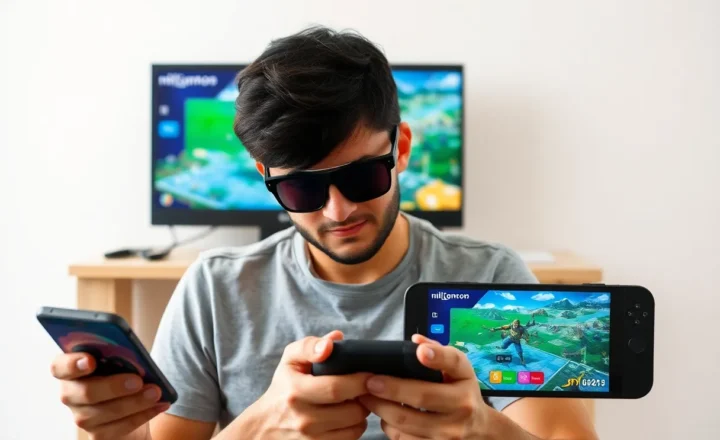
Cloud gaming was supposed to change everything: play the latest titles on a potato laptop, on your phone, on your TV—no console, no graphics card, no waiting for downloads. Just press play. A decade in, the promise is real for some people. For others, it’s still a laggy, inconsistent mess. The gap between those two experiences says a lot about where the technology actually is, and who gets to benefit.
This isn’t a review of any single service. It’s a look at who cloud gaming works for, who it’s still failing, and why the divide is so stubborn.
The Promise
Cloud gaming—streaming games from remote servers so your device only decodes video and sends input—solves real problems. Upfront cost drops: you don’t need a $500 console or a $1,200 GPU. Upgrades disappear: the hardware is in the datacenter. Convenience goes up: switch devices, pick up where you left off, try a game in seconds instead of downloading 100 GB. For publishers, it opens audiences who would never buy a gaming rig. For players in regions with weak local hardware supply, it can be the only way to touch current-gen titles.
Services like Xbox Cloud Gaming, GeForce Now, and PlayStation’s remote play have made that promise concrete. When conditions are right, you really can sit on your couch with a tablet and play something that would have required a console a few years ago.
Who It’s For
Cloud gaming works best for people who already have three things: decent broadband, proximity to a provider’s servers, and the right kind of expectations.
Stable, low-latency internet. If you’re in a city or suburb with a solid cable or fiber connection, you’re in the target zone. Services typically want at least 15–25 Mbps and prefer low jitter. That’s not universal, but it’s increasingly common in many parts of the world.
Casual and flexible play. If you’re the kind of player who enjoys single-player campaigns, co-op, or games where a frame or two of delay doesn’t ruin the experience, cloud gaming can feel great. Story-driven titles, turn-based games, and many indies are a natural fit. You’re not constantly testing the limits of reaction time.
Device flexibility. People who want to play on a laptop that can’t run the latest games, or on a phone or tablet during travel, get real value. So do households that don’t want to buy multiple consoles. One subscription, several screens—that’s the pitch, and for the right user it delivers.
Who It’s Still Failing
On the other side are the people for whom cloud gaming remains frustrating or simply unusable.
Competitive and twitch players. Fighting games, shooters, and anything where split-second timing matters still suffer from added latency. Even with the best home connection, you have encode–network–decode delay. For high-level play, that’s often a non-starter. Cloud gaming is rarely the choice for esports or leaderboard climbing.
Rural and underserved areas. If your internet is slow, unstable, or capped, cloud gaming can be a slideshow or a data bill shock. Many services recommend 20 Mbps or higher and don’t guarantee a good experience on satellite or congested shared connections. The people who could benefit most—those who can’t easily buy or upgrade local hardware—often live in exactly the places where infrastructure is weakest.
Data caps and ISPs. Streaming games burns through data. An hour can easily use 5–10 GB or more. For users on metered or throttled plans, that makes cloud gaming expensive or impractical. Some ISPs also treat gaming traffic differently, which can introduce inconsistency even when raw speed looks fine.

The Stubborn Divide
Improvements in codecs, edge computing, and 5G will keep pushing the needle. Latency will come down for more people; picture quality will go up. But the divide isn’t only technical. It’s economic and geographic. Building low-latency game server presence is expensive. Providers concentrate in regions with paying customers and good infrastructure. So the “who it’s for” group and the “who it’s failing” group often map onto existing inequalities: urban vs. rural, well-served vs. underserved.
That doesn’t mean cloud gaming is a failure. It means it’s a partial success—valuable for a growing slice of the market, and irrelevant or disappointing for another. Acknowledging both sides is the only honest way to talk about where it stands. If you’re in the right situation, it’s worth trying. If you’re not, the promise can feel like a tease. For now, both experiences are real.
What to Expect
If you’re considering cloud gaming, the practical takeaway is simple: try it in your own context. Use a free tier or trial. Test at different times of day and on the devices you care about. If it feels good, you’re in the cohort it’s for. If it’s stuttery or laggy, you’re in the cohort it’s still failing—and that might not change until your connection or your region’s infrastructure does. The technology will keep improving, but so will the games that push its limits. The gap between “for” and “failing” will narrow for some and stay wide for others. Knowing which side you’re on is the first step.