The Attention Economy Is Broken—Here’s What Might Replace It

Sage Collier
February 24, 2026

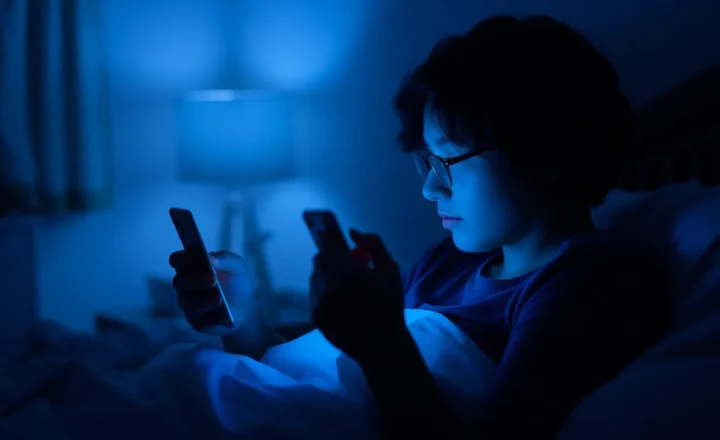
You open your phone to check the time. Twenty minutes later you’re still scrolling, and you can’t quite say how you got there. That’s not a personal failing—it’s by design. The attention economy, the system that turns your focus into the product that platforms sell to advertisers, has spent two decades getting very good at one thing: capturing and holding your gaze. The problem is that it’s also making us miserable, fragmenting public discourse, and leaving creators and publishers in a constant scramble for scraps. Something has to give.
Here’s the good news: the cracks are showing. From subscription models to calm technology to regulatory pressure, alternatives are emerging. They’re messy, uneven, and nowhere near dominant—but they’re real. This is a look at what’s broken, and what might replace it.
How We Got Here
The attention economy didn’t invent advertising, but it weaponized it. In the early web, ads were mostly static: banners, sidebars, the occasional pop-up. They were annoying, but they didn’t know much about you. Then came the shift to engagement. Platforms realized that the more time you spent on the site, the more ads you saw—and the more valuable you became. So the goal stopped being “useful content” and started being “content that keeps you here.”
Infinite scroll, autoplay, notifications, and recommendation algorithms all serve that goal. They’re optimized for one metric: time on platform. Whether that time is meaningful, informative, or even enjoyable is secondary. The result is a digital environment that’s constantly pulling at your sleeve, asking for one more refresh, one more video, one more “what if I miss something?”
What It Costs
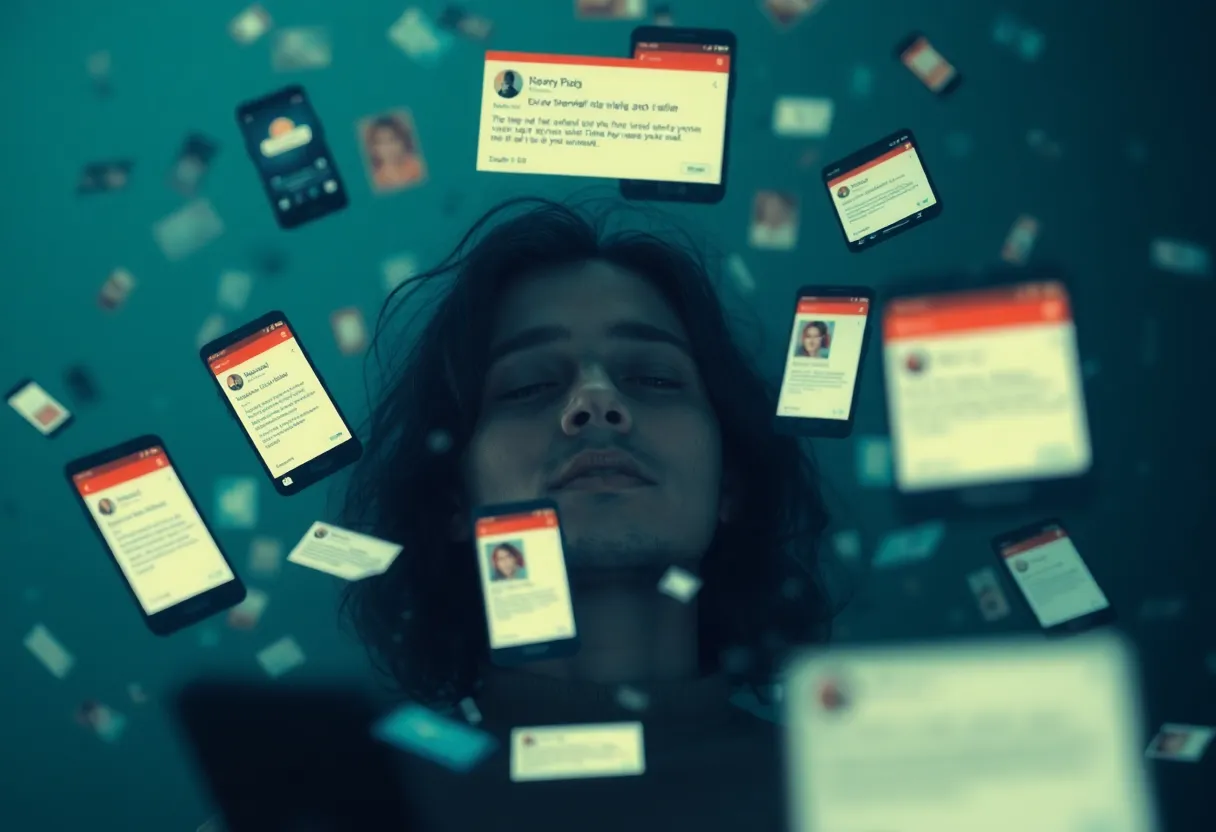
The costs show up at every level. For individuals, it’s fractured focus, higher anxiety, and the creeping sense that your time isn’t really yours. Studies keep linking heavy social and algorithmic media use to worse mental health, especially among young people. For society, it’s filter bubbles, outrage loops, and a public square that rewards the loudest and most divisive voices. For creators and publishers, it’s a treadmill: you have to feed the algorithm to survive, which often means more volume, more clickbait, and less room for the kind of work that doesn’t “perform.”
Worst of all, the system is self-reinforcing. The more attention you give, the better the models get at taking it. The more you scroll, the more data they have. We’re not just using these products—we’re training them on ourselves.
What Might Replace It
No single thing will replace the attention economy overnight. But several shifts are already underway, and they point toward a different equilibrium.
Subscription and direct support
When revenue comes from readers and viewers instead of advertisers, the incentive flips. You want loyal audiences, not maximal eyeballs. Substack, Patreon, and paid newsletters are part of this story; so are public media and reader-supported journalism. The model doesn’t scale like ad-supported virality—and that’s the point. It scales with trust and quality instead.
Calm technology and time-well-spent
There’s a growing push for technology that doesn’t demand your attention by default. “Calm technology” and “time-well-spent” aren’t just slogans; they’re design philosophies. Features like screen-time tools, notification controls, and optional “focus” modes are small steps. Bigger ones would be products built from the ground up to respect attention: no infinite scroll, no autoplay, no dark patterns. Some apps and devices are already experimenting in this direction.

Regulation and transparency
Governments are starting to treat attention-harvesting as a regulatory target. Age checks, limits on targeted advertising, and requirements for algorithmic transparency don’t kill the attention economy by themselves—but they raise the cost of the worst behaviors and give users more information and control. The EU’s Digital Services Act and similar efforts are early examples. How far they’ll go is still an open question.
Creator-led and community-owned
Some creators and communities are building their own spaces: smaller platforms, membership sites, and federated or open-source alternatives where the goal isn’t to maximize engagement for a parent company. These experiments are fragile and often niche, but they prove that different incentives are possible when the people who make the content also have a say in how the system works.
The Road Ahead
The attention economy won’t disappear. It’s too entrenched, too profitable for the biggest players, and too tied to how we’ve come to expect “free” content. But it can be supplemented, challenged, and gradually displaced in parts of our lives. The alternatives—paying for what we value, designing for calm, regulating the worst excesses, and building smaller and more human-scale spaces—are already here. They need support, iteration, and the willingness to shift our own habits: subscribe to one more thing, turn off one more notification, choose one more product that doesn’t treat our attention as the product.
That might sound small. But the attention economy was built one scroll at a time. Replacing it can start the same way.