A brass nozzle vs hardened steel the first time you print carbon-fiber filament

Anya Petrov
September 23, 2026
The first spool of carbon-fiber filament feels like a graduation. The packaging promises stiffness, matte texture, and “engineering” parts. The unfinished advice in forums is shorter: do not run that spool through a brand-new brass nozzle and expect the nozzle to stay new.
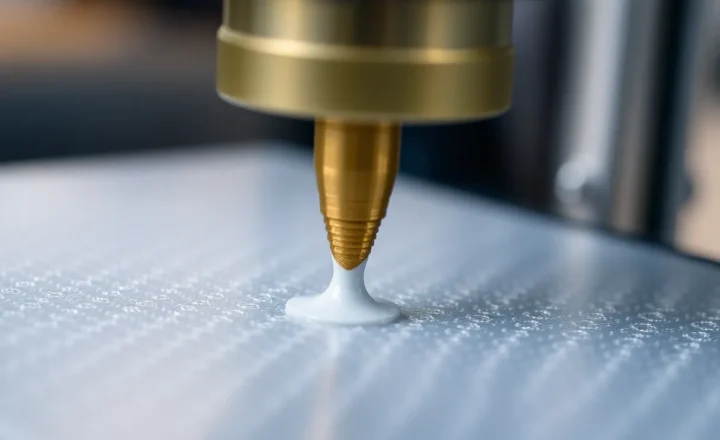
Brass versus hardened steel is not a brand war. It is a wear problem. Carbon fiber (and glass fiber, glow-in-the-dark pigments, some metal fills) abrades the orifice. Brass conducts heat beautifully and machines easily, which is why it ships on most printers. It also loses the fight against abrasive filler in hours or days of printing, not months.
If this is your first CF print, the practical question is whether to swap nozzles before you start, or to “just try a small part” on brass and learn the expensive way.
What carbon-fiber filament is doing to the tip
Carbon-fiber filament is usually a base polymer — PETG, nylon, ABS, polycarbonate — loaded with short fiber. The fiber is hard relative to brass. Every millimeter of filament that passes the constriction scrapes the bore and the land at the tip.
Wear shows up as diameter growth and as a change in tip geometry. A 0.4 mm hole becomes 0.45, then 0.5, then an oval. Flow increases for the same E-steps. Walls look overstuffed. Fine details blur. First-layer calibration that was perfect last week suddenly dumps too much plastic. People chase temperature and flow multipliers when the nozzle is simply larger than the slicer assumes.
The second failure mode is tip rounding. A sharp land shears cleanly; a worn trumpet tip leaves ridges, blobs, and inconsistent line width. Once that geometry is gone, no amount of PID tuning restores the old surface finish.

Why brass feels fine — until it does not
Brass is still the right nozzle for PLA, PETG, TPU, and most unfilled materials. Heat transfer is excellent. Clogs are often easier to clear. Stock kits are cheap. For a mixed household printer that mostly prints toys and organizers, brass is the default for good reasons.
Abrasives change the economics. A brass nozzle might survive a short CF test coupon. It will not survive a weekend of nylon-CF tool mounts without becoming a different diameter than your profiles expect. The worst outcome is not “nozzle destroyed.” It is “nozzle half-destroyed,” so your dimensional calibration drifts while you blame the filament brand.
There is also the false reassurance of a successful first print. The first 50 grams may look great. Wear is cumulative. By the time you notice elephant’s foot and fuzzy walls on a critical fit, you have already printed the scrap that taught you the lesson.
What hardened steel actually buys you
Hardened steel (and other wear-resistant tips: some stainless, ruby, tungsten carbide, hardened alloys marketed for abrasive filament) exists so the orifice diameter stays closer to nominal while abrasive filler passes through.
You are trading thermal performance and price for wear life. Steel conducts heat less readily than brass. On some hotends, that means a higher set temperature to get the same melt behavior, or a slightly narrower process window for temperature-sensitive polymers. Many modern hotends and sliced profiles cope fine; older all-metal stacks with long heat breaks are where people notice the difference first.
You are also trading forgiveness. A damaged steel nozzle is still replaceable, but you will care more about clean filament paths, proper temps, and not grinding cold pulls unnecessarily. The point of the swap is stability across a spool, not immortality.
For a first CF project, a quality hardened nozzle in your usual size (often 0.4 or 0.6 mm) is the boring correct answer. Buy two. Keep the brass nozzles for non-abrasive work and put them back when you return to PLA.

Size choice matters as much as metal
Carbon-fiber mixes often prefer a slightly larger nozzle than the 0.4 mm default — not always mandatory, but commonly recommended. Fibers and particle fills jam more easily in tiny orifices. A 0.6 mm hardened tip reduces clog drama and still resolves most functional parts.
If you stay on 0.4 mm, dry the filament thoroughly, use conservative speeds, and accept that CF is not the filament for tiny text and 0.2 mm layers. The nozzle metal will not fix a particle that cannot physically fit the hole.
The “just one print on brass” temptation
It is understandable. The hardened nozzle is on backorder. The brass one is already installed. The model is small.
Sometimes you get away with it. A 20-minute PLA-CF keychain may leave the brass tip only slightly worse. A 12-hour nylon-CF drone frame will not. The risk is not binary failure; it is silent calibration drift that poisons the next ten non-CF prints until you notice and replace the tip.
If you must print one abrasive job on brass, treat the nozzle as sacrificial: note the hours, measure a single-wall calibration cube before and after, and replace the brass nozzle before you return to tight-tolerance work. Do not “keep using it until it fails.” It already failed when the diameter changed.
Other abrasives hide in ordinary spools
Carbon fiber is the obvious villain. Glow-in-the-dark PLA chews brass. Some “sparkly” and mineral-filled cosmetics do too. Glass-fiber nylons are brutal. If a filament markets strength via filler, assume abrasive until the manufacturer explicitly says otherwise — and even then, believe wear over marketing.
Colorants alone are usually fine. Fiber and hard particulate are not.
Wood-filled and cork-filled PLA sit in a gray zone: softer than glass fiber, still more abrasive than plain PLA over long prints. If you print liters of wood PLA for cosplay, a hardened tip still pays for itself. If you print one decorative vase a year, brass may survive — monitor quality rather than assuming immortality.
The same discipline applies when friends hand you a “mystery engineering spool.” Identify the fill before you identify the color. A matte black nylon might be harmless or it might be CF. When unsure, hardened nozzle first, questions second.
A clean workflow for mixed materials
Run two nozzle identities mentally:
- Brass set — everyday PLA/PETG/TPU, detailed prints, anything you want maximum thermal responsiveness and cheap swaps.
- Hardened set — CF, GF, glow, filled nylons, and any “engineering” spool you do not fully trust.
Change nozzles when you change material class, not when the print quality has already collapsed. Re-check Z-offset after a swap; tip length varies. Re-run a quick flow check when you move between brass and steel if your hotend’s thermal behavior shifts.
Keep a log if you share the printer: which nozzle is installed saves a night of debugging someone else’s CF experiment on your brass tip.
Hotend and gear side effects
Nozzles take the spotlight, but abrasive filament also wears extruder drive gears and can polish heat-break paths over long use. Hardened gears or bonding-grade extruders pair sensibly with a hardened nozzle if CF becomes common in your shop. For a first spool, the nozzle swap is the mandatory step; gear upgrades can wait until you know CF is a habit.
All-metal hotends and high-temp polymers (nylon-CF especially) need dry filament and sane temperatures more than they need mythology. A hardened nozzle will not unclog moisture-induced nylon steam. Dry first, then print.
Retraction settings deserve a fresh look after you switch tip metals. A steel nozzle that runs a few degrees effectively cooler at the melt zone can string differently than brass at the same set point. Dial stringing on a small test tower after the swap instead of copying your PLA-PETG profile blindly onto nylon-CF. The metal change and the polymer change arrive together; do not debug both at once if you can help it.
First-layer behavior can shift too. Tip length tolerances between brands mean your Z-offset from the brass days may be slightly high or low. Do a fresh baby-step or paper test when the new nozzle goes on. Blaming CF adhesion for a tip that is 0.05 mm longer than the last one wastes an evening.
How to tell the brass tip is already worn
You do not need a pin gauge set, though those help. Print a single-wall square or vase-mode calibration cup at a known line width. If the wall measures fat relative to your usual brass baseline, suspect diameter growth. Inspect the orifice under a bright light or phone macro: a round 0.4 mm hole that looks oval or flared is done for precision work.
Surface symptoms pile up: sudden over-extrusion on profiles that were dialed, ridges that appear mid-spool, and “the filament must be wet” rabbit holes when the filament is fine and the tip is not. When in doubt after abrasive use, replace brass. Nozzles are cheaper than the parts you will reprint.
Bottom line
The first time you print carbon-fiber filament, put in a hardened steel (or other wear-resistant) nozzle before you start. Brass is excellent until abrasive filler reams it into a new diameter. Steel costs a little thermal convenience and a few dollars; brass costs you calibration trust and a ruined tip.
Print the CF part. When you go back to ordinary PETG, put the brass nozzle back on. That small ritual is the difference between “CF is awesome” and “why is everything over-extruding since Tuesday.”