Why Concrete Recycling Still Can’t Match Virgin Aggregate Economics

Daniel Voigt
July 9, 2026

Concrete is, by total mass, the most-produced material on Earth after water, and construction and demolition waste consistently represents one of the largest waste streams by volume in developed economies, which makes concrete recycling — crushing demolished concrete into recycled concrete aggregate (RCA) for reuse in new construction — an obvious-sounding sustainability win that’s been technically viable for decades. And yet virgin aggregate, freshly quarried gravel and crushed stone, still dominates most construction markets even in regions with mature demolition recycling infrastructure already in place. I’m a materials scientist, and the reasons recycled aggregate hasn’t displaced virgin material more broadly come down to a genuinely unfavorable set of cost and performance trade-offs that sustainability framing alone doesn’t resolve.
Why Recycled Aggregate Has a Real Performance Penalty
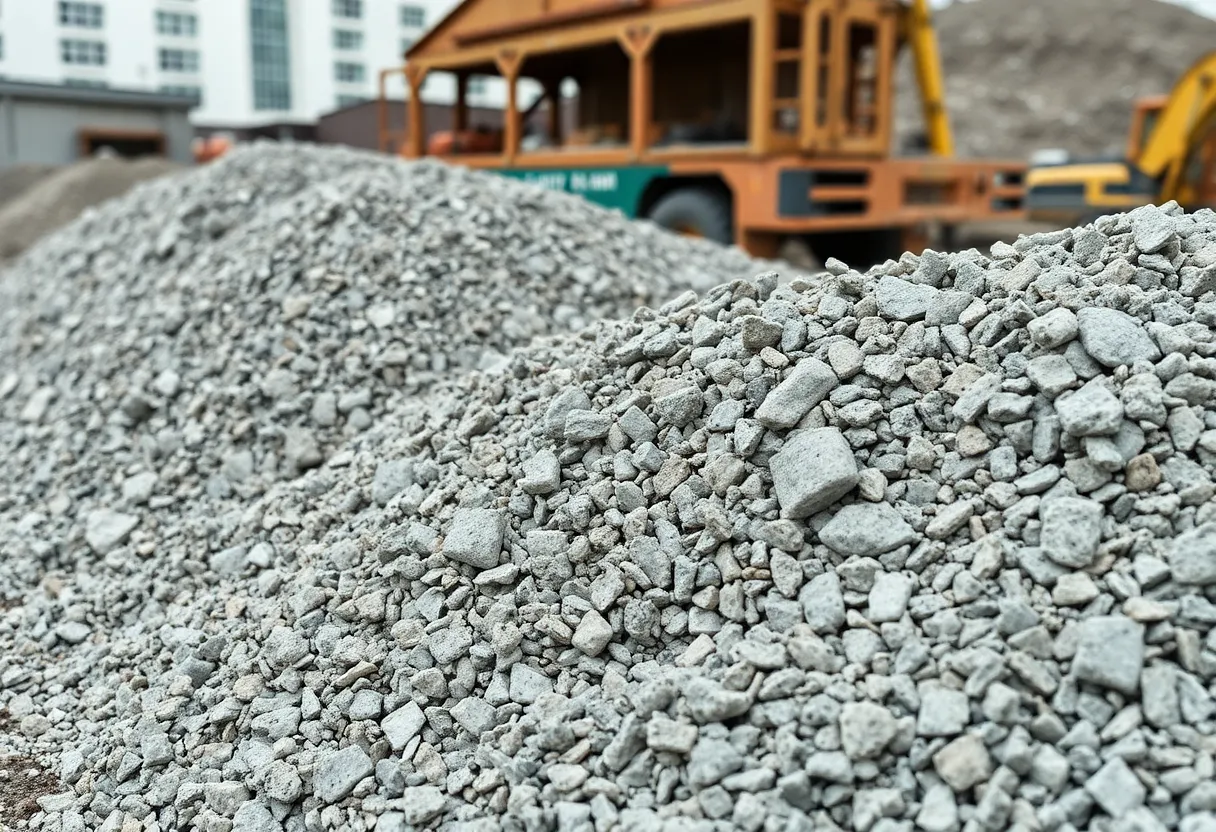
Recycled concrete aggregate isn’t simply crushed rock the way virgin aggregate is — it retains a coating of old cement paste and mortar from the original concrete it was crushed from, which behaves differently in a new concrete mix than clean, uncoated virgin aggregate does. This residual cement paste increases water absorption in the aggregate, which if not carefully compensated for in mix design, leads to higher water demand and correspondingly reduced compressive strength and durability in the resulting new concrete compared to an equivalent mix using virgin aggregate.
Engineers have developed real, workable mix design adjustments to compensate for this — using lower recycled aggregate replacement ratios rather than 100% substitution, adjusting water content and using specific admixtures to counteract the higher absorption, and in higher-performance applications, pre-treating recycled aggregate to remove or stabilize the residual cement paste coating. But these adjustments add engineering complexity and, in many cases, additional cost to the mix design and quality control process, meaning recycled aggregate concrete generally isn’t a simple drop-in substitute that a contractor can specify without additional engineering consideration, the way virgin aggregate concrete mix designs, refined over a much longer track record, typically can be.
The Quality Control Problem That Virgin Aggregate Doesn’t Have
Virgin aggregate quarried from a known geological source has relatively consistent, well-characterized material properties that quarry operators and concrete producers have often validated through decades of use at a specific site. Recycled aggregate’s source material — demolished buildings of unknown age, unknown original concrete mix design, and often mixed with contaminating material like rebar fragments, brick, wood, or other construction debris that wasn’t fully separated during demolition and processing — introduces genuine, harder-to-control variability in material composition and quality between different batches of recycled aggregate, even from the same recycling facility, depending entirely on whatever demolition waste happened to be processed that particular day.
This variability means recycled aggregate generally requires more frequent and more rigorous quality testing to ensure consistent performance in structural applications than a well-characterized virgin aggregate source does, adding real testing and quality assurance cost that concrete producers have to factor into their overall cost comparison, and that has made many producers and specifying engineers, particularly for structural (rather than lower-specification, non-structural) applications, genuinely more cautious about recycled aggregate adoption than the base sustainability case alone would suggest is warranted.
Why Transportation Economics Often Decide the Outcome
Aggregate, whether recycled or virgin, is a genuinely low-value-per-unit-weight material, meaning transportation cost represents an unusually large share of aggregate’s total delivered cost compared to most other construction materials — this single economic fact often ends up being the actual deciding factor in whether recycled aggregate is cost-competitive at a specific project location, more so than any inherent processing cost difference between recycled and virgin material production.
In regions with abundant nearby virgin aggregate quarries, transportation costs for virgin material are low, and recycled aggregate, unless sourced from a demolition site and recycling facility genuinely closer to the project than the nearest quarry, often can’t compete on delivered cost even before accounting for any additional quality control or mix design engineering expense. Recycled aggregate’s economic case becomes considerably stronger specifically in dense urban areas where nearby virgin quarries are scarce or have been developed over for other land uses, and where demolition waste is generated in large volumes close to where new construction is simultaneously happening — exactly the conditions found in cities like Amsterdam and Singapore, which have both developed genuinely more mature recycled aggregate markets than most other regions, driven substantially by this same local transportation economics logic rather than sustainability policy alone.
How Regulation Has Actually Moved the Needle
Given that pure market economics often favor virgin aggregate outside of these specific favorable urban conditions, policy intervention has been the primary lever that’s actually increased recycled aggregate adoption in places where it’s happened at meaningful scale. The Netherlands and several other European countries have implemented landfill taxes and disposal restrictions on construction and demolition waste specifically designed to make the true cost of virgin aggregate use (inclusive of the environmental and disposal cost of the demolition waste that recycling would otherwise divert) more visible in project economics, rather than allowing that cost to remain externalized and absent from a simple materials cost comparison.
Some jurisdictions have gone further with direct recycled content mandates or minimum recycled aggregate percentage requirements for certain public infrastructure projects, using government procurement policy specifically to create guaranteed demand for recycled aggregate that helps recycling facility operators justify the capital investment needed to build out processing capacity, addressing a genuine chicken-and-egg problem where recycled aggregate markets have struggled to reach the kind of processing scale and quality consistency that would make them more broadly cost-competitive without this kind of policy-driven initial demand.

Where Recycled Aggregate Has Actually Found a Real Niche
Recycled aggregate has found genuinely solid, sustainable adoption in specific lower-specification applications where its performance limitations matter less: road base and sub-base material, where compressive strength requirements are considerably lower than structural concrete and where recycled aggregate’s performance is generally well-proven and cost-competitive, has become one of the more successful and widely accepted recycled aggregate applications across many markets, including ones where structural concrete recycled aggregate adoption has remained much more limited. This pattern — recycled aggregate succeeding readily in lower-specification applications while struggling to gain equivalent traction in higher-performance structural applications — reflects a genuinely rational allocation of a material with real, documented performance trade-offs toward the use cases where those trade-offs matter least, rather than a failure of the recycling concept as a whole.
The Realistic Path Forward
Concrete recycling’s future growth is more likely to come from continued policy support (particularly disposal cost internalization and procurement mandates), improved aggregate processing and sorting technology that reduces the quality variability problem, and continued expansion in exactly the dense urban markets where transportation economics already favor it, rather than from some single technological breakthrough that eliminates the fundamental performance and quality-control gap between recycled and virgin aggregate. That’s a less dramatic, more incremental story than the technology’s theoretical sustainability case might suggest is achievable, but it’s the one actually supported by where recycled aggregate adoption has succeeded and where it’s continued to struggle across different markets and application types.