What Actually Happens During a Controlled Building Demolition Countdown

Futurion Editorial
July 9, 2026
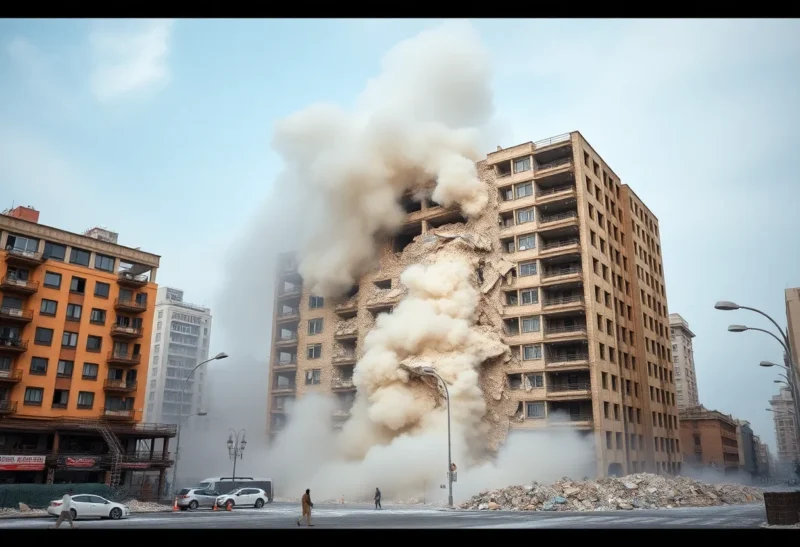
The public spectacle of a controlled building demolition — the countdown, the horn blasts, the building appearing to fold in on itself in a matter of seconds — represents the highly visible final moments of a process that actually takes weeks or months of careful engineering preparation, and the seconds-long collapse itself is the product of extraordinarily precise timing and sequencing decisions that determine whether a building falls exactly where and how engineers intended, or fails to fall as planned in ways that could be genuinely dangerous.
Why the Actual Explosive Detonation Sequence Is So Precisely Timed
Contrary to how it might appear from outside, a controlled demolition doesn’t involve a single simultaneous explosion — it involves a carefully engineered sequence of individual explosive charges detonating in a specific, pre-planned order and timing pattern, often with delays between individual charge detonations measured in mere milliseconds, precisely calculated to remove specific structural support columns in a deliberate sequence that causes the building to collapse in a predetermined direction and pattern rather than simply falling straight down or toppling unpredictably.
This sequencing typically starts by removing lower-level structural supports on one side or section of the building first, creating an intentional structural imbalance that causes that section to begin falling before charges on other parts of the building detonate, with the overall sequence engineered so that the building’s own weight and the progressive removal of structural support combine to bring the structure down in a specific direction and pattern — frequently collapsing inward toward the building’s own footprint specifically to minimize damage to surrounding structures, a critical safety consideration for demolitions happening in dense urban environments near other buildings and infrastructure.
The Months of Preparation That Precede the Actual Detonation
Before any explosive charges are placed, demolition engineers conduct extensive structural analysis of the specific building being demolished, studying its original architectural and structural engineering plans (or conducting physical structural surveys where original plans aren’t available or the building has been substantially modified since original construction) to identify precisely which structural elements are actually load-bearing and critical to the building’s structural stability, since removing the wrong combination of structural supports could cause the building to fail unpredictably rather than collapsing in the engineered pattern.
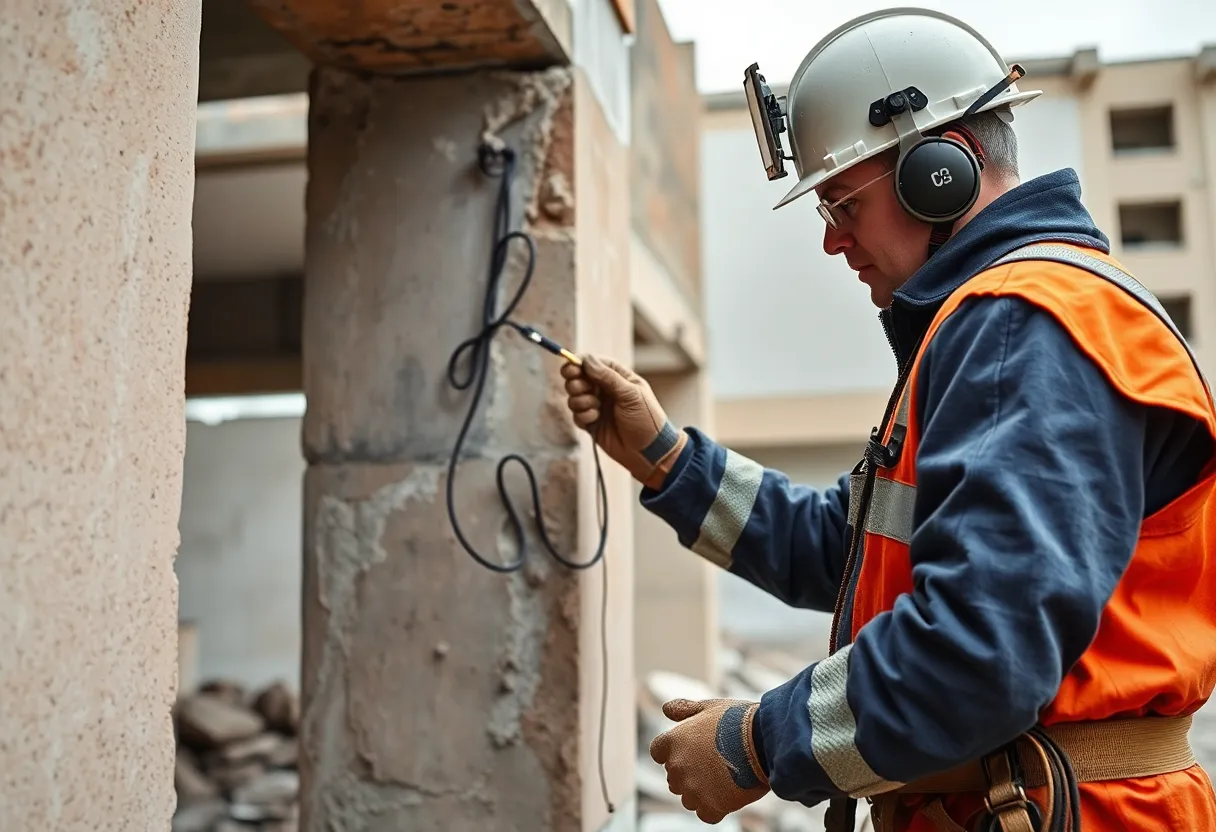
Once this structural analysis is complete, demolition crews spend substantial time in the weeks before actual detonation performing extensive preparatory structural weakening work, including removing non-structural materials and, in some cases, partially pre-weakening certain structural elements to reduce the total explosive force needed to achieve the engineered collapse sequence, which reduces the total quantity of explosives required and correspondingly reduces the debris, vibration, and air overpressure impact on surrounding areas compared to relying purely on explosive force applied to a fully intact structure.
Why the Actual Detonation Sequencing Requires Specialized Electronic Timing Systems
Given how precisely the detonation sequence needs to be timed, modern controlled demolitions rely on specialized electronic detonation systems specifically engineered to achieve extremely precise, programmable millisecond-level timing control across potentially hundreds of individual explosive charges distributed throughout a large building, a level of timing precision and reliability that older, simpler detonation methods couldn’t reliably achieve at the scale and precision modern controlled demolition engineering requires.
These electronic timing systems are extensively tested and verified in the hours before actual detonation, including circuit continuity testing to confirm every individual charge and its connection to the central timing system is properly wired and will actually detonate when triggered, since a charge that fails to detonate at its scheduled moment in the sequence could disrupt the entire engineered collapse pattern, potentially leaving structural elements partially intact in ways that create genuine safety hazards during the post-collapse site cleanup process.
What the Countdown and Horn Signals Are Actually Coordinating
The audible countdown and horn signal sequence that precedes visible public demolitions serves a genuinely critical safety coordination function beyond simple dramatic effect — it’s specifically timed to confirm that the surrounding exclusion zone has been fully cleared of people and that all safety personnel positioned around the site have confirmed clear status, with the specific horn signal pattern (commonly a distinct pattern of long and short horn blasts used across the demolition industry) serving as a standardized, unambiguous communication method understood by everyone on site regardless of their specific role or position relative to the building.
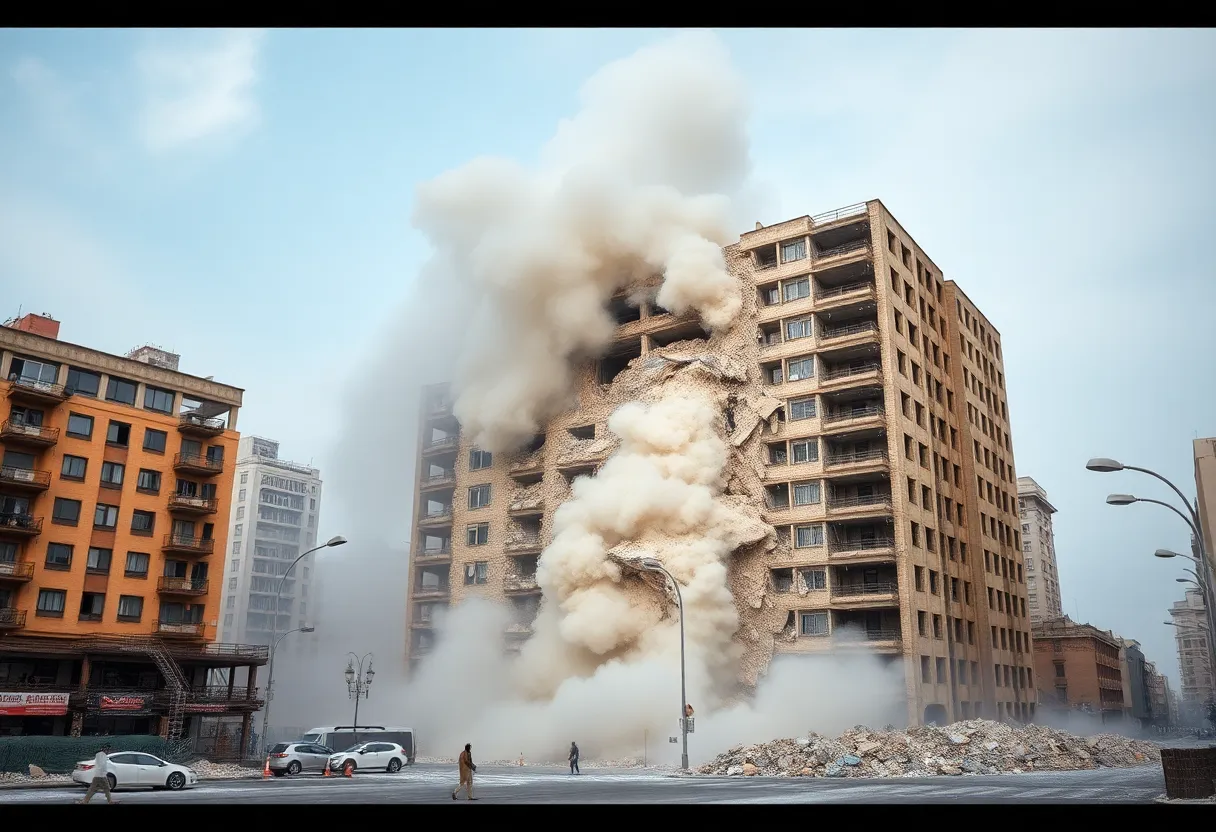
Only once this exclusion zone clearance and safety confirmation sequence is fully complete does the demolition’s lead engineer or designated safety officer actually authorize the final detonation trigger, meaning the visible countdown the public sees and hears represents the final step of an extensive site-wide safety verification process rather than simply a dramatic buildup before the collapse itself.
Why the Moments Immediately After Collapse Still Require Careful Management
The building’s actual physical collapse, typically complete within just a few seconds once detonation begins, is followed by a substantial dust and debris cloud that demolition crews specifically plan for using pre-positioned water spray systems designed to suppress dust dispersal into surrounding areas, along with continued exclusion zone enforcement for a period after the visible collapse is complete, since settling debris and potential secondary structural instability in the collapsed material can pose genuine hazards for some time after the initial collapse event has finished. This combination of extensive advance engineering preparation, precisely sequenced detonation timing, and rigorous safety coordination reflects how much genuinely technical work underlies what the public typically experiences as a brief, dramatic spectacle lasting only a few seconds.