The 2018 Tham Luang cave rescue in Thailand, where a youth soccer team was trapped for over two weeks in a flooded cave system, put a global spotlight on just how primitive most cave search-and-rescue capability actually was at the time — the eventual rescue relied overwhelmingly on human diver expertise rather than robotic systems, despite years of academic and DARPA-funded robotics research specifically targeting subterranean exploration and rescue applications. I’m a robotics researcher and volunteer cave rescue technician, and cave environments remain one of the genuinely hardest operating contexts in field robotics, for reasons that go well beyond the more obvious challenge of tight, dark spaces.
Why GPS-Dependent Navigation Simply Doesn’t Work
Nearly every robotic navigation and mapping system developed for outdoor field robotics — autonomous vehicles, drones, agricultural and construction robots — depends on GPS positioning as a foundational input for localization, either as the primary navigation signal or as ground-truth calibration for other sensor systems. Caves eliminate this entirely: GPS signals don’t penetrate rock, meaning any cave robot has to solve localization and mapping using exclusively onboard sensing, a fundamentally harder problem called SLAM (simultaneous localization and mapping) that has to build an accurate map of an unknown environment while simultaneously tracking the robot’s own position within that map, using only the robot’s own sensors and computation rather than any external positioning reference at all.
This isn’t a solved problem even in relatively favorable conditions — SLAM algorithms designed for cave and tunnel environments (heavily featured in DARPA’s Subterranean Challenge, a multi-year robotics competition specifically focused on this exact problem) have made real, measurable progress, but cave environments’ irregular, often self-similar rock geometry, combined with genuine darkness that limits camera-based sensing effectiveness, push SLAM performance considerably harder than the more structured or visually distinctive environments most SLAM research and commercial deployment has historically focused on.
Why Communication Is Arguably the Harder Problem
Even a robot that can navigate a cave autonomously faces a separate, equally serious challenge: getting information back out to rescue teams at the surface or cave entrance. Radio frequency communication, the default wireless communication method for essentially every other field robotics application, degrades extremely rapidly underground, especially through the kind of mineral-rich rock common in many cave systems, meaning a robot operating even a modest distance into a cave system can quickly lose reliable radio contact with any control or monitoring station outside.
Cave rescue robotics research has explored several workaround approaches, none of which are fully satisfying solutions: physical tethered fiber-optic communication cables provide reliable high-bandwidth data transmission but limit robot range and mobility to however far the cable can practically extend and be managed without tangling or breaking, mesh networking using a chain of relay robots or beacon nodes placed progressively deeper into a cave can extend effective communication range but requires deploying and managing multiple coordinated robotic units rather than a single robot, and acoustic or extremely low-frequency radio communication systems, while capable of somewhat better underground penetration than standard radio frequencies, generally support only very low data rates insufficient for real-time video or detailed sensor data transmission that rescue teams would actually want during an active search operation.
Why Cave Terrain Physically Defeats Most Robot Mobility Designs
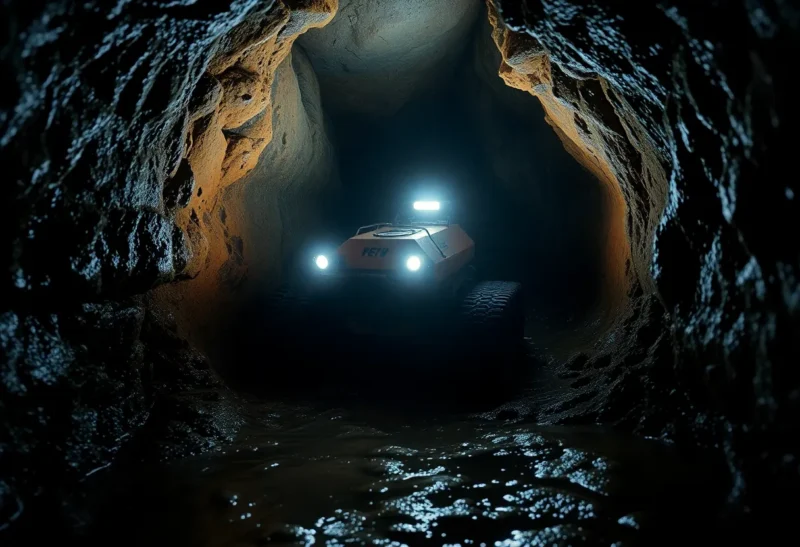
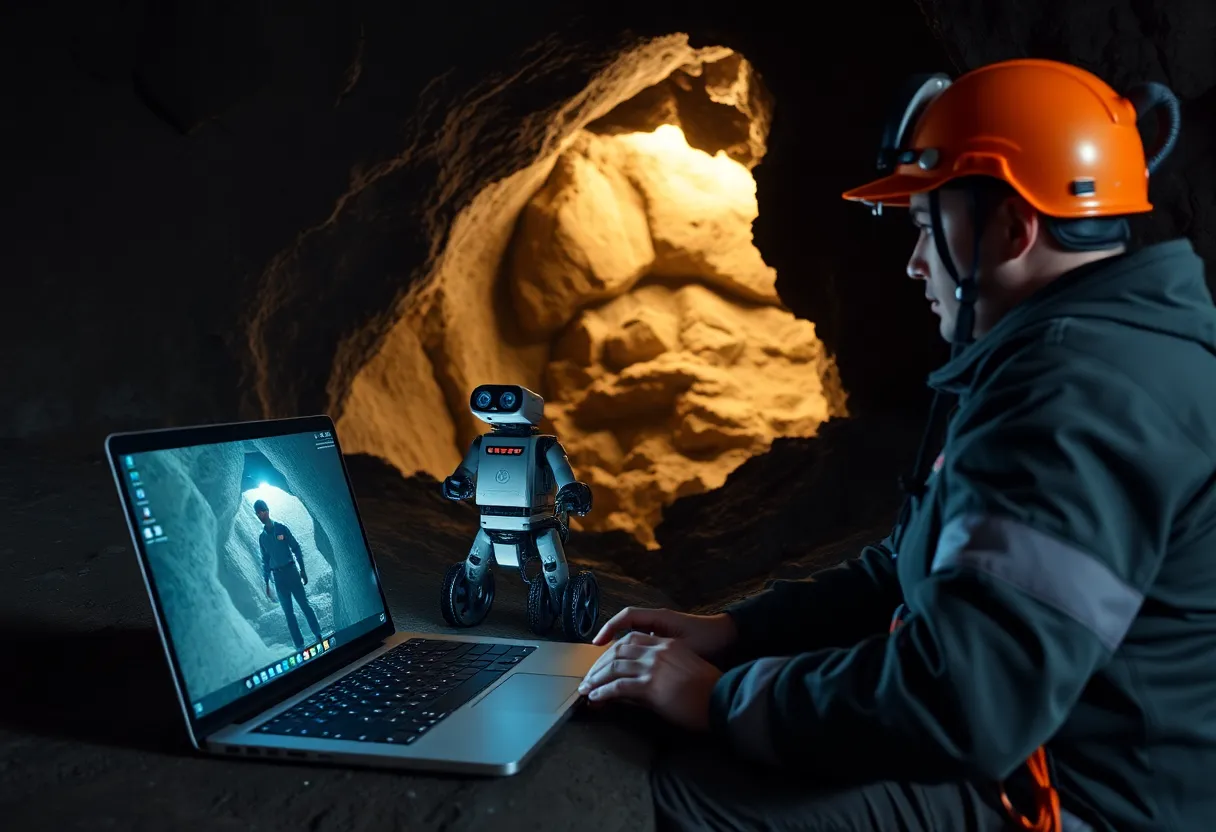
Beyond navigation and communication, cave terrain itself poses genuine mechanical mobility challenges that most robot locomotion designs simply aren’t built for. Wheeled robots struggle badly with the loose rubble, steep inclines, and irregular rock surfaces common throughout natural cave systems, and tracked robots, while more capable on uneven terrain than wheeled designs, still face real limits navigating the tight squeezes, vertical drops, and water-flooded sections that characterize many real cave rescue scenarios, including the flooded passages that made the Tham Luang rescue so specifically dangerous and difficult for human divers to navigate.
This mobility challenge has pushed cave robotics research toward more unconventional locomotion approaches — legged robots that can better navigate irregular rubble and steep terrain, snake-like or soft robotic designs that can squeeze through narrow passages a wheeled or tracked platform simply couldn’t fit through at all, and in some research programs, robots specifically designed for underwater or flooded-passage navigation using different propulsion approaches entirely. None of these approaches has emerged as a clearly superior general solution, largely because real cave systems present such a genuinely wide range of different terrain types within a single connected cave network that a robot optimized for one specific challenge (steep rubble, say) often performs poorly in a different section of the same cave system that requires a different kind of mobility (tight horizontal squeezes, or flooded vertical shafts).
What DARPA’s Subterranean Challenge Actually Demonstrated
DARPA’s Subterranean Challenge, run across multiple competition years specifically to advance robotics capability in tunnel, urban underground, and cave environments, produced genuinely useful research progress and demonstrated real capability improvements in autonomous underground navigation, mapping, and multi-robot coordination compared to where the field stood before the competition series began. Teams developed genuinely sophisticated approaches combining multiple robot types (ground robots, aerial drones capable of operating in confined underground spaces, and in some cases specialized crawling or climbing robots) working together as a coordinated team rather than relying on any single robot design to handle a full cave system’s varied terrain and challenges alone.
But the competition also honestly demonstrated how far this technology remains from being genuinely reliable enough for real emergency deployment in an actual life-or-death rescue scenario — competition environments, while genuinely challenging and realistic, were still more controlled and bounded than the kind of unpredictable, urgent, safety-critical conditions an actual cave rescue operation like Tham Luang involves, where any robotic system failure or unreliable performance carries genuinely serious consequences for missing or trapped people rather than simply a lower competition score.
Where Robotics Has Actually Started Helping
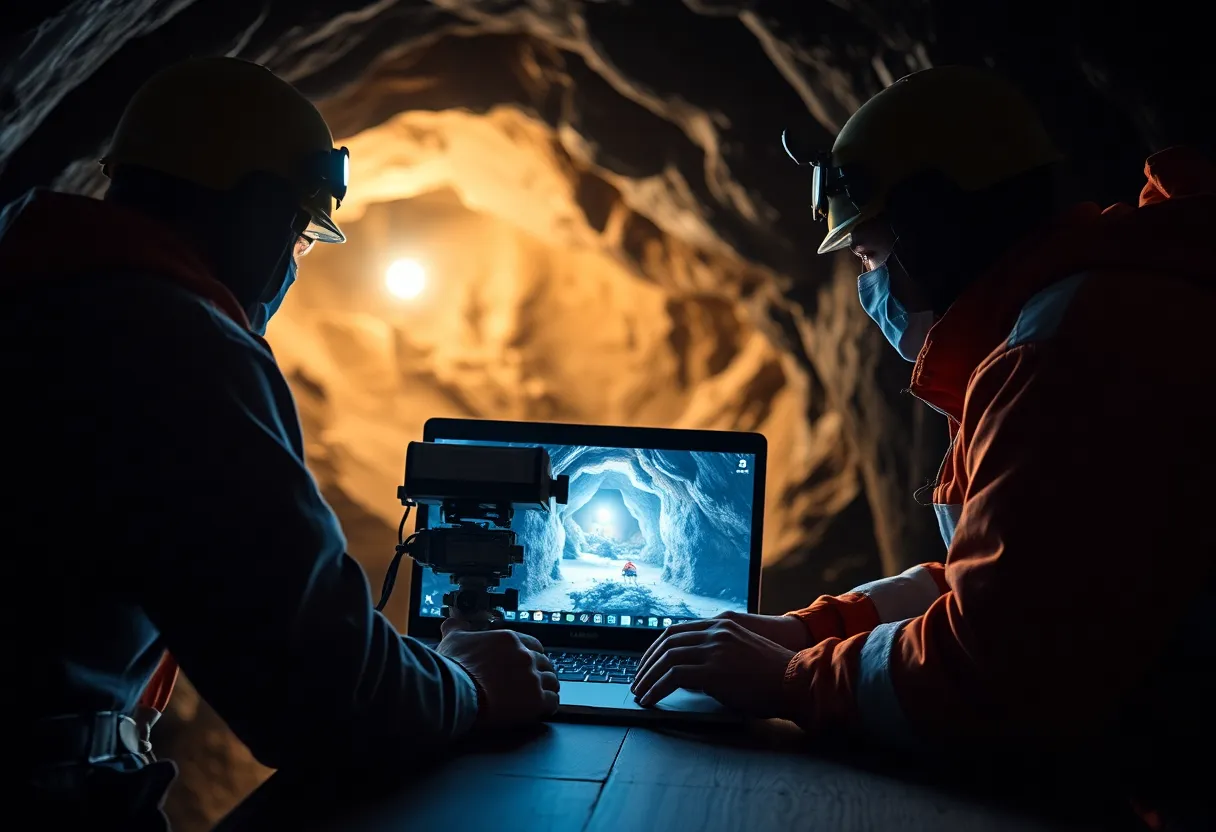
Despite these genuine, unresolved technical challenges, cave and mine rescue robotics has made real practical progress in more narrowly scoped applications rather than the kind of fully autonomous, general-purpose rescue robot that remains more aspirational. Reconnaissance robots — smaller, simpler platforms specifically designed to extend human rescuers’ sensing range into hazardous areas ahead of them, transmitting camera and sensor data back via tethered connection rather than attempting full autonomous operation — have seen genuine operational deployment in mine rescue and some cave rescue contexts, providing real, useful information about hazardous conditions ahead without requiring a rescuer to physically enter an area of uncertain safety first.
This more modest, human-robot collaborative framing — robots as sensing and reconnaissance tools that extend and inform human rescuer decision-making, rather than autonomous systems intended to fully replace human search and rescue capability — reflects a more realistic near-term trajectory for this technology than the more ambitious fully-autonomous vision that research competitions like the Subterranean Challenge have pushed toward, and represents genuine, currently deployable value even while the harder underlying navigation, communication, and mobility problems that would enable more autonomous cave rescue capability remain active, unsolved research challenges.