Why Prosthetic Limb Sensory Feedback Is Harder Than the Robotics

Futurion Editorial
July 9, 2026
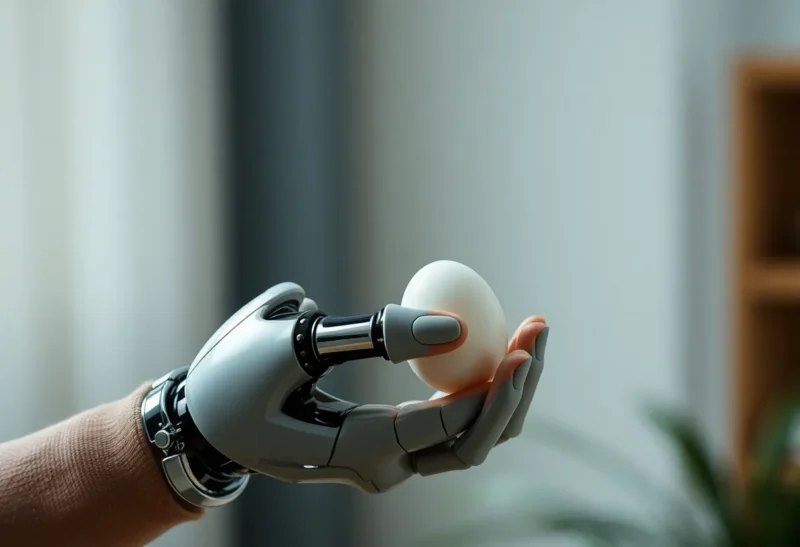
Modern prosthetic hands have become genuinely remarkable pieces of engineering: individually articulated fingers, multiple grip patterns selectable through muscle signal detection, and increasingly natural-looking movement that would have seemed like science fiction a generation ago. Ask actual long-term prosthetic users what they still find most frustrating about even the most advanced commercial devices, and the answer is rarely about the robotics or the range of motion at all — it’s the near-total absence of sensory feedback, the simple ability to feel what the hand is touching, how hard it’s gripping, or whether an object is starting to slip, all information able-bodied hands receive automatically and unconsciously, and that prosthetic users have to work around entirely through vision and learned compensation strategies instead.
Why This Turned Out to Be the Harder Half of the Problem
The prosthetics field made its most visible engineering progress first on the motor control side of the problem — sensing a user’s residual muscle signals through surface electromyography electrodes and translating those signals into commands controlling a prosthetic hand’s grip pattern and movement — because that specific engineering challenge, while genuinely difficult, maps onto problems the broader robotics and signal-processing fields already had substantial existing expertise in solving: detecting a signal, classifying it, and using that classification to drive an actuator’s movement.
Sensory feedback represents a fundamentally different, and in several respects harder, engineering problem, because it requires solving the reverse direction: taking sensor data collected at the prosthetic hand — pressure, texture, temperature, slip — and somehow delivering that information back to the user’s nervous system in a form their brain can actually interpret as meaningful touch sensation, rather than just an abstract buzz or vibration that the user has to consciously learn to interpret as a proxy for touch, rather than experiencing anything resembling the automatic, unconscious sensory integration that intact biological touch provides.
The Interface Problem That Sits at the Core of the Difficulty
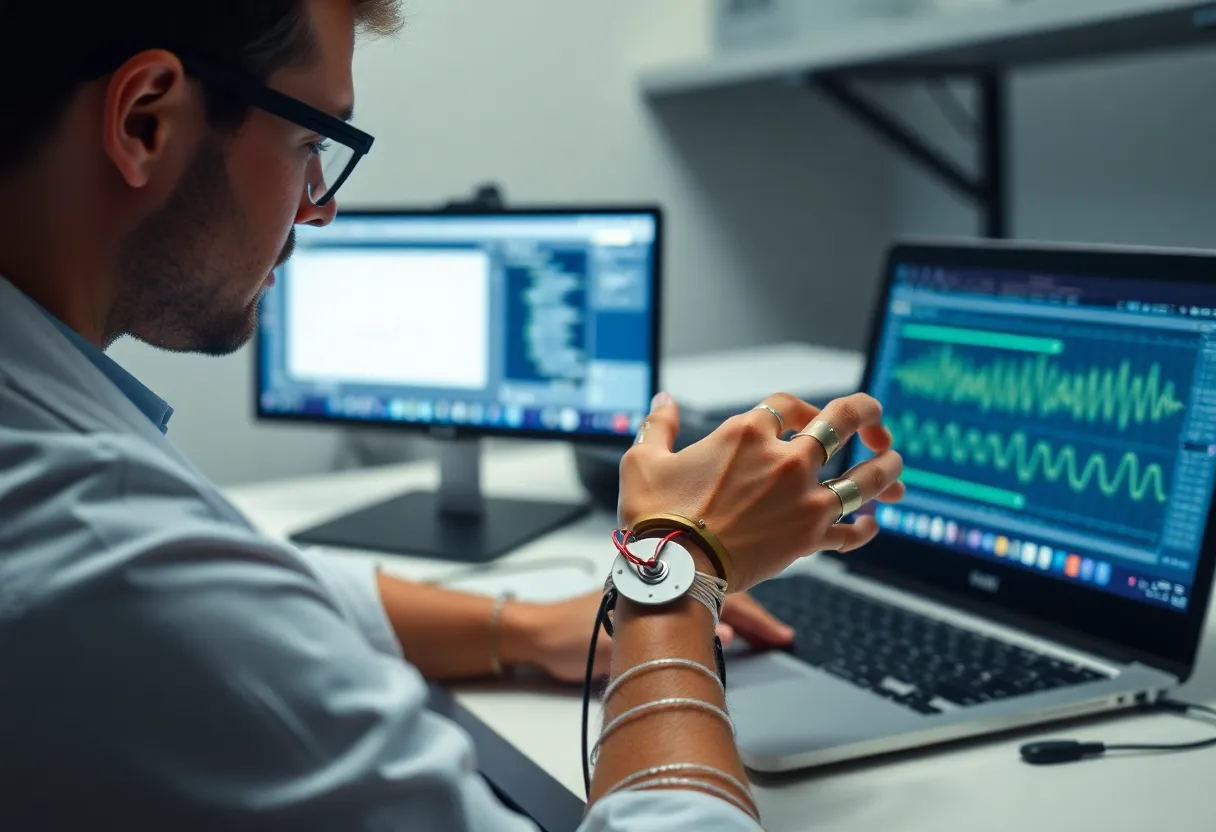
The central technical obstacle is what researchers in the field generally call the neural interface problem: getting information into the nervous system in a way that the brain processes as genuine sensory input requires either directly stimulating peripheral nerves or the brain itself with a level of precision and biological compatibility that remains genuinely at the frontier of current neuroscience and biomedical engineering, or relying on indirect, substitute feedback channels — vibration motors, small electrical stimulation on unrelated areas of remaining skin, or pressure feedback applied to intact areas of the residual limb — that can convey some proxy information but require the user to consciously learn and interpret an artificial signal-to-sensation mapping that doesn’t correspond to how their nervous system naturally processes touch.
Research into direct peripheral nerve interfaces — surgically implanted electrodes that interface directly with nerves in a person’s residual limb, designed to deliver more naturalistic sensory signals rather than a substitute vibration or pressure cue — has produced some genuinely compelling published results, including several well-documented research participants reporting sensations that felt recognizably like natural touch, pressure, or even, in some specific published case studies, something resembling the sensation of an individual finger being touched, rather than the more generic buzzing or tingling that non-invasive feedback methods typically produce. This research remains substantially confined to academic and clinical research settings rather than commercially available prosthetic products, largely because implanted neural interfaces carry genuine surgical risk, face significant long-term biocompatibility and signal-stability challenges as the body’s tissue response to a permanently implanted device changes over months and years, and require substantially more complex, expensive supporting hardware than a purely external prosthetic device needs.
Why Even “Simple” Sensory Substitution Feedback Is Genuinely Useful, Despite Being Imperfect
It’s worth being fair to the non-invasive, indirect feedback approaches that are more commonly found in current commercial and near-commercial prosthetic products, because despite not delivering anything resembling truly naturalistic touch sensation, they’ve demonstrated real, measurable functional benefits in published research and user studies. Vibrotactile feedback systems, which use small vibration motors placed against intact skin on the residual limb or elsewhere on the body to convey information like grip force or object contact through variable vibration intensity or pattern, have been shown in multiple studies to measurably improve grip control and reduce the visual attention a user has to devote to monitoring their prosthetic hand during object manipulation tasks, even though users have to consciously learn to interpret the vibration patterns as a proxy for actual touch rather than experiencing them as intuitive, automatic sensation the way biological touch works.
This distinction between “provides genuinely useful functional information” and “feels like natural sensation” turns out to matter enormously for how the field evaluates and prioritizes different feedback approaches, since a feedback system doesn’t necessarily need to feel naturalistic to meaningfully improve a user’s actual functional performance and reduce the cognitive burden of relying purely on vision to monitor prosthetic hand behavior, which is the more immediately achievable and, for many practical daily tasks, arguably more important goal than pursuing fully naturalistic sensation as an end in itself.

Why Commercial Adoption Has Lagged Behind Research Progress
Despite genuine, published research progress on both invasive and non-invasive sensory feedback approaches, the large majority of commercially available prosthetic hands sold today still lack any meaningful sensory feedback capability at all, relying purely on the motor control side of the technology while leaving sensory feedback as, at best, an optional premium feature on a small number of higher-end commercial devices. This gap between research demonstration and broad commercial deployment reflects a combination of genuine remaining technical challenges — particularly around long-term reliability and durability of feedback sensors and actuators embedded in a device that has to withstand years of daily physical use — and the difficult economics of prosthetic device development generally, where the total addressable market for any given prosthetic technology is considerably smaller than most consumer electronics categories, making the substantial R&D investment required to bring sensory feedback technology to reliable commercial maturity a harder economic case to justify relative to continuing to refine motor control capability, which most users and clinicians still identify as their most immediate practical priority when evaluating and selecting a device.
Where Genuine Progress Is Most Likely to Show Up Next
Researchers and clinicians in this field generally expect continued, incremental improvement to come from a combination of directions rather than a single breakthrough resolving the sensory feedback gap all at once: further refinement and cost reduction of non-invasive vibrotactile and pressure-based feedback systems that can be integrated into commercial devices at genuinely practical cost, continued clinical research advancing peripheral nerve interface technology toward eventual broader clinical availability as surgical technique and implant durability improve, and, further out, potential convergence with the broader and separately advancing field of brain-computer interface research, which is pursuing some genuinely overlapping neural interface technology for entirely different applications but faces many of the same fundamental biocompatibility and signal-stability engineering challenges that prosthetic sensory feedback research has been working through for years already.