What Automated Warehouse Robots Still Can’t Do Without Human Backup

Victor Lang
July 9, 2026
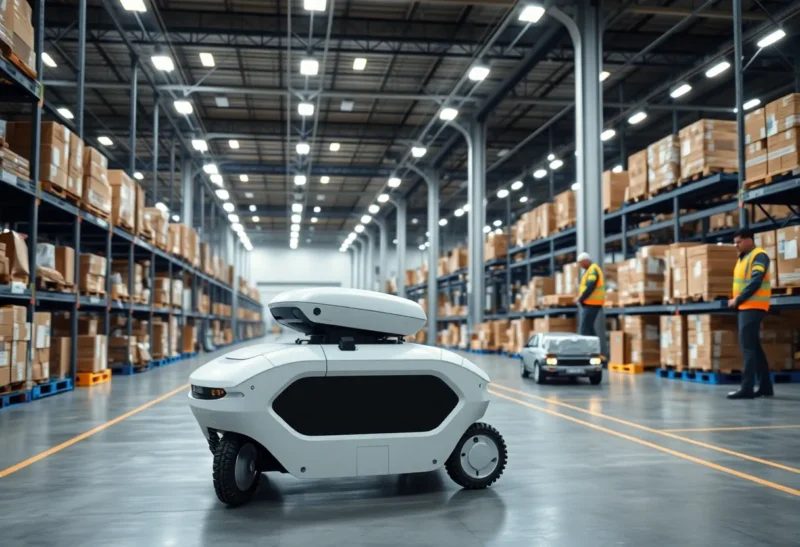
Warehouse automation has advanced enough that it’s genuinely tempting to assume the “lights-out warehouse” — a fully automated facility running with no human workers on the floor — is close to a solved engineering problem, just waiting for costs to come down further. That assumption doesn’t hold up against what’s actually deployed in commercial warehouses today. Even the most heavily automated large-scale fulfillment centers, including Amazon’s most advanced robotics-equipped sites, still rely on substantial human labor for a specific, recurring set of tasks that current robotics and computer vision genuinely cannot handle reliably on their own — and understanding exactly where that line sits explains both how far warehouse robotics has actually come and why “fully autonomous warehouse” remains further off than casual coverage sometimes suggests.
What Robots Have Actually Solved Well
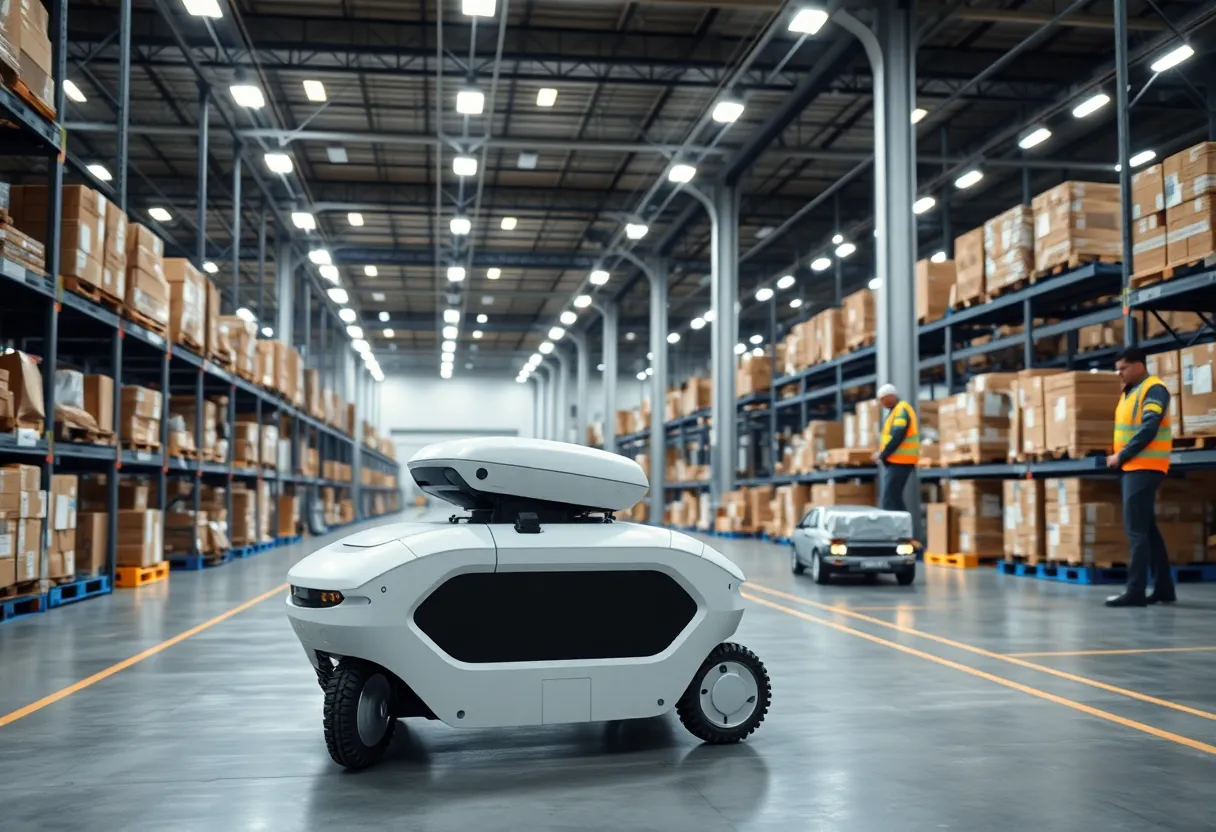
The genuine, well-established robotics success story in warehousing is movement and transport of goods within a facility — autonomous mobile robots (AMRs) that navigate warehouse floors carrying shelving units or pallets, and automated storage and retrieval systems (AS/RS) that move inventory vertically and horizontally within structured racking. These systems work reliably because the underlying problem, while not trivial, is a genuinely well-bounded one: navigate a mapped space, avoid obstacles, and move a container from point A to point B, using a combination of sensor fusion (lidar, cameras, sometimes floor markers) and route planning that robotics research solved to a commercially viable degree over roughly the past fifteen years.
This is why the transport and storage layer of warehouse operations has been automated far more extensively and successfully than the layer most people actually picture when they imagine “robot warehouse workers”: the physical handling of individual, varied items.
Item-Level Picking Is Where the Real Difficulty Lives
Picking a specific individual item out of a bin and placing it correctly — whether into a shipping box, a different storage container, or onto a conveyor — sounds simple because humans do it almost without conscious effort, but it’s genuinely one of the harder unsolved problems in applied robotics, for reasons that become clear once you consider the actual variability involved. A general fulfillment warehouse handles an enormous range of item shapes, sizes, weights, packaging materials, and orientations, often stored in bins where items overlap, sit at odd angles, or partially obscure each other — nothing like the clean, single-item, consistent orientation setup that makes industrial robotic picking work reliably in, say, an automotive assembly line handling one known part repeatedly.
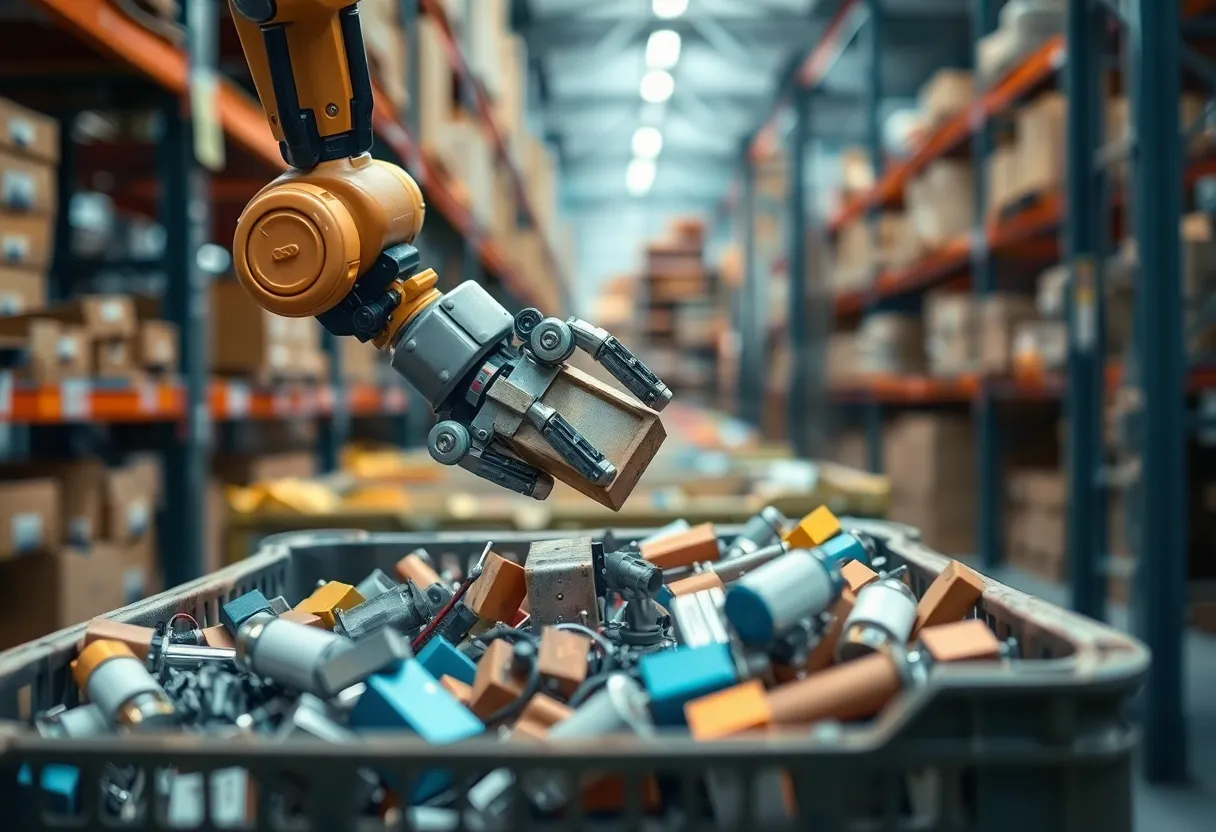
Robotic picking systems using computer vision and machine-learning-trained grasping models have made real progress on this problem over the past decade — companies like Amazon (through its Robotics division), Berkshire Grey, and various robotics startups have deployed picking robots capable of handling a genuinely impressive range of item types. But published success rates for automated picking across a truly general, mixed inventory still fall meaningfully short of what’s needed to eliminate human backup entirely, particularly for irregularly shaped items, soft or deformable packaging, items with unpredictable weight distribution, or items that are fragile enough that a slightly imperfect grasp risks damage rather than just a failed pick attempt.
Exception Handling Is the Category That Keeps Humans in the Loop
Even where automated picking succeeds most of the time, “most of the time” isn’t good enough for a warehouse that needs every order fulfilled correctly, which means every automated picking station effectively needs a human fallback for the failure cases — and in practice, those failure cases occur often enough that human “pick assist” or exception-handling roles remain a standard, planned part of automated fulfillment center staffing rather than a temporary gap being phased out. When a robotic picking arm fails to grasp an item, misidentifies it, or encounters a bin configuration its vision system can’t confidently resolve, the item typically gets flagged for human intervention rather than the system attempting an increasingly uncertain automated retry.
This exception-handling need scales with inventory diversity — a fulfillment center handling a narrow, consistent product range (like a single retailer’s own private-label goods packaged consistently) can push automation further than a general marketplace fulfillment center handling literally millions of different third-party seller items with no packaging standardization at all, which is a major reason why the most heavily automated warehouses tend to be ones with more inventory control, not necessarily the ones with the most advanced robotics investment.
Damage, Fragility, and Liability Add a Layer Beyond Pure Technical Capability
Even where a robotic system is technically capable of picking a given item most of the time, the cost asymmetry between a successful pick and a damaged, mishandled item pushes many warehouse operators toward keeping humans in the loop for higher-value or fragile inventory categories specifically, independent of raw picking success rate statistics. A failed automated pick on a low-cost, non-fragile item is a minor efficiency loss; a failed pick that damages an expensive electronics item or breaks fragile packaging is a real cost that can outweigh the labor savings from automating that specific category in the first place, which is why picking automation deployment tends to be selective by product category rather than applied uniformly across an entire warehouse’s full inventory.
Why the “Lights-Out Warehouse” Remains a Longer-Term Target
Industry roadmaps from major logistics automation vendors and large retailers generally describe fully unstaffed, “lights-out” fulfillment centers as a longer-term aspiration rather than a near-term deployment plan, and the item-level picking and exception-handling gap described above is the primary reason cited. Continued improvement in robotic grasping (including advances in tactile sensing and machine-learning-based grasp planning trained on increasingly large and diverse item datasets) is narrowing this gap gradually, and some highly specialized, inventory-controlled facilities have pushed automation further than general fulfillment centers can currently manage.
But for the general case — a warehouse handling a genuinely broad, unpredictable mix of item types packaged by thousands of different manufacturers with no coordination on packaging standards — human labor for picking, exception handling, and quality verification remains a structurally necessary part of the operation, not a legacy holdover waiting for the next robotics generation to eliminate entirely. The realistic trajectory most warehouse automation researchers describe is a gradually shrinking, more specialized human role focused increasingly on exception handling and oversight rather than routine picking, rather than a near-term transition to a fully unstaffed facility.