How Museum Conservators Use Multispectral Imaging to Find Hidden Paintings

Futurion Editorial
July 9, 2026
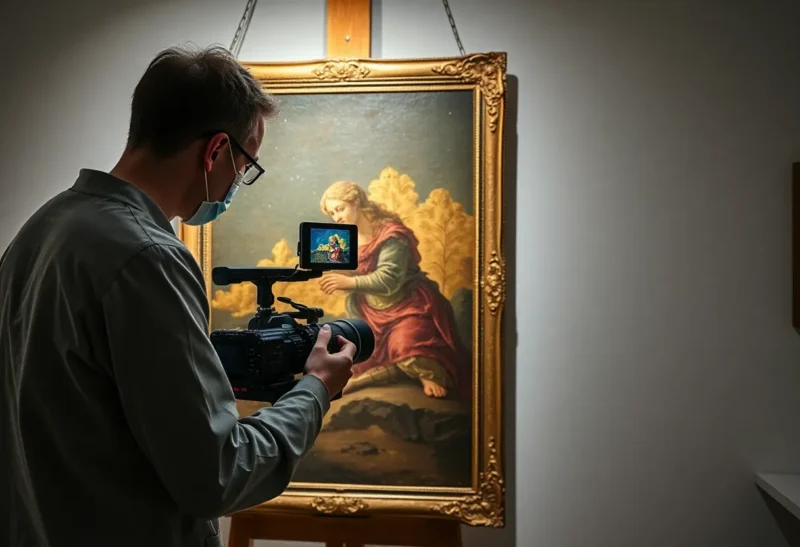
Old master paintings frequently hide more than what’s visible on the surface. Artists reused canvases to save money, painted over earlier compositions they abandoned, or made significant changes to a composition partway through work, leaving earlier versions buried under layers of paint that have been invisible to ordinary viewing for centuries. Museum conservation science has developed an increasingly sophisticated set of imaging techniques specifically to see through those top layers without touching or damaging the painting at all, and the underlying physics and technology involved is considerably more interesting than simply “taking an X-ray,” which is the part of this process most people have actually heard of.
Why Different Imaging Techniques Reveal Different Things
The core insight behind museum multispectral imaging is that different materials — different pigments, different types of paint, the ground layer beneath paint, and preparatory sketching material like charcoal or graphite — interact differently with different wavelengths of light and radiation, some of which fall well outside the narrow band of visible light human eyes and ordinary cameras can perceive. Conservation scientists exploit these different material-specific interactions by imaging a painting across many different wavelength bands, then comparing what shows up differently across those bands to identify features that aren’t visible under ordinary lighting at all.
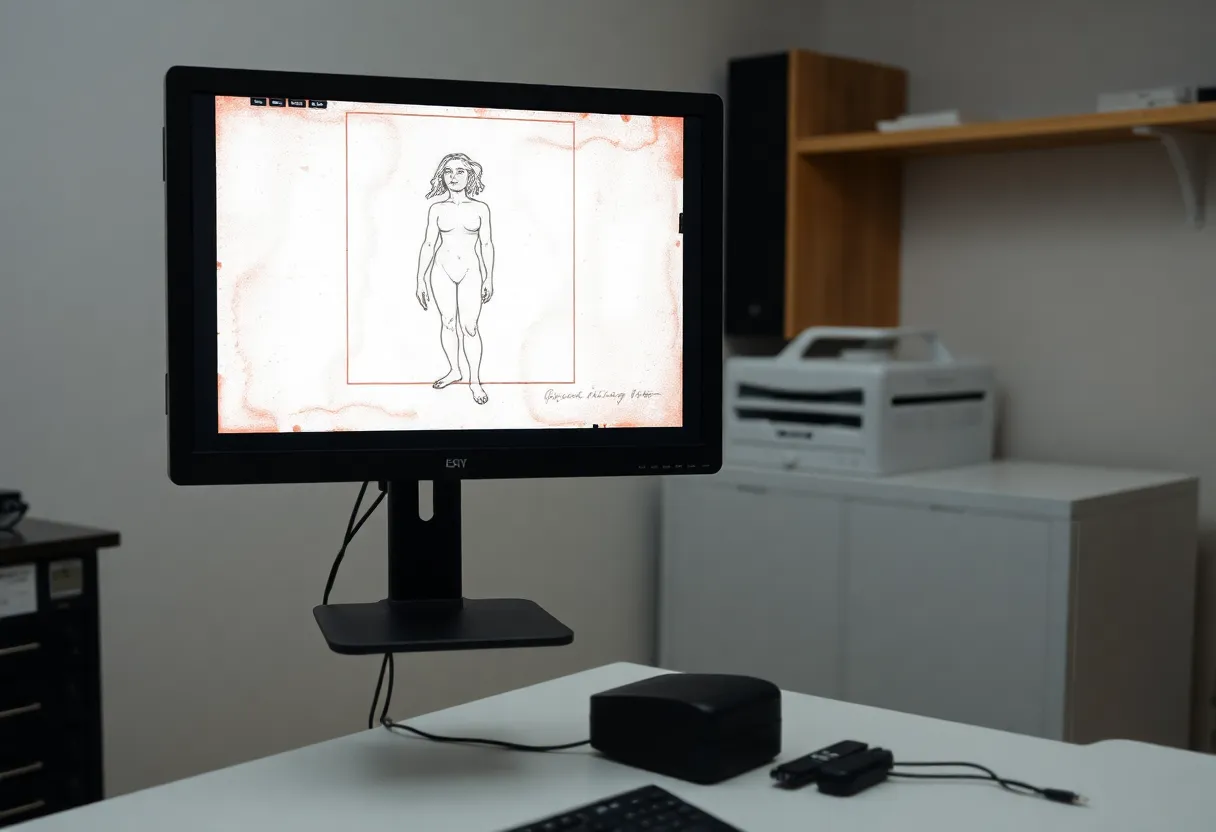
Infrared reflectography, one of the most established of these techniques, exploits the fact that many pigments used in a painting’s visible top layer become significantly more transparent to infrared light than they are to visible light, while certain preparatory drawing materials, particularly carbon-based materials like charcoal, absorb infrared light strongly. This combination means an infrared camera photographing a painting can often see straight through the visible paint layer to reveal an artist’s original underdrawing — the preparatory sketch made before paint was ever applied — showing compositional changes, corrections, and sometimes entirely different original ideas for a composition that the artist ultimately painted over.
X-Rays Solve a Different Problem Than Infrared
X-ray radiography, the more familiar imaging technique to most people because of its widespread medical use, works on an entirely different physical principle and reveals different information than infrared imaging does. X-rays pass through a painting and are absorbed to different degrees depending primarily on the atomic density of the materials present, meaning heavier, denser pigments — lead white being a particularly common historical example, since lead is a dense element that absorbs X-rays strongly — show up prominently in an X-radiograph regardless of which paint layer they’re in, while lighter, less dense materials appear far more faintly or not at all.
This means X-radiography is particularly good at revealing an entirely different, earlier composition that an artist painted over completely with new paint, especially when the underlying hidden composition used dense pigments like lead white, since those dense buried pigments will show up clearly in an X-ray image regardless of what’s been painted on top. This is the specific technique responsible for some of the more dramatic hidden-painting discoveries that have made news over the years — cases where X-ray imaging revealed an entirely different portrait or composition existing underneath a painting’s final visible surface, sometimes even by the same artist reusing a canvas, and sometimes revealing an entirely different painting by a different, unrelated artist that had simply been painted over at some point in a canvas’s history.
Why Conservators Need Multiple Techniques Rather Than Just One
No single imaging technique reveals everything a conservator might want to know, which is precisely why serious painting analysis in major museum conservation labs and university art conservation programs typically involves layering several different, complementary imaging techniques together, each sensitive to different aspects of a painting’s hidden history. Ultraviolet fluorescence imaging, which captures the visible light that certain materials emit when excited by ultraviolet radiation, is particularly useful for identifying varnish layers and mapping prior restoration work, since old and new varnish, along with different restoration materials applied at different points in a painting’s conservation history, often fluoresce distinctly differently under UV light even when they look essentially identical to the naked eye under normal lighting.
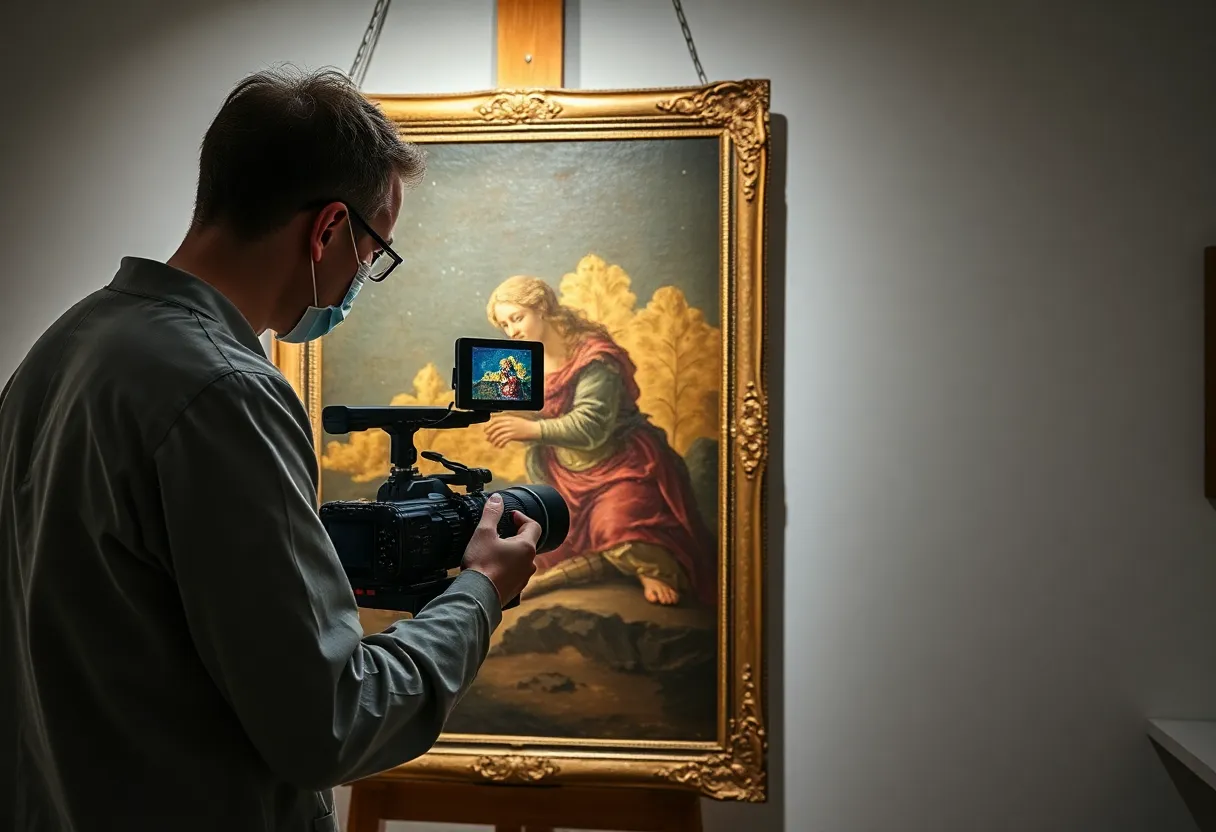
More recent conservation science has moved toward genuinely comprehensive multispectral and hyperspectral imaging systems that capture a painting across dozens or even hundreds of distinct, narrow wavelength bands spanning ultraviolet through visible through infrared in a single systematic imaging session, rather than relying on a handful of separate techniques run independently. This more comprehensive approach, increasingly used at major conservation science departments including those at institutions like the National Gallery in London and the Metropolitan Museum of Art’s conservation labs, generates enormously richer datasets that can then be analyzed computationally to identify subtle material and compositional features that a more limited, single-technique imaging session might miss entirely.
Where Computational Analysis Has Genuinely Changed the Field
The shift from analyzing a handful of separate images by eye to computationally processing large multispectral and hyperspectral datasets has meaningfully changed what conservation scientists can actually extract from this imaging work. Image processing techniques borrowed from other scientific imaging fields, including various forms of pattern recognition and, increasingly, machine learning models trained to identify specific material signatures across the full multispectral dataset, have allowed researchers to detect and separate overlapping hidden features that would be genuinely difficult to disentangle by simply looking at individual wavelength-band images one at a time.
Some of the more sophisticated recent research projects have used this kind of computational multispectral analysis to reconstruct hidden underlying compositions in considerably more visual detail and confidence than earlier, more manual interpretation of raw infrared or X-ray images alone could achieve, in some documented cases producing genuinely legible reconstructed images of an entirely separate hidden painting, complete with recognizable figures and color information inferred from the specific combination of spectral signatures detected, rather than just a rough outline or vague shape that older analysis methods typically produced.
Why This Matters Beyond Simple Curiosity
Beyond the genuine public fascination with discovering a “hidden painting” story, this imaging work serves real, practical conservation and art historical purposes that go well beyond novelty. Understanding a painting’s full compositional history, including abandoned earlier ideas and prior restoration interventions, helps conservators make better-informed decisions about how to approach current restoration or preservation work, since knowing exactly what materials and layers actually exist beneath a painting’s visible surface is directly relevant to choosing safe, appropriate conservation treatments. It also provides art historians with genuine primary evidence about an artist’s working process and decision-making that no amount of study of the painting’s final visible surface alone could ever reveal, turning what looks to a museum visitor like a single, finished, static object into something closer to a layered historical record of an artist’s actual creative process, made visible again after centuries hidden beneath the surface everyone assumed was the whole story.