Why Furniture Flat-Pack Design Optimizes for Shipping, Not Assembly

Maya Torres
July 9, 2026
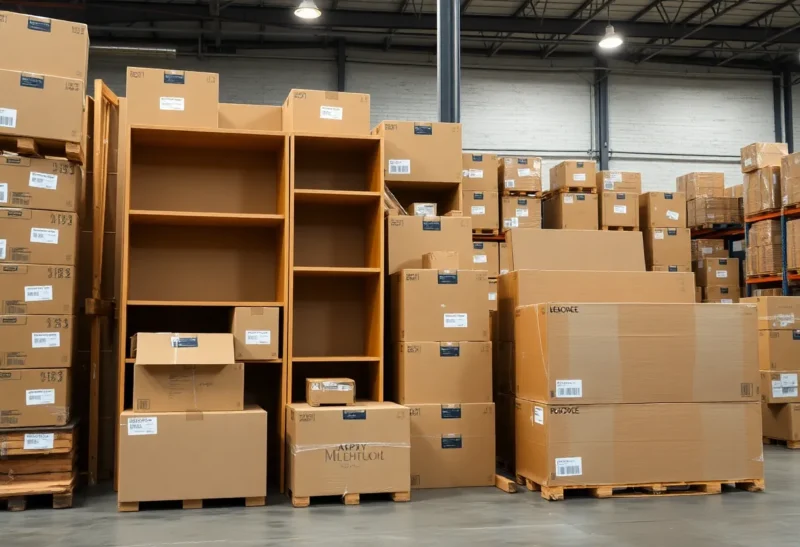
The frustration of decoding a flat-pack furniture instruction sheet, sorting dozens of nearly identical fasteners, and discovering a design choice that seems to make assembly harder than it needed to be is a nearly universal modern experience. That frustration makes more sense once you understand what flat-pack furniture is actually engineered to optimize for, and it generally isn’t assembly ease at all — it’s shipping efficiency, and the specific design compromises that make assembly occasionally annoying are frequently the direct, deliberate tradeoff for achieving dramatically better packing density and shipping economics than fully assembled furniture could ever achieve.
Why Shipping Costs Dominate Flat-Pack Furniture’s Economics
Furniture, especially larger case goods like bookshelves, wardrobes, and dressers, is dimensionally inefficient to ship in assembled form because assembled furniture’s three-dimensional shape wastes an enormous amount of shipping container and truck volume relative to its actual material weight — a fully assembled bookshelf is mostly empty air once you account for the shelving gaps, meaning a shipping container full of assembled furniture is transporting a huge amount of empty space alongside the actual product.
Flat-pack design solves this by disassembling that three-dimensional shape into flat, stackable panels that pack together with dramatically less wasted volume — IKEA, the company most associated with popularizing flat-pack design at scale, has specifically documented internal research showing that flat-pack redesigns of individual products have sometimes reduced shipping volume by well over half compared to earlier, less optimized flat-pack designs for the same items, translating directly into proportionally fewer shipping containers and trucks needed to move the same number of units, which is an enormous cost and logistics efficiency gain that dwarfs the value most manufacturers place on marginally easier home assembly.
How This Priority Shapes Actual Component Design Choices
Once shipping volume optimization becomes the dominant design constraint, it directly explains several specific flat-pack design patterns that consumers often experience as assembly annoyances rather than recognizing as deliberate packing-density tradeoffs. Cam lock fasteners (the distinctive plastic cam and dowel system common in flat-pack furniture) were specifically developed and widely adopted because they allow strong, adequately rigid furniture joints using flat, thin hardware components that pack efficiently alongside flat panels, compared to alternative joinery methods that might be structurally superior but would require bulkier, less packing-efficient hardware or pre-assembled joint sections that increase shipping volume.
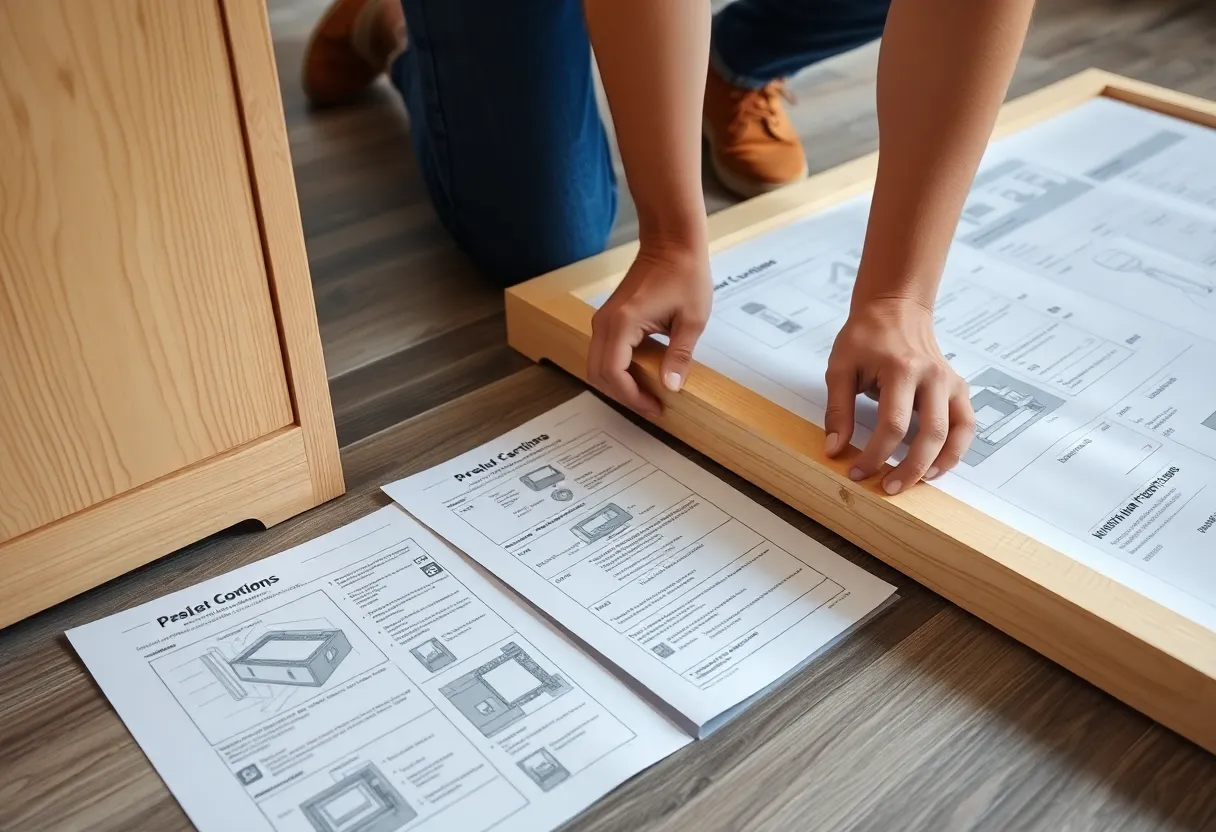
Similarly, the specific panel sizing and cutting patterns used in flat-pack furniture design are frequently optimized not purely around the furniture’s final functional dimensions, but around how efficiently those panel sizes nest together within standard shipping box dimensions and standard sheet material sizes during manufacturing, sometimes producing furniture proportions or component counts that wouldn’t be the most assembly-intuitive choice if assembly ease were the primary design driver, but that meaningfully improve packing efficiency and material yield from standard manufacturing sheet stock.
Why Instruction Design Reflects Manufacturing Scale, Not Just User Experience
Flat-pack furniture’s famously minimal, often wordless pictogram-based instructions aren’t simply a design aesthetic choice — they reflect a genuine practical constraint around manufacturing and distributing furniture across dozens of countries and languages at massive scale, where producing and printing separate detailed text instructions for every language market a product ships to would add real cost and logistics complexity compared to a single universal pictogram instruction sheet that works identically regardless of the customer’s language.
This international scalability requirement is a large part of why flat-pack instruction design has converged on the minimal pictogram format across essentially the entire industry, even though user experience researchers have documented that pictogram-only instructions, while genuinely more universally accessible across languages, produce measurably higher assembly error and frustration rates for complex assemblies compared to instructions that combine pictograms with even minimal supplementary text guidance — a tradeoff furniture manufacturers have generally accepted in exchange for the manufacturing and localization cost savings pictogram-only instructions provide at global scale.
Material Selection Reflects the Same Priority Structure
Flat-pack furniture’s common reliance on engineered wood products like particleboard and MDF (medium-density fiberboard) rather than solid wood construction is often criticized as pure cost-cutting on material quality, but it also directly serves the shipping and packing optimization goal, since engineered wood panels can be manufactured to precise, completely flat, uniform thickness specifications that pack more predictably and efficiently than solid wood, which has more natural dimensional variation and is generally heavier per unit of structural rigidity than engineered alternatives.
Reduced weight specifically matters enormously for flat-pack shipping economics beyond just volume, since shipping costs scale with both volume and weight, and lighter engineered wood panels reduce total shipment weight meaningfully compared to equivalent solid wood furniture, compounding the packing density benefits with a genuine weight-based shipping cost advantage that reinforces engineered wood’s appeal for flat-pack applications specifically, independent of whatever cost savings also come from engineered wood generally being a cheaper raw material than solid hardwood.
Why Understanding This Tradeoff Changes How to Evaluate Flat-Pack Furniture
Recognizing that flat-pack furniture design is fundamentally optimized around shipping and manufacturing economics, with assembly experience treated as a real but clearly secondary design consideration, helps explain design choices that otherwise seem like unnecessary assembly friction or corner-cutting. It also helps explain why furniture designed with less emphasis on flat-pack shipping efficiency — pieces built and sold through models that don’t depend as heavily on minimizing shipping volume across a global retail network, including much bespoke and higher-end furniture — often uses meaningfully different joinery, material, and instruction approaches, not necessarily because those approaches are objectively superior in every respect, but because they’re optimizing for a genuinely different set of priorities than the shipping-volume-dominated economics that shape mass-market flat-pack furniture design specifically.