How Tidal Energy Turbines Are Finally Solving Their Biofouling Problem

Callan Reeve
July 9, 2026
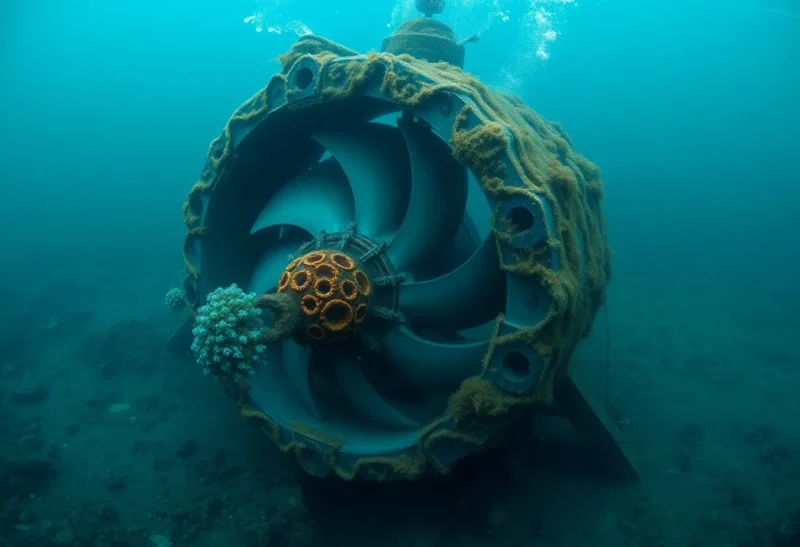
Tidal energy has always had a genuinely compelling theoretical pitch: water is roughly 800 times denser than air, meaning a tidal turbine can generate meaningful power from currents moving far slower than the wind speeds a comparable wind turbine would need, and tidal currents are predictable on a schedule driven by lunar cycles rather than the variable, weather-dependent generation profile wind and solar both face. What’s kept commercial tidal energy from scaling anywhere near wind or solar’s deployment levels has been a persistent, unglamorous engineering problem that gets far less attention than the more exciting core turbine physics: biofouling, the accumulation of barnacles, mussels, algae, and other marine organisms on submerged structures, which has been a genuinely serious operational headache for tidal infrastructure specifically. I’m a marine and offshore engineer who’s spent a decade designing subsea infrastructure, and biofouling’s slow, unglamorous resolution is a useful reminder that scaling a promising energy technology often depends more on solving boring maintenance problems than on any single dramatic breakthrough.
Why Biofouling Hits Tidal Turbines Especially Hard
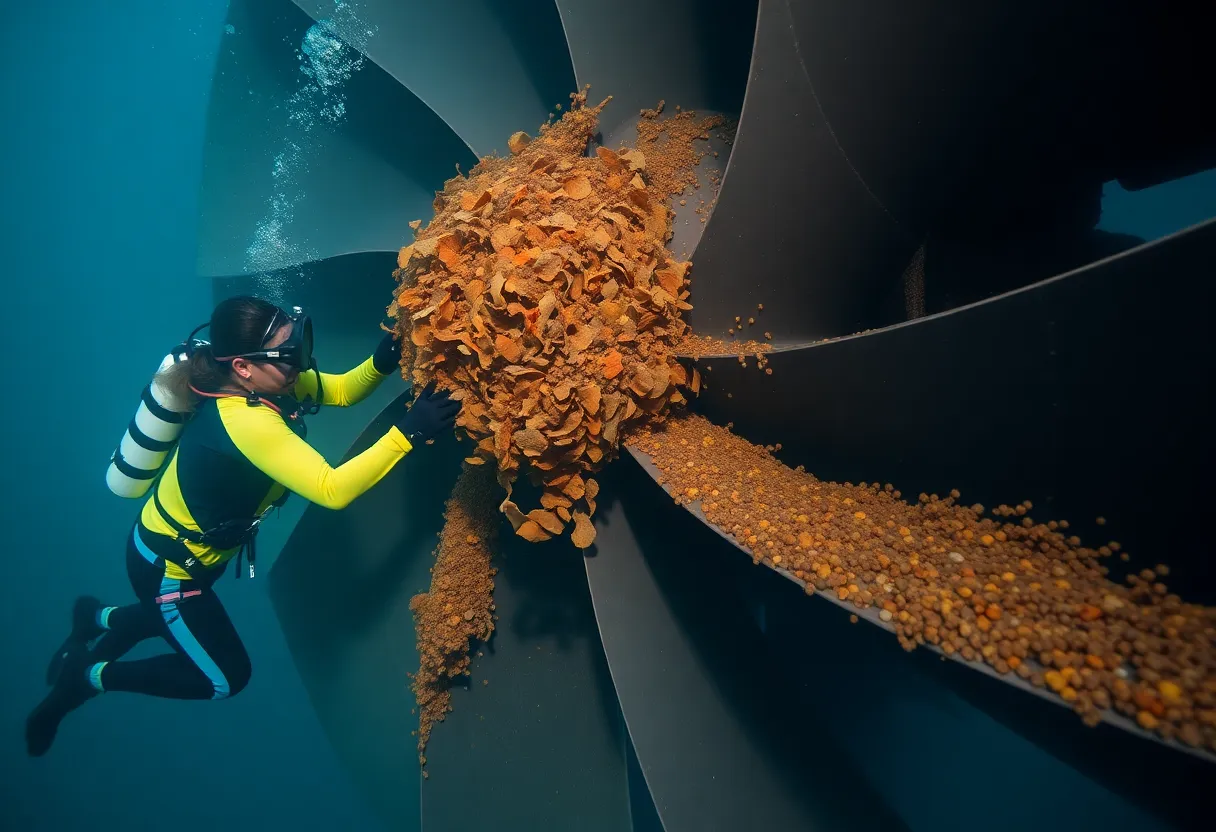
Any submerged marine structure accumulates biofouling to some degree — ship hulls, offshore platform legs, and underwater pipelines all deal with this to varying extents, and marine biofouling prevention is a long-established engineering discipline generally. What makes tidal turbines a particularly demanding case is the direct interaction between biofouling accumulation and the turbine’s actual power generation performance: barnacle and mussel growth on turbine blades directly disrupts the smooth hydrodynamic profile the blades are engineered around, degrading energy capture efficiency in a way that’s functionally similar to how ice or debris accumulation degrades wind turbine blade performance, except underwater biofouling accumulates continuously and persistently rather than being an intermittent weather event.
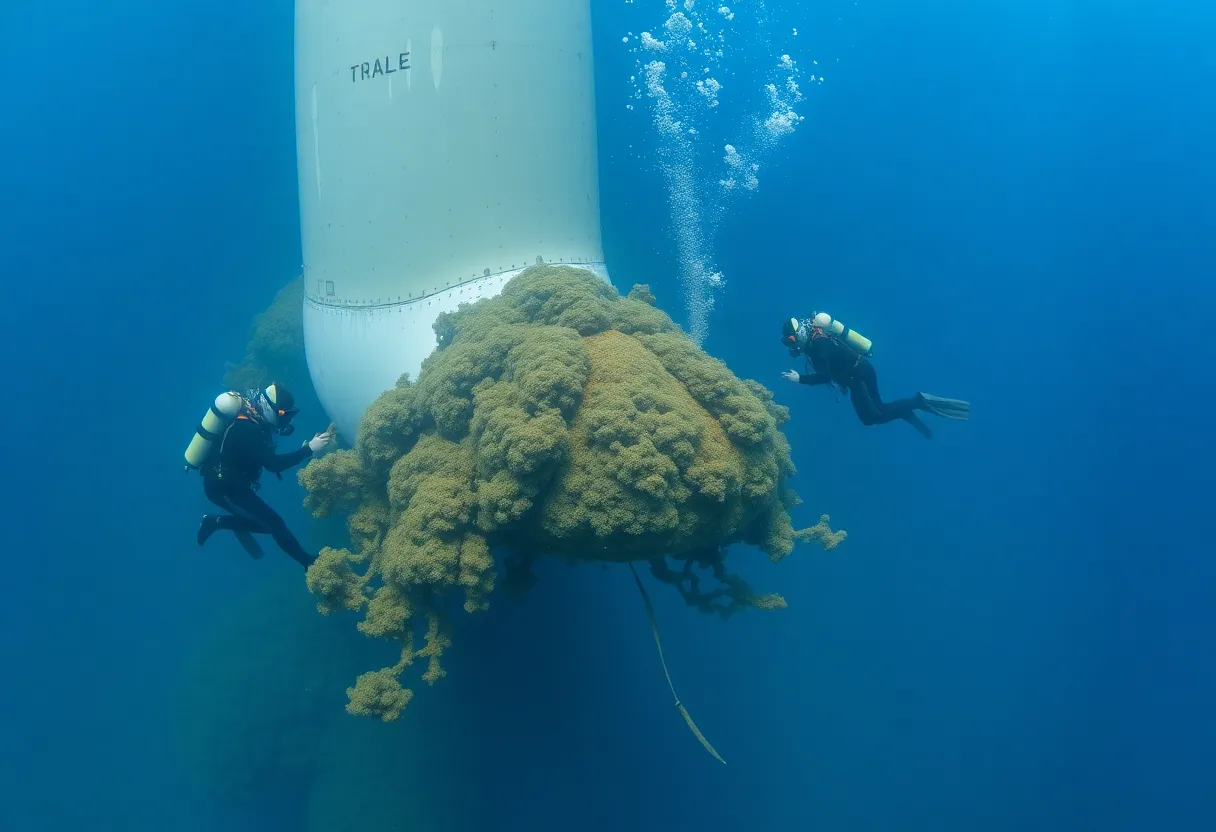
Beyond the blades themselves, biofouling accumulation on sensors, mooring lines, and other mechanical components can introduce additional maintenance burden and, in more severe cases, genuine mechanical reliability risk if fouling growth interferes with moving parts or sensor accuracy needed for the turbine’s control and monitoring systems to function correctly. Because tidal turbines are specifically deployed in strong current locations — the exact conditions that make a site attractive for power generation also tend to bring nutrient-rich water and strong larval dispersal that supports vigorous marine growth — biofouling accumulation rates at productive tidal energy sites have often proven considerably faster and more severe than initial site assessments anticipated based on generic marine biofouling data from calmer water environments.
Why Simply Copying Ship Hull Antifouling Approaches Didn’t Work
The maritime shipping industry’s primary biofouling defense — antifouling paint coatings, historically often containing biocide compounds like copper or, in the past, the now largely banned tributyltin (TBT) — has a well-established track record for hull applications, but hasn’t translated cleanly to tidal turbine blades for several genuine technical reasons. Turbine blades experience considerably more abrasion, flex, and mechanical stress from constant strong current exposure than a ship hull typically encounters during normal operation, and antifouling coatings that work well on relatively static hull surfaces have often shown faster wear and reduced effectiveness lifespan when applied to the more mechanically stressed, continuously flexing blade surfaces of an operating tidal turbine.
Environmental regulation has also genuinely constrained which antifouling chemistries are viable options in most jurisdictions where tidal energy projects operate, given legitimate ecological concerns about biocide leaching into marine environments that are often specifically chosen for tidal development because of their strong currents and, not coincidentally, often ecologically significant marine habitats — meaning tidal developers have had less flexibility to simply reach for the most aggressive, historically effective biocide-based antifouling chemistry that shipping has sometimes relied on, and have had to pursue alternative, more environmentally acceptable approaches instead.
What Foul-Release Coatings Actually Do Differently
The more promising modern approach that’s gained real traction specifically for tidal applications is foul-release coating technology — typically silicone or fluoropolymer-based surface coatings that don’t rely on biocide toxicity to prevent settlement at all, but instead create an extremely low-friction, low-adhesion surface that marine organisms struggle to attach to firmly, and that sheds any organisms that do attempt to settle more easily under the mechanical stress of water flow and turbine operation than they would from a conventional painted surface. This foul-release mechanism is genuinely different from biocide-based antifouling in its underlying approach, working through physical surface properties rather than chemical toxicity, which has made it a more environmentally acceptable option under the regulatory constraints tidal projects generally operate under.
Foul-release coatings have shown measurably better performance specifically on the continuously flexing, high-current-exposure blade surfaces that gave biocide coatings trouble, and several commercial tidal turbine developers, including Orbital Marine Power and other companies operating in strong-current UK and European test sites, have reported meaningfully improved biofouling management outcomes after adopting these coating approaches compared to earlier project generations that relied on more conventional marine antifouling technology adapted from shipping applications without modification.
Why Maintenance Scheduling Innovation Has Mattered Just as Much as Coatings
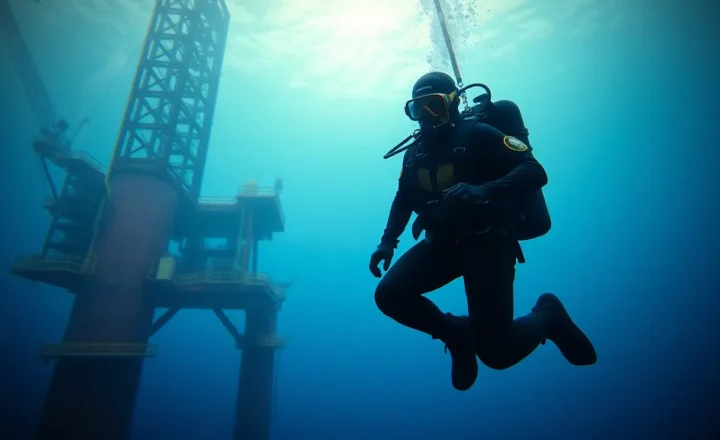
Coating technology alone hasn’t solved the problem — the other major advance has been in how tidal energy operators plan and execute maintenance itself. Many commercial tidal turbine designs have moved toward modular, retrievable installation architectures specifically so that turbines can be lifted out of the water on a scheduled maintenance basis for hull and blade cleaning and coating reapplication, rather than requiring expensive and logistically complex diver-based underwater maintenance work at depth in strong current conditions, which is both more expensive and considerably more hazardous to execute safely and reliably at scale.
This retrievability-focused design philosophy reflects a broader lesson that’s shaped tidal turbine engineering more generally: designing for maintenance accessibility from the outset, rather than treating maintenance as an afterthought to be solved with whatever underwater intervention technique proves necessary after a turbine’s already been permanently installed, has turned out to be one of the more important practical determinants of whether a given tidal energy project can actually sustain economically viable operation over its intended multi-decade service life, since biofouling-related maintenance costs, if not properly planned for, can meaningfully erode a project’s overall economic returns.
Where This Leaves the Broader Tidal Energy Industry
Biofouling was never the only factor holding back commercial tidal energy scaling — high upfront capital costs, a genuinely more limited number of suitable high-current sites compared to onshore and offshore wind’s much larger available site inventory, and grid connection challenges for often remote coastal deployment locations have all been significant contributing factors as well. But biofouling specifically represented a genuinely under-appreciated operational cost and reliability risk that made early tidal projects’ actual operating economics considerably worse than initial projections that hadn’t fully accounted for how aggressively marine growth would accumulate at the strong-current sites tidal projects specifically target.
The combination of improved foul-release coating technology and maintenance-accessible turbine design has meaningfully improved this picture over the past several project generations, even though it hasn’t eliminated biofouling maintenance cost entirely — a realistic, incremental improvement rather than a dramatic solved-problem narrative, but one that’s genuinely helped move commercial tidal energy projects’ operating economics closer to the kind of long-term viability that would be needed for the technology to eventually scale beyond its current status as a promising but still relatively niche renewable energy source.