How Coral Restoration Nurseries Decide Which Genetics to Plant

Futurion Editorial
July 9, 2026
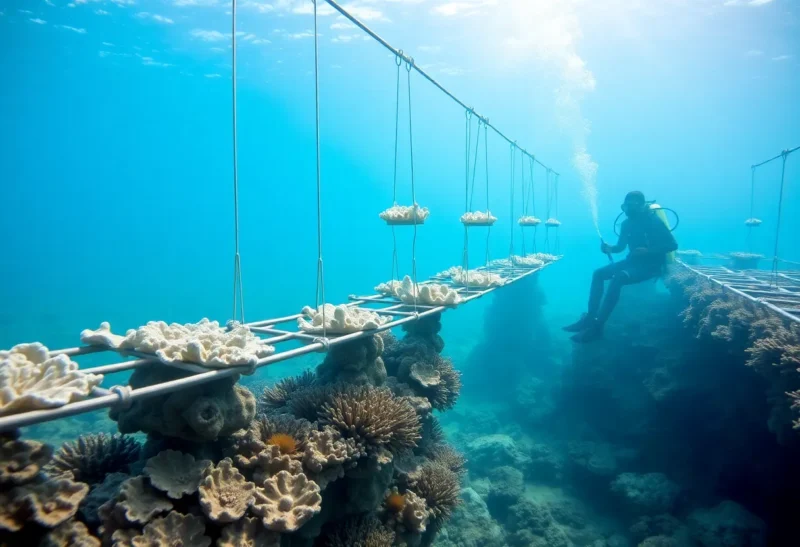
Coral restoration has moved well past its early era of simply growing coral fragments in underwater nurseries and transplanting them onto degraded reefs to increase overall coral cover. As restoration programs have matured and accumulated more monitoring data on which restored coral actually survives long-term, the field has shifted toward a much more deliberate question: which specific coral genetic lineages should be prioritized for propagation and outplanting, given that not all coral of the same species performs equally well under the stressed conditions — warming water, disease pressure, ocean acidification — that make restoration necessary in the first place.
Why Coral Genetics Varies Enough to Matter
Coral colonies of the same species can carry meaningfully different genetic profiles that produce real differences in stress tolerance, even among corals living on the same reef system exposed to broadly similar environmental conditions. This genetic variation exists for the same basic evolutionary reasons genetic diversity exists in any wild population — different individual colonies carry different combinations of genetic variants affecting things like heat shock protein expression, symbiotic algae partnership characteristics, and disease resistance mechanisms, and this variation means that during a bleaching event or disease outbreak, some individual colonies within a population survive and recover while genetically different neighboring colonies of the same species, exposed to the same conditions, die.
Restoration researchers have specifically identified and tracked these differentially resilient individual coral genotypes — sometimes called “super corals” in popular coverage, though researchers generally prefer more precise language about specific measured stress tolerance traits rather than a single blanket “super” label — through repeated observation of which specific colonies survive successive bleaching events and disease outbreaks better than their genetically different neighbors on the same reef.
How Nurseries Actually Select and Propagate These Genotypes
Once a restoration program identifies colonies with documented, measured resilience advantages — typically through a combination of field survival observation across multiple stress events and, increasingly, laboratory stress testing that exposes coral fragments to controlled heat or acidification stress to directly measure comparative tolerance — those specific genotypes become priority candidates for nursery propagation using asexual fragmentation, where small pieces cut from a resilient parent colony grow into full new colonies genetically identical to that parent.
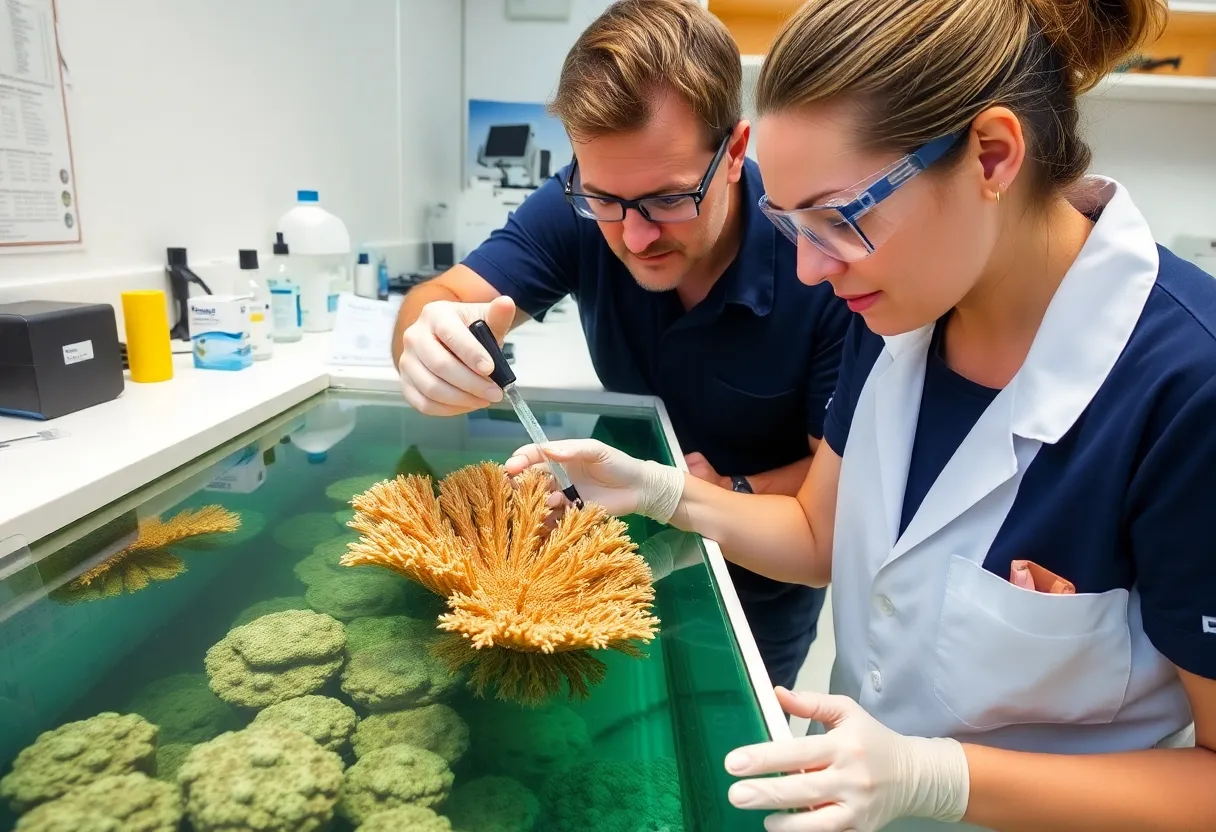
This asexual propagation approach lets restoration programs scale up a documented resilient genotype relatively efficiently, since a single well-characterized parent colony can generate large numbers of genetically identical fragments for nursery growth and eventual outplanting, without needing to wait for and select through the slower, more uncertain process of sexual reproduction and larval settlement. Major restoration programs, including the Coral Restoration Foundation in Florida and similar programs across the Caribbean, Pacific, and Indo-Pacific regions, maintain structured “genetic libraries” of documented coral genotypes with tracked resilience characteristics specifically to support this kind of informed genotype selection rather than propagating whatever coral happens to be locally convenient to collect.
Why Genetic Diversity Still Matters Even When Prioritizing Resilience
Despite the clear logic of prioritizing documented resilient genotypes, restoration researchers have been careful not to let this become a strategy of propagating only a small number of “best” genotypes at the expense of overall genetic diversity, because a restored reef built from too narrow a genetic base carries its own serious long-term risk: a population with low genetic diversity is more vulnerable to being wiped out by a future stressor (a new disease strain, an unusually severe bleaching event) that happens to affect exactly the genetic traits that specific narrow gene pool shares in common, since genetic diversity is itself a hedge against future, unpredictable stress types that current resilience screening can’t anticipate.
This has pushed most well-designed restoration programs toward a deliberately balanced strategy: prioritizing documented resilient genotypes meaningfully in propagation efforts, while still maintaining and outplanting a genetically diverse mix rather than converging entirely on a narrow set of “winning” genotypes, and increasingly incorporating sexual reproduction and larval propagation techniques specifically because they generate new genetic combinations (rather than identical clones) that can maintain and even expand a restored population’s genetic diversity beyond what pure fragmentation-based propagation of existing colonies can achieve on its own.
The Role of Assisted Gene Flow and Cross-Region Genetic Mixing
Some restoration programs have gone further, deliberately introducing coral genotypes or larvae from different, often warmer or more stress-exposed reef regions into restoration efforts at a different location, on the theory that coral populations that evolved under naturally warmer or more variable conditions may carry heat tolerance traits beneficial to introduce into populations facing new warming stress they haven’t had as much evolutionary time to adapt to.
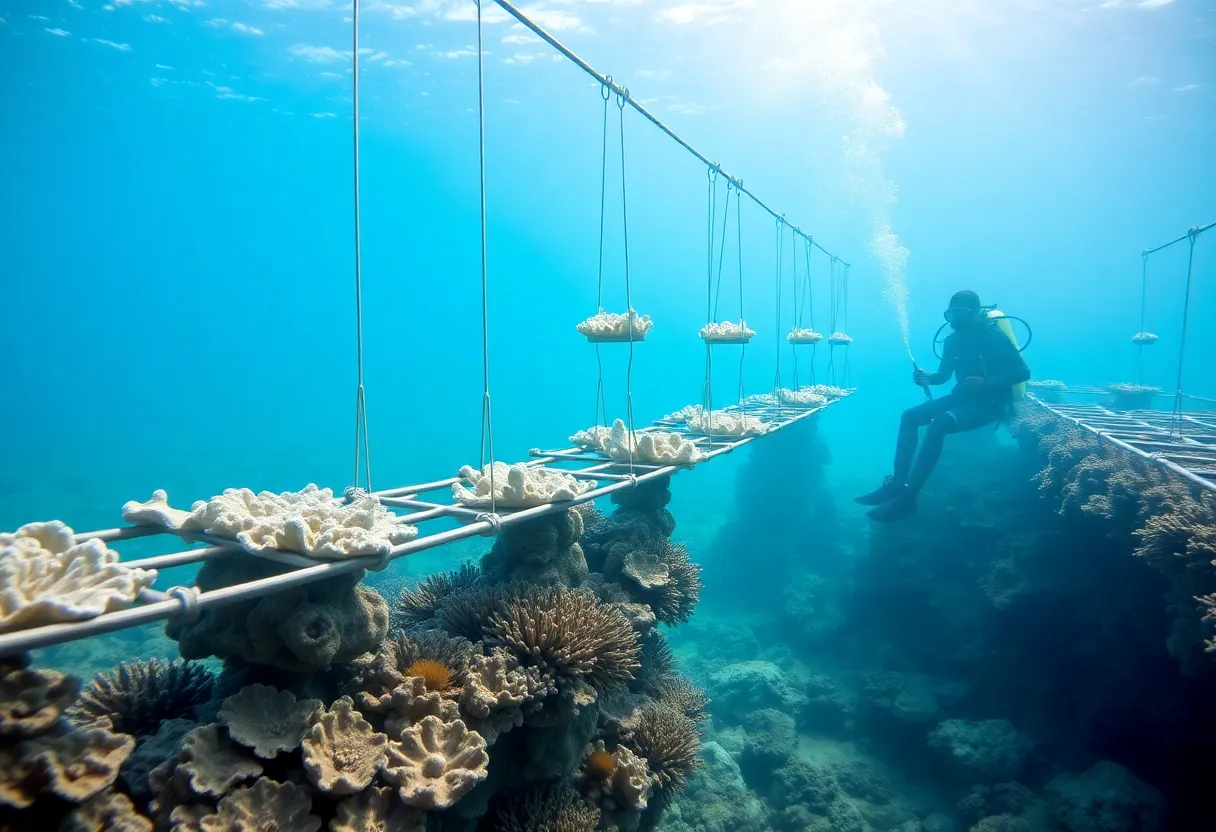
This assisted gene flow approach remains more experimental and more actively debated among restoration researchers than straightforward local resilient-genotype propagation, both because moving coral genetic material between regions raises its own ecological risk considerations (potential disease transfer, disruption of locally adapted traits that might matter in ways not yet fully understood) and because the practical evidence base for how well transplanted regional genetics actually performs long-term in a new reef environment is still accumulating rather than fully established through years of monitored outcomes.
Why This Genetics-Informed Approach Represents a Real Shift in the Field
The overall trajectory in coral restoration research over roughly the past fifteen years has moved from a relatively simple “grow more coral, plant more coral” framing toward a considerably more sophisticated understanding that which specific coral gets propagated and where it gets planted matters enormously for whether restoration efforts produce reefs with a realistic chance of surviving the ongoing warming and stress conditions driving the original reef decline in the first place. This doesn’t mean genetics-informed restoration has solved the underlying problem — global reef decline is still primarily driven by ocean warming trends that restoration efforts alone can’t reverse — but it does represent restoration science taking seriously the reality that not all coral, even within a single healthy-looking population, faces the same future, and that recognizing and working with that variation is a meaningfully better strategy than treating coral genetics as an interchangeable detail.