Why Home 3D Printer Filament Storage Is Harder Than It Looks

Anya Petrov
July 9, 2026
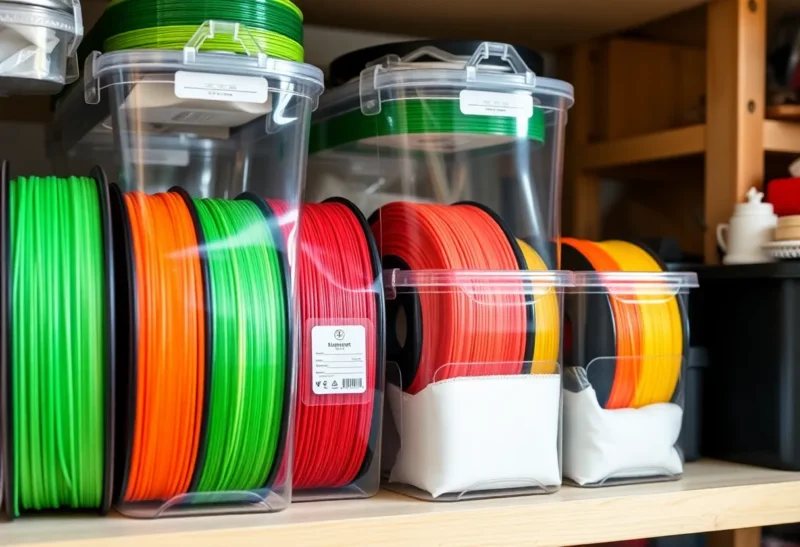
New 3D printer owners almost universally learn the same lesson within their first few months, usually the hard way: filament isn’t a shelf-stable material you can leave sitting in a spool holder indefinitely. Most common filament materials are hygroscopic, meaning they actively absorb moisture from ambient air, and that absorbed moisture causes print quality problems ranging from minor cosmetic surface defects to prints that fail outright — a fact that catches almost every beginner off guard because filament looks and feels completely solid and dry to the touch even after it’s absorbed enough moisture to cause real printing problems.
Why Moisture Absorption Happens at the Molecular Level
Hygroscopic polymers absorb water molecules into their internal structure through a slow diffusion process driven by ambient humidity, not just surface contact with liquid water — meaning filament sitting in a normal room, with no visible moisture exposure at all, will still gradually absorb water vapor directly from the air over days and weeks, with the absorption rate depending on the specific polymer’s chemistry and the ambient relative humidity level. Some common printing materials are considerably more hygroscopic than others: nylon and PVA are notoriously fast absorbers, PETG and ABS absorb more slowly but still meaningfully over time, and PLA — often marketed to beginners as an easier, more forgiving material — is actually somewhat hygroscopic too, just slower to show visible print quality problems than materials like nylon.
Once water molecules are embedded within the filament’s polymer structure, they don’t just sit there passively — during printing, the extruder heats the filament well above water’s boiling point, which causes absorbed moisture to rapidly vaporize and expand inside the molten plastic as it’s being extruded through the nozzle.
What Moisture Damage Actually Looks Like Coming Out of the Nozzle
That rapid steam expansion inside molten filament is the direct mechanical cause of the print defects experienced 3D printer users learn to recognize as classic symptoms of wet filament: audible popping or crackling sounds coming from the hotend during extrusion (the sound of tiny steam pockets bursting as they exit the nozzle), visible surface roughness or a rough, matte, slightly bubbled texture on printed surfaces instead of the smooth finish dry filament produces, stringing and oozing between print features caused by inconsistent extrusion pressure as steam pockets disrupt the smooth flow of molten plastic, and in more severe cases, a measurable reduction in the finished part’s mechanical strength, since steam bubbles trapped within the printed layers create tiny internal voids that weaken the part’s structural integrity in ways that aren’t visible just by looking at the print’s exterior.
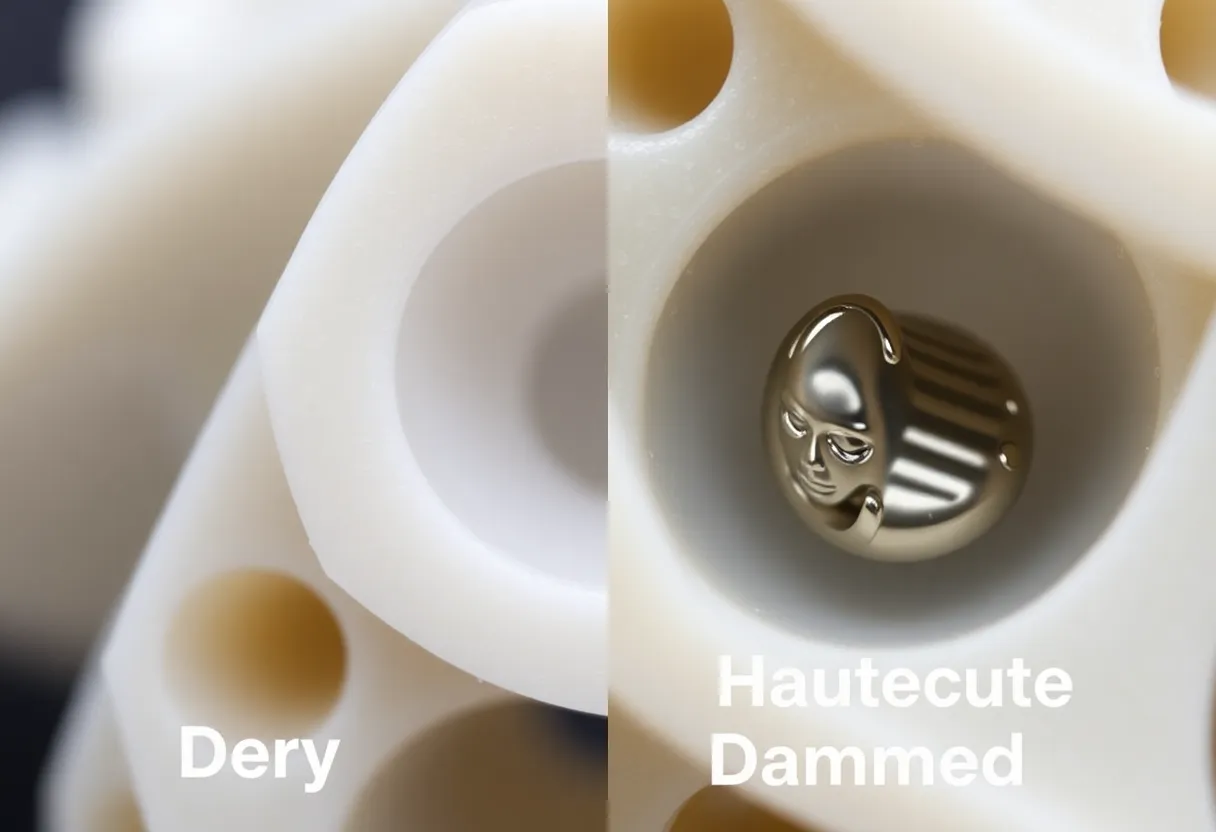
Nylon and other highly hygroscopic materials show these effects dramatically and quickly, sometimes within days of being left unsealed in a moderately humid environment, while PLA’s slower absorption rate means users can sometimes get away with less rigorous storage discipline for months before noticing meaningfully degraded print quality — a difference that’s part of why filament storage advice varies so much depending on which specific material someone is asking about.
Why “Just Keep It in a Bag” Isn’t Always Enough
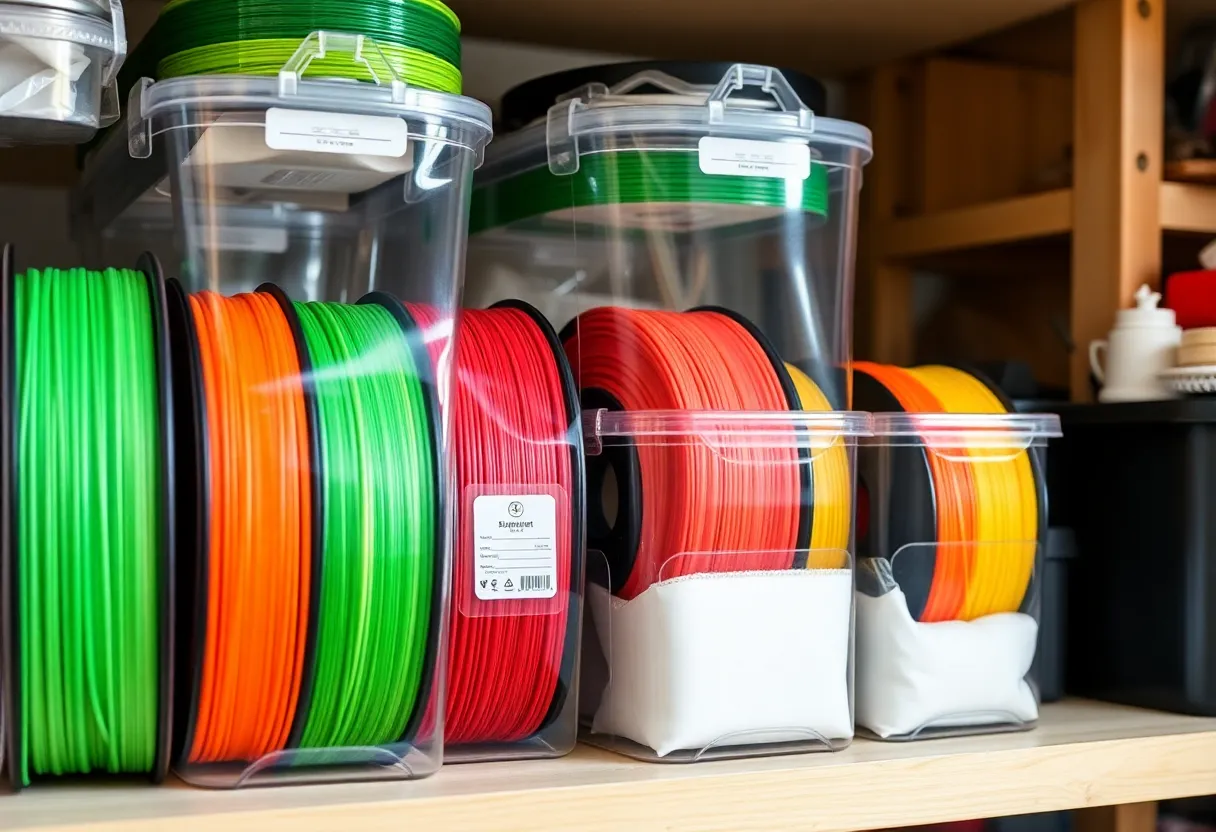
The baseline storage advice most 3D printing communities converge on — keeping filament in a sealed container or bag with desiccant — is genuinely effective, but the specific execution matters more than casual advice usually conveys. A generic zip-top bag without a proper airtight seal, or a container that gets opened and closed frequently during active printing (letting humid room air back in each time), provides much weaker protection than a genuinely airtight solution, because hygroscopic moisture absorption is a continuous process that resumes immediately whenever filament is exposed to ambient air again, regardless of how well it was protected before that exposure.
This is why more serious 3D printing setups have moved toward dedicated solutions specifically designed to maintain low humidity continuously rather than just during storage between prints: vacuum-sealed bags or containers that remove the ambient air moisture is diffusing from in the first place, desiccant specifically rated and sized for the container volume being used (with color-changing indicator desiccant that shows saturation level, since desiccant itself has a limited moisture absorption capacity before needing replacement or reactivation), and increasingly, active “dry box” systems — sealed containers with a heating element or low-power dehumidifier that actively maintains a controlled low-humidity environment even while filament is actively being fed out of the box during printing, rather than only protecting filament during idle storage between prints.
The Active Drying Step for Filament That’s Already Absorbed Moisture
Filament that has already absorbed meaningful moisture isn’t necessarily ruined — the moisture can be driven back out through controlled heating below the material’s melting point, typically using a food dehydrator, a purpose-built filament dryer, or an oven set carefully to a safe low temperature, held for several hours depending on the specific material and how much moisture it’s absorbed.
This drying process genuinely restores print quality for most moisture-affected filament, which is why experienced users often treat active drying as a routine pre-print step for materials known to be moisture-sensitive, rather than treating moisture damage as an irreversible problem requiring the filament to be discarded. The specific time and temperature required varies enough by material that generic advice risks either under-drying (not fully resolving the problem) or over-drying at too high a temperature (risking the spool itself softening or deforming), which is part of why dedicated filament dryers with material-specific presets have become a popular purchase for anyone printing regularly with moisture-sensitive materials like nylon or specialty engineering filaments.
Why This Matters More as Printing Materials Diversify
As 3D printing hobbyists and small businesses increasingly move beyond basic PLA into more specialized engineering materials — nylon composites, polycarbonate, TPU, and various fiber-reinforced filaments used for functional parts rather than simple decorative prints — moisture sensitivity becomes a more consistently relevant concern rather than an occasional edge case, since many of these more advanced materials are considerably more hygroscopic than PLA and considerably less forgiving of storage neglect. Understanding moisture absorption as a real, ongoing material property rather than an occasional troubleshooting footnote is part of what separates consistently reliable print results from the frustrating, hard-to-diagnose inconsistency that drives many beginners to blame their printer’s calibration when the actual root cause was sitting in an unsealed filament box the whole time.