The Hidden Complexity of Getting Accurate Nutrition Labels on Packaged Food

Futurion Editorial
July 9, 2026
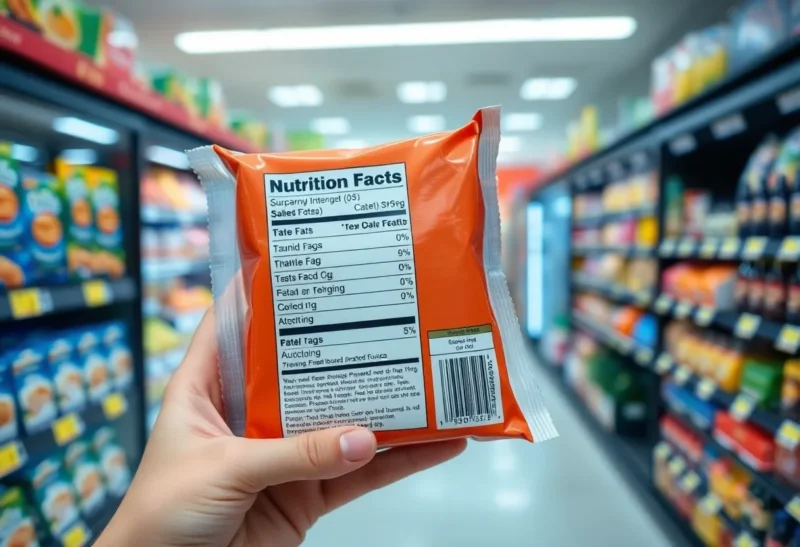
Nutrition Facts labels look like straightforward, precisely measured data — a specific number of calories, a specific gram count of protein, sodium, and sugar, printed with a confidence that suggests exact laboratory measurement of that particular product. The reality behind how those numbers get generated and legally regulated is considerably messier than the clean printed label suggests, involving legal tolerance ranges, calculation methods that don’t always reflect direct measurement, and enforcement gaps that mean inaccurate labels are more common, and harder to catch, than most consumers assume.
How Nutrition Label Values Actually Get Generated
Food manufacturers generate the values on a Nutrition Facts label through one of two general methods, and which one gets used matters for how accurate the final number actually is. Direct laboratory analysis involves sending physical product samples to an accredited food testing lab, which measures actual nutrient content through chemical and physical analysis methods appropriate to each nutrient — genuinely rigorous, but also expensive and time-consuming enough that manufacturers don’t necessarily do it for every single product formulation or every production batch.
The more common method for many products, particularly for manufacturers producing a large product line or making frequent minor recipe adjustments, is calculation based on standardized nutrient databases — essentially adding up the known nutritional values of each individual ingredient according to its listed quantity in the recipe, using reference databases like the USDA’s FoodData Central. This calculated approach is legally permitted and generally reasonably accurate for well-characterized, simple ingredients, but it introduces more room for error than direct lab analysis, particularly for complex processed ingredients whose actual nutrient content can vary somewhat from the generic database reference value, or for products where cooking and processing changes nutrient content in ways a simple ingredient-addition calculation doesn’t fully capture.
Legal Tolerance Ranges Mean “Accurate” Doesn’t Mean “Exact”
The FDA doesn’t require nutrition label values to be precisely, exactly correct — it permits a defined tolerance range around the labeled value, with the specific allowed variance differing by nutrient category. For nutrients that consumers are generally trying to get more of (like vitamins, minerals, protein, and fiber), the FDA generally requires the actual content to be at least 100% of the labeled value, allowing manufacturers to label conservatively low relative to actual content without violating the standard. For nutrients consumers are generally trying to limit (calories, fat, saturated fat, sodium, sugar), the FDA generally allows a tolerance where actual content can run somewhat higher than the labeled value without technically violating labeling requirements, reflecting the practical reality that natural variation in ingredients and production makes hitting an exact number on every unit genuinely difficult to guarantee.

This tolerance framework exists for legitimate practical reasons — natural ingredients like fruits, vegetables, and meats have genuine batch-to-batch nutrient variation based on growing conditions, seasonality, and countless other factors that make labeling to an exact, single precise number somewhat misleading regardless of how carefully a manufacturer tests. But it does mean that a product’s actual nutrient content, especially for something like sodium or added sugar that consumers are specifically trying to track and limit, can legally run measurably higher than the label states without that constituting mislabeling under current regulatory standards.
Serving Size Definitions Add a Second Layer of Confusion
Beyond the accuracy of the nutrient values themselves, serving size definitions add a separate, well-documented source of consumer confusion that isn’t about measurement error at all, but about how “reference amounts customarily consumed” get defined by FDA regulation for different food categories. These reference serving sizes are periodically updated based on actual consumption survey data, and the 2016 nutrition label overhaul specifically increased several serving sizes (like ice cream and soda) to better reflect how much people actually eat and drink in one sitting, rather than the smaller, less realistic serving sizes some manufacturers had used previously, which had the effect of making per-serving calorie and sugar counts look artificially low relative to typical actual consumption.
Even with these updates, serving size definitions remain a genuine point of confusion, because a package’s total contents divided by its labeled serving size doesn’t always match how a typical consumer actually portions and consumes the product in one sitting — a bag of chips labeled as containing multiple servings is functionally a single-serving item for a large share of consumers who eat the whole bag in one sitting, which technically discloses accurate per-serving information while still leaving room for a consumer to significantly undercount their actual nutrient intake if they don’t do the multiplication themselves.
Enforcement Gaps Mean Inaccurate Labels Aren’t Always Caught
The FDA does not test every product on the market for label accuracy on any regular, comprehensive basis — enforcement relies heavily on a combination of periodic spot-check testing programs, consumer and competitor complaints, and manufacturer self-certification under the general expectation that companies are complying honestly with labeling law, backed by the threat of FDA enforcement action if a violation is discovered rather than by comprehensive upfront verification of every product’s label accuracy before it reaches shelves.
Independent testing conducted by researchers and consumer advocacy organizations over the years has periodically found meaningful discrepancies between labeled and actual nutrient content for specific products, particularly for restaurant and prepared foods (which face somewhat different, often less rigorous labeling requirements than packaged retail food) and for smaller manufacturers with less resource-intensive quality control and testing processes than large, well-resourced food companies. This doesn’t mean label fraud is rampant across the food industry broadly, but it does mean the printed number on a label represents a legally compliant, tolerance-permitted approximation verified primarily through a self-certification and complaint-driven enforcement system, rather than a guaranteed, independently pre-verified exact measurement for every individual product on the shelf.
What This Means for How Seriously to Take the Printed Numbers
None of this complexity means nutrition labels are unreliable enough to ignore — for the overwhelming majority of products from established manufacturers, labeled values are reasonably close approximations of actual content, useful for general dietary planning and comparison shopping between products. But for anyone with a medical condition requiring genuinely precise nutrient tracking, such as closely managing sodium intake for kidney or cardiovascular conditions, or carefully counting carbohydrates for diabetes management, understanding that labeled values carry a legally permitted tolerance range — and that calculated rather than lab-tested values introduce additional potential variance — is a meaningful, practical caveat that the clean, precise-looking printed label doesn’t communicate on its own.