Why Cold Storage Warehouses Are Becoming Robotics’ Hardest Proving Ground

Futurion Editorial
July 9, 2026
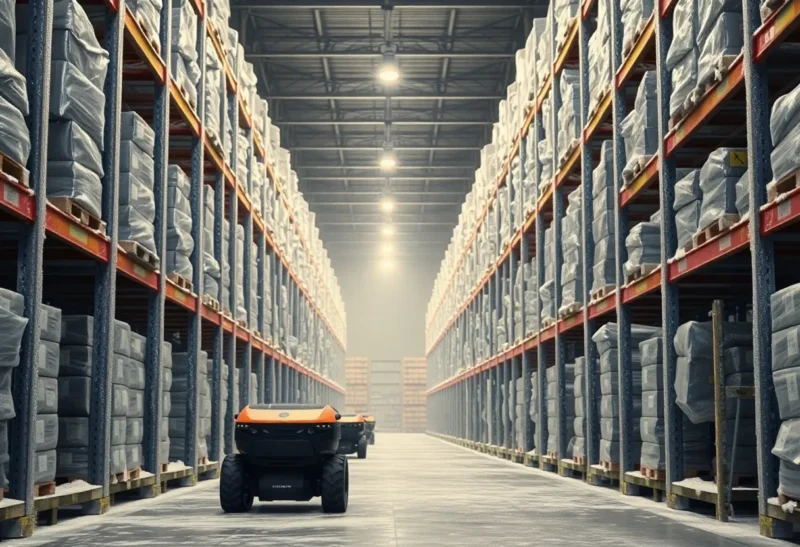
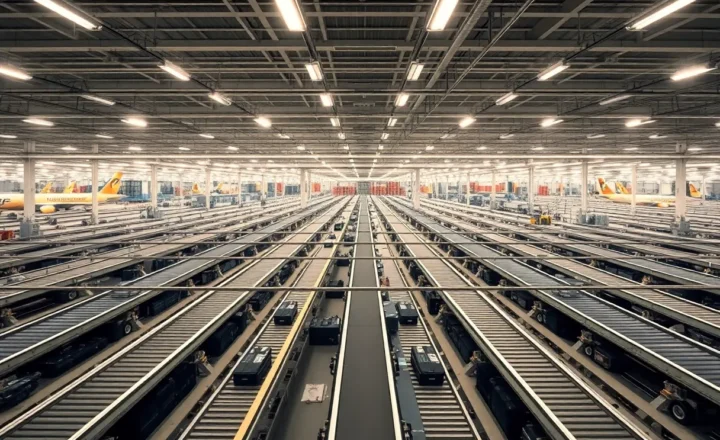
Warehouse robotics has become a mature, almost boring category in ordinary ambient-temperature distribution centers — autonomous mobile robots gliding between shelves, robotic arms picking and packing orders, all reasonably well-solved engineering problems at this point. Walk into a frozen food distribution facility running at minus 25 degrees Celsius, and nearly every one of those solved problems becomes unsolved again. Cold storage has quietly become the industry’s hardest deployment environment, and the specific reasons why reveal a lot about how much standard robotics engineering quietly assumes a comfortable, temperate environment that most of the industry has simply never had to question until now.
Why “Just Make It Colder” Undersells the Problem
The naive assumption is that cold storage robotics is mostly a materials engineering problem — use different lubricants, different plastics, different battery chemistry rated for low temperatures, and otherwise the same robot works fine. The reality is that extreme cold breaks robotic systems in ways that cascade across nearly every subsystem simultaneously, rather than being isolated to one easily swapped component.
Lithium-ion batteries, the power source for the overwhelming majority of mobile warehouse robots, lose a significant fraction of their usable capacity in sub-freezing temperatures — the electrochemical reactions that make batteries work simply proceed more slowly as temperature drops, and can drop by well over half in extreme cold compared to room-temperature performance. This isn’t just an inconvenience requiring more frequent charging; it fundamentally changes robot fleet sizing and charging infrastructure math for an entire facility, since a robot that might run an eight-hour shift at room temperature might only manage three or four hours in a deep freezer, requiring either substantially more robots to cover the same workload or a charging infrastructure and rotation schedule built around much more frequent charging cycles.
Condensation: The Problem That Breaks Sensors, Not Just Batteries
The single most cited engineering challenge across cold storage robotics deployments isn’t the cold itself — it’s the transition between temperature zones. Warehouse robots frequently need to move between a deep freezer section, a moderately chilled section, and sometimes a room-temperature loading dock area within a single facility and a single work cycle, and each temperature transition creates a real risk of condensation forming on cameras, LIDAR sensors, and electronic components as warmer, more humid air suddenly contacts cold surfaces — the exact same physics that fogs up a car windshield or a cold drink glass, just happening on the delicate optical and electronic surfaces a robot depends on to navigate and function.
Condensation on a LIDAR sensor or camera lens isn’t a minor cosmetic problem — it can directly degrade or completely blind the sensor systems most autonomous mobile robots rely on for navigation and obstacle detection, creating both a functional failure and a genuine safety hazard in an environment where robots are moving alongside human workers and heavy equipment. Engineering solutions have included sealed, heated sensor housings that keep the sensor surface itself slightly warmer than the surrounding air to prevent condensation from forming in the first place, along with careful facility zone design that minimizes abrupt temperature transitions along a robot’s typical travel routes wherever operationally possible.
Why Standard Navigation and Mapping Gets Harder Too
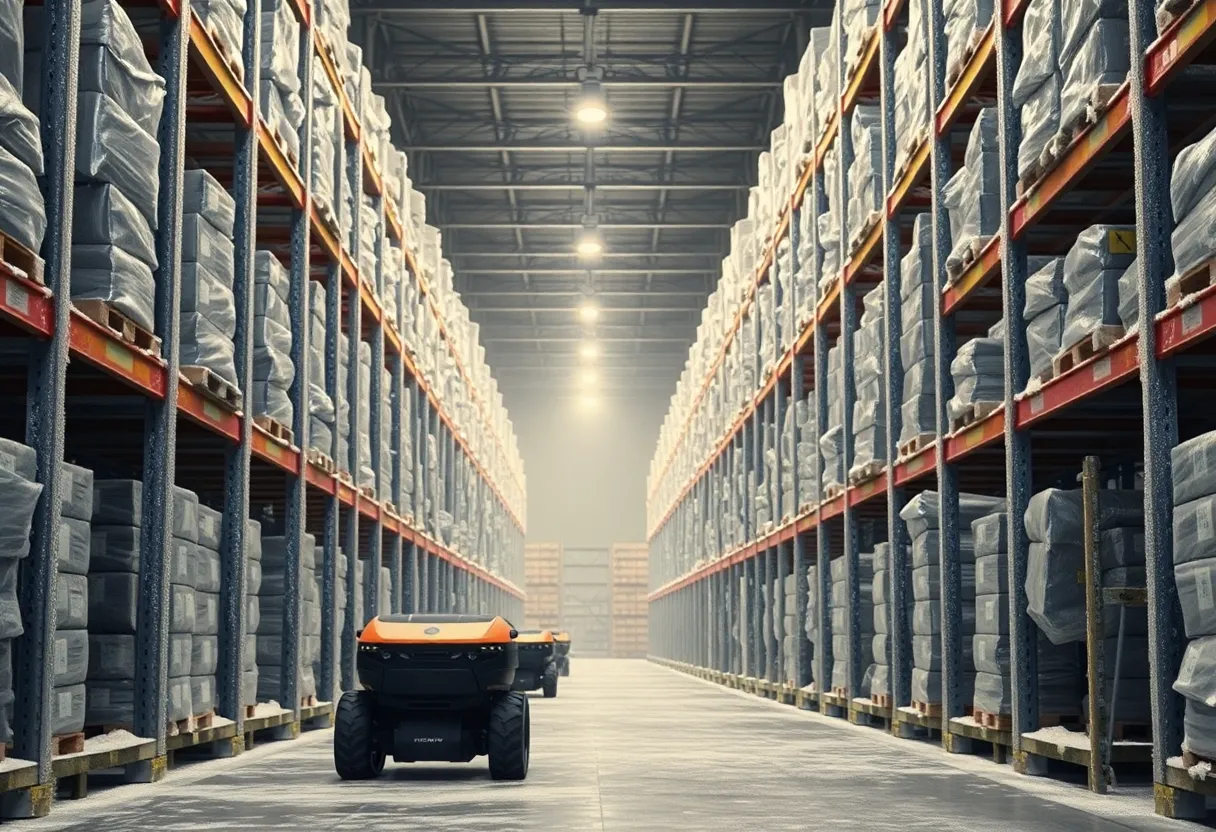
Beyond hardware survival, the navigation software stack that works reliably in a typical warehouse faces its own cold-specific challenges. Frost accumulation on shelving, floors, and product packaging changes the visual and reflective characteristics of the environment that vision-based and LIDAR-based navigation systems were originally trained or calibrated to recognize, sometimes significantly enough to degrade localization accuracy if the system wasn’t specifically developed and tested with frost-covered surfaces in mind from the start. Standard warehouse robotics navigation software, largely developed and refined in temperate-climate distribution centers, has in several documented industry case studies required meaningful retraining or recalibration of perception models specifically to handle the visual environment of a working freezer facility.
Floor conditions add a further complication: even well-maintained cold storage facilities can develop ice patches or frost buildup on floors, particularly near loading dock doors where temperature and humidity fluctuate most, and wheeled robots designed around the assumption of a clean, dry, consistent-traction warehouse floor need additional traction control, different wheel materials, or more conservative navigation speed profiles specifically to handle intermittent low-traction surface conditions that simply don’t exist as a meaningful design consideration in a standard ambient-temperature facility.
The Human Labor Problem That Makes This Worth Solving
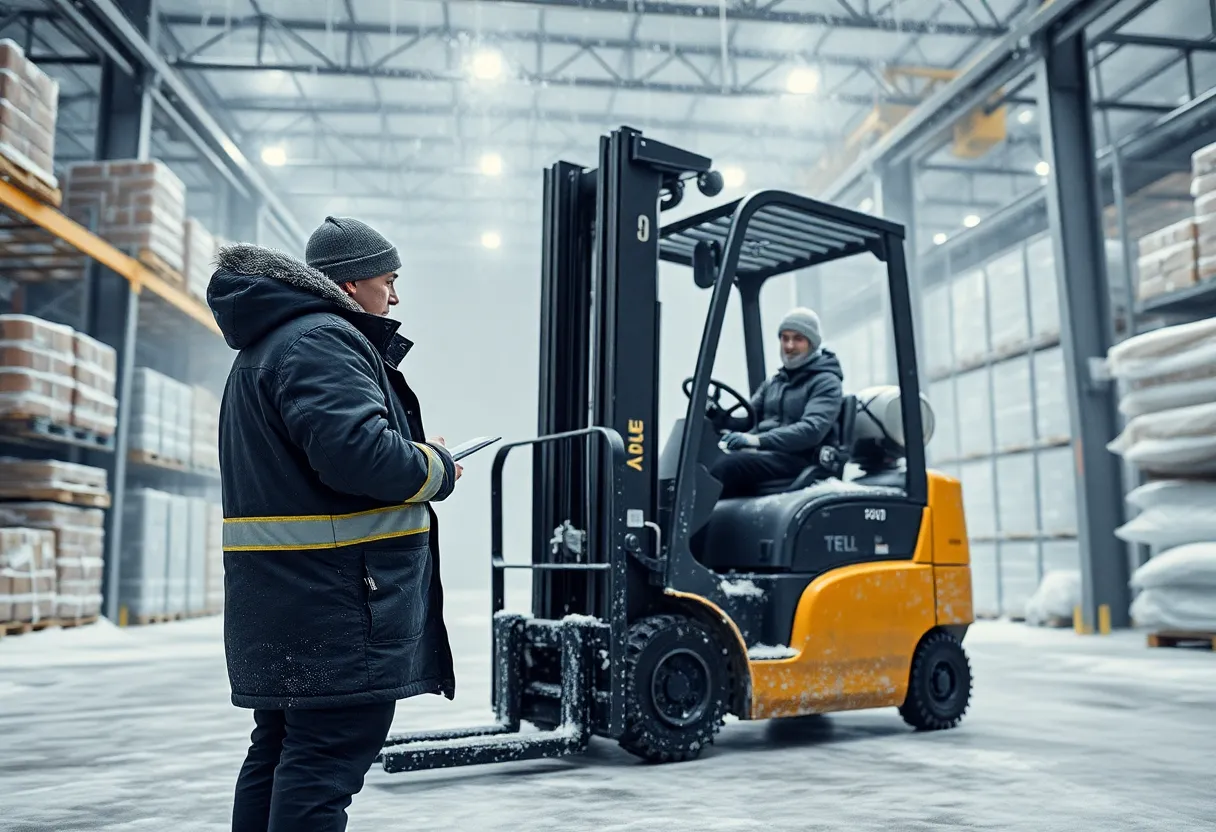
The economic case for pushing through these engineering difficulties is unusually strong in cold storage specifically, for reasons that go beyond the general labor-cost-reduction argument that drives most warehouse automation. Cold storage and frozen warehouse work has long been documented as one of the most physically demanding and least desirable categories of warehouse labor, with elevated rates of workplace injury related to cold exposure, and persistently high staff turnover and chronic understaffing that industry surveys have repeatedly identified as a significant operational problem for frozen food logistics specifically, worse than the labor market challenges most ambient-temperature warehouse operations report.
This creates a genuinely compelling case for automation that goes beyond the usual cost-efficiency argument warehouse robotics companies typically lead with: cold storage facility operators are often not simply trying to reduce headcount for cost reasons, but trying to solve a persistent staffing and worker-safety problem that has made this specific segment of the warehouse industry unusually difficult to adequately staff at all, regardless of wages offered, because the physical working conditions themselves are a genuine deterrent independent of compensation.
Who’s Actually Deploying This and What They’ve Learned
Major cold chain logistics operators and food distributors have moved from pilot programs to genuine production deployments over the past several years, with companies building specialized robotics divisions or partnering with robotics vendors that have developed cold-specific hardware variants rather than simply deploying standard warehouse robots and hoping they survive. The consistent lesson reported across these deployments has been that treating cold storage as simply “the same robot with better insulation” underestimates the engineering challenge significantly — successful deployments have generally required purpose-built hardware revisions addressing battery performance, sensor housing design, and navigation software recalibration as a coordinated package, rather than treating any single one of those issues as a bolt-on fix to an otherwise standard robot platform.
The trajectory, as with most warehouse automation categories, points toward continued expansion as vendors accumulate more cold-specific engineering experience and as the underlying case for solving a genuinely difficult labor and safety problem in frozen food logistics remains as strong as ever. Cold storage robotics is unlikely to ever be as simple or standardized as ambient-temperature warehouse automation has become, but it has moved decisively past the experimental stage into a real, if still maturing, deployment category — one that has quietly forced the broader warehouse robotics industry to relearn several assumptions it had stopped questioning after years of success in far more forgiving operating environments.