Why Cold Storage Warehouses Became Robotics’ Hardest Testing Ground

Petra Lindgren
July 9, 2026
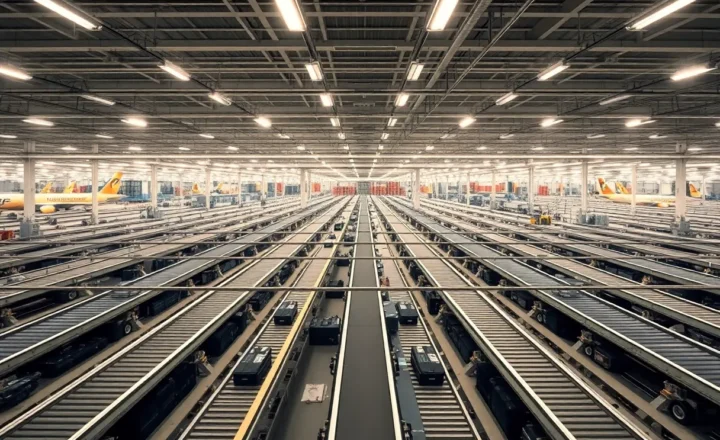
Warehouse robotics has matured rapidly over the past decade in ordinary ambient-temperature distribution centers, with autonomous mobile robots and robotic picking arms now common enough at companies like Amazon and major third-party logistics providers to feel like a solved engineering problem. Cold storage and frozen distribution facilities — the warehouses that keep frozen food, pharmaceuticals, and other temperature-sensitive goods at anywhere from refrigerated temperatures down to -25°C or colder — have turned out to be a substantially harder environment for exactly the same robotic systems, and the reasons why reveal a lot about which parts of robotics engineering are genuinely solved versus which parts just haven’t been stress-tested by harsh enough conditions yet. I spent seven years deploying automated warehouse and cold-chain systems before shifting into writing about this industry, and cold storage has consistently been where robotic systems that worked reliably in ambient warehouses started failing in ways their designers hadn’t fully anticipated.
Why Cold Simply Breaks Things Batteries and Electronics Don’t Expect
Lithium-ion batteries, which power the overwhelming majority of autonomous mobile robots and robotic forklifts used in modern warehouses, lose meaningful capacity and discharge rate performance as temperature drops, with significant degradation becoming clearly measurable below roughly 0°C and severe enough below -20°C that battery life and available power output for a robot working an eight-hour shift in a deep-freeze facility can be cut dramatically compared to the same robot’s rated performance at room temperature. This isn’t a minor efficiency loss — it’s a fundamental electrochemical property of how lithium-ion cells function, meaning robots designed and rated for ambient warehouse conditions frequently can’t simply be deployed into a frozen facility and expected to perform at anything close to their advertised specifications without specific cold-rated battery systems and thermal management built in from the start.
Beyond batteries, sensors and electronic components more broadly face real reliability challenges in sustained sub-freezing conditions — LIDAR and camera sensors used for navigation and object detection can suffer from condensation and frost formation on lenses and housings when a robot moves between temperature zones (a genuine, frequent occurrence in facilities with staging areas at different temperatures), and standard electronic components not specifically rated for extended cold operation can experience elevated failure rates that simply don’t show up in ambient-temperature deployment at anywhere near the same frequency.
The Condensation Problem That’s Uniquely Nasty
The single most distinctive and difficult problem cold storage robotics faces, one that doesn’t really have an equivalent in ambient warehouse operation, is condensation and ice formation triggered by temperature transitions rather than cold itself. Any robot, sensor, or piece of equipment that moves from a warmer staging or loading area into a deep-freeze zone, or vice versa, experiences rapid condensation on any surface colder than the surrounding air’s dew point — exactly the kind of transition that happens constantly in real warehouse operations as robots move goods between receiving docks, staging areas, and frozen storage zones throughout a normal operating cycle.
This condensation, if it forms on and then refreezes on sensor lenses, moving mechanical joints, or electrical contacts, can degrade sensor accuracy, physically jam mechanical components, or cause electrical faults in ways that are genuinely difficult to fully engineer around, because the problem isn’t a fixed operating condition a system can simply be rated for — it’s a dynamic transition effect that depends on humidity, transition speed, and dwell time in each temperature zone, all of which vary throughout a real operating day in ways that are harder to fully simulate and test for during a robot’s original design and certification process than a simple fixed cold-temperature rating would be.
Why Human Workers Still Set the Real Benchmark
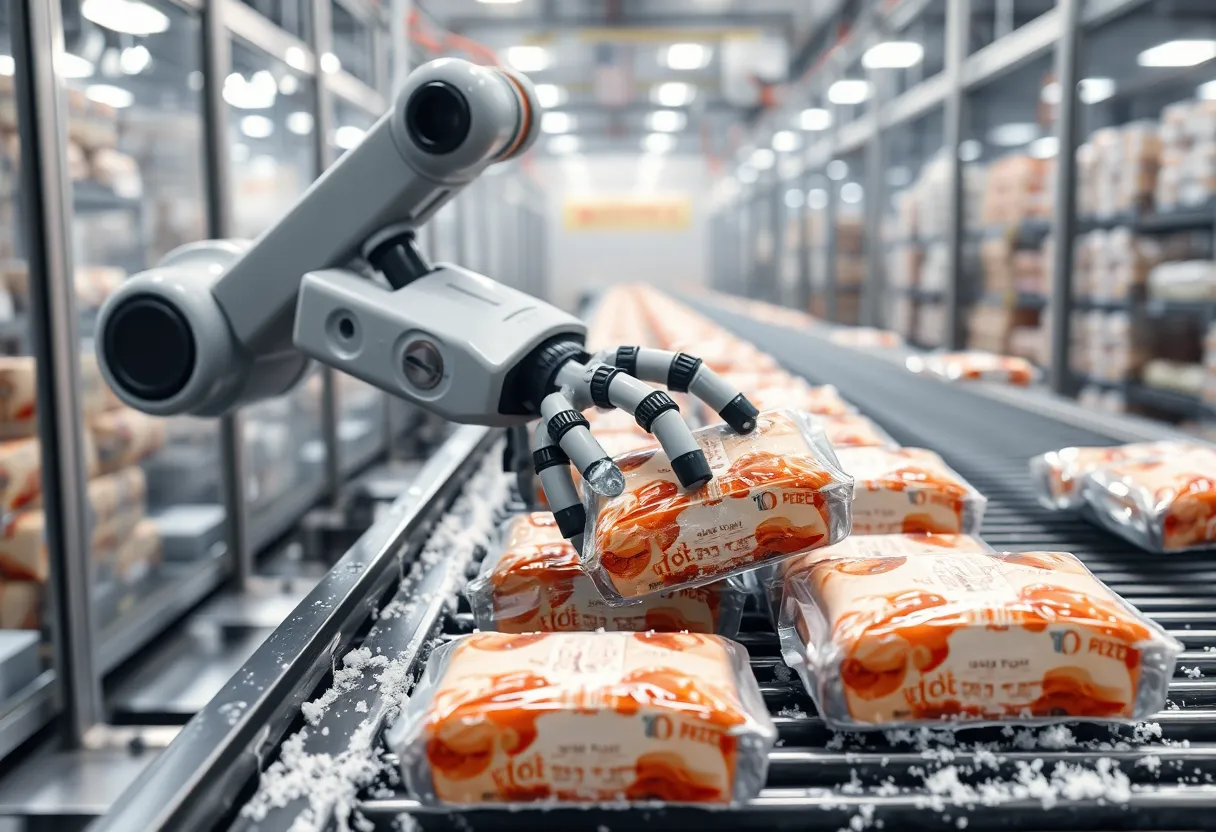
Cold storage facilities have historically been among the most difficult warehouse environments to staff, given the genuinely harsh working conditions for human employees spending full shifts in sub-freezing temperatures, which is part of why cold storage operators have had strong independent motivation to pursue automation regardless of the additional technical difficulty involved — the labor cost and retention challenge in this specific segment of warehousing is generally more severe than in ambient facilities, creating a stronger business case for automation investment even where the engineering is harder and more expensive to get right.
This has meant cold storage robotics deployment often proceeds somewhat differently than ambient warehouse automation: rather than waiting for a fully mature, off-the-shelf robotic solution the way many ambient warehouse operators have been able to do, cold storage operators and robotics vendors have frequently had to co-develop and heavily customize cold-rated equipment specifically for individual facility deployments, a more bespoke, higher-cost engineering process that has kept cold storage automation adoption meaningfully behind ambient warehouse automation in overall market penetration, even though the underlying business incentive to automate is, if anything, stronger in cold storage given the human labor challenges involved.
What’s Actually Worked
Despite the real difficulty, cold storage robotics has produced genuine, deployed successes rather than remaining purely theoretical. Automated storage and retrieval systems (AS/RS) — fixed-rail or shuttle-based systems that move pallets or cases through dense storage racking without requiring a human-operated forklift to enter the frozen zone at all — have proven to be one of the more successful cold storage automation approaches specifically because they avoid some of the hardest mobile robotics problems (dynamic navigation, sensor reliability across temperature transitions) by using fixed infrastructure and simpler, more predictable motion patterns rather than free-roaming autonomous robots.
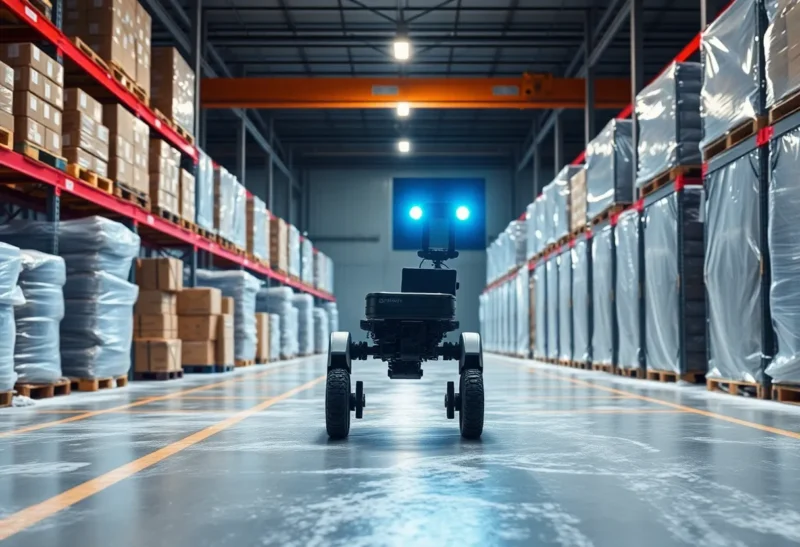
Cold-rated autonomous mobile robots, purpose-built with sealed electronics, cold-tolerant battery chemistry, and heated sensor housings specifically engineered to prevent the condensation and icing problems described above, have also reached genuine commercial deployment at several major cold storage operators, though typically at a meaningfully higher unit cost than equivalent ambient-rated robots, reflecting the real additional engineering required to make mobile robotics reliably function in sustained sub-freezing, temperature-transitioning environments.
Where This Goes From Here
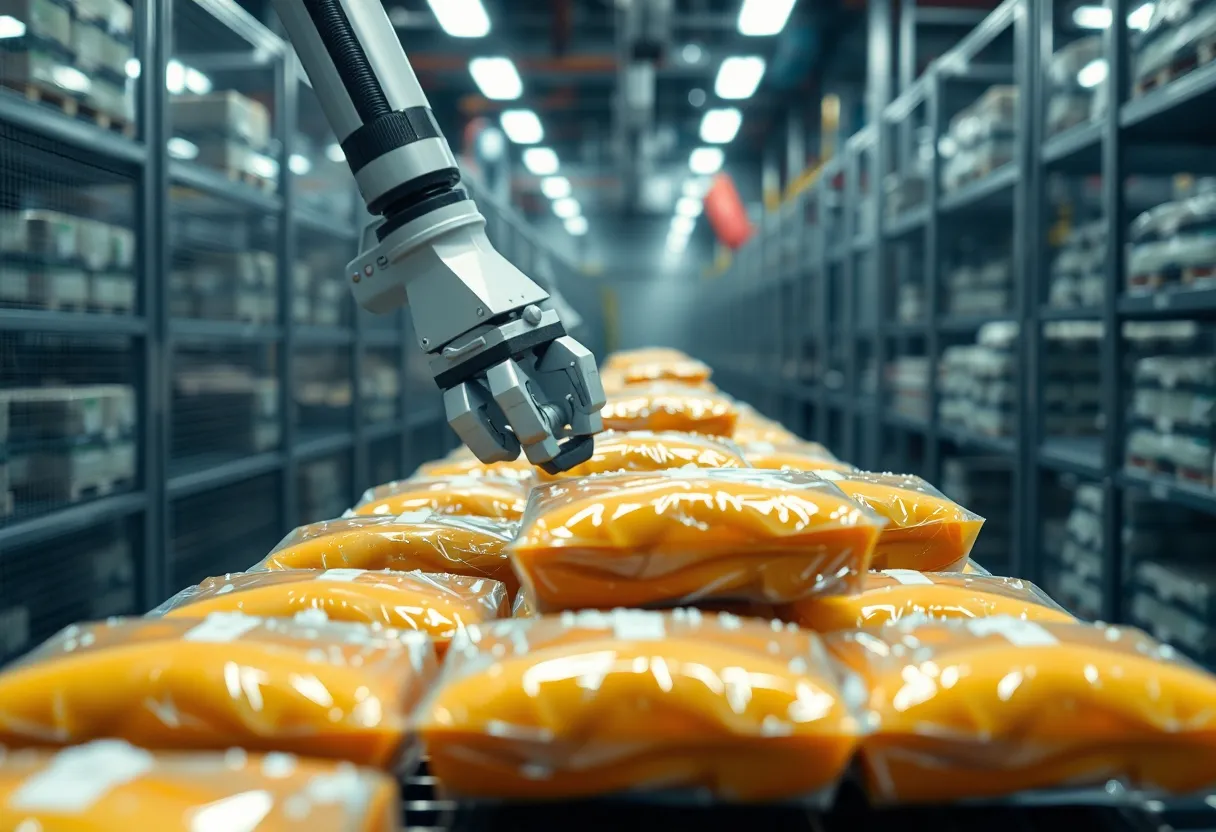
The realistic trajectory for cold storage robotics is continued gradual maturation rather than a rapid catch-up to ambient warehouse automation’s current maturity level, because the fundamental engineering challenges — battery cold performance, condensation management, and sensor reliability across temperature transitions — require genuinely different design approaches rather than simply hardening existing ambient-rated systems, and that harder engineering path takes time and dedicated investment to mature into the kind of reliable, cost-competitive off-the-shelf product category that ambient warehouse robotics has already become.
What’s likely to keep driving investment despite the difficulty is the labor economics that made cold storage automation attractive in the first place — human staffing challenges in sub-freezing work environments aren’t going away, and as cold-rated robotics technology continues maturing and unit costs gradually decline through continued deployment experience and iteration, cold storage is likely to keep closing the automation gap with ambient warehousing over the coming decade, even if it never fully catches up given how much harder the underlying physics genuinely makes this specific automation problem.