What Airport Baggage Handling Systems Actually Do Between Check-In and the Plane

Futurion Editorial
July 9, 2026
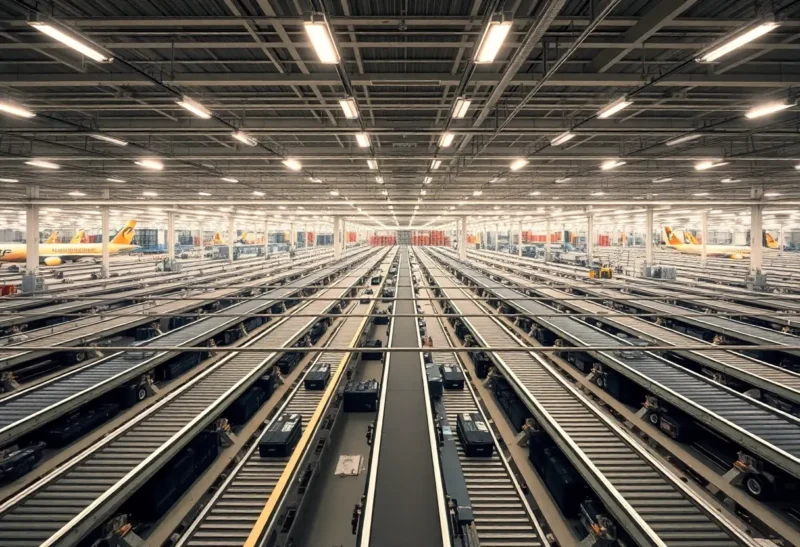
Hand a suitcase across a check-in counter and it disappears into a system most travelers never think about again until it either shows up on the carousel at the destination or, less happily, doesn’t. What happens in between is one of the more genuinely impressive pieces of everyday logistics infrastructure most people will never see: a network of conveyors, scanners, sorters, and increasingly autonomous vehicles that has to route hundreds of thousands of individual bags per day, each with its own unique destination, connection window, and security screening requirement, through a physical building at a speed that has to keep pace with a departure schedule measured in minutes.
The First Job Is Just Identification
Every checked bag gets a tag at check-in containing a unique ten-digit license plate number, encoded in a barcode, that’s linked in the airport’s baggage handling system to that specific passenger’s itinerary — flight number, destination, and any connecting flights. This tag is the single point of truth the entire mechanical system relies on for the rest of the bag’s journey; everything downstream, from which conveyor branch the bag gets routed onto to which aircraft container it eventually lands in, depends on that barcode being read correctly and consistently as the bag physically moves through the building.
Modern systems increasingly supplement barcode scanning with RFID tagging, which several major airlines and airports have adopted specifically because RFID doesn’t require a direct line of sight the way barcode scanning does — a bag lying at an odd angle or with a scuffed tag can still be read reliably by an RFID scanner in a way a barcode scanner might miss, and industry data on RFID-tagged bag misdirection rates shows meaningfully fewer tracking failures compared to barcode-only systems, which is part of why IATA has pushed RFID adoption as an industry standard specifically to reduce mishandled baggage rates globally.
Security Screening Happens Inline, Not as a Separate Stop
Checked baggage in most developed-world airports doesn’t get pulled aside for a separate manual security check unless something specific flags it — the screening is built directly into the conveyor path itself. Bags pass through CT-based explosive detection systems that build a full 3D image of the bag’s contents using the same underlying technology as medical CT scanners, analyzing density and shape data automatically to flag anything matching the profile of a prohibited item, all while the bag continues moving along the belt at normal speed.
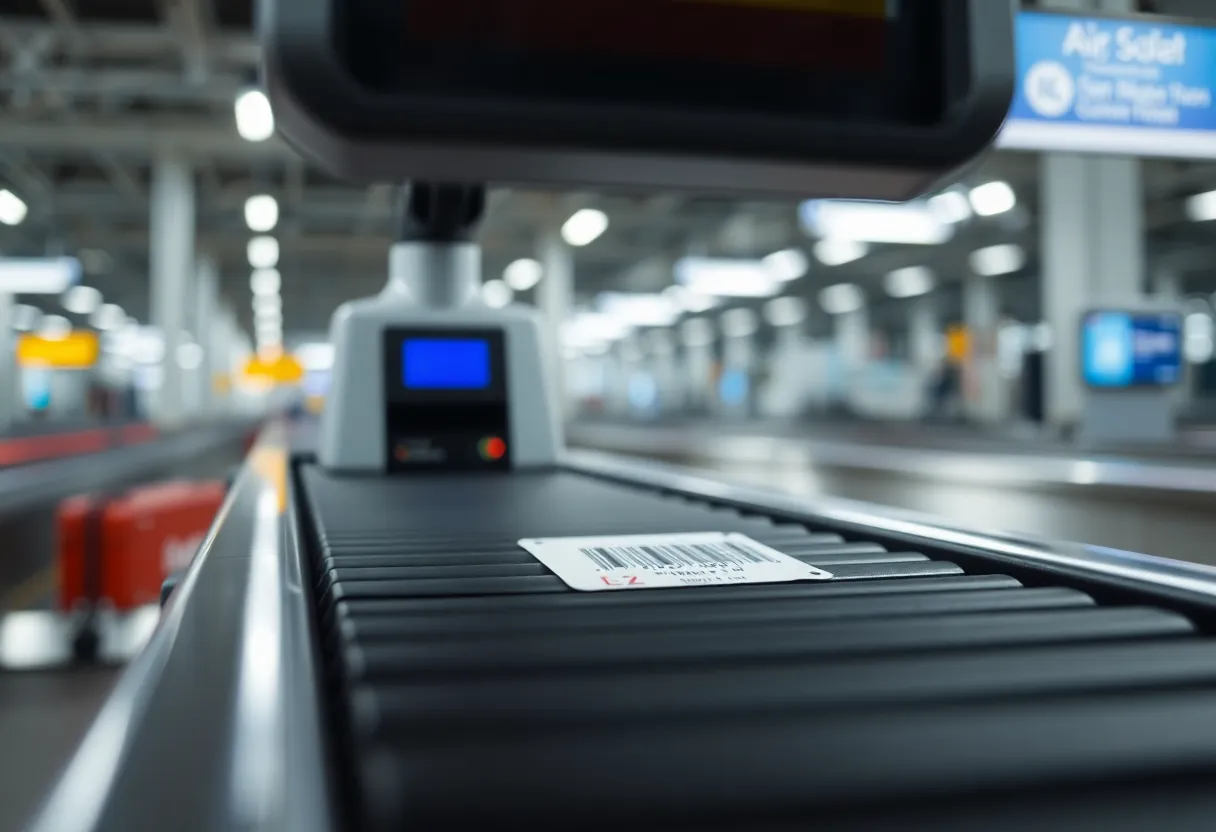
Bags that get flagged by automated screening get physically diverted off the main conveyor line to a separate area for manual inspection by security staff, a process that has to happen fast enough not to create a bottleneck in the primary sorting flow, since a single flagged bag sitting in a diversion queue can’t be allowed to back up the hundreds of other bags still moving through the main system behind it. Airports design specific buffer capacity and staffing levels around exactly this problem — how many bags can be diverted for manual screening simultaneously without the whole system’s throughput collapsing — because security screening rates and false-positive flag rates are treated as a real operational planning input, not just a security requirement bolted on separately.
The Sorting Problem Is a Real-Time Routing Puzzle
Once a bag is identified and cleared, the system has to physically route it to the correct location — a specific aircraft’s baggage cart or container, for a specific flight, at a specific gate, within the specific time window before that flight’s baggage loading cutoff. Large hub airports handling dozens of simultaneous departures use automated sortation systems, often based on tilt-tray or cross-belt sorter technology, that read each bag’s tag as it passes a scan point and mechanically divert it onto the correct output chute among potentially hundreds of possible destinations, entirely without human intervention for that specific routing decision.
This is where connecting bags create the hardest engineering and operational problem in the entire system: a bag arriving on an inbound flight with a short connection time has to be physically transferred from the arriving aircraft, through security re-screening if required by the specific airport and itinerary, and onto the correct outbound sorter path fast enough to make a connecting flight that might depart within an hour of the inbound arrival. Airports with notoriously tight minimum connection times build their baggage system specifically around moving bags through this transfer process as fast as physically possible, and a bag that misses its mechanical window — even by a few minutes — is the single most common reason for the “your bag didn’t make the connection” scenario travelers occasionally experience, a purely mechanical and time-based failure rather than anything to do with staff error in most cases.
Where Automation Has Genuinely Changed the Job in the Last Decade
The most visible recent change in baggage handling infrastructure is the growing deployment of autonomous mobile robots and automated guided vehicles for the ramp-side portion of the journey — moving loaded baggage carts and containers between the sorting facility and the aircraft itself, a task that traditionally required a human-driven tug vehicle. Airports including several major hubs in Europe and Asia have piloted or deployed autonomous towing systems specifically for this ramp transfer leg, reducing dependency on driver staffing for a repetitive route between fixed points.
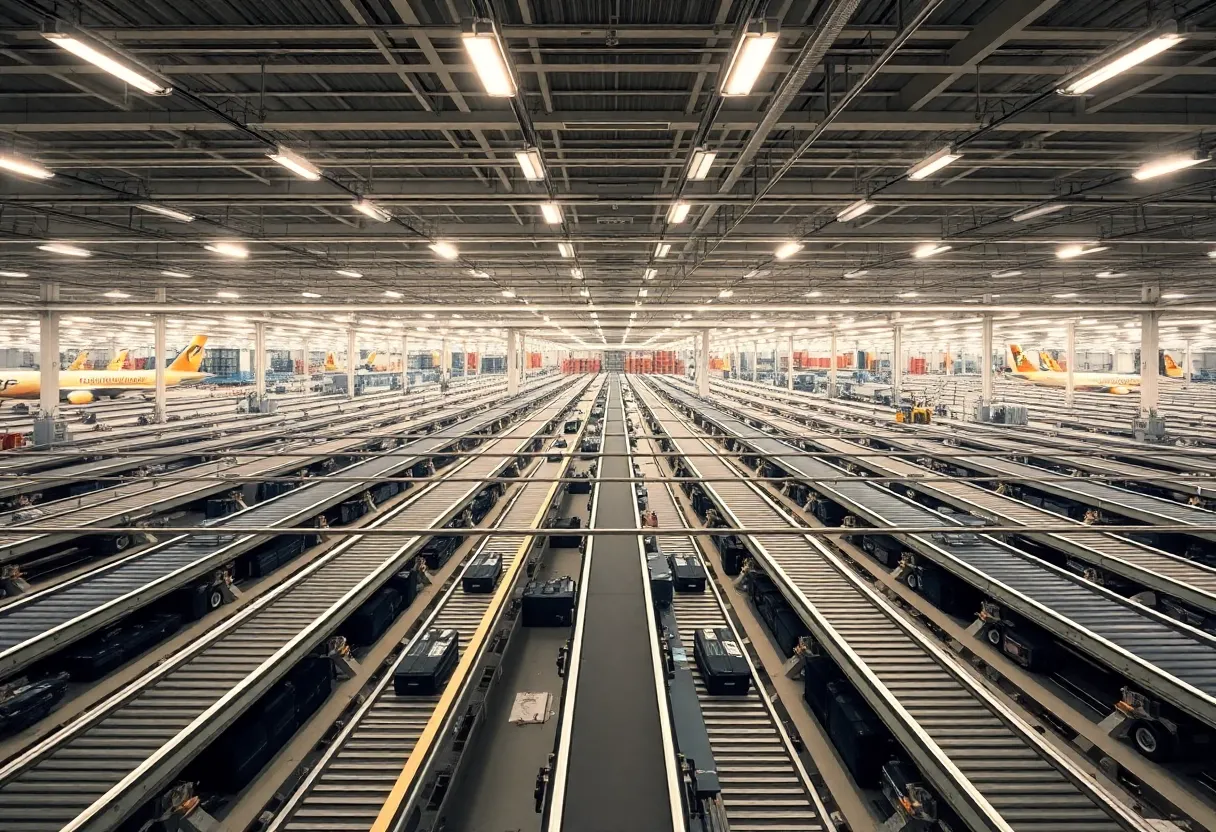
Machine vision systems have also started supplementing barcode and RFID reading for handling bags whose tags are damaged, obscured, or unreadable — a persistent operational headache that used to require manual intervention every time it happened, now increasingly handled by cameras that can identify a bag by shape, color, and other visual characteristics well enough to cross-reference against expected bags in the system and resolve the identification without stopping the belt.
Why Bags Still Occasionally Go Missing Despite All This
Given the sophistication of modern baggage systems, industry mishandling rates — while dramatically lower than a couple of decades ago, per IATA’s own tracked statistics — haven’t reached zero, and the remaining failure modes are informative about where the system’s real weak points sit: extremely tight connection windows that leave no buffer for even minor delays, manual tag application errors at check-in counters that create a bad barcode read before the bag even enters the automated system, and disruption events like weather delays or aircraft swaps that force baggage teams to manually re-route bags outside the system’s normal automated logic under real time pressure. The infrastructure has gotten remarkably good at solving the routine case reliably; it’s the edge cases, still handled by rushed human intervention when the automated plan breaks down, that account for most of what still goes wrong.