The Quiet Rise of Ultra-Wideband Chips in Everyday Phone Features

Futurion Editorial
July 9, 2026
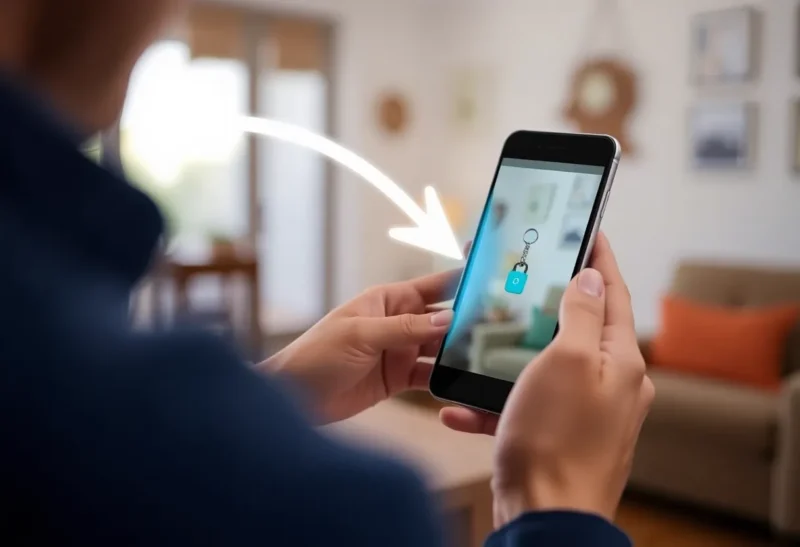
When you hold your iPhone near an AirTag and watch an arrow on screen guide you, centimeter by centimeter, to a lost set of keys buried under a couch cushion, or when you point your phone at a friend’s phone to instantly share a file with no menu navigation required, you’re using a radio technology that has been quietly embedded in flagship smartphones for several years without ever getting a dedicated marketing moment the way 5G or satellite connectivity did. Ultra-wideband, commonly abbreviated UWB, does something genuinely different from the wireless technologies most people already know, and its slow, feature-by-feature rollout into everyday phone use is a useful case study in how a technically impressive capability quietly becomes standard infrastructure without most users ever learning its name.
What Actually Makes UWB Different From Bluetooth or Wi-Fi
Bluetooth and Wi-Fi both estimate distance and position, when they attempt to at all, primarily by measuring signal strength — a coarse, unreliable proxy for distance that’s easily thrown off by walls, interference, and the way radio signals bounce and scatter in real indoor environments. Ultra-wideband takes a fundamentally different approach: it measures distance by timing exactly how long a radio pulse takes to travel between two devices, a technique called time-of-flight ranging, using extremely short pulses spread across a very wide slice of radio spectrum — hence “ultra-wideband.” Because it’s measuring actual signal travel time rather than inferring distance from signal attenuation, UWB can achieve positioning accuracy down to a few centimeters, compared to Bluetooth-based proximity estimation, which is typically only reliable to within a few meters at best under real-world conditions.
This precision advantage sounds like a nice-to-have improvement, but it actually unlocks an entirely different category of application. Bluetooth can tell you a device is “nearby,” in a fairly loose sense. UWB can tell you a device is 40 centimeters away and slightly to your left, updated many times per second — precise enough to build directional, real-time-guided experiences rather than just a rough “getting warmer” proximity indicator.
Where It Quietly Showed Up First
Apple was the first major smartphone manufacturer to embed a UWB chip at scale, introducing its custom U1 chip with the iPhone 11 in 2019, years before most consumers would encounter any feature that actually used it in an obviously compelling way. The initial use cases were genuinely subtle — improved AirDrop file-sharing directionality, letting the phone prioritize file transfer to whichever nearby device you were physically pointing at, rather than showing a list of every nearby AirDrop-enabled device and making the user pick manually.
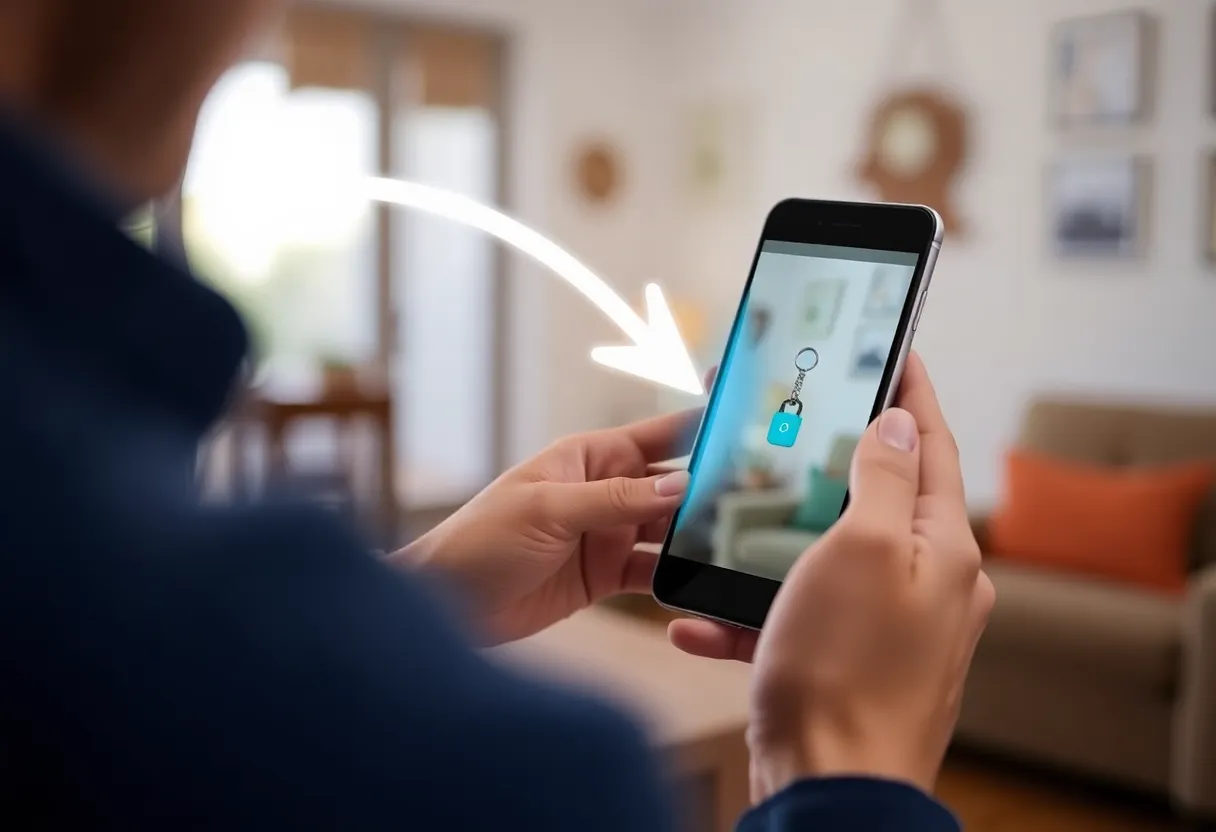
The feature that actually made UWB tangible to ordinary consumers arrived with AirTags in 2021, which used the iPhone’s UWB chip to power the “Precision Finding” feature — the on-screen directional arrow and distance readout that guides a user to a lost item with genuinely useful accuracy, rather than the vague “getting closer” proximity alerts that Bluetooth-only trackers like the earlier Tile products had offered for years prior. This was the first UWB application marketed directly and clearly to consumers as a distinct, namable benefit, even though the underlying chip had already been sitting in iPhones, doing quieter work, for two full product generations beforehand.
Android manufacturers followed a broadly similar trajectory, with Samsung integrating UWB into its flagship Galaxy lineup starting around 2022 and using it for similar item-finding features with its own SmartTag Plus trackers, as well as UWB-based digital car keys that let a phone unlock and start certain vehicles based on precise proximity detection, distinguishing between a phone that’s genuinely inside or right next to the car versus one that’s merely somewhere in the same building — a meaningfully harder and more security-relevant distinction than Bluetooth-only proximity unlock systems could reliably make on their own.
The Security Angle That Matters More Than the Convenience Features
UWB’s precision has turned out to matter more for security-sensitive applications than for the convenience features that first introduced it to consumers, and this is arguably the more important part of the technology’s quiet rise. Traditional Bluetooth-based proximity systems, including keyless car entry and phone-based door unlock systems, have long been vulnerable to a well-documented attack called a relay attack, where an attacker uses radio equipment to essentially extend the effective range of a legitimate key’s signal, tricking a car or door into believing the authorized key is nearby when it’s actually sitting inside the owner’s house, sometimes hundreds of meters away, while the attacker relays the signal from just outside the vehicle.
UWB’s time-of-flight ranging is considerably more resistant to this specific attack, because relaying a UWB signal without introducing detectable timing delay is much harder than relaying a simple Bluetooth signal-strength measurement, given how precisely UWB depends on measuring exact pulse travel time rather than a more easily spoofed proxy signal. This is why UWB has become the preferred underlying technology for the newer generation of digital car key standards, including elements of the Car Connectivity Consortium’s Digital Key specification, which several major automakers have adopted specifically because of this improved relay-attack resistance compared to the Bluetooth-only digital key systems that preceded it.
Where the Technology Is Quietly Expanding Next
Beyond item-finding and car keys, UWB is steadily showing up in a widening set of applications that mostly share the same underlying pattern: situations where precise, real-time relative positioning between two or more devices genuinely matters, rather than just rough proximity. Indoor navigation and asset tracking within large facilities — warehouses, hospitals, airports — increasingly uses fixed UWB anchor points combined with UWB-equipped mobile devices or tags to achieve indoor positioning accuracy that GPS, which struggles significantly indoors, simply cannot match. Contactless payment and access control systems have begun exploring UWB specifically for its relay-attack resistance, applying the same security logic that made it attractive for car keys to building access badges and point-of-sale terminals.
Smart home applications represent a newer and still-developing frontier, with UWB being explored as a way to let a phone or dedicated smart home hub understand precisely which room a person is in, or hand off media playback seamlessly between speakers as someone walks through a house, based on the kind of centimeter-level positioning accuracy that Bluetooth-based presence detection has never been able to deliver reliably.
Why It Never Got a Marketing Moment
Part of why UWB has remained relatively unknown by name, despite sitting in hundreds of millions of phones, is that it doesn’t lend itself to the kind of single, flashy marketing headline that technologies like 5G or satellite messaging get, because its value shows up entirely through specific downstream features — precise item finding, more secure car keys, better indoor navigation — rather than through any single number or experience a company can put on a billboard. It’s a foundational, enabling technology in the truest sense: quietly making a growing list of specific features work better than they otherwise could, present in the background of an increasing share of daily phone interactions, largely unnoticed by the people benefiting from it, which is arguably the most common way genuinely useful infrastructure technology actually succeeds.