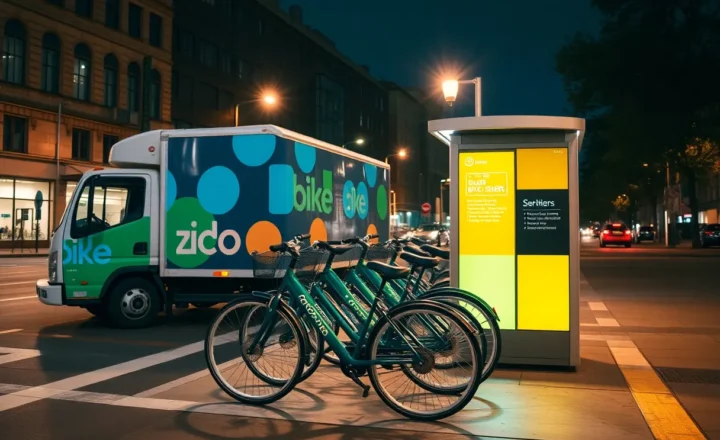
Why Cargo Bike Delivery Fleets Are Quietly Replacing Vans in Dense Cities

Anita Osei
July 9, 2026
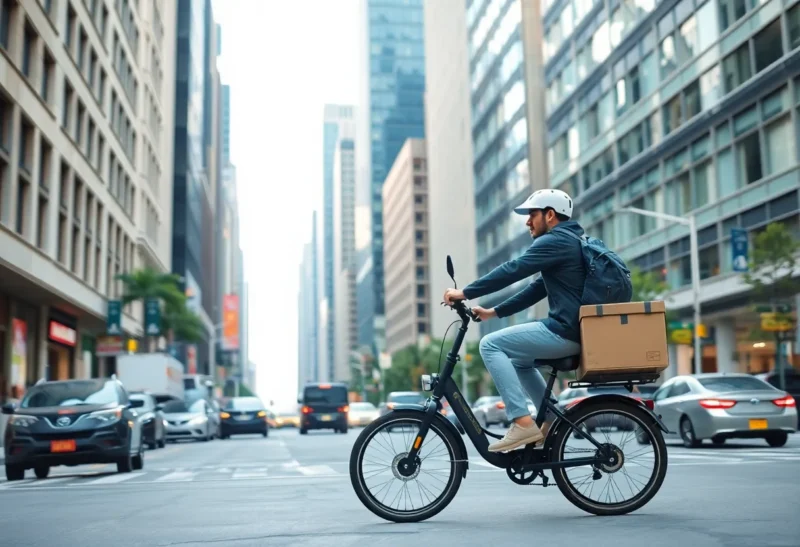
Amazon, UPS, and DHL have all quietly built out electric cargo bike delivery fleets in dense European and, increasingly, North American city centers over the past several years, and the reason isn’t environmental branding — it’s that in specific, well-defined urban conditions, a cargo bike now delivers more packages per hour than a van does. I’ve spent years working in logistics technology and supply chain operations, and this is one of the more genuinely counterintuitive efficiency stories in urban delivery: a slower vehicle, in exactly the right context, beating a faster one on the metric that actually matters to a delivery company’s bottom line.
Why “Slower” Doesn’t Mean “Less Efficient” Here
The math that makes cargo bikes competitive has nothing to do with top speed and everything to do with what actually consumes a delivery driver’s time in a dense urban environment. A van driver in a congested city center spends a disproportionate share of every delivery cycle not driving, but searching for parking, waiting in traffic, and walking from a parking spot to the actual delivery address — in the densest, most congested urban cores, this overhead can eat more total time per stop than the actual driving between stops. Cargo bikes, particularly e-cargo bikes with pedal-assist motors that handle heavier loads without requiring extreme physical effort, can use bike lanes, cut through pedestrian zones and shortcuts inaccessible to vehicles, and park directly in front of or very near a delivery address without needing to find (or pay for) a legal parking space — for many stops in a dense area, essentially eliminating the parking-and-walking overhead that dominates van delivery time.
Multiple operational studies, including research published by the Massachusetts Institute of Technology’s Center for Transportation & Logistics and internal case studies published by logistics companies themselves, have found cargo bikes achieving comparable or higher delivery stops per hour than vans in dense city center conditions specifically, even though a cargo bike carries a smaller total payload per trip and travels at meaningfully lower average speed. The efficiency gain is entirely about eliminating dead time, not about the vehicle itself being inherently faster.
The Micro-Hub Model That Makes This Work at Scale
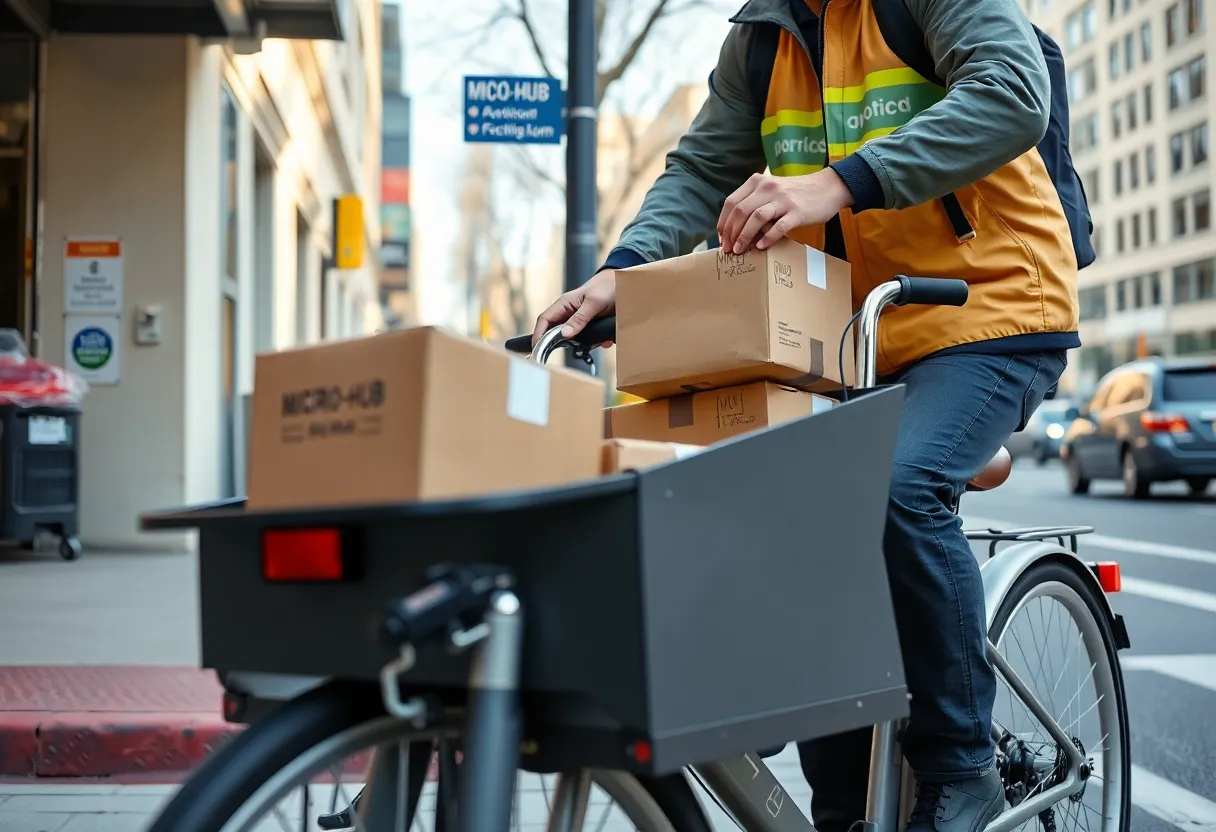
Cargo bikes have an obvious limitation that determines how this actually gets deployed: limited cargo capacity compared to a van, meaning a single cargo bike can’t cover the same wide delivery route a van driver might run in a lower-density area. The operational model that’s emerged to work around this constraint is the micro-hub or micro-fulfillment center — a small urban warehouse or converted retail space positioned within a dense neighborhood, where larger vehicles (vans or trucks) bring bulk shipments in from outside the city, and cargo bikes then handle the final, short-distance leg of delivery to individual addresses within that neighborhood.
This “last-mile within the last mile” structure is what actually makes the economics close, because it confines cargo bikes to exactly the routing profile where they outperform vans — short-distance, high-stop-density delivery — while leaving longer-distance bulk transport to vehicles better suited for it. DHL’s operations in several major European cities, and Amazon’s expanding cargo bike and micro-hub deployments in cities including London, New York, and Paris, follow this same basic structure, and the model’s spread has tracked closely with how many cities have made urban warehouse or retail space available for micro-hub leasing, which has itself become a competitive real estate category in dense city centers.
The Regulatory Push That’s Accelerating Adoption
Municipal policy has become a significant independent driver of cargo bike adoption, separate from the underlying operational economics. Low-emission zones and increasingly strict vehicle access restrictions in city centers across Europe — London’s Ultra Low Emission Zone, various Zone à Faibles Émissions restrictions across French cities, and similar low-emission zone frameworks spreading across German and Italian cities — have made diesel and even some gasoline delivery van access to dense urban cores progressively more expensive or outright restricted, directly pushing delivery companies toward zero-emission alternatives regardless of the standalone efficiency case.
Dedicated cargo bike infrastructure and loading zone allocations, which several cities have specifically built out as part of broader urban delivery policy (Paris and several Dutch cities have been particularly aggressive on this front), further tilt the operational math in cargo bikes’ favor by giving them access to infrastructure and curb space that reduces friction relative to van delivery even further. This policy environment means the cargo bike delivery trend, while genuinely supported by real operational efficiency data, has also been meaningfully accelerated by regulatory pressure that makes the van alternative comparatively more expensive and complicated in exactly the markets where cargo bikes perform best.
Where Cargo Bikes Clearly Don’t Work
It’s worth being direct about the limits, because this isn’t a universal delivery solution. Low-density suburban and rural delivery routes, where stops are spread far apart and total distance covered matters more than per-stop parking friction, remain firmly van and truck territory — the entire efficiency case for cargo bikes depends on a stop density that simply doesn’t exist outside dense urban cores, and no reasonable amount of infrastructure investment changes that basic geography. Heavy or bulky items — furniture, appliances, large B2B shipments — exceed cargo bike capacity by a wide margin regardless of routing cleverness, meaning cargo bikes have settled into a role covering a specific subset of parcel delivery (smaller packages, dense residential and commercial addresses) rather than replacing van delivery wholesale even within the cities where they’ve been most successfully deployed.
Weather and seasonal variation also introduce real operational complexity that van delivery doesn’t face to the same degree — heavy snow, ice, or extreme heat meaningfully affect cargo bike rider safety and delivery speed in ways that a climate-controlled van cabin doesn’t, and companies operating cargo bike fleets in climates with harsh winters have had to build seasonal contingency capacity (falling back on vans during the worst weather windows) that adds operational complexity a pure cargo bike fleet in a milder climate wouldn’t need.
The Labor Side of This Shift
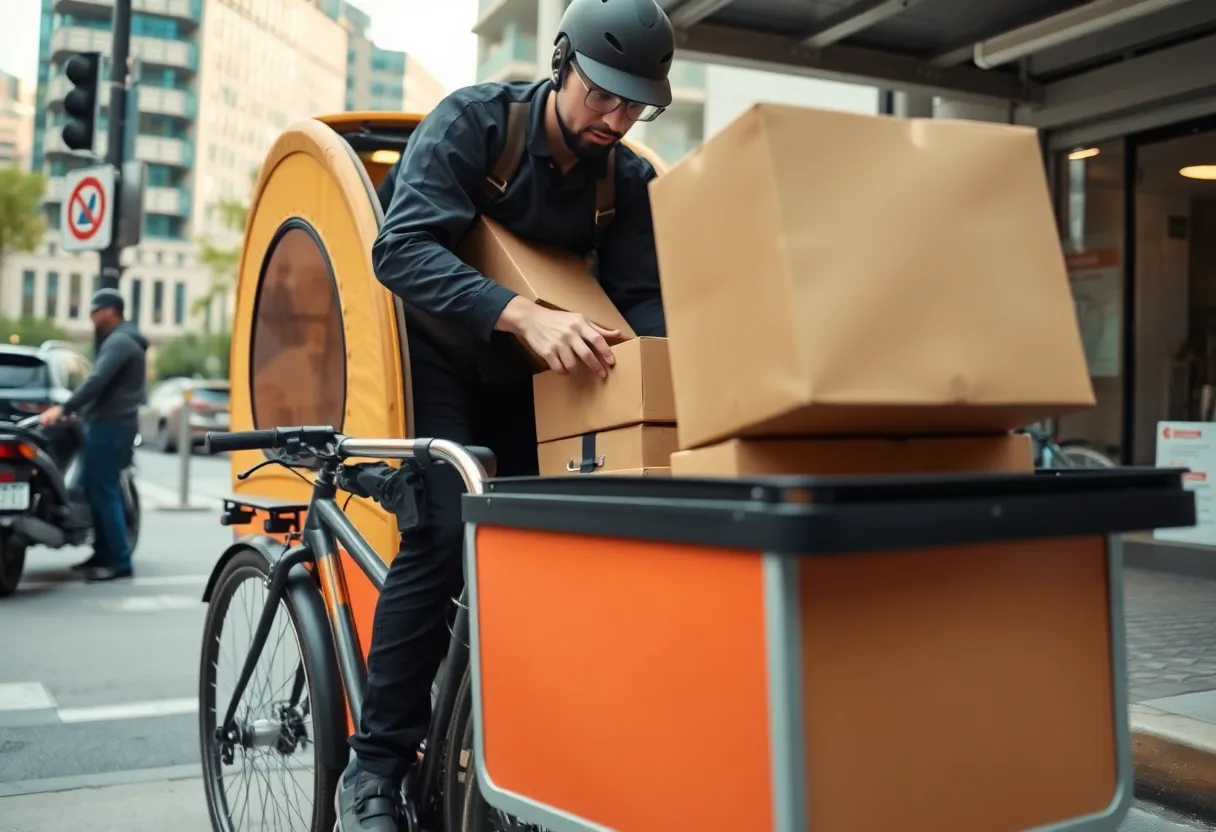
Worker experience is a genuinely mixed part of this story that deserves more attention than it usually gets in coverage focused purely on logistics efficiency. Cargo bike delivery work involves real physical exertion, especially for riders covering longer shifts or working in adverse weather, and labor advocates in several European markets have raised legitimate concerns about injury rates, adequate break provisions, and whether per-delivery or per-stop pay structures (common in gig-style delivery contracting) create pressure to rush deliveries in ways that compromise safety, concerns broadly similar to those raised about gig delivery work on any vehicle type, but with physical exertion factors specific to pedaling a loaded cargo bike through traffic that a van driver doesn’t face.
Companies operating these fleets directly, rather than through gig contracting arrangements, have generally reported better ability to manage these labor concerns through direct employment structures, proper equipment maintenance, and shift scheduling that accounts for weather and physical demands — a distinction that’s become a real point of differentiation in how responsibly different operators in this space are perceived by labor advocates and city regulators alike.
Where This Is Headed
The realistic trajectory is continued expansion specifically within the dense urban delivery niche where the model already works, rather than a broader takeover of delivery logistics as a whole. More cities are likely to formalize micro-hub zoning and cargo bike infrastructure as this model proves out, and more delivery companies are likely to expand cargo bike operations in their densest markets as the operational efficiency case keeps getting validated by real deployment data rather than remaining a pilot-program novelty.
What’s genuinely changed over the past five years, and what makes this different from earlier, less successful attempts at bike-based urban delivery, is that the micro-hub logistics model has matured enough to reliably deliver the efficiency gains the underlying vehicle economics always promised in theory. That combination — a real efficiency case, proven operational infrastructure, and regulatory tailwinds all pointing the same direction — is why this has moved from a sustainability talking point to a genuine, expanding piece of how packages actually get delivered in the world’s densest cities.