Why Sodium-Ion Batteries Are Quietly Showing Up in Budget EVs First

Futurion Editorial
July 9, 2026
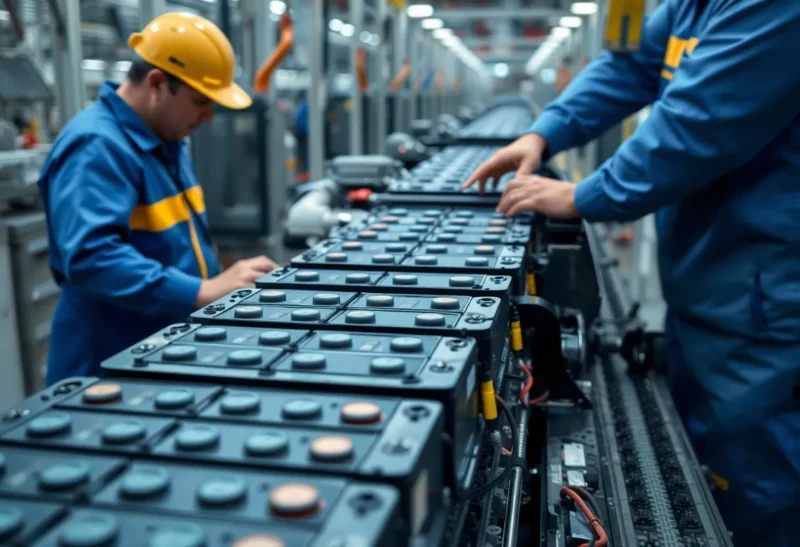
While most battery headlines over the past few years have chased solid-state chemistry and its promise of dramatically longer range, a quieter and arguably more immediately consequential shift has been happening at the opposite end of the market: cheap, short-range electric vehicles built around sodium-ion batteries instead of lithium-ion. It’s not a technology anyone expects to end up in a long-range premium EV anytime soon. That’s precisely the point — sodium-ion is winning its first real commercial foothold specifically because it’s worse than lithium-ion in the one way that happens not to matter much for a small city runabout, and better in the ways that matter enormously for keeping that runabout cheap.
The Basic Chemistry Trade-off
Sodium-ion batteries work on essentially the same electrochemical principle as lithium-ion — ions shuttling between electrodes through an electrolyte during charge and discharge — just with sodium substituted for lithium as the charge-carrying ion. Sodium sits directly below lithium on the periodic table, sharing similar chemical behavior, which is exactly why battery researchers have known sodium-ion was theoretically viable for decades, even as lithium-ion pulled far ahead commercially starting in the 1990s.
The trade-off is straightforward and well understood: sodium ions are larger and heavier than lithium ions, which fundamentally limits how much energy a sodium-ion cell can store for a given weight and volume compared to an equivalent lithium-ion cell. Current commercial sodium-ion cells typically deliver somewhere around 30-40% less energy density than mainstream lithium-ion cells, which translates directly into either a heavier battery pack or a shorter range for the same pack size — a genuinely serious limitation for any vehicle where long range is the priority.
What sodium-ion gives up in energy density, it gains back in raw material economics, and this is where the story actually gets interesting. Sodium is one of the most abundant elements on Earth, extractable cheaply from ordinary salt, while lithium extraction remains geographically concentrated, environmentally contentious in several major extraction regions, and subject to the kind of price volatility that comes with a global supply chain dominated by a handful of countries and companies. Sodium-ion cells can also typically skip cobalt and nickel entirely — two of the most expensive and supply-constrained materials in conventional lithium-ion cathodes — which removes a significant chunk of raw material cost and supply chain risk at once.
Why This Trade-off Actually Fits the Budget EV Segment Perfectly
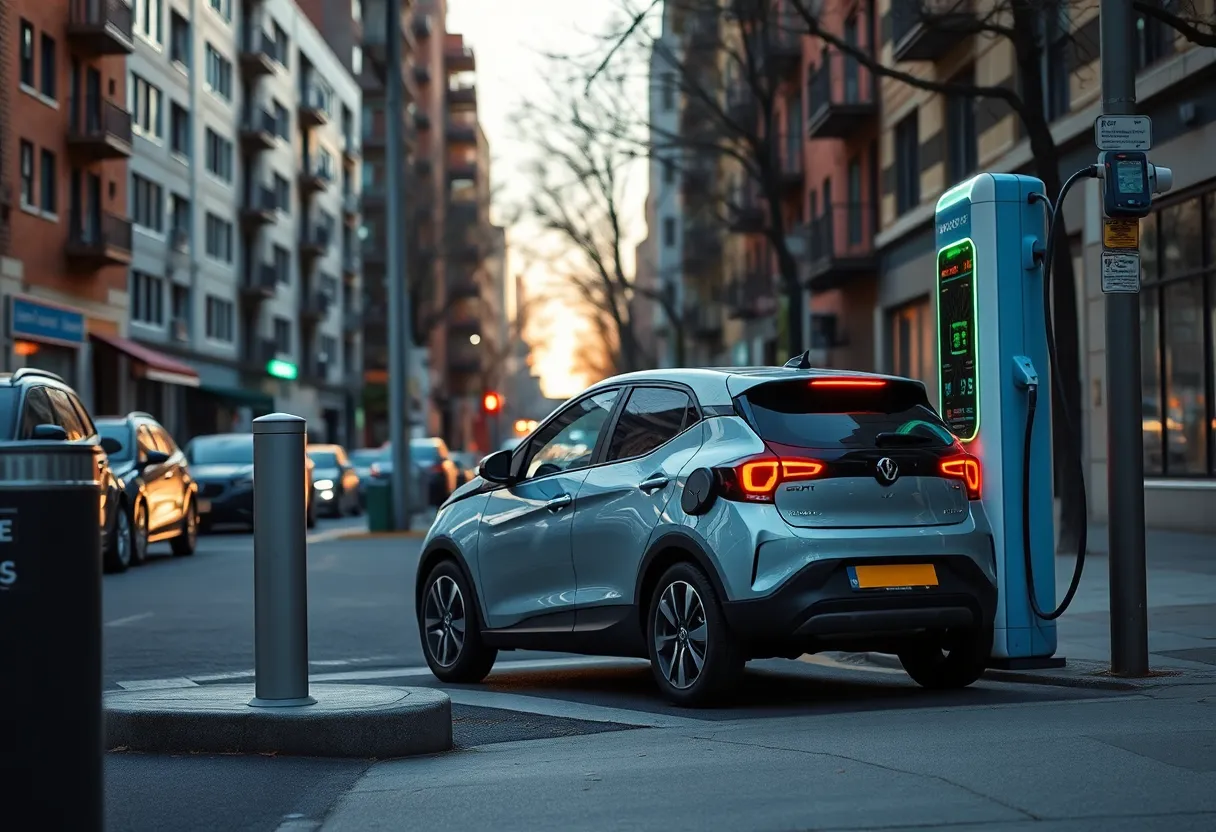
A short-range city car built for urban commuting and errands — the kind of vehicle segment that has struggled to be profitable under lithium-ion cost structures because customers in this segment are extremely price sensitive and unwilling to pay a premium for range they don’t need — turns out to be almost exactly the use case sodium-ion’s trade-off profile suits best. A car that only needs 200 kilometers of range for daily urban use doesn’t lose much real-world utility from sodium-ion’s lower energy density, since the pack can simply be sized appropriately for that shorter range target, while the underlying cost savings from cheaper, more geographically distributed raw materials flow directly into a lower vehicle price — the single factor that matters most in the budget EV segment.
Sodium-ion chemistry also tends to perform better than lithium-ion in cold weather, retaining a higher percentage of its capacity at low temperatures — a genuinely useful property for a budget commuter vehicle that, unlike a premium EV, likely won’t have as sophisticated a battery thermal management system to compensate for cold-weather performance loss. Additionally, sodium-ion cells have generally demonstrated better safety characteristics in thermal runaway testing, being somewhat less prone to the kind of rapid, self-sustaining overheating failure that has occasionally plagued lithium-ion packs, which matters for manufacturers trying to hit an aggressive price target without over-investing in battery safety engineering that a premium vehicle’s price point could otherwise absorb more easily.
Who’s Actually Shipping This
Chinese battery and automotive manufacturers have moved fastest and furthest on commercializing sodium-ion for vehicles, which fits the broader pattern of China’s EV industry aggressively pursuing cost leadership across its entire supply chain. CATL, the world’s largest EV battery manufacturer, has been developing and promoting its sodium-ion “Naxtra” battery technology specifically for cost-sensitive vehicle segments, positioning it explicitly as a complement to, rather than a replacement for, its mainstream lithium-ion lineup. Several smaller Chinese EV manufacturers, including brands specifically targeting the budget and micro-EV segment that has become a significant and growing category within the Chinese domestic EV market, have announced or begun producing models using sodium-ion packs, often for genuinely tiny, short-range city cars aimed at buyers who previously might have considered a gasoline-powered microcar or an electric scooter instead of a full electric vehicle.
This segment-specific rollout pattern — sodium-ion appearing first in the cheapest, shortest-range vehicles rather than gradually creeping up from the bottom of premium lineups the way many automotive technologies typically diffuse — reflects a deliberate strategic bet by manufacturers that the chemistry’s cost advantage is currently large enough to matter most, and its range disadvantage small enough to tolerate, specifically at this end of the market, while premium and mid-range EVs continue relying on lithium-ion (and eventually, potentially, solid-state chemistry) where the extra energy density genuinely justifies the extra cost.
The Manufacturing Advantage Nobody Mentions Enough
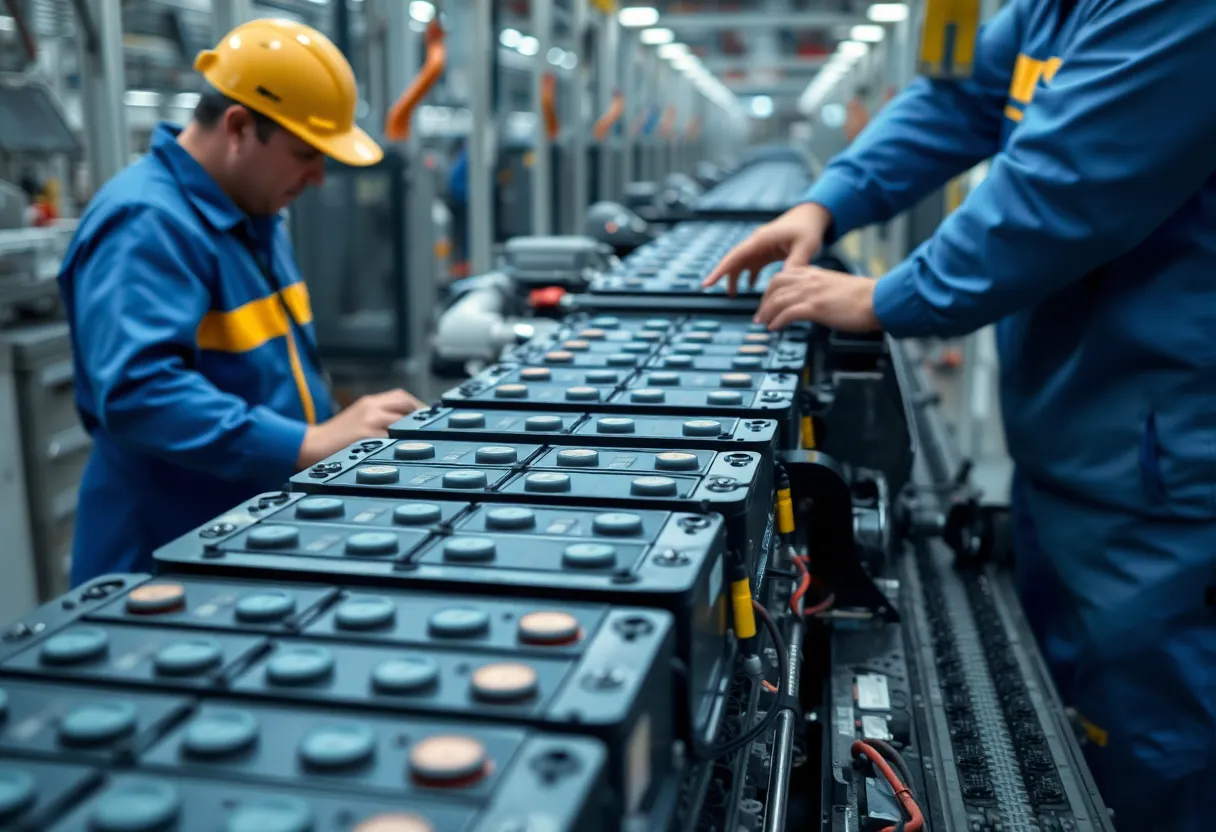
A frequently underappreciated point in favor of sodium-ion’s commercial prospects is that its cell manufacturing process is largely compatible with existing lithium-ion battery gigafactory equipment and processes, requiring comparatively modest retooling rather than an entirely new manufacturing infrastructure buildout. This matters enormously for how fast a technology can actually scale commercially — solid-state batteries, by contrast, generally require substantially different and still-immature manufacturing processes, which is a meaningful part of why solid-state has taken so much longer to reach real commercial volume despite years of promising lab results and investor enthusiasm. Sodium-ion’s relative manufacturing compatibility with the existing lithium-ion industrial base is a quiet but genuinely important reason it has been able to move from lab curiosity to shipping vehicles considerably faster than some higher-profile battery chemistry alternatives.
The Realistic Ceiling for This Technology
Battery researchers and industry analysts covering this space are generally consistent in describing sodium-ion’s likely long-term role: a genuinely useful, cost-optimized complement to lithium-ion for specific applications — budget short-range EVs, stationary grid energy storage where weight and volume matter far less than cost per kilowatt-hour, and certain two- and three-wheeler electric vehicle categories that dominate personal transportation in much of Asia — rather than a wholesale lithium-ion replacement. The fundamental energy density gap is a matter of ion physics, not manufacturing immaturity, which means it’s unlikely to close enough through further engineering refinement to make sodium-ion competitive for long-range or performance-oriented vehicles, the way some earlier lithium-ion chemistry improvements did close analogous gaps over time.
What sodium-ion represents, more than a single breakthrough technology, is a useful reminder that battery chemistry doesn’t need to be universally superior to be commercially important — it just needs to be the right trade-off for a specific, large enough market segment. Budget EVs turned out to be exactly that segment, and the quiet rollout of sodium-ion in exactly this corner of the market, largely overshadowed by flashier solid-state headlines, may end up doing more to actually expand global EV affordability and adoption in the near term than any single higher-profile battery breakthrough currently in development.