How Solid-State Batteries Could Unlock Electric Vehicles’ Remaining Limitations

Jordan Lee
July 7, 2026
Battery technology has been the defining constraint of electric vehicle adoption since the modern EV era began. The improvements in lithium-ion batteries over the past decade—higher energy density, lower costs, faster charging—have been substantial enough to make EVs competitive with internal combustion vehicles on most practical dimensions for most drivers. But several limitations remain: the time required for a full charge is still multiple times longer than a gasoline refill; range anxiety persists in cold weather and at highway speeds; and the long-term degradation of lithium-ion batteries creates uncertainty about battery pack replacement costs.
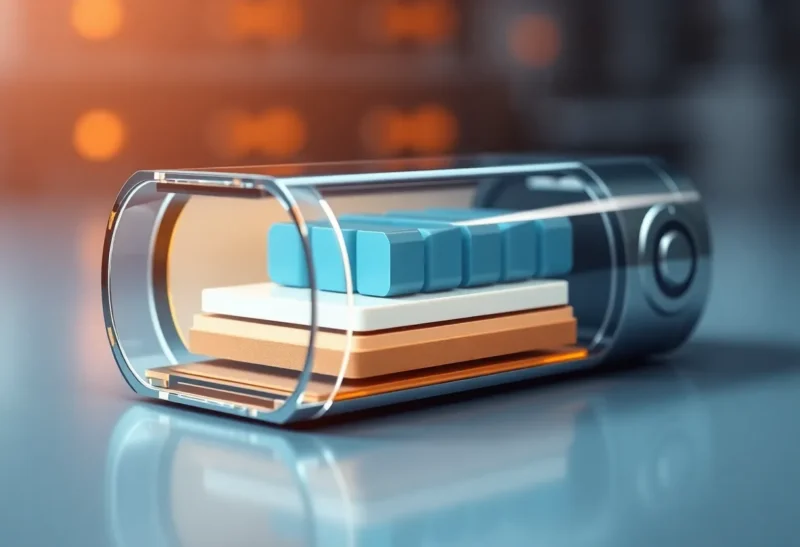
Solid-state batteries—a class of battery architectures that replace the liquid electrolyte of conventional lithium-ion cells with a solid material—have been presented as the technology that addresses these remaining limitations simultaneously. The claims have circulated for years with a frustrating pattern: “5 years away” has been said about solid-state batteries for more than a decade. The technology’s current status is more nuanced: it’s working in limited commercial applications, it has genuine advantages over liquid-electrolyte cells in specific areas, and the path to mass automotive deployment has real obstacles that aren’t merely engineering challenges.
Why the Electrolyte Matters
In a conventional lithium-ion battery, lithium ions move between electrodes through a liquid electrolyte—typically a lithium salt dissolved in an organic solvent. This liquid has several properties that shape battery performance and safety:
Flammability. The organic solvents used in liquid electrolytes are flammable. Under fault conditions—physical damage, overcharging, internal short circuit—these solvents can ignite and sustain combustion, which is why lithium-ion battery fires are difficult to extinguish and why automotive battery packs require extensive thermal management and protection systems. The liquid electrolyte is the primary flammability source in current EV batteries.
Temperature sensitivity. Liquid electrolytes become more viscous and less conductive at cold temperatures, reducing the rate at which lithium ions can move and thus reducing power output and charge acceptance in cold weather. This is the mechanism behind the well-documented winter range reduction in EVs—the battery’s peak power and charging rate are both limited by electrolyte conductivity. It’s also why fast charging requires battery preconditioning (heating the battery to optimal temperature before the charge session begins).
Dendrite formation. When lithium metal is used as an anode (the negative electrode), lithium ions deposit unevenly during charging, forming branching metallic structures called dendrites that can eventually pierce the separator and cause a short circuit. This dendrite problem is why virtually all current EV batteries use graphite anodes rather than lithium metal, even though lithium metal has roughly 10 times the theoretical energy density of graphite. The liquid electrolyte enables dendrite growth; solid electrolytes—if they’re sufficiently hard and dense—can physically prevent dendrites from propagating.
What Solid Electrolytes Offer
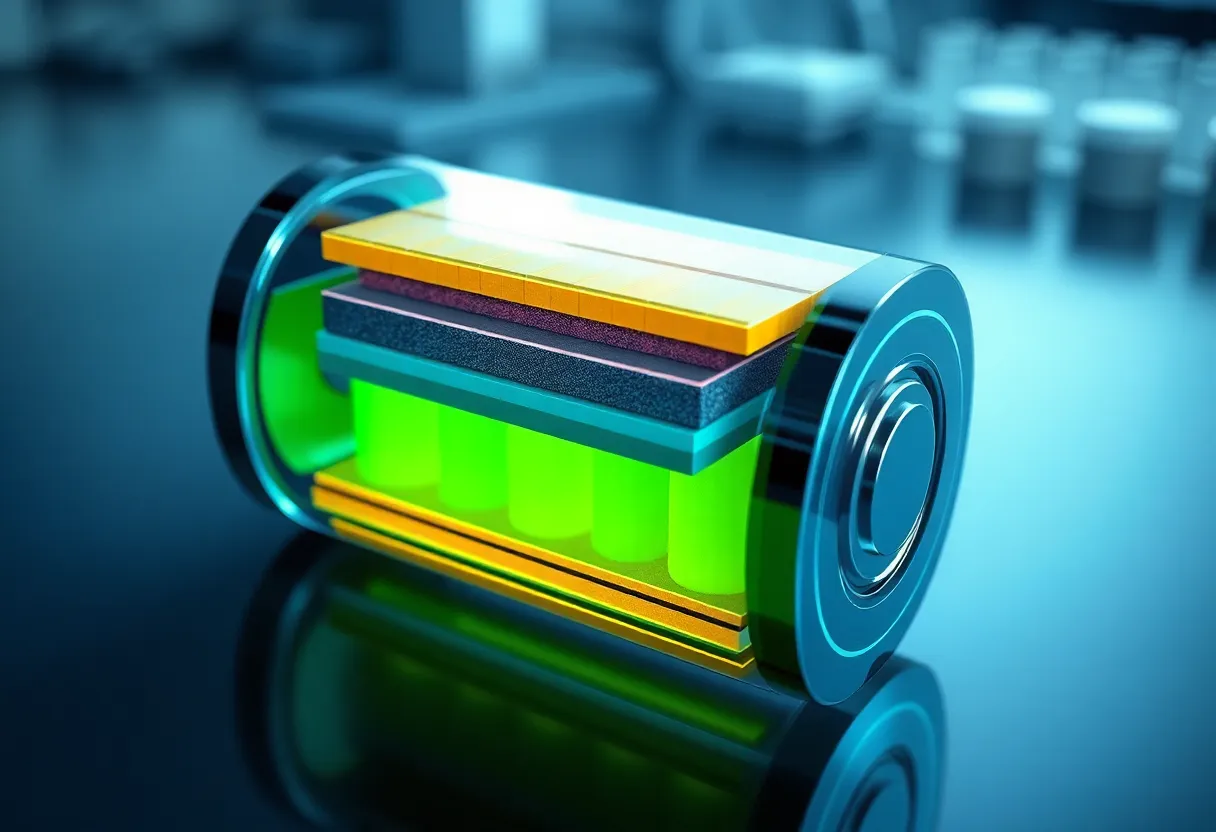
Replacing the liquid electrolyte with a solid material addresses several of these limitations directly:
Reduced flammability. Solid electrolytes—ceramics, glass, or polymer-based materials—are not flammable in the way organic solvents are. A solid-state battery fire is not impossible (the electrodes can still burn), but the primary flammability source is removed. This allows significant simplification of battery pack thermal management systems and may reduce the space and weight requirements for safety systems—a meaningful advantage for vehicle design.
Better cold-weather performance. Some solid electrolyte materials maintain conductivity more consistently across temperature ranges than liquid electrolytes. The specific improvement depends on the electrolyte chemistry; sulfide-based solid electrolytes (currently the most promising for automotive applications) have temperature-conductivity profiles that outperform liquid electrolytes in cold conditions, though the improvement magnitude varies.
Enabling lithium metal anodes. This is the biggest potential advantage. With a solid electrolyte physically blocking dendrite propagation, lithium metal anodes become viable—or at least more viable than in liquid-electrolyte cells. A lithium metal anode combined with a solid electrolyte could produce energy densities significantly above current lithium-ion cells, enabling the same range from a smaller, lighter, cheaper battery pack, or substantially more range from the same pack size.
The theoretical energy density advantage of lithium metal anode solid-state batteries over the best current lithium-ion cells is roughly 40–60% by weight and 30–50% by volume. If achieved in production cells that maintain this advantage through thousands of charge cycles, the impact on EV range, weight, and cost would be transformative.
The Engineering Obstacles That Remain
The gap between laboratory demonstrations and automotive mass production is where solid-state battery development is currently stuck.
Interface resistance. The interface between the solid electrolyte and the electrodes is a fundamental problem in solid-state cells. In a liquid electrolyte cell, the liquid conforms to the electrode surface and maintains intimate ionic contact across the full contact area. Solid electrolytes have rigid surfaces that don’t conform to the electrode’s changing volume during charge/discharge cycles. As the lithium metal anode expands and contracts, contact with the solid electrolyte is lost at some interface points, increasing resistance and degrading cycle life. Managing this interface is one of the primary engineering challenges that production solid-state cells need to solve.
Cycle life under automotive conditions. Automotive batteries need to sustain thousands of charge/discharge cycles with minimal capacity loss—typically 1,000 cycles to 80% of original capacity is considered the automotive standard. Early solid-state cells in laboratory settings have shown good cycle life under gentle conditions but have been more prone to degradation under aggressive cycling (fast charging, deep discharge, thermal cycling) than the lab numbers suggest. Validating cycle life under realistic automotive conditions requires years of testing.
Manufacturing at scale. Current production methods for lithium-ion batteries are highly optimised through decades of manufacturing development and economies of scale. Solid electrolyte materials are manufactured through different processes—some ceramics require high-temperature sintering, some sulfide materials are air-sensitive and require inert atmosphere processing. Building the manufacturing infrastructure to produce solid-state cells at automotive volumes is a capital and process engineering challenge that doesn’t disappear once the cell chemistry is demonstrated in the lab.
Cost. Solid-state cells are currently more expensive to produce than lithium-ion cells at comparable energy. The cost premium will shrink with scale and manufacturing optimisation, but the transition period requires producing an initially expensive product in sufficient volume to drive costs down—a chicken-and-egg challenge that requires large capital commitments from manufacturers who are simultaneously managing lithium-ion battery production.

The Commercial Landscape in 2026
Several manufacturers have solid-state battery cells in production at small scale or in late-stage development:
Toyota has committed publicly to solid-state battery EVs and has announced multiple timeline targets—most of which have slipped, but the company’s R&D investment is substantial and its patents in the solid-state space are extensive. Toyota’s current target is introducing solid-state battery vehicles in the second half of the decade, with initial production using a bipolar design that incorporates some solid electrolyte elements but isn’t fully solid-state.
QuantumScape (backed by Volkswagen) has demonstrated promising cycle life data on lithium-metal solid-state cells and has begun sending samples to automotive partners, but scaling from sample production to automotive volume production remains the challenge. QuantumScape’s 2025 annual report acknowledged that manufacturing scale-up is the primary outstanding challenge—the cell chemistry is working at small scale.
Solid Power (backed by BMW and Ford) is pursuing a different chemistry approach and has begun pilot production at its Colorado facility, with automotive-format cell samples delivered to partners for testing.
Samsung SDI, CATL, and Panasonic all have active solid-state development programmes, and all have indicated commercialisation timelines in the 2027–2030 range for initial production vehicles—though these timelines have a history of slipping.
The first commercially available solid-state battery EVs are likely to be premium vehicles with small initial production volumes—essentially high-margin products that allow manufacturers to bring cells to market while manufacturing scales and costs come down. This follows the pattern of other battery technology transitions, where the premium market absorbs early production at high cost before volumes grow enough to bring prices down for mainstream vehicles.
What This Means for EV Buyers in the Near Term
For the majority of EV buyers making purchasing decisions in 2026–2028, solid-state batteries are not a meaningful factor. Lithium-ion battery technology continues to improve in its own right—better cathode chemistry (LFP, high-nickel NMC), improved cell-to-pack integration, faster charging through better thermal management—and current-generation EVs are genuinely competitive for most driving patterns.
The specific EV limitations that solid-state batteries most directly address—fast charging times and cold weather range—are being partially addressed through other means in the interim. 800-volt architectures in current production vehicles (Hyundai Ioniq 6, Porsche Taycan, Kia EV6) already enable 20–80% charges in 15–20 minutes under optimal conditions. Cold weather performance is improving through better battery conditioning systems and chemistry optimisation.
Solid-state batteries matter most for the EV market’s long-term trajectory: they enable vehicle designs that are lighter, safer, and longer-range than current lithium-ion limits allow, and they may eventually reduce the cost premium of EVs compared to internal combustion vehicles by increasing energy density enough to reduce battery pack size while maintaining range. That outcome—when it arrives—will be significant. The timeline for mass automotive deployment remains 2028–2032 at the optimistic end of credible estimates, with meaningful volume not until the early 2030s.