The Hidden Complexity Behind Real-Time Language Dubbing for Streaming

Soren Bell
July 9, 2026
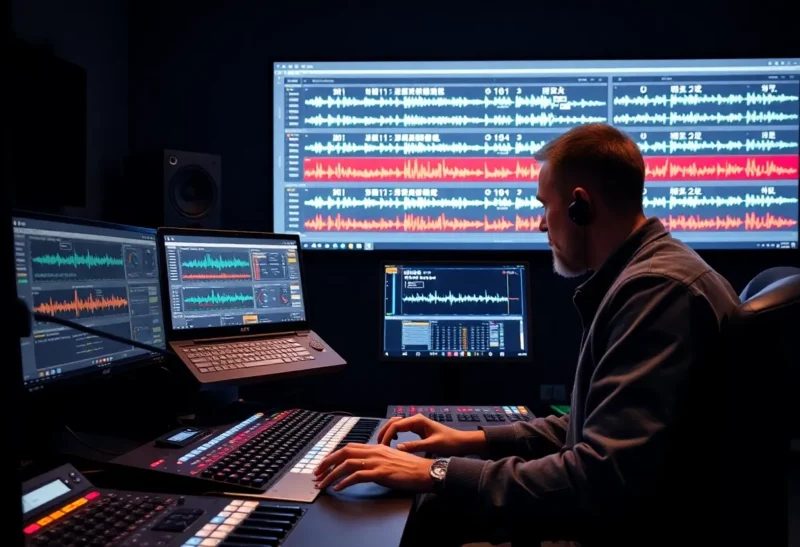
YouTube’s automatic dubbing rollout, Amazon’s investment in AI dubbing through subsidiaries, and Netflix’s growing use of AI-assisted localization tools have all pushed the same pitch into the mainstream over the past two years: instant, high-quality dubbing into dozens of languages, generated automatically instead of requiring the traditional process of hiring voice actors, translators, and audio engineers for every language a piece of content needs to reach. I’ve spent six years doing live sound and post-production audio work, and the gap between the demo reels these companies show and what’s actually achievable in production reveals a lot about why this technology, while genuinely improving fast, hasn’t replaced traditional dubbing pipelines nearly as completely as the coverage sometimes implies.
What’s Actually Involved in Dubbing a Single Line
Traditional professional dubbing involves several distinct, skilled steps that most viewers never think about: translation that captures meaning while fitting the target language’s typical syllable count and rhythm to the original performance’s timing, voice casting that matches the character’s tone and personality, voice direction to get an emotionally accurate performance, and audio engineering to blend the new vocal track cleanly with the original score and effects track. Professional dubbing studios have refined this into a genuinely skilled craft over decades, and the difference between good and bad dubbing is immediately, viscerally obvious to any viewer, even one who doesn’t speak the language being evaluated — bad lip-sync and mistimed emotional delivery read as “off” almost instantly.
AI dubbing systems attempt to automate most of this pipeline simultaneously: automatic speech recognition to transcribe the original dialogue, machine translation to convert it to the target language, text-to-speech or voice cloning to generate the new audio, and increasingly, video-based lip-sync adjustment to modify the on-screen mouth movements to better match the new audio track. Each of these components has individually improved enormously over the past five years — modern neural machine translation and voice synthesis are dramatically better than what existed even three years ago — but chaining all of them together into a single automated pipeline compounds each component’s individual error rate in ways that are easy to underestimate from a demo reel showcasing a carefully selected best-case example.
Where the Translation Layer Actually Breaks
Machine translation has gotten remarkably good at literal accuracy, but dubbing specifically punishes literal translation in a way that text translation doesn’t, because dubbed dialogue has to fit a fixed time window set by the original performance’s pacing and the on-screen actor’s mouth movements. A perfectly accurate translation that takes twice as long to say in the target language creates an immediate, visible synchronization problem, and professional dub translators (sometimes called adaptation writers) specifically train in the skill of preserving meaning while hitting a target syllable count and timing — a genuinely different skill from general translation that current automated systems handle inconsistently, particularly for language pairs with significant structural differences in sentence length and word order, like English to Japanese or German.
Idiom, humor, and culturally specific references compound this further. Automated translation systems have improved at handling common idioms through better training data, but genuinely novel wordplay, puns tied to the specific phonetics of the original language, and culturally specific jokes remain areas where human adaptation writers consistently outperform automated systems, because these require a kind of creative, context-aware substitution — finding an equivalent joke that works in the target language and culture rather than a literal translation — that’s a fundamentally creative task current AI translation handles unevenly at best.
Voice Synthesis Has Improved Faster Than the Rest of the Pipeline
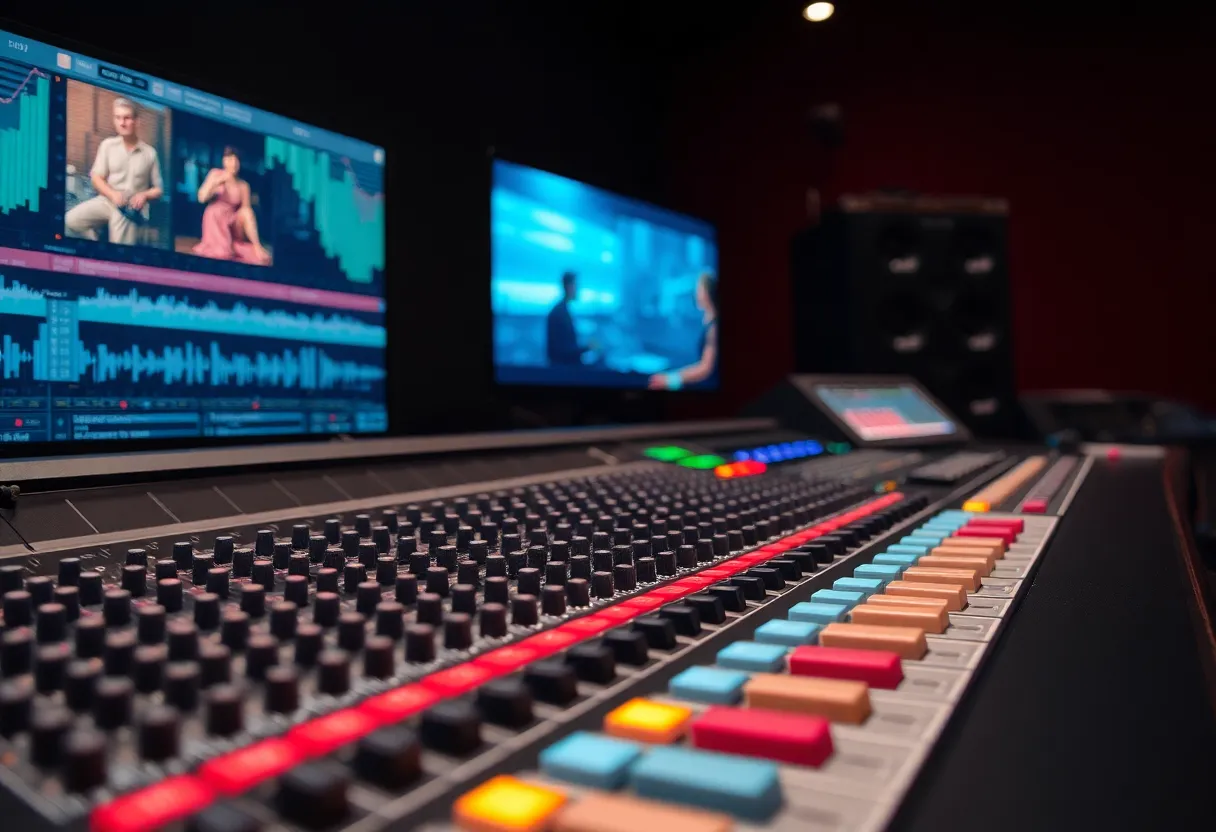
This is genuinely the strongest link in the automated dubbing chain right now. Modern voice cloning and text-to-speech systems, building on the same underlying advances that have made voice cloning fraud a serious cybersecurity concern in a completely different context, can now generate speech with naturalistic intonation, appropriate emotional coloring, and voice characteristics that closely match — or in licensed cases, actually preserve — the original actor’s vocal identity across languages. This is a meaningful improvement over older text-to-speech systems, which produced dubbing with a flat, robotic quality that was immediately, jarringly obvious to any listener.
But voice synthesis quality alone doesn’t solve emotional performance timing — a technically clean, naturalistic-sounding voice reading a translated line with the wrong emotional emphasis or pacing relative to the on-screen action still produces a dub that feels subtly wrong, even when no individual word sounds synthetic. Getting performance-level emotional accuracy, not just vocal naturalism, remains a harder problem than voice quality alone, and it’s the area where human voice direction — an actual director listening to a take and asking for a different emotional read — still meaningfully outperforms current automated pipelines, which generally generate a single pass without the kind of iterative creative feedback a human performance benefits from.
Lip-Sync: The Problem Everyone Underestimates
Traditional dubbing accepts imperfect lip-sync as an inherent limitation — the original actor’s mouth movements don’t change, so the dub adapts translation timing to approximate the existing mouth shapes as closely as reasonably possible, and viewers have, over decades, become accustomed to this imperfection as a normal feature of dubbed content. The more ambitious AI approach attempts something genuinely more difficult: using generative video models to actually modify the on-screen mouth movements to match the new dubbed audio, an approach companies like Flawless and features within some major streaming platforms’ localization tools have pursued specifically to eliminate the lip-sync mismatch that’s historically been dubbing’s most visible flaw.
This technology works impressively in controlled demo conditions, but it introduces its own new failure modes and ethical complexity: it’s a form of video manipulation, however benign the stated purpose, and it raises the same deepfake-adjacent concerns about consent and authenticity that voice cloning has raised elsewhere in the industry, particularly regarding actor consent for how their on-screen likeness gets digitally altered after filming, a subject that’s become a genuine point of negotiation in entertainment industry labor agreements following the 2023 SAG-AFTRA strikes, which specifically addressed AI likeness and voice usage rights.
Where This Actually Gets Deployed Today
The realistic current deployment pattern reflects these limitations directly: fully automated AI dubbing has found genuine, appropriate use for content where perfect quality matters less than coverage and speed — user-generated content on platforms like YouTube, corporate training videos, and lower-budget content that previously had no dubbing at all because traditional dubbing costs made localization economically unviable for anything but major theatrical releases and prestige streaming shows. For that category of content, AI dubbing represents a genuine access improvement: content that would otherwise remain entirely inaccessible to non-native speakers of the original language now gets at least a passable localized version.
For premium content — major streaming releases, theatrical films — the actual production pattern that’s emerged is a hybrid approach: AI tools assist and accelerate parts of the traditional pipeline (faster initial transcription and translation drafts, AI-assisted voice matching for efficiency) while human translators, voice actors, and audio engineers still handle the creative judgment calls and final quality control that current automated systems don’t reliably replicate. Netflix and other major streaming platforms have been fairly explicit in trade press interviews that this hybrid model, not full automation, represents their actual near-term production strategy for flagship content, even as they continue investing in and improving the underlying AI tools.
Where This Realistically Goes
The trajectory over the next several years likely continues this bifurcation rather than resolving toward either full automation or a return to pure human-only dubbing: a growing base of previously undubbed content getting AI-only localization that wouldn’t have existed at all otherwise, representing a genuine net access improvement, alongside premium content continuing to rely on a hybrid pipeline where AI accelerates specific steps without replacing the human creative judgment that still produces measurably better results for content where quality bar and audience expectations are highest.
That’s a less dramatic story than “AI replaces dubbing studios,” but it’s a more accurate read of where the actual quality ceiling of fully automated pipelines currently sits, and where the industry’s own production choices — not just marketing claims — suggest confidence in the technology genuinely lies today.