How Cargo Bike Delivery Is Reshaping Last-Mile Logistics in Dense Cities

Victor Lang
July 9, 2026
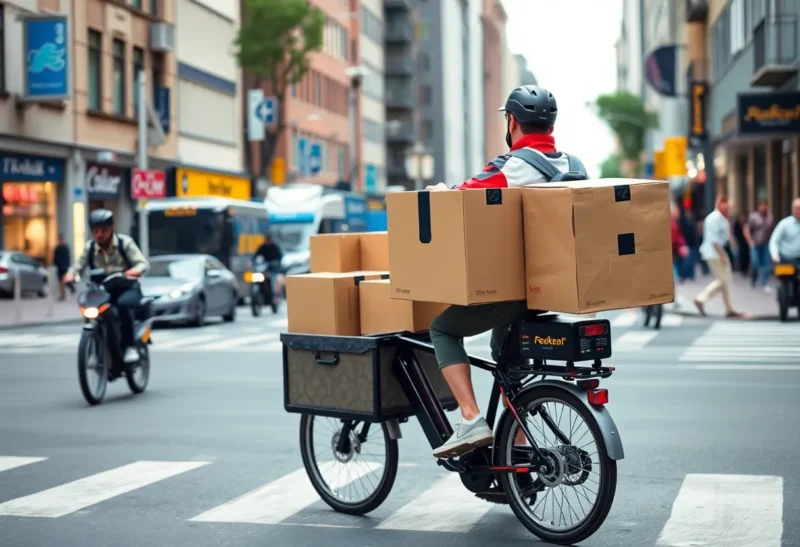
Last-mile delivery — the final leg of getting a package from a distribution point to someone’s door — has quietly become one of the most expensive and congested parts of urban logistics, and the vehicle everyone assumed would dominate it, the delivery van, has run into problems that are specific to dense city cores rather than logistics in general. Double-parked vans blocking bike lanes and traffic, drivers circling blocks looking for legal parking, and delivery windows that blow up because a single vehicle spends more time searching for a spot than actually delivering packages — all of this is pushing a growing number of logistics companies toward a vehicle that looks almost comically modest by comparison: the cargo bike.
Why Vans Struggle Specifically in Dense Urban Cores
Delivery van economics work reasonably well in suburban and lower-density settings, where parking is available near most stops and each stop is far enough apart that a vehicle’s speed matters more than its ability to squeeze through traffic. Dense urban cores invert both of those assumptions. Legal parking near a delivery stop is often unavailable, pushing drivers into double-parking that blocks travel lanes, bike lanes, and bus lanes — and generates the parking violation costs that several major logistics companies have publicly acknowledged budgeting for as a routine cost of doing business in specific dense neighborhoods, rather than treating it as an exception.
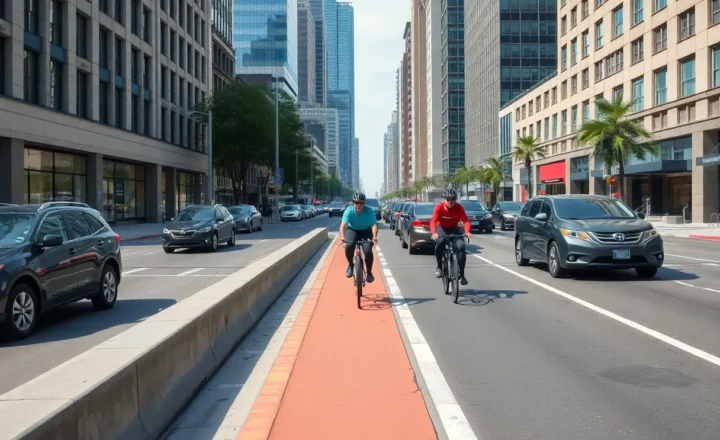
Traffic congestion in dense cores also erases much of a van’s theoretical speed advantage. Studies of last-mile delivery performance in cities like London, Paris, and New York have found that in sufficiently congested, dense areas, a cargo bike making short-radius deliveries from a nearby micro-hub can complete a comparable number of stops per hour to a van stuck in traffic and parking search, because the bike can use bike infrastructure, cut through routes vans can’t access, and load/unload at the curb almost instantly rather than searching for parking each stop.
The Micro-Hub Model That Makes This Work at Scale
Cargo bikes can’t carry a full van’s worth of packages, which means the model that actually works economically isn’t “replace every van one-for-one with a bike” — it’s restructuring the delivery network around small, centrally located micro-hubs (sometimes called urban consolidation centers or microdepots) where larger vehicles drop off palletized freight, and cargo bikes handle the final, short-radius distribution from that hub outward to individual addresses.
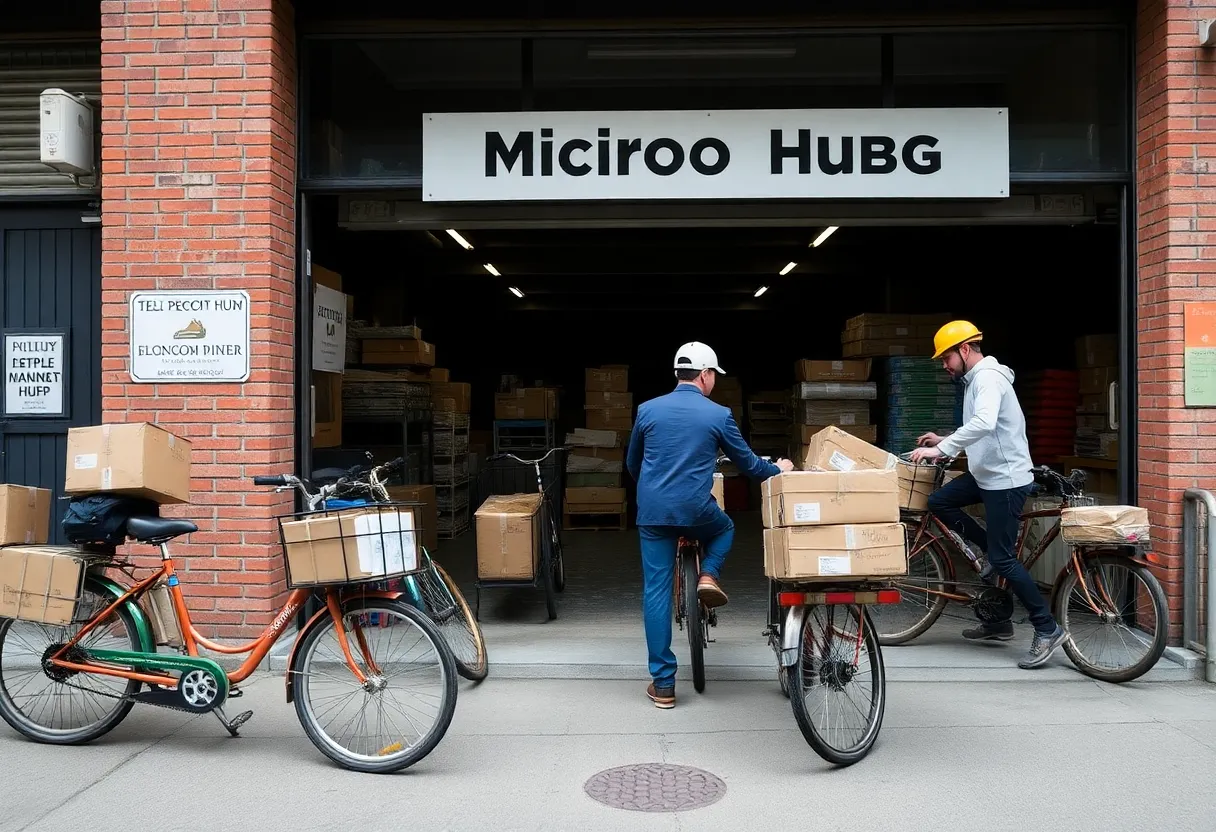
This two-tier structure — long-haul or medium-haul freight into a dense-area hub by larger vehicle, short-hop final delivery by bike — is functionally similar to how airlines use hub-and-spoke routing, and it’s the specific structural innovation that makes cargo bike delivery viable at real commercial volume rather than as a boutique, low-volume alternative. Companies including UPS, DHL, and various city-specific logistics startups have deployed exactly this model in multiple dense European cities, and increasingly in select U.S. and Canadian downtown cores, generally starting with a single pilot micro-hub before expanding to a network of several serving different neighborhoods.
What Cargo Bikes Actually Solve, Beyond Speed
The congestion and parking advantages get the most attention, but several other factors are pushing adoption independently. Curb space in dense commercial districts has become genuinely scarce and contested — competing demands from outdoor dining, bike infrastructure, bus lanes, and ride-hailing pickup zones have all reduced available curb space for commercial loading, and a cargo bike’s minimal footprint lets it use loading zones, bike lanes, or even sidewalk-adjacent space that a van legally and physically cannot use.
Municipal policy has also started actively favoring this shift rather than remaining neutral. A growing number of European cities have implemented low-emission zones or outright vehicle bans in historic city centers that exempt bikes and e-bikes but restrict or charge fees for combustion vans, which creates a direct regulatory incentive on top of the operational one. Some cities have gone further, offering dedicated loading zones or subsidies specifically for cargo bike logistics operators as part of broader urban congestion and air quality policy, treating last-mile logistics as a lever for reducing urban traffic and emissions rather than treating delivery vehicle choice as purely a private business decision.
Where the Model Actually Struggles
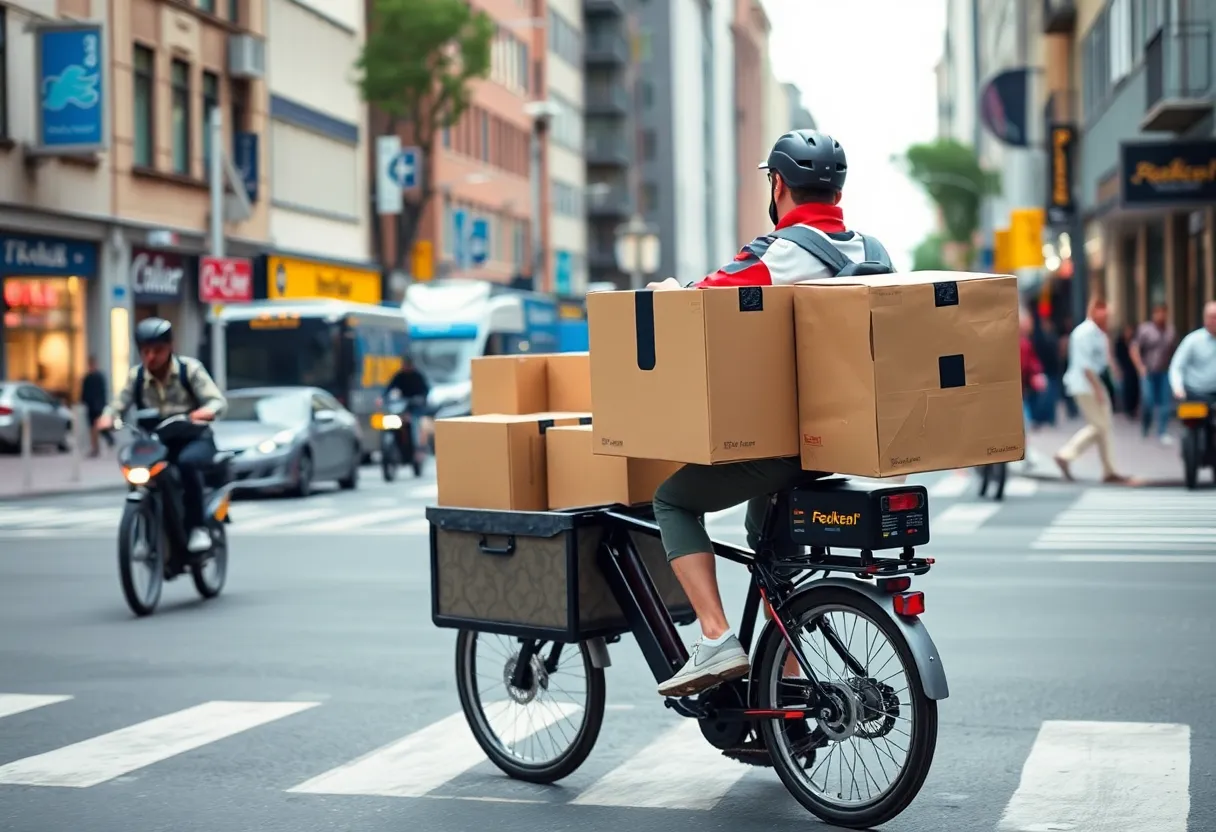
Cargo bike delivery is not a universal replacement for vans, and the limitations are specific and real. Payload volume and weight are fundamentally constrained — even a heavy-duty electric cargo bike or trike tops out well below a van’s carrying capacity, which means cargo bikes work best for the high-frequency, lower-weight parcel categories that dominate e-commerce delivery (small packages, food delivery, grocery delivery) and struggle with bulky freight, appliances, or high-volume B2B deliveries that vans handle more efficiently per trip.
Weather resilience is a genuine operational challenge that logistics companies have had to build explicit contingency planning around — heavy snow, ice, and severe storms can shut down cargo bike operations in ways that don’t affect enclosed vans, requiring backup van capacity or delayed delivery windows during bad weather, which adds operational complexity that a van-only fleet doesn’t have to plan for. And the micro-hub model itself requires available, affordably-leased real estate in exactly the dense, expensive urban areas where commercial rent is highest, which has been a genuine constraint on how quickly companies can scale the model to new neighborhoods — finding and securing a suitable micro-hub location is often a slower, harder logistical problem than the delivery routing itself.
Why This Is a Structural Shift, Not Just a Marketing Trend
The clearest evidence that this is a durable operational shift rather than a green-marketing gesture is that the companies adopting it most aggressively are optimizing purely for delivery economics and speed in the specific geographies where it works, not primarily for sustainability messaging — cargo bikes are being deployed because they measurably outperform vans on stops-per-hour in the exact conditions dense urban cores create, with emissions reduction as a genuine but secondary benefit rather than the primary business case. That’s a meaningfully more durable foundation for adoption than a trend driven mainly by corporate sustainability targets, because it means the economics hold up independent of how carbon policy or public sentiment shifts over time — cargo bikes are winning specific delivery routes because they’re faster and cheaper there, not just because they look better in an annual sustainability report.