The Real Bottleneck in Recycling Lithium-Ion Batteries at Scale

Dr. Keiko Andersen
July 9, 2026
Every discussion about the EV transition eventually arrives at the same reassurance: don’t worry about all these batteries piling up, they’ll just get recycled. It’s technically true — lithium-ion battery recycling is a real, functioning industry, not a hypothetical — but the reassurance skips past the actual bottleneck that determines whether recycling can scale to match the wave of batteries about to reach end-of-life. I’ve spent years working as an electrochemist on battery materials, and the constraint that gets the least attention in mainstream coverage isn’t the chemistry of extracting materials from a used battery — it’s the unglamorous, deeply unsexy logistics problem of collection, sorting, and getting batteries to a recycler safely in the first place.
The Chemistry Actually Works Reasonably Well
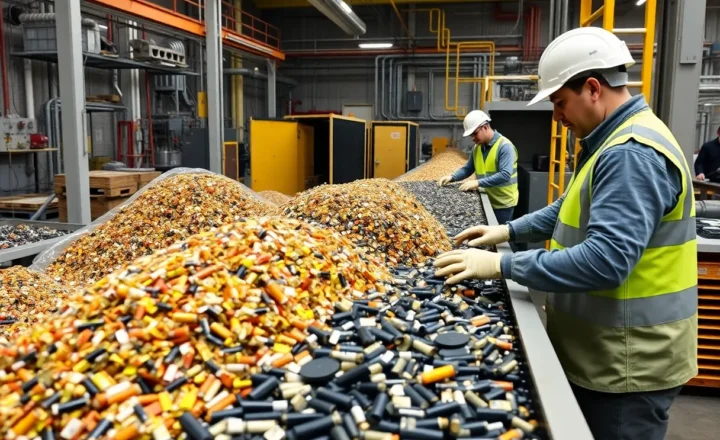
It’s worth being clear about what recycling technology can already do, because the actual extraction chemistry is genuinely mature. Hydrometallurgical processes, which use aqueous chemical leaching to dissolve and separate battery materials, can recover well over 90% of the cobalt and nickel and a large majority of the lithium from spent lithium-ion cells, according to figures reported by major recyclers including Redwood Materials, Li-Cycle, and Umicore. Pyrometallurgical (smelting-based) approaches, an older and generally less material-efficient method, still recover valuable metals reliably, just with somewhat higher energy input and lower lithium recovery rates compared to hydrometallurgical processing.
Direct recycling — a newer approach that aims to recover and refurbish the cathode material’s crystal structure directly, rather than fully breaking it down into raw elements and resynthesizing from scratch — has shown promising lab and pilot-scale results for preserving more of the material’s original value, potentially producing battery-grade material at lower cost and energy input than starting from mined ore. It hasn’t yet reached the same commercial scale as hydrometallurgical processing, but multiple companies and national labs (including significant work out of Argonne National Laboratory in the U.S.) are actively commercializing it. None of this represents a chemistry problem still waiting for a breakthrough — this part of the puzzle is largely solved engineering, being scaled rather than invented.
Where the Actual Bottleneck Lives
The real constraint is upstream of the recycling plant, in collection and logistics — and it’s a genuinely different kind of problem than material science. Lithium-ion batteries are, in a real and non-hypothetical sense, hazardous cargo: damaged or improperly handled cells carry a real fire risk, driven by the same thermal runaway mechanism that makes battery fires so difficult to extinguish once started. That risk profile means transporting spent batteries requires specialized hazmat shipping compliance, proper packaging to prevent short circuits and physical damage in transit, and trained handling at every point in the chain — none of which is prohibitively expensive at a single-shipment scale, but which compounds into a significant cost and complexity burden when you’re trying to aggregate batteries from millions of scattered sources: individual EV owners, small electronics repair shops, municipal e-waste collection points, and disassembled consumer devices.
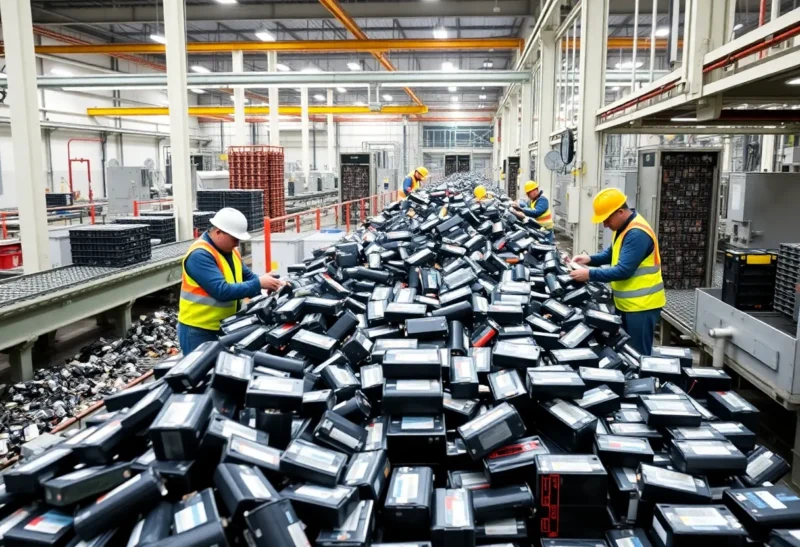
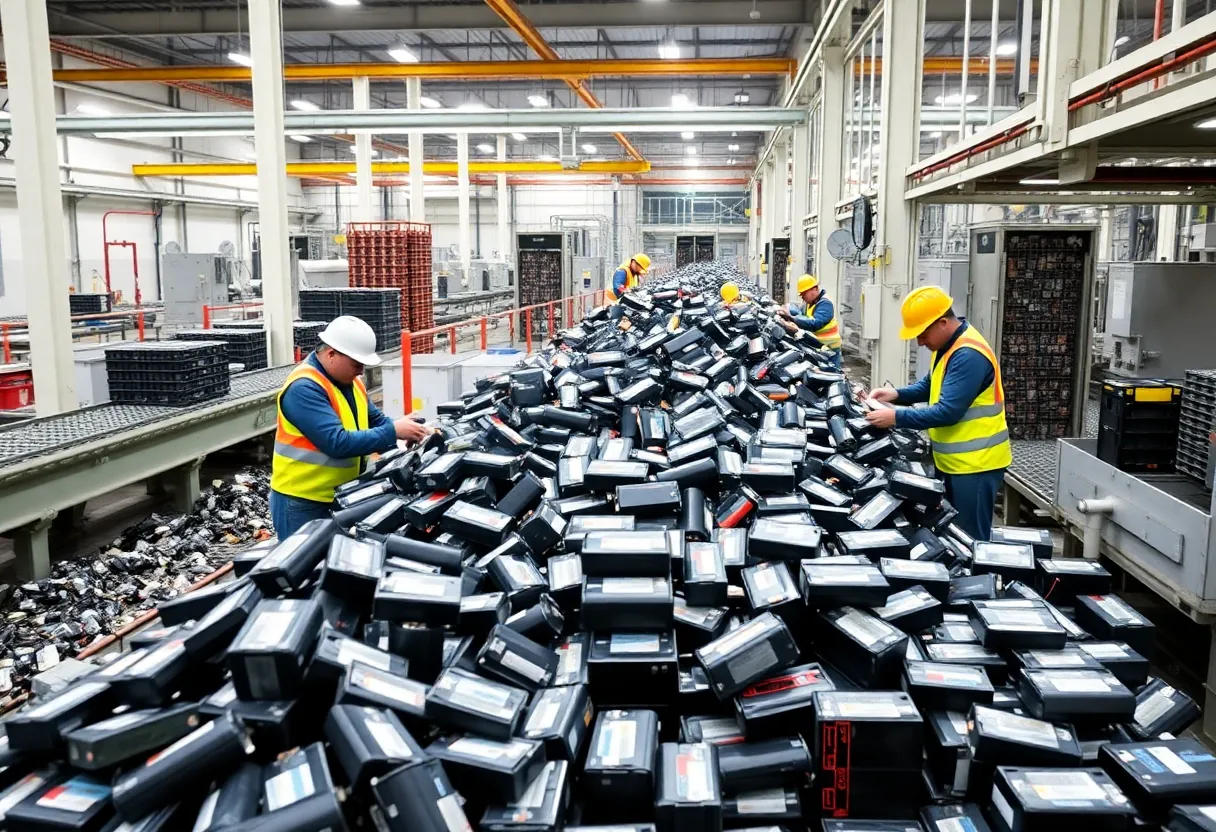
Battery format fragmentation makes the sorting problem worse. Unlike a relatively standardized commodity like aluminum cans, lithium-ion batteries arrive at collection and sorting facilities in an enormous variety of form factors, chemistries (NMC, LFP, NCA, and others, each requiring somewhat different processing approaches for optimal material recovery), and states of charge and physical condition — some fully depleted and stable, others damaged, swollen, or still holding a partial charge that needs to be safely discharged before further processing. Sorting this heterogeneous stream efficiently, safely, and cost-effectively, at the volume scale the industry will need within the next decade, is a harder logistics and automation problem than most people appreciate when they picture “battery recycling” as conceptually similar to recycling a soda can.
Why EV Batteries Specifically Complicate the Picture
Consumer electronics batteries — laptop and phone cells — are small, relatively easy to physically handle and ship in volume, even accounting for the hazmat considerations above. EV battery packs are an entirely different logistics challenge: individual packs weigh hundreds of kilograms, are integrated into complex mechanical and electrical assemblies specific to each vehicle model, and generally can’t simply be tossed onto a truck the way a bag of old phone batteries can be. Disassembling an EV pack safely — de-energizing the high-voltage system, separating modules, extracting individual cells — requires specialized equipment and trained technicians, and standardization across manufacturers on pack design remains limited enough that a process optimized for one manufacturer’s pack doesn’t necessarily transfer cleanly to another’s.
This has produced a somewhat counterintuitive industry response: a growing “second life” market for used EV battery packs, where a pack that’s degraded below the roughly 70-80% capacity threshold considered acceptable for vehicle use still retains significant value for less demanding stationary storage applications — grid storage, backup power for buildings, and similar uses where the discharge profile requirements are less strict than automotive use. This delays, sometimes by many years, when a given pack actually enters the recycling stream at all, which is generally a good outcome for total resource efficiency, but it also means near-term EV battery recycling volumes are running behind what a naive “battery sold five years ago should be getting recycled about now” estimate would suggest.
The Collection Infrastructure Gap
For consumer electronics specifically, collection infrastructure remains genuinely underdeveloped relative to the volume involved. Unlike aluminum or glass, which have decades of established municipal curbside recycling infrastructure, lithium-ion battery collection in most of the U.S. and many other countries still relies heavily on a patchwork of retailer drop-off programs (Call2Recycle being the most prominent U.S. network), municipal hazardous waste collection events that often run only a few times a year, and increasingly, extended producer responsibility regulations that place collection and recycling funding obligations directly on manufacturers — the EU’s Battery Regulation, which took full effect starting in 2024 and sets escalating collection and recycling rate targets through the 2030s, represents the most comprehensive regulatory push in this direction globally.
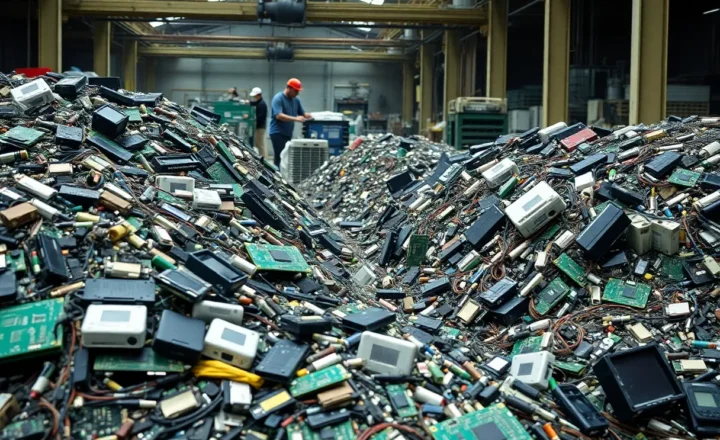
Where these collection systems remain informal or underfunded, a meaningful share of consumer lithium-ion batteries simply end up in general municipal waste streams, at real risk of causing waste facility fires from punctured or crushed cells — a well-documented and rising hazard cited repeatedly in waste management industry incident reports over the past several years, and a strong practical argument, independent of resource recovery goals, for building out better collection infrastructure specifically to keep these batteries out of general waste streams in the first place.

What Actually Fixes This
The interventions that would meaningfully close the collection bottleneck aren’t primarily technological — they’re regulatory and structural. Extended producer responsibility laws that make manufacturers directly financially accountable for end-of-life collection have proven effective in the EU and are increasingly being adopted in some U.S. states, since they create a direct incentive for manufacturers to invest in their own take-back logistics rather than treating collection as a diffuse public problem with no clear owner.
Standardization efforts around EV pack design — some manufacturers are moving toward more modular, more easily disassembled pack architectures partly for exactly this reason — would meaningfully reduce the labor cost and complexity of the disassembly bottleneck specific to EV batteries, though this requires cooperation across an industry that doesn’t have strong existing incentive to standardize purely for a downstream recycler’s convenience. And investment in automated sorting and disassembly robotics, an active area of development at several major recyclers, could reduce the labor-intensive manual handling that currently makes battery sorting one of the more expensive steps in the entire recycling chain relative to the actual material extraction that follows it.
The Honest Bottom Line
Lithium-ion battery recycling isn’t a technology gap waiting on a scientific breakthrough — the extraction chemistry works, and it works well. It’s a logistics and policy gap, centered on safely and cheaply getting a highly heterogeneous, mildly hazardous material stream from millions of scattered sources into a small number of processing facilities efficiently enough to make the economics work at the volume scale the next decade of battery retirements will actually require. That’s a less exciting story than a chemistry breakthrough, but it’s the more accurate one, and it’s where the actual policy and infrastructure investment attention needs to go if recycling capacity is going to keep pace with the wave of batteries about to reach the end of their useful life.