How Electric Aircraft Are Approaching Commercial Viability

Jordan Lee
July 7, 2026
Aviation is one of the hardest sectors to decarbonize, and that difficulty isn’t primarily a matter of will or investment—it’s physics. The energy density of jet fuel, at roughly 12,000 Wh/kg, is about 60 times higher than the best lithium-ion batteries in commercial production today. For short-range flights in small aircraft, that gap is manageable. For a transatlantic crossing carrying 300 people, it is not—not with today’s technology, and probably not for decades.
But the landscape of aviation is not just long-haul jumbo jets. It includes commuter routes under 100 miles, training aircraft, air taxis operating over cities, and cargo drones. In these segments, the physics are more favorable, the regulatory path is clearer, and genuine commercial viability—actual aircraft flying paying passengers or cargo without subsidy—is within reach or already achieved.
Here’s where electric aviation actually stands and what’s required to push it further.
The Battery Energy Density Problem
Understanding what’s possible in electric aviation starts with understanding the constraint that shapes everything else: energy storage.
A gallon of jet fuel weighs about 6.7 lbs and contains about 125,000 BTU of energy. A good lithium-ion battery pack capable of delivering power at aircraft-relevant rates weighs many times more than jet fuel for the same energy content. At the cell level, the best commercial lithium-ion cells are around 250–300 Wh/kg. At the pack level—including battery management systems, cooling, structural enclosures, and interconnects—usable energy density is lower, often in the 150–200 Wh/kg range for aerospace applications.
This is improving. Cell energy densities have roughly doubled over the past decade. Solid-state batteries, still in development, could potentially reach 400–500 Wh/kg at the cell level. But even solid-state batteries would leave aviation batteries with perhaps 10–15% of jet fuel’s energy density by weight. For any aircraft where weight is the dominant constraint—which is all aircraft—this limits practical range severely.
The physics improve somewhat when you account for electric motor efficiency. Electric motors convert electrical energy to shaft power at 90–95% efficiency, compared to roughly 30–40% efficiency for turbine engines. This means an electric aircraft needs less raw energy per mile than an equivalent kerosene-powered aircraft, partially offsetting the battery weight penalty. But the offset is not enough to close the gap for large aircraft on long routes.
Where Fully Electric Is Already Working
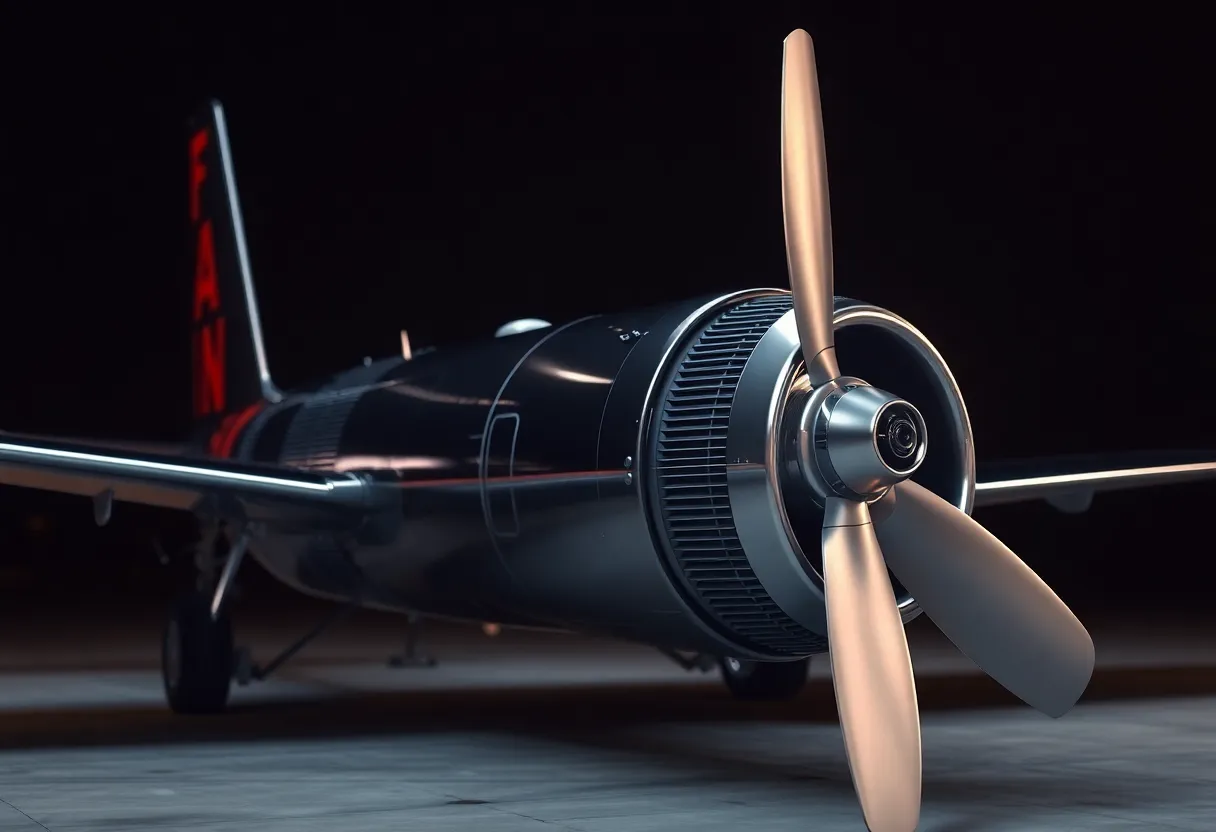
Small electric aircraft have been flying for years. The Pipistrel Alpha Electro, a two-seat trainer certified in Europe, has been in commercial use for pilot training—a use case that doesn’t require long range, involves repeated short flights, and where the fuel cost savings are significant. Training aircraft fly many short circuits, and the lower per-flight energy cost of electricity versus avgas translates directly into operating cost reduction.
The Slovenian company Pipistrel (now part of Textron) demonstrated that a commercially viable electric aircraft product was achievable in the light training segment. Several other manufacturers have followed with their own electric trainers for similar use cases.
Cargo drones—unmanned electric aircraft operating on short routes—are another segment where commercial operations are underway. Wing (Alphabet’s drone delivery subsidiary) and Zipline have deployed electric delivery drones for commercial operations in limited markets. These operate at small scale, with weights measured in kilograms, and range requirements measured in tens of kilometers—well within battery capabilities.
The Air Taxi Push—And Its Real Status
The most heavily marketed segment of electric aviation is the eVTOL (electric vertical takeoff and landing) air taxi. Companies including Joby Aviation, Lilium (now restructured), Archer Aviation, Wisk (Boeing), and others have raised enormous amounts of capital to develop urban air taxis—electric aircraft designed to take off and land vertically like helicopters, fly passengers across cities, and operate from small vertiports.
The technical achievements are real. Multiple companies have built and flown full-scale prototypes. Joby’s aircraft has completed tens of thousands of test flights and holds FAA type certification progress that no other eVTOL company has matched. Archer has flown its Midnight aircraft on multi-minute test flights in California.
But commercial passenger operations have not yet launched at scale. The path from successful prototype to certified, commercially operating aircraft is long, expensive, and uncertain. Type certification for a novel category of aircraft involves demonstrating compliance with safety requirements across thousands of test points. Regulatory frameworks for eVTOL operations in urban airspace are still being developed.
The timeline has slipped significantly from original projections. Companies that projected commercial operations in 2023–2024 are now targeting 2025–2027, and some have reduced scope or restructured. Joby’s agreement with Delta Airlines and Archer’s deal with United Airlines suggest investor confidence, but actual scheduled commercial service remains ahead.
The range and payload constraints are real. Most eVTOL designs target ranges of 50–150 miles and payloads of 4–5 passengers. Battery weight limits this; adding passengers directly adds battery weight requirements, creating a scaling problem. The economics depend on high utilization rates and airspace throughput that don’t yet exist.
Hybrid-Electric Approaches for Larger Aircraft
For regional aircraft—the 9–50 seat category flying routes of 100–500 miles—fully electric propulsion is out of reach with current or near-term batteries. Hybrid-electric architectures are being explored as a bridge.
A parallel hybrid aircraft uses both an electric motor and a conventional engine, able to draw power from either or both. The electric motor can assist during the high-power takeoff phase (when conventional engines are least efficient and most polluting), and the engine can recharge batteries during cruise. This reduces fuel burn without requiring the range autonomy that pure electric demands.
A series hybrid architecture uses the conventional engine solely to generate electricity, which then drives electric motors. This simplifies the drivetrain and allows the engine to operate at constant, optimal speed, but adds the weight of a generator to the system.
Heart Aerospace, a Swedish startup, is developing the ES-30, a 30-seat hybrid-electric regional aircraft, with certification targeted in the late 2020s. Rolls-Royce and Airbus have collaborated on hybrid demonstrator programs. These programs face the dual challenge of developing new power systems while meeting aviation certification standards—a slow, expensive process.
Hydrogen as an Alternative
Hydrogen—either burned in a modified jet engine or used in fuel cells to generate electricity—offers energy density substantially better than batteries. Liquid hydrogen has a gravimetric energy density of about 33,000 Wh/kg, roughly three times jet fuel by weight (though it requires cryogenic storage, dramatically increasing volume).
Airbus has committed publicly to hydrogen-powered aircraft with its ZEROe concept aircraft, targeting entry into service in the 2035 timeframe for regional and short-haul aircraft. The technical challenges are substantial: cryogenic fuel storage requires new tank designs, hydrogen is harder to handle safely than jet fuel, and ground infrastructure for hydrogen fueling would need to be built from scratch at airports globally.
Zero Avia, a UK-US startup, has been flight-testing hydrogen fuel cell powertrains in modified regional aircraft and has secured aircraft orders from regional airlines. The fuel cell approach offers very high efficiency and zero direct emissions, but power density remains a challenge for larger aircraft.
What Actually Has to Change
Electric aviation’s commercial viability in any segment beyond small training aircraft and cargo drones requires progress on several fronts:
Battery energy density: Reaching 400+ Wh/kg at the pack level—requiring either significant improvements in lithium-ion chemistry or viable solid-state batteries—would expand the range of feasible electric aircraft configurations substantially.
Regulatory clarity: Certification pathways for novel aircraft categories need to mature. The FAA and EASA have created new certification categories for powered-lift aircraft, but the specific process for novel eVTOL configurations is still being defined. Faster, more predictable certification would reduce development risk and cost.
Infrastructure: Electric aircraft require charging infrastructure, hydrogen aircraft require fueling infrastructure, and urban air taxis require vertiport locations, air traffic management integration, and noise-compatible airspace. None of this exists at scale.
Operating economics: Lower fuel costs need to offset higher aircraft purchase costs, higher maintenance complexity (initially), and infrastructure investment. The economics need to work at realistic utilization rates, not optimistic projections.
The Honest Assessment
Electric aviation is genuinely progressing, but progress is segmented. For very small aircraft, trainers, and cargo drones, electric propulsion is already commercially viable and in operation. For urban air taxis, the technology works but commercial operation is still ahead, and the economics remain unproven. For regional aircraft, hybrid-electric architectures are the near-term path, with fully electric options depending on battery improvements that are real but not yet delivered. For narrowbody and widebody aircraft, there is no credible near-term path to electrification; sustainable aviation fuel and eventually hydrogen are the more plausible decarbonization routes.
The aviation industry accounts for roughly 2.5% of global CO₂ emissions directly, with additional climate forcing from contrails and other non-CO₂ effects. Electrification will play a role in reducing this, but a much smaller role in the near term than in road transport—the physics of energy density are simply harder to overcome in the sky than on the ground.