The Engineering Behind Modern Water Treatment: How Tap Water Gets Safe

David Shaw
July 7, 2026
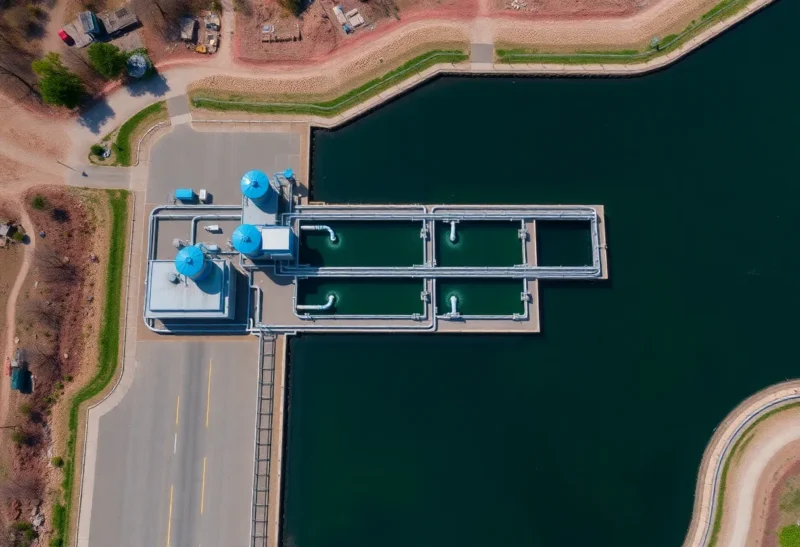
You turn on the tap and water comes out. It’s safe, it’s clear, it doesn’t smell wrong. For most people in developed countries, this is such a reliable experience that it’s become invisible—something you only think about when it fails. But getting water from a river, reservoir, or aquifer to a state where it’s genuinely safe to drink involves an elaborate sequence of engineering steps, each targeting a different category of contaminant.
Modern water treatment is one of the most consequential pieces of infrastructure humanity has built. When it works—which it does, overwhelmingly—you don’t notice it. Here’s what’s actually happening inside the system.
Where Water Comes From
Municipal water supply draws from two main source types: surface water (rivers, lakes, reservoirs) and groundwater (wells tapping aquifers underground). Surface water is more abundant and more vulnerable—it’s exposed to agricultural runoff, industrial discharge, sediment, organic material, and biological contamination. Groundwater is generally cleaner but not automatically safe; it can contain dissolved minerals, heavy metals, or radionuclides depending on the geology it passes through, and it can be reached by agricultural chemicals or industrial solvents that leach through the soil.
The treatment required depends significantly on the source. Surface water almost always needs more intensive processing. Groundwater sometimes requires less but not always—some aquifers contain naturally high levels of arsenic or fluoride that require active removal.
The Treatment Sequence
Most municipal water treatment plants follow a similar sequence of steps, though the specific technologies and the order can vary based on source water quality, regulatory standards, and plant age.
Screening and Pre-Treatment
The first step is physical screening. Water entering the plant passes through metal screens that remove large debris—branches, leaves, fish, anything that would damage pumps or interfere with downstream processes. In surface water treatment, this is a significant step; rivers and lakes carry a lot of floating material.
Pre-chlorination or ozonation is sometimes applied at this stage to prevent algae or bacterial growth within the plant itself, though many modern facilities have moved away from early chlorination to reduce the formation of disinfection byproducts (more on that later).
Coagulation and Flocculation
Raw water, even after screening, is full of particles too small to settle on their own—clay, silt, algae, bacteria, colloidal organic matter. These particles stay in suspension because they carry negative electrical charges that cause them to repel each other. Coagulation disrupts this stability.
Aluminum sulfate (alum) or iron-based salts (ferric chloride, ferric sulfate) are added to the water. These coagulants are positively charged and neutralize the negative surface charge on the suspended particles. The particles then lose their repulsion and begin to aggregate. Polymer flocculants are often added alongside coagulants to help bridge particles together into larger clusters called floc.
The water then passes through a flocculation basin where it’s stirred gently—turbulent enough to encourage particle collisions but not so turbulent that it breaks the floc apart. Over 20 to 30 minutes, particles that were invisible to the naked eye clump together into visible, settleable masses.
Sedimentation
The flocculated water flows into large settling tanks—sedimentation basins—where it’s allowed to move very slowly. The floc, now heavy enough to sink, settles to the bottom as sludge. The clarified water from the top of the basin moves forward in the process. The sludge collected at the bottom is removed for separate treatment and disposal.
Modern plants often use inclined plate settlers or tube settlers—arrays of angled surfaces that dramatically increase the effective settling area without requiring larger tanks. Water flowing between the inclined surfaces has much less distance to travel before a particle hits a surface and settles, allowing higher flow rates in smaller footprints.
Filtration
After sedimentation, water still contains fine particles that didn’t settle—some bacteria, protozoa, and residual turbidity. Filtration removes these through physical straining and adsorption.
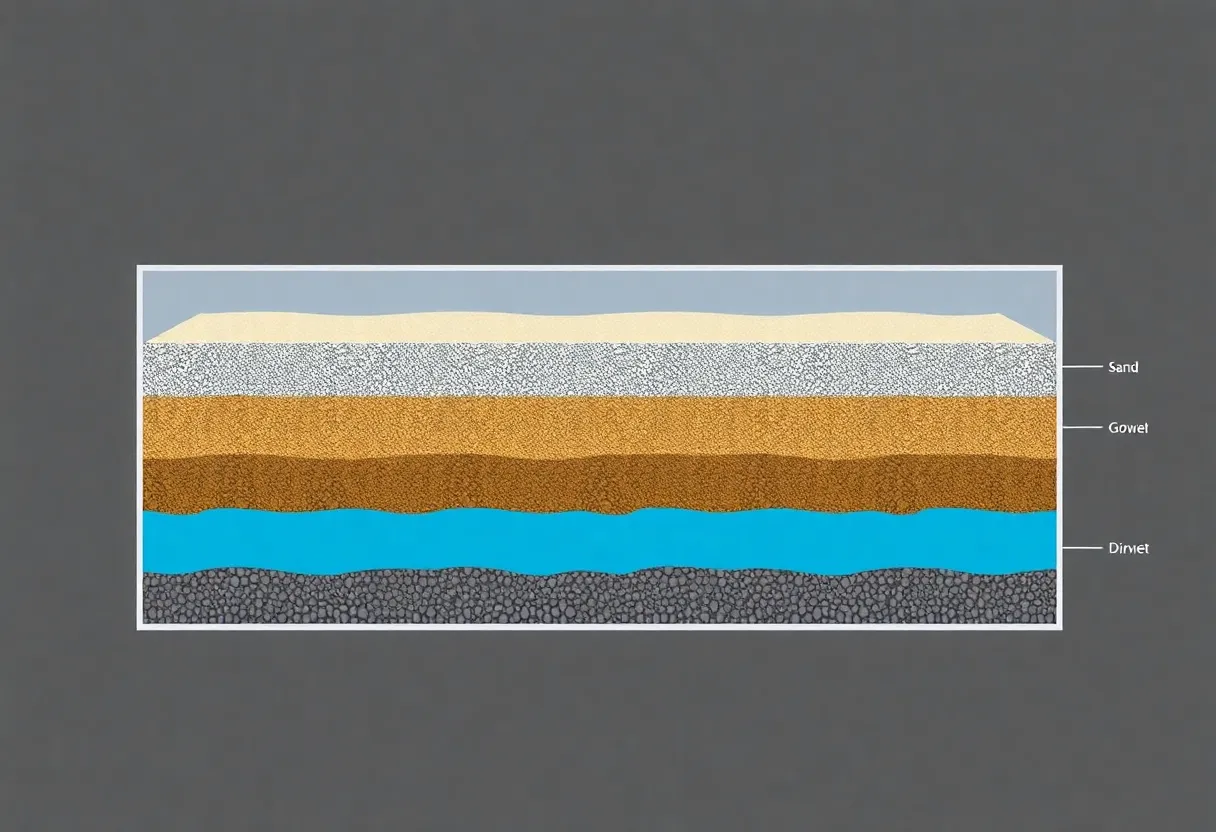
The most common filter medium is dual-media: a layer of anthracite coal over a layer of sand. The anthracite captures larger particles while the finer sand catches smaller ones. Below these media layers is a support layer of gravel, and the filtered water drains through underdrains into a clear well below.
Activated carbon is increasingly incorporated into filtration as a third medium, or in separate contactor beds. Activated carbon has an enormous internal surface area—a single gram can have surface area measured in hundreds of square meters—that adsorbs taste-and-odor compounds, disinfection byproduct precursors, and certain organic micropollutants.
Filters must be backwashed regularly—water is forced upward through the media at high flow to expand and agitate the bed, dislodging captured particles. This backwash water is collected and treated separately before disposal or recovery.
Membrane Filtration
Many newer treatment plants use membrane filtration either alongside or instead of conventional media filters. The main technologies are microfiltration (MF), ultrafiltration (UF), nanofiltration (NF), and reverse osmosis (RO), each with progressively smaller pore sizes.
Microfiltration and ultrafiltration membranes, with pore sizes measured in microns and nanometers respectively, physically exclude bacteria and protozoa (including Cryptosporidium and Giardia, which are resistant to chlorine) without requiring chemical treatment. They’re increasingly common in plants where pathogen removal must be reliably demonstrated.
Nanofiltration and reverse osmosis operate by forcing water under pressure through semi-permeable membranes with pore sizes measured in angstroms—small enough to exclude dissolved salts, hardness ions, nitrates, and most organic micropollutants. Reverse osmosis is the principal technology for desalination and is used in some municipal systems facing severe hardness or contamination challenges. It’s energy-intensive and produces a concentrated brine stream that must be disposed of carefully.
Disinfection
Physical filtration removes particles but doesn’t reliably inactivate all dissolved pathogens. Disinfection—the step that kills or inactivates microorganisms—is applied after filtration.
Chlorine remains the most widely used disinfectant globally. It’s inexpensive, effective against most waterborne bacteria and viruses, and crucially, it maintains a residual concentration in the distribution system, providing continued protection as water travels through pipes to homes and businesses. Chlorine is added as a gas or liquid sodium hypochlorite.
The problem with chlorine is that it reacts with naturally occurring organic matter in the water to form disinfection byproducts (DBPs)—primarily trihalomethanes (THMs) and haloacetic acids (HAAs)—some of which are classified as probable carcinogens. Modern treatment aims to minimize DBP formation by removing organic matter before disinfection, using lower chlorine doses, and optimizing contact time.
Chloramine—a compound formed by reacting chlorine with ammonia—is used by many utilities as a secondary disinfectant because it forms fewer THMs and HAAs than free chlorine and is more stable over long distribution distances. However, it’s a weaker disinfectant and doesn’t protect against Cryptosporidium.
Ozonation uses ozone (O₃), a powerful oxidant generated on-site by passing air or oxygen through an electrical discharge. Ozone is highly effective against Cryptosporidium, destroys taste-and-odor compounds, and breaks down many micropollutants. It doesn’t leave a residual, so a secondary disinfectant (chlorine or chloramine) must be added before the water enters distribution.
Ultraviolet (UV) disinfection exposes water to UV-C light at specific wavelengths that damage microbial DNA, preventing reproduction. UV is particularly effective against Cryptosporidium and Giardia at doses that are practical in full-scale treatment. Like ozone, UV leaves no residual and must be used alongside a chemical disinfectant for distribution system protection.
pH Adjustment and Corrosion Control
After disinfection, pH is typically adjusted with lime or sodium hydroxide to bring it into the slightly alkaline range (7.5–8.5). This matters for several reasons. Disinfection with chlorine is more effective at lower pH, but corrosion of pipes is more aggressive at lower pH too. Distribution systems include millions of miles of pipes, many of them old lead or copper pipe. Maintaining appropriate pH and alkalinity stabilizes a protective calcium carbonate scale on pipe surfaces that limits the leaching of metals into the water.
Where lead service lines or copper pipes with lead solder are present, orthophosphate is also added. Orthophosphate reacts with lead to form insoluble lead phosphate minerals that coat pipe surfaces, dramatically reducing lead release. This is the primary mechanism through which many utilities comply with lead action levels—not by replacing lead pipes (though that is increasingly mandated) but by keeping water chemistry in ranges that minimize corrosion and leaching.
The Distribution Challenge
Treatment plants produce water that meets regulatory standards at the point of discharge. But the water still has to travel—through hundreds or thousands of miles of pipes, storage tanks, and pumping stations—before it reaches a tap. The distribution system is a major engineering and maintenance challenge in its own right.
Water age—the time water spends in the distribution system—matters significantly. Disinfectant residuals decay over time. Longer distribution networks and storage tanks with slow turnover can allow residuals to drop below effective levels, creating zones where bacterial regrowth is possible. Nitrification, where ammonia from chloramine decomposition is converted to nitrite by bacteria in biofilms on pipe walls, is a particular challenge for chloraminated systems.
Distribution systems are monitored with a network of sampling points—typically in homes, fire stations, and monitored locations—that measure residual disinfectant, turbidity, and coliform bacteria. Regulatory frameworks like the Safe Drinking Water Act in the US require regular sampling and reporting, with action required when contaminants exceed established levels.
What Isn’t Removed
Conventional treatment is very effective against its primary targets: pathogens, turbidity, taste-and-odor compounds, and regulated chemical contaminants. It’s less effective against some emerging categories of concern:
Pharmaceuticals and personal care products: Trace concentrations of drugs, hormones, and other bioactive compounds pass through conventional treatment and appear in treated water at very low concentrations. Current evidence suggests these concentrations are far below levels that would cause acute health effects, but long-term epidemiological effects are not well established.
PFAS (per- and polyfluoroalkyl substances): These highly persistent synthetic chemicals, used in fire-fighting foam, non-stick coatings, and many industrial applications, are resistant to conventional treatment and have contaminated water supplies near military bases and industrial sites globally. Granular activated carbon adsorption and advanced oxidation processes can remove PFAS, and many utilities are upgrading specifically to address this contamination. US EPA maximum contaminant level rules for PFAS in drinking water were finalized in 2024.
Microplastics: Particles of degraded plastic are found in source waters globally. Conventional treatment removes most microplastics through coagulation, sedimentation, and filtration, but very small particles and nanoplastics are harder to capture. The health implications of microplastic ingestion via drinking water are still under active study.
The Engineering of Safety
What makes municipal water treatment remarkable isn’t any single technology but the multiple redundant barriers. Pathogens that survive coagulation are removed by filtration. Those that pass through filtration are inactivated by disinfection. The system is designed so that no single failure results in contaminated water reaching consumers—each step is a backup for the others.
Regulatory frameworks like multiple-barrier treatment requirements, surface water treatment rules, and pathogen-specific log-reduction targets (requiring treatment to achieve a certain number of orders-of-magnitude reduction in pathogen concentration) formalize this layered approach.
The result—reliably safe tap water delivered at the turn of a handle—is an engineering achievement that almost entirely escapes notice. That invisibility, paradoxically, is the measure of its success.