How 5G Actually Works and Why It Hasn’t Changed Everything (Yet)

David Shaw
July 7, 2026
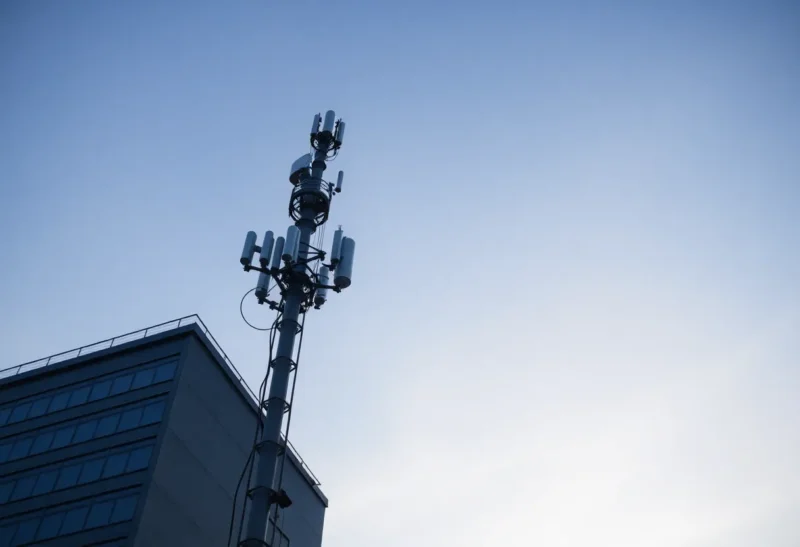
5G was marketed to consumers with transformative promises: download speeds that felt like science fiction, latency low enough for remote surgery, networks that would enable autonomous vehicles and smart cities and immersive AR experiences. Most consumers who now have 5G phones in cities with 5G coverage have experienced something more modest—faster speeds in some locations, occasional genuinely impressive throughput, but not a fundamental change in how they use their devices. Understanding why requires looking at what 5G actually is, which parts have been deployed, and what the remaining rollout actually involves.
The Frequency Bands: Three Very Different Networks
5G is not a single technology—it operates across three distinct frequency bands, each with fundamentally different characteristics. The performance gap between the best and worst 5G is larger than the gap between good 4G LTE and poor 4G LTE.
Sub-6 GHz (low and mid-band 5G): Frequencies below 6 GHz, including the 600 MHz, 700 MHz, 2.5 GHz, and 3.5 GHz bands. Low-band 5G (600–900 MHz) has coverage that behaves like 4G—signals penetrate buildings, travel long distances, and cover rural areas. Mid-band 5G (2.5–3.5 GHz) provides more bandwidth than low-band with still-reasonable coverage. Peak speeds in mid-band 5G: 100–600 Mbps depending on conditions and spectrum availability. This is what most consumers experience when their phone shows “5G” in most cities.
mmWave (millimeter wave, high-band 5G): Frequencies of 24–100 GHz. This is where the marketing claims came from—mmWave 5G can deliver 1–4 Gbps speeds and sub-5 millisecond latency. The physics catch: millimeter waves have very short range (typically 100–300 metres in open air) and are blocked by walls, windows, trees, and heavy rain. mmWave requires dense networks of small cells placed every block. In practice, mmWave 5G is deployed in very specific high-density locations—certain venues (stadiums, airports, convention centres), some urban downtown blocks in major US cities—where carriers have built the dense small-cell infrastructure. Most 5G phone users will rarely or never be in mmWave coverage.
What’s Actually Deployed: The State in 2026
In the US, 5G coverage from the major carriers (Verizon, AT&T, T-Mobile) covers the majority of the population, but the coverage is predominantly low-band and mid-band. T-Mobile’s mid-band network (2.5 GHz) is the most extensive and produces consistently good mid-band performance in major cities. Verizon’s mmWave network is the most extensive in the US but still covers only specific urban locations. AT&T’s 5G is mostly low-band and mid-band.
In the UK, O2, Vodafone, EE, and Three have deployed mid-band 5G across major cities with improving rural coverage on lower bands. European deployments generally follow a similar pattern—good urban mid-band 5G, limited rural coverage, minimal mmWave.
China has the most extensive 5G deployment globally: over 3 million 5G base stations as of 2025, with mid-band 5G (3.5 GHz and 2.6 GHz) covering most urban areas and extending to many rural areas. Chinese carriers achieved this through faster regulatory approval, lower permitting friction, and significant state investment in infrastructure.
Why 5G Hasn’t Changed Consumer Devices as Promised
The honest answer to “why hasn’t 5G changed my phone experience much” is: because the use cases that would require 5G performance don’t yet exist as mainstream products or services.
The applications that would require mmWave 5G speeds and sub-5ms latency—cloud-rendered AR/VR, autonomous vehicle coordination, remote haptic surgery—are not yet consumer-available services regardless of network capability. Mobile streaming at the speeds required for 4K video works on 4G LTE—most users already had sufficient bandwidth for their current use cases before 5G. The “bottleneck” on most smartphone use is not network speed or latency but application design, content availability, and device processing.
This is not unique to 5G—3G’s promise of “always-on internet” preceded the smartphone era; 4G’s promise of “HD video calling everywhere” arrived before the videoconferencing services that would make it ubiquitous. Networks typically deploy before the applications that justify them.
Where 5G Is Actually Making a Difference
The most concrete 5G impact in 2026 is in fixed wireless access (FWA)—using 5G network capacity as an alternative to home broadband. T-Mobile Home Internet and Verizon Home Internet deliver broadband-speed internet to homes via 5G radios using the same mid-band network as smartphones. This has been genuinely disruptive to local cable monopolies in served areas, providing a competitive broadband alternative in places that previously had one or no choice. FWA is now a meaningful percentage of new broadband connections in the US.

Private 5G networks for industrial applications—factories, warehouses, ports, mines—are the enterprise use case where 5G’s technical characteristics are most valuable. A private 5G network in a factory provides reliable, low-latency wireless connectivity for industrial robots, AGVs (autonomous guided vehicles), and machine vision systems in environments where Wi-Fi’s performance degrades due to interference and the physical environment. Companies like Bosch, BMW, Amazon, and various port operators have deployed private 5G for operational use with documented productivity improvements. This is a real 5G success story that receives less attention than consumer applications.
What Comes Next
5G’s impact on consumer devices will become more visible as: mid-band coverage extends to more locations where mmWave economics don’t work; device and application ecosystems develop for the capabilities 5G enables; and 5G FWA expands as a home broadband alternative. The transformative applications—cloud gaming without perceptible latency, seamless AR overlays in daily use, connected vehicle ecosystems—remain in development. The network is largely ready for them before they arrive. This has been the pattern with every wireless generation, and 5G is unlikely to be the exception.