How Underwater Internet Cables Make the Modern Internet Possible

Avery Kapoor
July 7, 2026
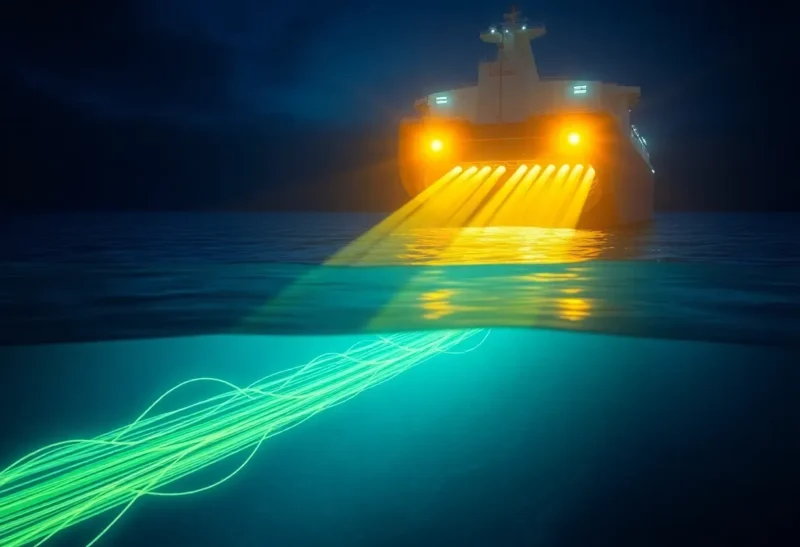
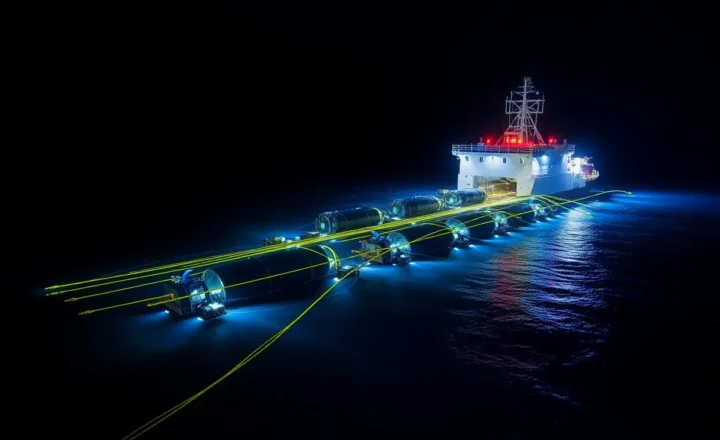
Virtually every piece of international internet traffic travels through submarine fiber optic cables on the ocean floor. When you load a website hosted in a different country, stream a video from a foreign platform, or send an email to another continent, the data almost certainly traverses one or more submarine cable systems — physical cables running along ocean floors at depths that can exceed 8,000 meters, spanning thousands of kilometers between continents. Satellites handle a tiny fraction of global internet traffic; the submarine cable network handles over 95% of intercontinental data. Understanding what this infrastructure is, how it works, and how fragile it actually is provides context for why international internet connectivity is the way it is.
What Submarine Cables Are and How They Work
A modern submarine communications cable is a highly engineered assembly built for function under extreme ocean conditions. The innermost component is a bundle of fiber optic strands — typically 8–16 fiber pairs in modern cables, with some recent cables deploying more — each pair capable of carrying terabits per second of data using wavelength-division multiplexing (WDM), which runs multiple light frequencies simultaneously over a single fiber. The fiber bundle is surrounded by successive protective layers: a U-tube (a water-blocking layer), copper conductors that carry electrical power to the submarine repeaters along the cable, strength members (steel or Kevlar) that provide tensile strength, and outer protective armoring in shallow water sections where physical damage is more likely.
Submarine cables require repeaters — signal amplifiers — every 70–100 km along their length because fiber optic signals attenuate with distance. These repeaters are underwater electronic devices powered by the copper conductors in the cable, with electricity supplied from land stations at each cable endpoint. A single cable system across the Atlantic might have dozens of repeaters operating continuously on the ocean floor. The electrical power requirement for all repeaters on a long cable can reach 5,000–10,000 volts at the power-feed equipment, delivered as high-voltage DC.
The capacity of modern cables is remarkable: a single cable system (which typically has multiple fiber pairs, each pair using multiple wavelengths, each wavelength carrying massive throughput) can carry tens of terabits per second. Google’s Curie cable, connecting the US to South America, has a design capacity of approximately 72 terabits per second. The Dunant cable (Google-funded), crossing the Atlantic, carries 250 terabits per second. These capacities reflect the rapid pace of advancement in submarine cable technology — cables are designed for 25-year lifespans, but the equipment installed at each end is upgraded more frequently as technology improves.
Who Builds and Owns Submarine Cables
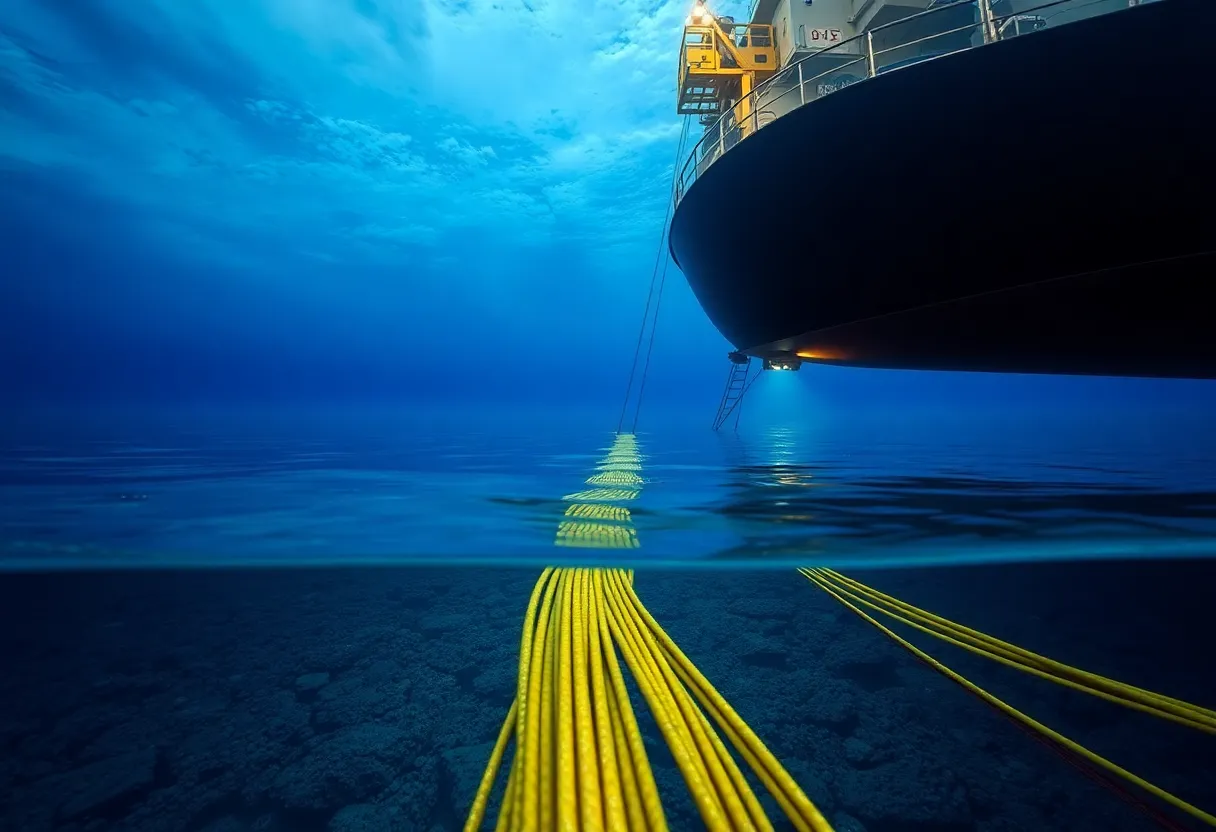
The economics of submarine cable ownership have shifted significantly over the last decade. Historically, submarine cables were consortium projects owned by groups of telecom carriers — AT&T, BT, France Telecom, and their international peers — who shared capacity and cost proportionally. This model provided wide ownership distribution but was slow (years of negotiation before any cable was planned or built) and limited in capacity (the consortium members sized cables to their commercial needs).
The modern era of submarine cables is increasingly dominated by hyperscaler investment: Google, Meta, Microsoft, and Amazon are now the primary funders and often the primary owners of the most advanced new cables. These companies have demand for international bandwidth that dwarfs that of any traditional telecom carrier — they are moving vast quantities of internal data (between their own datacenters) as well as serving their user traffic. Building cables they own outright (private cables or cables they predominantly fund) gives them guaranteed capacity, lower cost per bit, and technology control that leasing capacity on consortium cables can’t provide. Google has built or co-built more submarine cable kilometers than any traditional telecom carrier; Meta and Microsoft have similar positions.
This concentration of ownership has geopolitical implications: the physical infrastructure of the global internet is increasingly owned by a small number of US-headquartered technology companies, which changes the dynamics of international discussions about data sovereignty and digital infrastructure.
The Vulnerability Problem
Submarine cables are more fragile than their critical importance implies. Cable damage occurs regularly — the most common causes are fishing activities (trawling catches cables) and anchor drags in shallow waters. Deep-sea sections are harder to damage accidentally and are less frequently repaired, but deep-sea breaks do occur, typically from submarine landslides, seismic events, or (rarely) from ship anchors in shallow-to-deep transition zones.
The 2022 Tonga volcanic eruption caused a submarine landslide that severed Tonga’s only submarine cable, leaving the island nation with no international internet connectivity for weeks while a cable repair ship made the long journey from Suva. This event illustrated the vulnerability of island and isolated nations dependent on one or two cable systems. Major regions with multiple redundant cable systems (transatlantic, trans-Pacific) are much less vulnerable to any single cable failure — traffic is automatically rerouted across surviving cables.
Intentional cable damage has become an increasing concern as geopolitical tensions have grown. The Baltic Sea cables cut in 2023 and 2024 — including the Finland-Estonia EstLink cables and others — prompted concerns about deliberate cable sabotage by state or state-adjacent actors. Cable repair is slow (repair ships are few and specialized, taking days to weeks to reach a damage site, and repair operations in deep water are technically challenging), meaning even a few well-targeted cable cuts could significantly degrade regional connectivity for extended periods.
Latency: Why Geography Matters for Internet Speed
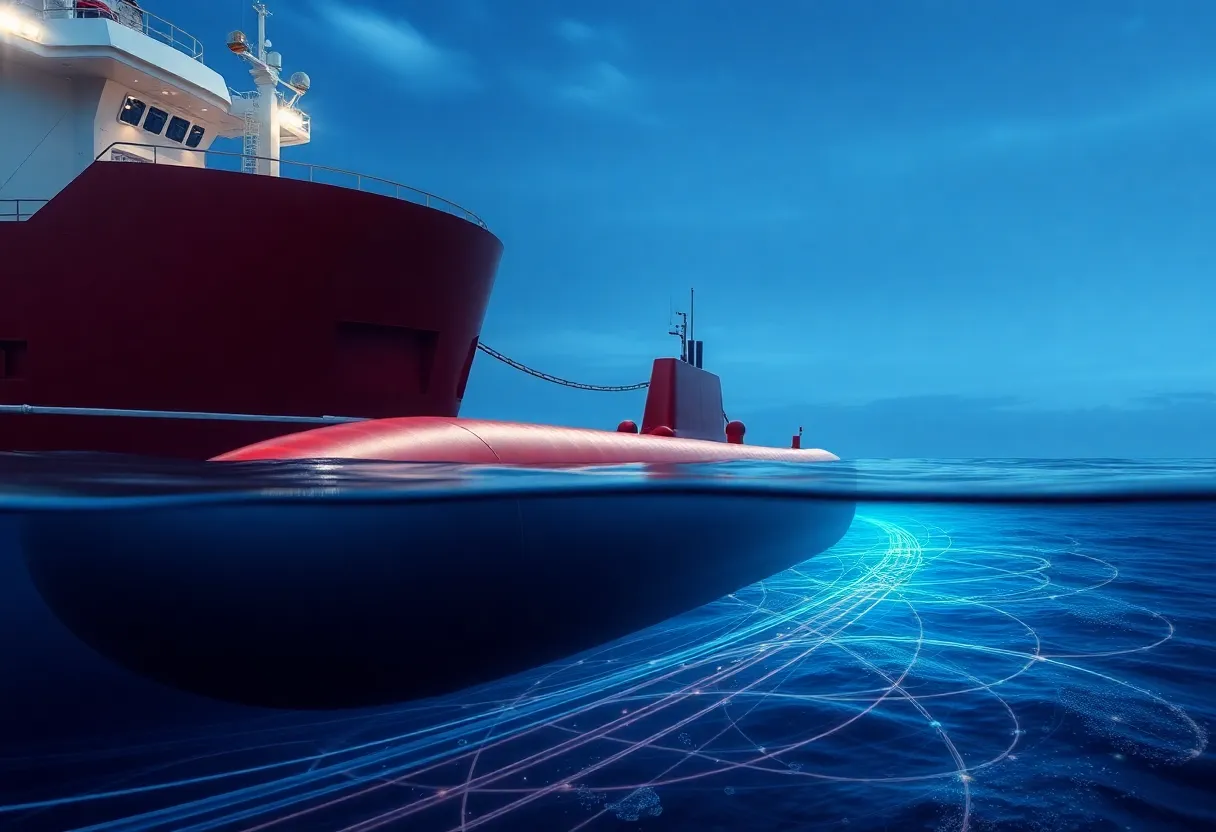
Light travels through fiber at approximately 200,000 km/second (slower than in a vacuum due to the glass medium’s refractive index). The round-trip travel time from New York to London on the transatlantic fiber route is approximately 70ms at the speed of light — 10ms of which is actual cable propagation time, with the rest being processing and routing overhead at network nodes. Financial trading firms pay premiums for the lowest-latency transatlantic routes because milliseconds matter in algorithmic trading; the latency floor imposed by physical cable length and the speed of light is not improvable by software or better hardware — it is a fundamental physical limit.
This is why Starlink and other low-Earth orbit satellite constellations claim latency advantages for some routes over submarine cables: LEO satellites have lower latency than geostationary satellites (which orbit at 36,000km, producing 600ms round trips) and can in some cases match or beat submarine cable latency for routes that don’t have direct cable paths. However, for routes with well-established direct cable infrastructure (transatlantic, trans-Pacific main routes), submarine cables remain lower-latency than any current satellite option and orders of magnitude higher in capacity.