How Modern Satellite Internet Constellations Work: LEO vs GEO Explained

Zara Nkosi
July 7, 2026
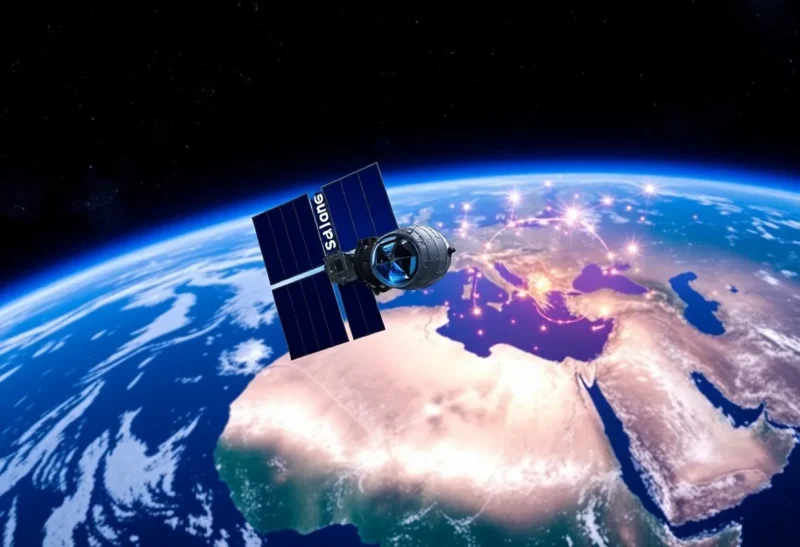
Satellite internet has existed for decades, but the launch of SpaceX’s Starlink constellation beginning in 2019 represents a genuine technological transition—not just an improvement to existing satellite internet but a fundamentally different approach enabled by the economics of reusable rockets and the engineering of massive low-orbit constellations. Understanding why requires grasping the core difference between the traditional geostationary (GEO) satellite approach and the new low Earth orbit (LEO) constellation approach, and how physics determines their respective performance characteristics.
The Geometry of Geostationary Orbit
Traditional satellite internet, as provided by Viasat, HughesNet, and others, uses geostationary satellites positioned approximately 35,786 km above the equator. At this specific altitude, the orbital period exactly matches Earth’s rotation: a satellite in geostationary orbit appears to hover stationary over a fixed point on the Earth’s surface. This is immensely convenient for a fixed communication service—a dish antenna on the ground can point at a fixed position in the sky and maintain constant communication without tracking.
The problem is the physics of signal travel time. The speed of light is approximately 300,000 km/second in vacuum. A signal from a user terminal to a GEO satellite travels approximately 35,786 km; the satellite’s response travels 35,786 km back to a ground station; the data travels through the terrestrial internet and back via ground station and satellite to the user. This round trip covers at minimum 150,000 km, which at the speed of light takes approximately 500 milliseconds.
In practice, GEO satellite internet latency is 550–600 milliseconds. For web browsing, this is noticeable but tolerable. For interactive applications—video calls, online gaming, voice calls, real-time financial transactions—it is disqualifying. A 600 ms latency makes a phone call difficult (conversation turn-taking is awkward), makes first-person gaming unplayable, and makes web browsing feel significantly slower than the bandwidth alone would suggest because each HTTP request-response round trip takes over half a second before any data transfer begins.
Low Earth Orbit: The Latency Solution
Satellites in low Earth orbit operate at altitudes of 550–1,200 km rather than 35,786 km. At these altitudes, the signal travel time is approximately 3–5 ms per segment—round trip latency of 20–40 ms, comparable to terrestrial broadband. LEO satellite internet delivers a qualitatively different user experience because interactive applications work normally rather than being degraded by half-second delays.
The trade-off is that satellites in LEO orbit at very high velocities—Starlink’s satellites at 550 km altitude orbit at approximately 7.6 km/second, completing an orbit in about 90 minutes. From a given point on Earth’s surface, a single LEO satellite is visible for only a few minutes before it passes below the horizon. A single LEO satellite can never provide continuous coverage to a fixed location.
The solution is a constellation: enough satellites distributed across enough orbital planes that at any given moment, multiple satellites are above the horizon from any point on Earth, providing continuous coverage through handoffs from one satellite to the next. Starlink operates over 6,000 satellites as of 2024, distributed across multiple orbital shells. Amazon’s Kuiper, OneWeb, and other constellations add further capacity. The Starlink terminal’s phased-array antenna electronically steers its beam between satellites without mechanical movement, enabling the rapid handoffs needed as individual satellites transit overhead.
The Economics That Made This Possible
Previous attempts at LEO satellite internet—Iridium, Teledesic, and others in the 1990s—failed primarily for economic reasons. At pre-Falcon 9 launch costs of $10,000–20,000 per kilogram to orbit, building a constellation of hundreds or thousands of small satellites was prohibitively expensive. The Iridium constellation, launched in the late 1990s, cost approximately $5 billion for 66 satellites and resulted in one of the largest technology bankruptcies of its era.
SpaceX’s Falcon 9 reduced launch costs to approximately $2,000–3,000 per kilogram to low Earth orbit, and Falcon 9’s reusability (the first stage lands and is reused) has driven costs further. The ability to launch 60 Starlink satellites per Falcon 9 mission amortises launch costs across a large payload. Starlink satellites themselves are designed for mass production rather than the customised high-reliability one-offs typical of traditional satellite manufacturing, further reducing per-satellite costs.
The manufacturing and launch economics that made Starlink viable in 2019 didn’t exist in 1999. The technology—phased-array antennas, small satellite manufacturing, broadband communications payloads—also benefited from decades of advancement in electronics manufacturing. The convergence of lower launch costs and better satellite technology enabled a business model that previous attempts couldn’t achieve.
How Starlink Actually Works
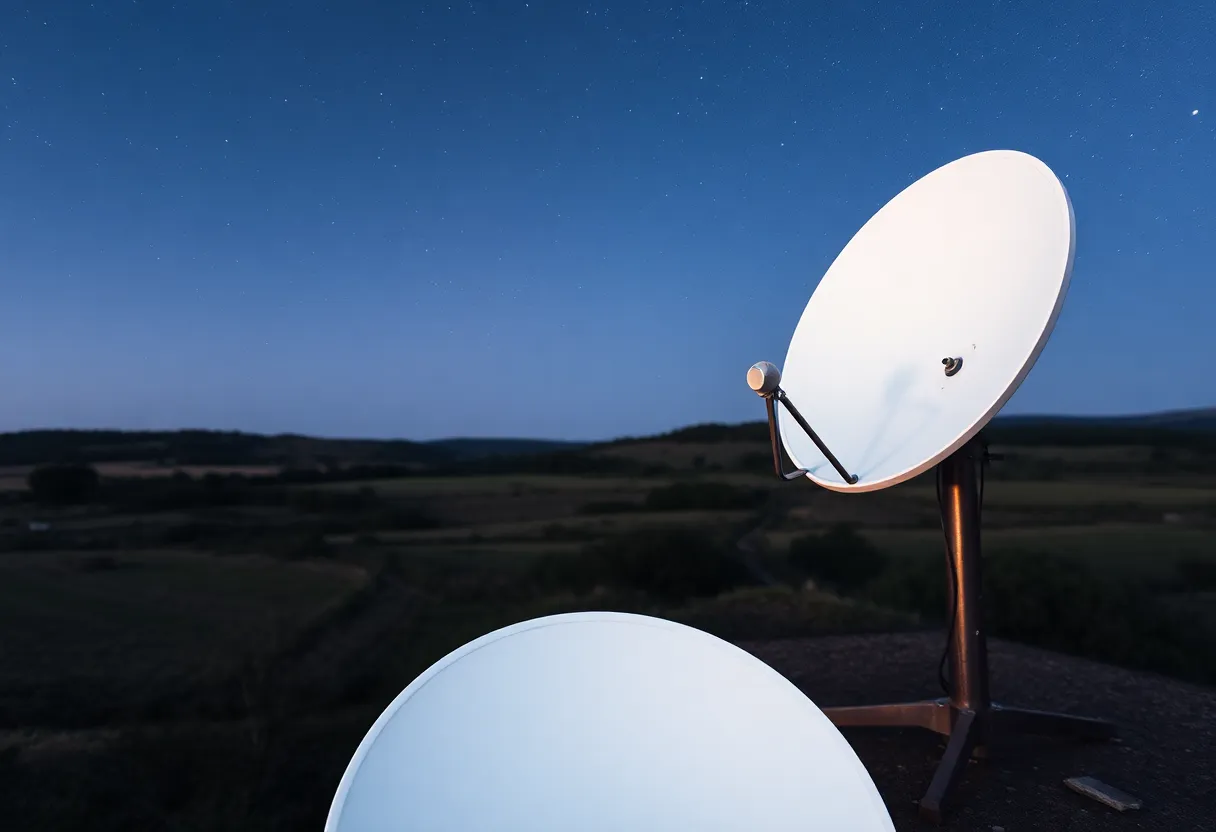
The Starlink user terminal (colloquially known as “Dishy”) contains a phased-array antenna that can electronically steer its beam across a wide arc of the sky. When first set up, it autonomously finds a clear view of the sky and connects to the Starlink network. As individual satellites pass overhead, the terminal hands off between them—typically maintaining connection to multiple satellites simultaneously to ensure no interruption.
The satellites communicate with the user terminal at Ku-band (12–18 GHz) or Ka-band (26.5–40 GHz) frequencies, which provide high bandwidth but are affected by heavy rain and clouds (rain fade). Starlink’s second-generation satellites also have inter-satellite laser links—optical connections between satellites that allow data to travel through the constellation without touching the ground, reducing latency for long-distance routes. A data packet from London to Los Angeles can travel via the satellite constellation rather than undersea cables, potentially with lower latency than terrestrial routing for very long distances.
Ground stations (called “gateways” or “Points of Presence”) connect the constellation to the terrestrial internet. The location and number of ground stations affects which geographic areas have capacity: areas with denser ground station coverage can handle more user traffic. Starlink has invested heavily in ground station infrastructure globally, though coverage is more limited in some regions than others.
Real-World Performance and Limitations
Starlink’s typical performance in 2024—download speeds of 100–200 Mbps, upload speeds of 10–30 Mbps, latency of 20–50 ms—makes it competitive with cable broadband for most residential applications. For users in areas without cable or fibre infrastructure, this is a transformative change from GEO satellite internet or slow DSL.
The key limitations: weather affects performance during heavy rain or snow, terminal obstruction (trees, buildings) causes service interruptions, and during peak demand periods in densely served areas, performance can degrade due to capacity constraints. The premium pricing (currently around $120/month for residential service in the US plus a $600 terminal hardware cost) limits accessibility for low-income users.
The orbital debris concern—thousands of Starlink satellites at LEO altitudes that must be deorbited at end of life, with the associated collision risk and Kessler syndrome implications—is a legitimate ongoing concern that the satellite internet industry, astronomers (whose observations are affected by satellite trails), and space regulators are actively grappling with. The long-term sustainability of massive LEO constellations depends on effective deorbit protocols and collision avoidance systems that the industry is developing but that haven’t been tested at full scale.