Why Satellite Internet Performance Varies So Much Based on Where You Live

Lars Bergman
July 7, 2026

Starlink speed test results posted online vary from “better than my cable” to “barely usable at peak hours” — and both can be accurate for different users at different locations and times. This inconsistency puzzles people who assume satellite internet should deliver uniform performance everywhere the service covers, the way a cellular network promises at least some signal if you have bars. The reality is that low Earth orbit satellite internet performance varies substantially by location, time of day, season, local density of subscribers, and even local terrain and vegetation — a set of factors that make satellite performance significantly more variable than fixed broadband alternatives in the same coverage area.
The Constellation Density Factor
Starlink’s performance at any given location depends in part on how many satellites are overhead and able to serve that location at any moment. SpaceX’s constellation is not uniformly deployed; it’s denser over higher-latitude regions (the northern US, Canada, Europe) than over tropical regions, because the orbital inclinations of the deployment launches covered some areas before others. More satellites overhead means more capacity available per user, lower handoff frequency between satellites, and more consistent performance.
This means that, all else equal, a user in Montana or Ontario has more satellite capacity overhead during a given hour than a user in Florida or Texas, where the constellation was less dense in earlier deployment stages. SpaceX has been filling in coverage across all latitudes with newer launches, but the historical density difference has left users in some regions with persistently better average performance than others even within the United States.
The “cell” concept also matters: Starlink divides the world into service cells, and each cell has a capacity limit. When more users in a cell are active simultaneously — peak evening hours, suburban areas with higher subscriber density — each user gets a smaller share of available capacity. Rural areas with few subscribers per cell often see excellent performance because capacity is lightly loaded. Suburban areas with more subscribers, or any area where Starlink was heavily promoted and quickly adopted, may see significantly degraded peak-hour performance compared to off-peak.
Latitude, Weather, and Sky Obstruction
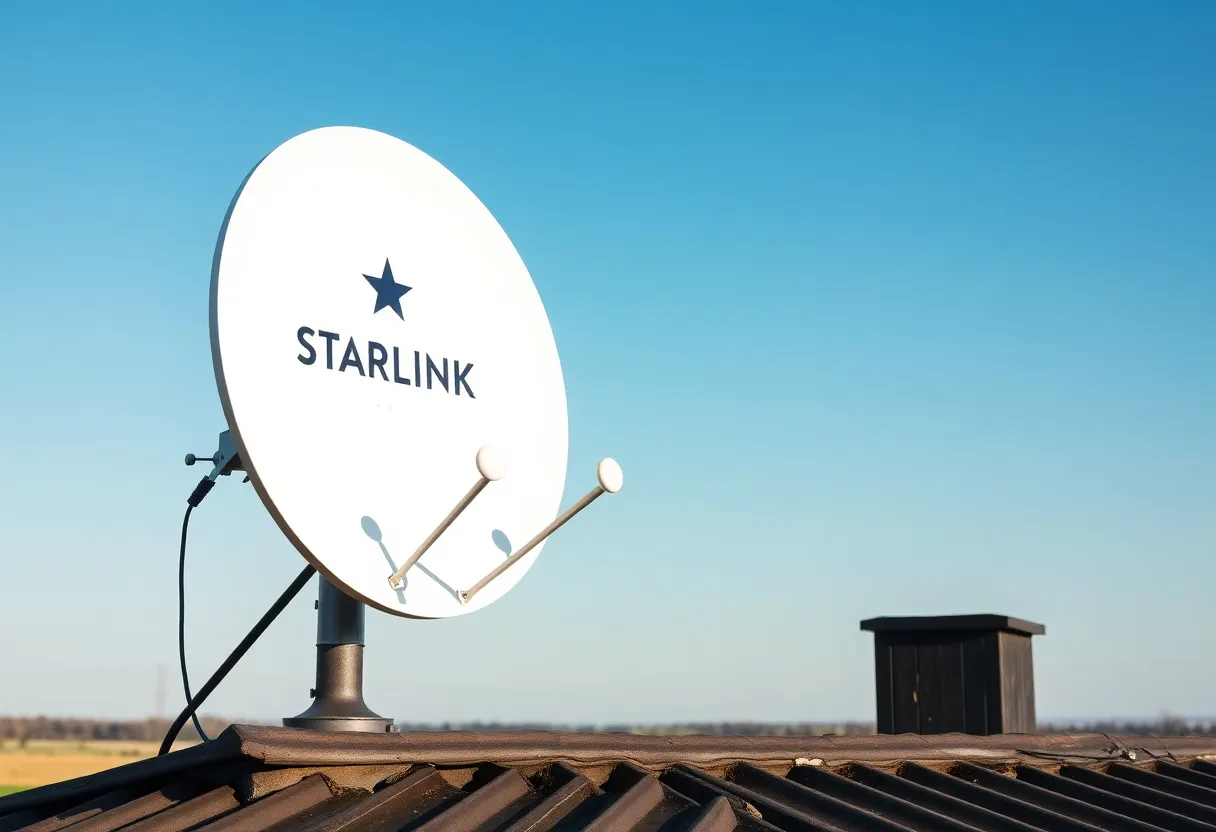
The Starlink dish (Dishy) communicates with satellites using phased-array antenna technology that tracks satellites electronically rather than mechanically. It needs a clear view of a large portion of the sky — the app’s obstruction check tool shows a cone of sky the dish needs to see clearly. Trees, buildings, power lines, and terrain features that intrude into this cone cause service interruptions as satellites pass through obstructed zones.
The impact of obstructions is not immediately obvious until you’ve lived with the service. A small tree branch that obscures 5% of the required sky view creates brief dropouts every few minutes as satellites transit that zone. For general web browsing, these dropouts are nearly invisible. For video calls, real-time gaming, or VPN sessions, they cause perceptible glitches. For rural users who installed Starlink specifically because it was their only broadband option, understanding and clearing obstructions is often the single highest-impact thing they can do to improve their experience.
Weather affects performance, but less severely than older geostationary satellite services, and the effect varies by weather type. Rain causes signal attenuation, but Ku-band signals (Starlink’s primary band) are affected less severely than Ka-band, and the attenuation at Starlink’s frequencies is generally modest for all but very heavy rain. Snow accumulation on the dish is more problematic — the dish has a built-in heater that activates to melt snow, but heavy wet snow accumulation can still degrade signal until the heater clears it. The dish’s built-in heating is effective for moderate conditions but not for extreme accumulation or freezing rain.
The Polar Region Advantage
One of the counterintuitive aspects of Starlink’s performance geography is that very high latitude users — Alaska, northern Canada, Scandinavia, Scotland — often report excellent performance, while users in heavily populated mid-latitude areas sometimes see more congestion. High-latitude regions are underserved by traditional broadband (running fiber or cable to very sparse, very remote populations is extremely expensive), meaning subscriber density per unit of satellite coverage is low. This translates to less congestion and better average throughput for users who are very far from urban areas.
This is precisely the market Starlink is most valuable in from a connectivity gap perspective — users in areas without viable wired alternatives who were previously limited to geostationary satellite (with its 600ms+ latency and tight data caps) or cellular service too weak for reliable broadband use. The performance these users get is dramatically better than their alternatives, and the congestion they experience is minimal because there simply aren’t many other subscribers sharing their coverage cell.
Priority and Service Tiers
Starlink’s pricing structure now includes multiple tiers with different performance expectations, adding another layer to the performance variation picture. Residential Standard service has no guaranteed throughput and is subject to deprioritization on congested cells. Priority Access (previously called Business) service offers higher guaranteed throughput and is less deprioritized on congested cells but costs significantly more. Mobile Regional service for RV and maritime users is similarly structured with different priority levels.
This means two users in the same geographic cell can have substantially different experiences based on their service tier. A Business subscriber will maintain more consistent speeds during peak hours on a congested cell than a Residential subscriber in the same area. The network management practices (which are disclosed in Starlink’s service terms) mean that stated “up to” speeds for Residential service reflect best-case rather than typical conditions during peak hours in congested cells.
What Shapes Your Experience
If you’re considering Starlink or trying to understand why your existing service isn’t meeting expectations, the factors that most commonly explain variation are: subscriber density in your cell (hard to measure directly, but correlates with how urban or suburban your area is), sky obstruction from your installation site (use the Starlink app’s obstruction scan before committing to a mounting location), your service tier, and local weather patterns.
Peak hour (roughly 7–11pm local time) versus off-peak performance differences are the most reliable signal of congestion effects. If your speeds are excellent at noon and significantly worse at 9pm, the cell is congested and that’s unlikely to improve without either a service tier upgrade or increased satellite density in your area over time. SpaceX is continuing to launch second-generation satellites with higher capacity that improve congestion in densely subscribed cells, but the timeline for congestion relief in a specific area is not predictable from outside the company.
For users in areas with no fiber or cable alternative, Starlink remains a significant improvement even with congestion variability. For users comparing it to a wired alternative, the higher variability and peak-hour performance degradation are real tradeoffs that wired connections don’t have. Satellite internet, even low-Earth orbit satellite internet, still fundamentally depends on shared wireless spectrum capacity in a way that fiber connections to a home don’t — and that difference in architecture produces a different (more variable) performance experience by design.