Commercial Space Stations After the ISS: What’s Actually Being Built and When

Robin Hayes
July 7, 2026
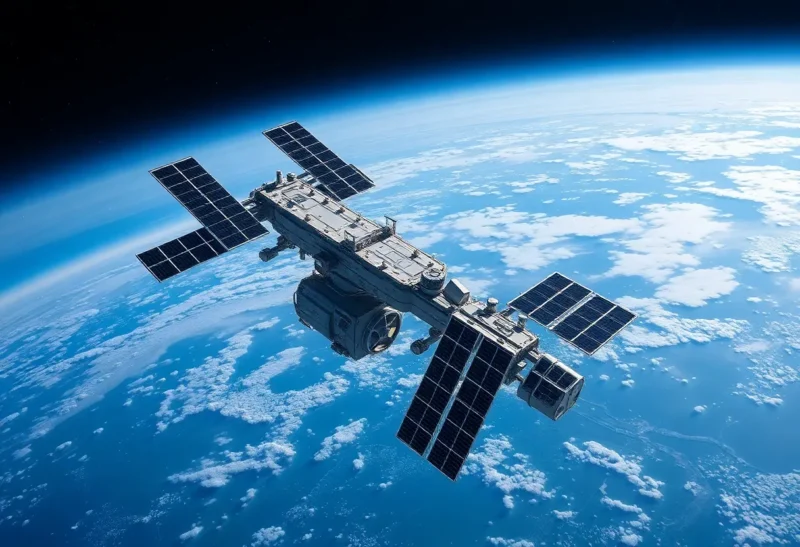
The International Space Station was never intended to be permanent. The earliest discussions about its operational end date go back to its construction in the late 1990s. Now, with ISS deorbit planned for 2030 and NASA’s Commercial Low Earth Orbit Destinations (CLD) program providing development funding to private station developers, the transition to commercial space stations is actively underway. Whether any of these stations will actually be operational when the ISS comes down is one of the more consequential open questions in the near-term space industry.
The optimistic picture — that two or three commercially operated stations will be ready to take NASA and partner astronauts as the ISS is deorbited — requires hardware readiness, launch schedules, and operational experience that none of the currently funded programs has yet demonstrated. The pessimistic picture — that the ISS goes down and there’s a multi-year gap before commercial successors are operational — would represent the first time since 2000 that no human habitation exists in low Earth orbit. The honest picture is somewhere between those scenarios, and understanding what each program has actually accomplished versus what it plans to accomplish helps clarify where the risks sit.
Axiom Space: The Furthest Along
Axiom Space holds the most developed position in the commercial station race for a simple reason: they’re actually attached to the ISS already. NASA contracted with Axiom to dock commercial habitation modules to the ISS’s existing Node 2 forward port, adding Axiom’s own modules to the station before eventual detachment to form the core of a standalone Axiom station. This approach allows Axiom to accumulate real operational experience in orbit before their station exists independently.
Axiom Module 1 (AxM-1) was originally scheduled to launch in late 2024 but has experienced delays and as of 2026 has not yet been launched. The subsequent modules — AxM-2, AxM-3, and the detachment of the combined Axiom segment to form an independent station — are downstream of that first launch. The schedule slippage has been significant and the revised timeline for the standalone Axiom station now stretches into the early 2030s, closer to and possibly past the ISS deorbit date rather than safely preceding it.
Axiom has demonstrated commercial credibility in adjacent ways: they’ve flown multiple private astronaut missions to the ISS (Axiom Mission 1, 2, 3, and 4) aboard SpaceX Crew Dragon, generating revenue and operational experience with commercial crew operations. Their spacesuits were selected by NASA for Artemis lunar EVAs. The company has real technical capability and genuine momentum, but the hardware timeline for the station itself has slipped from early ambitions.
Starlab: The Boeing-Voyager Partnership
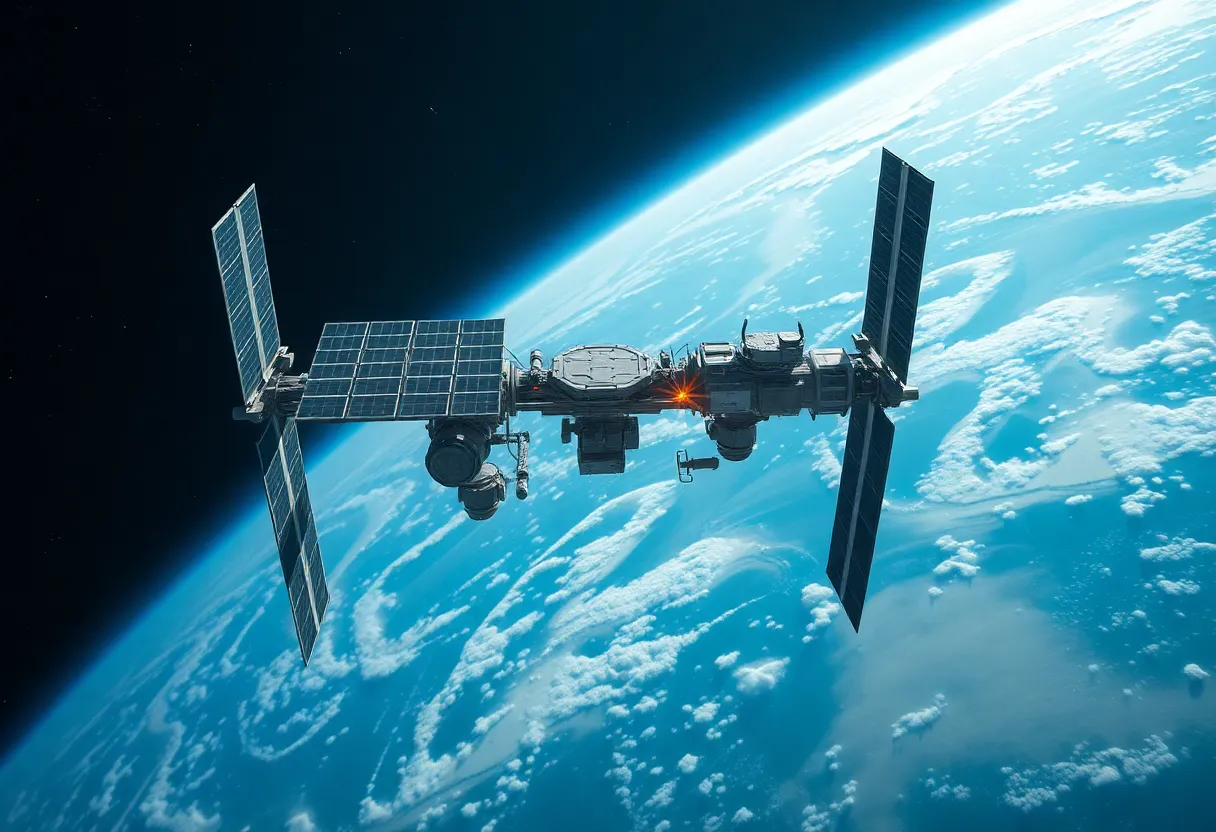
Starlab was announced by Voyager Space and Airbus in 2021, with later involvement from Boeing announced in 2023. The concept is a single-launch station — designed to fit in a large fairing and launch as a complete unit rather than being assembled incrementally. The design calls for a large inflatable habitat module, power generation systems, and a docking node, capable of hosting up to four crew.
Single-launch designs have appeal from a simplicity standpoint: no on-orbit assembly, no incremental risk accumulation across multiple launches. The trade-off is that everything must work correctly on first deployment, and the habitable volume is constrained by launch vehicle fairing dimensions even with inflatable technology. Starlab’s target is 340 cubic meters of habitable volume — smaller than the ISS’s roughly 915 cubic meters but a meaningful workstation.
Boeing’s involvement brought both credibility (they were a primary contractor for ISS and understand long-duration space habitation) and concern (Boeing’s Starliner crew vehicle program has experienced significant technical difficulties, though the commercial station program is separate). The funding situation and development timeline for Starlab have been less publicly detailed than Axiom’s program, and concrete milestones — completed hardware, test articles, launch contracts — have been slower to materialize publicly.
Blue Origin’s Orbital Reef
Blue Origin’s entry is Orbital Reef, a mixed-use station designed to accommodate a variety of tenants — NASA research, commercial manufacturing, tourism, and private laboratories. Sierra Space is a development partner providing the LIFE inflatable habitation module. The business model is explicitly broader than government contracts: Orbital Reef frames itself as a platform for multiple commercial customers, not primarily a NASA facility.
Blue Origin has the financial backing (Jeff Bezos’s continued investment in the company) and the infrastructure (they’re building New Glenn, their heavy-lift launch vehicle) to potentially fund a station development program. The Glenn spaceship planned for eventual crew transport adds another piece to a Blue Origin ecosystem. The risk with Blue Origin’s station ambitions has always been their historical tendency toward ambitious announcements with slower-than-projected hardware delivery — New Shepard has been operational but New Glenn only began launch operations in 2025 after years of delays, and translating launch experience to orbital habitation is a larger leap.
Sierra Space’s LIFE module uses expandable habitat technology similar to Bigelow Aerospace’s designs (Bigelow’s B330 program ultimately didn’t produce a station despite years of development). The technology works — NASA’s BEAM module on the ISS is an expandable structure that has functioned correctly for years. Scaling to a full habitable station module is a more complex engineering challenge.
The Other Programs
Several smaller players have received NASA CLD seed funding or are developing independent commercial capabilities. Nanoracks’ Starlab (a different entity from the Voyager Starlab — an earlier concept that was essentially superseded) and various international programs including JAXA interest in commercial station participation add to the landscape without representing near-term orbital capability.
China’s Tiangong station, completed in 2022 and fully operational since, is already serving as a national government station. It’s not a commercial platform, but it demonstrates that a functional, permanently crewed station smaller than the ISS is operationally viable. The Chinese station model — government-funded, single nation-operated, intended to be modular and expandable — is the closest operational analogue to what commercial station operators are trying to do, though with different ownership structure and customer base.
The Transition Gap Risk
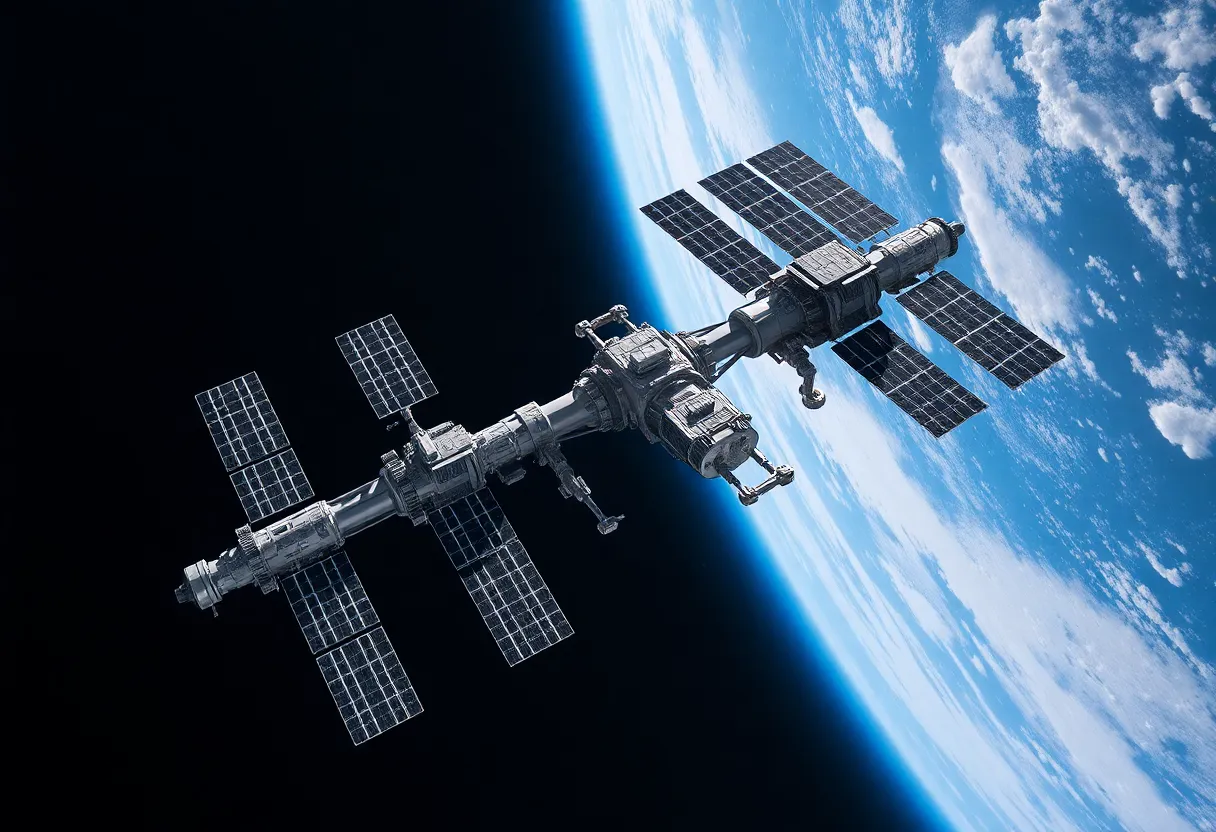
NASA has been explicit about the risk it’s managing: it does not want a gap in continuous US human presence in low Earth orbit. The agency’s plan assumes that at least one commercial station will be operational before the ISS is deorbited. The current ISS deorbit timeline of 2030 provides a target, but deorbit of a structure the size and complexity of the ISS requires careful management — the process could start as early as 2028 with final deorbit in 2030. That compresses the window for commercial station readiness.
The realistic assessment, based on current hardware status and typical aerospace development timelines, is that maintaining the 2030 ISS deorbit date without a gap in crewed access is contingent on at least one commercial station reaching operational status by 2029. Axiom’s schedule slippage makes this dependent on either accelerated delivery or ISS life extension. The Space Station Freedom experience — the original Reagan-era US station that became the ISS through repeated redesigns and cost growth — suggests that complex orbital habitation programs routinely take longer than planned.
An ISS life extension beyond 2030 has been discussed as a contingency. The structural challenges are real — ISS has fatigue cracking in some modules — but a technical evaluation rather than firm structural limits determines the actual end date. A 2033 or 2034 deorbit provides more buffer for commercial station development, at the cost of continuing ISS maintenance expenses that NASA has flagged as unsustainable long-term.
The commercial stations will come. The businesses are real, the NASA contracts are real, the investors are real. The question of whether they arrive on a schedule that provides continuous capability rather than a gap is legitimately uncertain, and the honest answer in 2026 is that the optimistic scenario requires things to go right that haven’t gone right yet.