Why Modern Irrigation Technology Is Struggling to Close the Agricultural Water Gap

Fatima Al-Rashid
July 7, 2026
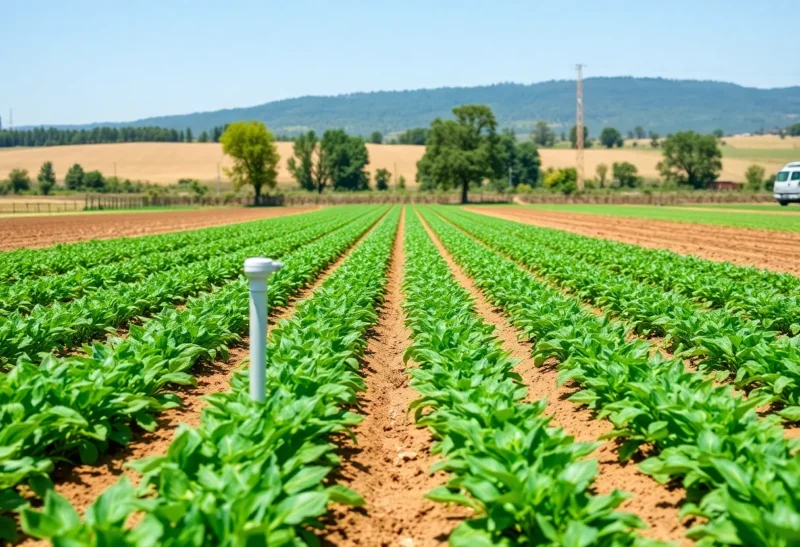
Agriculture uses approximately 70% of the world’s freshwater withdrawals—the largest single human use of water by a substantial margin. In water-stressed regions, this fraction rises above 90%. As climate change intensifies droughts, aquifer depletion accelerates, and competition for water among cities, industries, and farms increases, the pressure to improve agricultural water efficiency has never been greater.
Modern irrigation technology—drip irrigation, precision soil moisture sensing, variable-rate application, satellite-guided water management—exists and works. The efficiency improvements it delivers, compared to conventional flood or furrow irrigation, are substantial and well-documented. The gap between what the technology can achieve and what’s actually happening in the field is large and has persisted for decades. Understanding why requires looking beyond the technology itself to the economic, institutional, and policy environments in which irrigation decisions are made.
What Efficient Irrigation Actually Looks Like
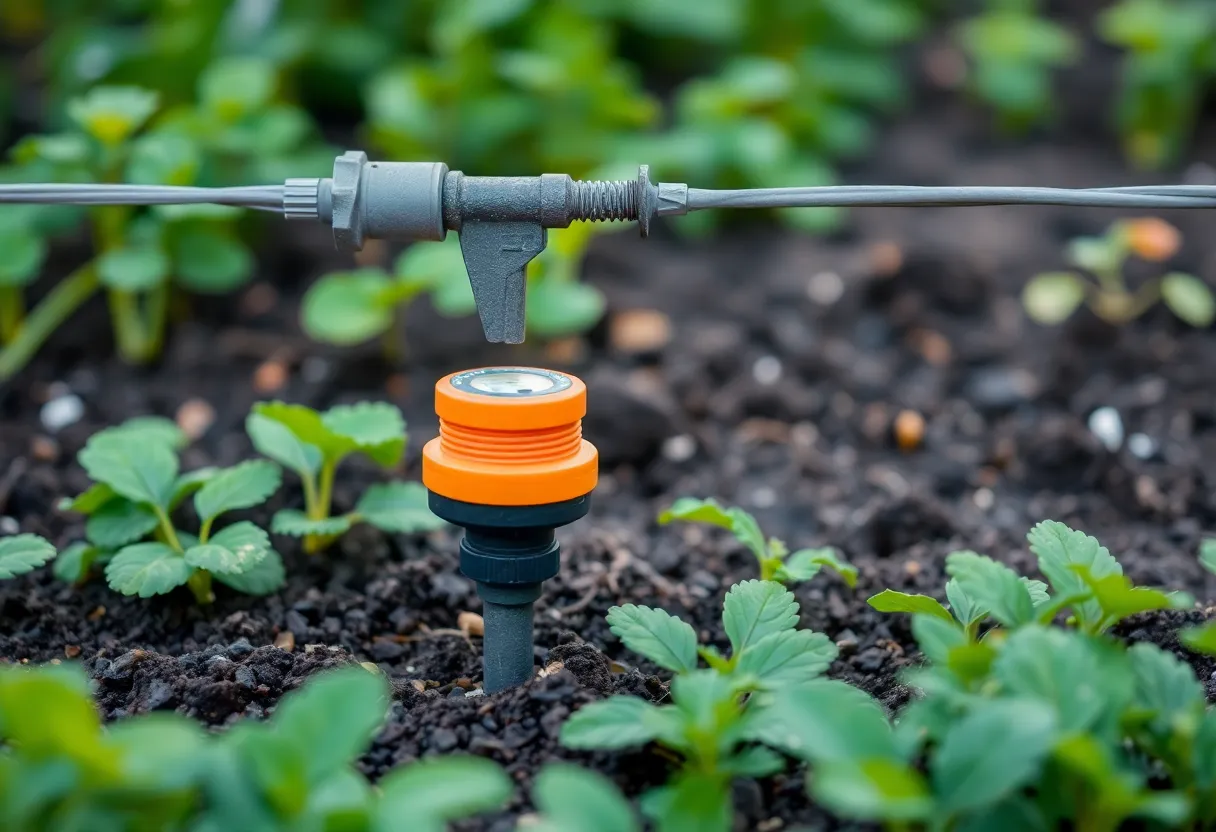
Flood or furrow irrigation—running water down channels between crop rows or flooding a field—has application efficiencies of 40–60%. Much of the water applied either runs off unused, evaporates before reaching plant roots, or percolates below the root zone where plants can’t access it. Sprinkler irrigation improves efficiency to 70–80%. Drip irrigation, which delivers water directly to the root zone through emitter tubes, achieves efficiencies of 85–95%.
Precision irrigation goes further: soil moisture sensors throughout the field, connected to weather data services, can determine when and exactly how much water is needed at each point in the field. Variable-rate application systems can deliver different amounts to different field zones based on crop type, soil type, topography, and observed moisture. The marginal water use for a given yield can be reduced by 30–50% compared to conventional sprinkler irrigation and by 60–70% compared to flood irrigation.
These efficiency gains are real, demonstrated, and not controversial in the agronomic literature. The question is why, given these documented benefits, the majority of irrigated agriculture globally still uses relatively inefficient methods.
The Economics of Water Pricing
In most agricultural contexts globally, water is either free or heavily subsidised. Farmers receiving water from a federal irrigation project in the American West often pay prices well below the cost of delivering that water; in many developing countries, agricultural water is either unpriced or available at nominal cost. When water is cheap or free, the financial incentive to invest in efficiency is minimal—the cost of upgrading from flood irrigation to drip irrigation might be $1,000–2,000 per hectare, and the payback period in water cost savings is infinite when water cost is zero.
The economic calculation changes when water is physically scarce rather than financially cheap. Farmers dependent on depleting aquifers eventually face either prohibitive pumping costs or complete depletion; farmers in regulated water markets where allocations are being reduced face direct revenue risk from insufficient water. Under these conditions, investment in water efficiency has clear returns, and adoption of more efficient technology accelerates.
The policy implication—volumetric water pricing that reflects actual scarcity—is straightforward but politically difficult. Agricultural water subsidies benefit farming communities with significant political influence in most countries; removing or reducing them faces organised resistance from the same communities. The countries that have made the most progress in agricultural water efficiency—Israel, Spain in some regions, Australia’s Murray-Darling Basin—have done so in contexts where water scarcity was severe enough that efficiency investment was existential, and in Australia’s case, through a tradeable water rights market that created direct financial incentives for efficiency.
The Knowledge and Capital Gap
Even where water pricing would make efficiency investments economically attractive, adoption faces barriers of capital access and technical knowledge. Installing drip irrigation on a farm requires upfront capital—equipment, installation, and the labour to convert from existing systems. Smallholder farmers in developing regions often lack access to the credit needed for this investment, even when the long-term economics are favourable.
The technical management requirements of precision irrigation are also higher than conventional irrigation. Monitoring soil moisture data, interpreting sensor readings, adjusting irrigation schedules, and maintaining drip irrigation emitters (which are susceptible to clogging) require skills and attention that are not required for traditional flood irrigation. For farmers already managing multiple challenges—market access, input costs, labour—the additional management burden is a real barrier, particularly when the water price signal doesn’t reinforce the investment.
Agricultural extension services—the institutions that transmit research and best practice to farmers—have been substantially reduced in many countries over the past decades through budget cuts. The knowledge transmission pathway that could help farmers implement efficient irrigation technology has weakened precisely as the technology has advanced.
The Rebound Effect: Why Efficiency Doesn’t Always Save Water
One of the more counterintuitive findings in agricultural water research is that improvements in irrigation efficiency don’t always translate to reductions in total water use at the basin or regional scale. The “efficiency rebound effect” or “Jevons paradox” in irrigation: when efficiency improvements reduce the cost of producing a unit of crop, farmers may respond by expanding irrigated area, shifting to more water-intensive crops, or increasing crop intensity in ways that consume the water savings and sometimes more.
Documented cases of this effect are widespread: irrigation efficiency improvements in parts of the American West and in several Central Asian agricultural regions have been associated with expanded irrigated area rather than reduced water withdrawals. The technology that was supposed to reduce water use instead enabled agricultural expansion that consumed the savings.
This doesn’t mean efficiency technology is counterproductive—it means that efficiency technology in isolation doesn’t constrain total water use. Constraining total use requires either physical scarcity (aquifer depletion) or regulatory allocation systems that limit total withdrawals rather than just setting efficiency standards. Without binding constraints on total water use, efficiency gains become production capacity gains rather than water savings.
What Actually Works
The evidence from regions that have made genuine progress on agricultural water use suggests a consistent pattern: technology improvement enables efficiency, but progress on actual water use requires either physical scarcity that forces adaptation or regulatory frameworks that create binding total withdrawal limits with effective enforcement.
Israel’s agricultural water efficiency—drip irrigation was largely developed there and is widely deployed—was driven by absolute water scarcity in an arid climate where inefficiency meant crops failing, not just higher costs. Spain’s drip irrigation adoption in Almería was driven by the need to produce high-value crops in a region that couldn’t support them with conventional irrigation given available water. Australia’s Murray-Darling Basin water trading market created direct financial incentives to conserve water by making saved water tradeable at market prices.
In each case, the technology existed before the adoption surge; what changed was the incentive structure. The technology is necessary but not sufficient for closing the agricultural water gap. The policy and institutional changes that create the right incentives are harder to achieve than the technology and receive less attention in public discourse about agricultural water—perhaps because technology advances make better news than water pricing reform.