What AI in Education Actually Looks Like When You Strip Away the Hype

Claire Donovan
July 7, 2026
Every educational technology wave arrives promising transformation. Tablets would personalise learning. MOOCs would democratise elite university education. Adaptive learning software would end one-size-fits-all instruction. Each wave has produced real changes at the margins and failed to deliver the systemic transformation its advocates claimed. AI in education in 2026 is following a similar trajectory—producing genuine, useful applications in specific contexts while falling well short of the claims made on its behalf.
What does AI in education actually look like when you examine the deployments rather than the press releases?
Where AI Tools Are Being Used and What They’re Doing
The most widespread uses of AI in education in 2026 fall into a few categories.
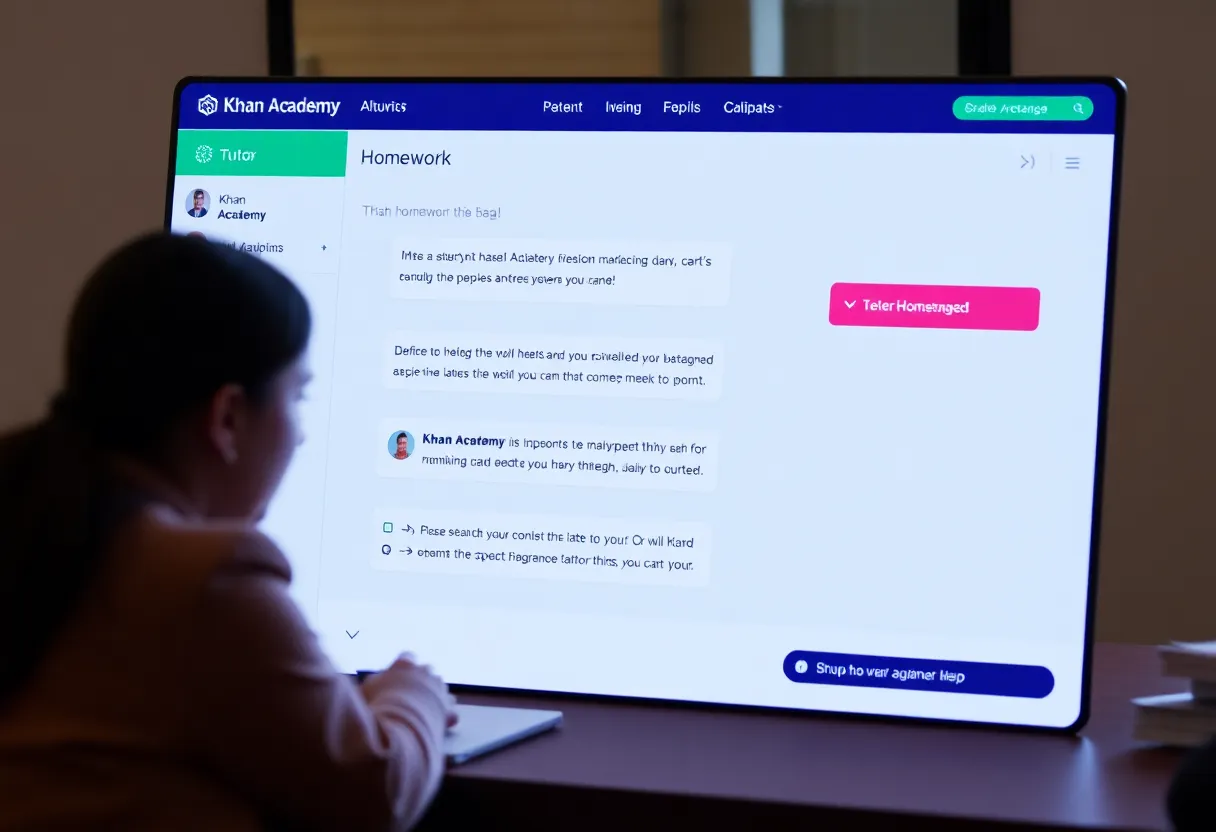
AI tutoring assistants: Khan Academy’s Khanmigo is the most-cited example of a well-implemented AI tutor—a conversational assistant that helps students work through problems using Socratic questioning rather than just providing answers. The system is designed to scaffold learning rather than complete tasks for students, asking guiding questions and explaining concepts at different levels of complexity. Early research on Khanmigo’s effectiveness shows moderate positive effects on student engagement and problem-solving in mathematics for middle-school students in controlled settings. The effect sizes are real but modest, and the benefits appear most pronounced for students who already have sufficient motivation to engage.
Writing feedback tools: AI writing feedback systems—both standalone tools and integrations in educational platforms—provide automated feedback on essays, arguments, and written work. These tools have become practically ubiquitous in secondary and university education. The feedback quality for surface-level writing concerns (grammar, sentence structure, clarity) is genuinely useful. For deeper concerns—quality of argument, originality of thought, appropriate use of evidence—the feedback is more variable and often misses what a skilled human teacher would identify. There’s also an obvious irony: systems that provide writing feedback co-exist with the same underlying models that students use to generate the writing those systems then evaluate.
Academic integrity challenges: The most universally felt effect of AI on education in 2026 is not any particular AI tool deployed by educators—it’s ChatGPT, Claude, and similar models being used by students to complete assignments. This has created a significant institutional response effort: AI detection tools (which have poor reliability, particularly high false positive rates that have caused genuine harm to innocent students), redesigned assessments that are harder to complete with AI assistance, and evolving institutional policies ranging from prohibition to conditional use with mandatory disclosure.
Adaptive Learning: The Gap Between Promise and Implementation
Adaptive learning—systems that adjust instructional content and pacing based on individual student performance—has been a recurring promise of edtech for years. AI has made the underlying personalisation more sophisticated, but the limitations are more instructional than technical.
Adaptive learning systems work best when the domain is clearly decomposable into skills and sub-skills with clear prerequisite relationships—mathematics, language learning, and standardised test preparation are the clearest successes. Duolingo’s AI-powered language learning adapts effectively to learner pace and performance because language acquisition follows patterns that are learnable from large datasets of learner behaviour. Adaptive maths platforms (Zearn, DreamBox) show positive effects in controlled studies for basic mathematics, particularly when used consistently alongside regular classroom instruction.
The limitation appears when the subject matter requires higher-order thinking, creative synthesis, or skills that aren’t easily decomposable into discrete measurable components. Writing, critical analysis, scientific reasoning, and collaborative problem-solving don’t lend themselves as naturally to adaptive delivery. The adaptive systems that exist for these domains are working at a shallower layer of the skill than the most educationally important elements.
The Teacher’s Relationship With AI Tools
Teacher adoption of AI tools has been slower and more selective than either enthusiasts or critics expected. The pattern that emerges from surveys and ethnographic research in schools is pragmatic: teachers adopt AI tools for specific, bounded tasks where they provide a clear time saving or quality improvement, and largely ignore them for everything else.
The tasks where teachers report AI tools as genuinely useful: generating first drafts of differentiated lesson materials for different ability levels, creating initial rubrics and assessment criteria, quickly generating varied practice questions on a topic, and producing communication drafts to parents. These are all tasks where the teacher’s expertise is in reviewing and selecting rather than generating from scratch—AI as a drafting assistant, not a replacement for pedagogical judgment.
The tasks where teachers report AI tools as unhelpful or requiring too much correction: assessing the quality of student reasoning, evaluating original work fairly, building relationships with students and understanding their individual contexts, navigating the interpersonal dimensions of classroom management. These are the high-complexity, high-stakes elements of teaching that AI tools have not meaningfully addressed.

Equity Concerns: Who Benefits
The equity dimension of AI in education deserves attention because it doesn’t pattern the way many advocates assume. The assumption that AI tutoring and personalised learning primarily benefit underserved students—by giving them access to tutoring resources previously available only to wealthier peers—is complicated by the evidence.
AI tools that provide educational benefit tend to require digital access (device and connectivity), parental support for engagement outside school, and the motivation and metacognitive skill to use them productively. These prerequisites are less equally distributed than technology access alone. Studies of adaptive learning platforms in high-poverty schools have found that effectiveness varies significantly by implementation quality—how teachers are trained to integrate the tools, how much time students use them, how the school structures the experience—rather than technology access alone.
There’s also an emerging concern about differential effects of AI-generated content on skill development. If higher-income students, with more human tutoring and stronger foundational skills, use AI tools to accelerate learning rather than substitute for thinking, while lower-income students with fewer support resources use AI tools primarily to complete assignments they’d otherwise struggle with, the tools may widen rather than narrow existing gaps.
What the Research Actually Shows
A 2025 systematic review of AI in education studies found positive effects on learning outcomes in specific narrow domains (mathematics practice, language learning, coding instruction) with effect sizes comparable to, but not substantially larger than, previous generations of well-implemented educational technology. The evidence for transformative impact on complex skills acquisition—the kind that matters most for long-term educational outcomes—is currently thin.
This is not an argument against AI in education. Modest positive effects at specific skill domains, reliably produced, are genuinely valuable. Saving teacher time on administrative and drafting tasks is genuinely valuable. Providing Socratic tutoring on demand for students who wouldn’t otherwise have it is genuinely valuable.
It is an argument against the claim that AI represents a fundamental transformation of what education is or how learning happens. The evidence suggests AI in education is a useful, moderately effective tool for specific applications—not the sector-level disruption that characterises most of the coverage. That more measured assessment is worth holding onto as the next wave of AI education products arrives, because the pattern of over-claiming and under-delivering is as reliable as the technology itself.