The Engineering Behind Modern Noise-Proof Offices and Focus Pods

Morgan Reese
July 7, 2026
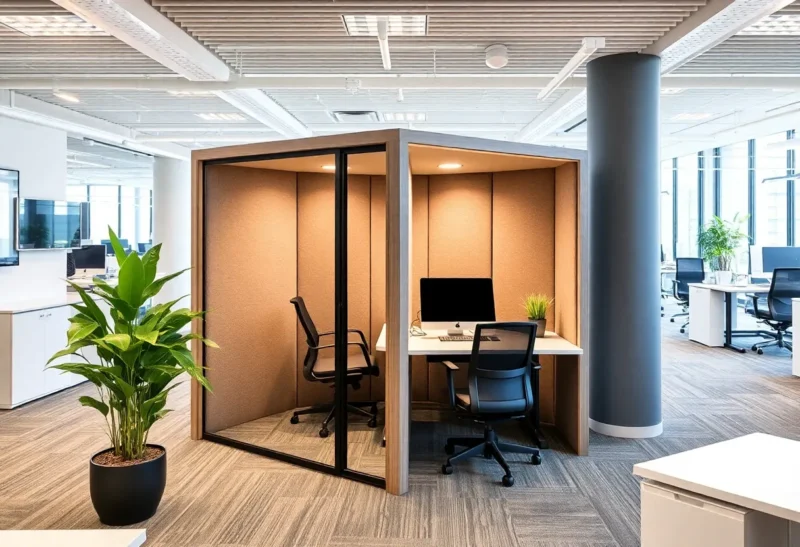
Open-plan offices became dominant in the 2000s and 2010s as companies chased real estate efficiency and the mythology of spontaneous collaboration. The research on what they did to workplace noise was consistent: ambient noise levels in open offices typically run between 60 and 65 decibels—loud enough to measurably impair concentration on cognitively demanding tasks, and above the threshold where speech intelligibility creates a specific kind of cognitive load called the “irrelevant speech effect,” where partially audible conversation near a worker consumes working memory even when the worker is not consciously listening to it.
The focus pod and acoustic office enclosure industry emerged partly as a response to this recognised problem, and partly as an architectural hedge: if you’re not going to rearrange the whole office, you can at least offer somewhere to retreat. What those pods actually do acoustically, and how well they work, is more interesting and more complicated than the marketing language around “acoustic privacy” typically conveys.
Sound: What You’re Actually Trying to Stop
Sound is pressure waves propagating through air. When you hear a conversation from across an open office, you’re receiving pressure waves that have travelled from a sound source, bounced off multiple surfaces, and arrived at your ears having lost energy along the way but not having disappeared. The goal of acoustic design is to reduce the energy reaching unintended listeners—and there are several mechanisms by which this can happen.
Absorption converts sound energy into heat through friction within a porous material. Foam panels, fabric-wrapped acoustic boards, carpet, and upholstered furniture all absorb sound energy rather than reflecting it. In a room with hard parallel surfaces (glass walls, bare floors, hard ceilings), sound reflects between surfaces, building up ambient levels and extending the duration of sounds through reverberation. Adding absorptive material reduces reverberation, shortening the “tail” of sounds and reducing overall ambient levels.
Blocking (or transmission loss) reduces sound passing through a structural barrier. Mass is the primary variable: a heavy concrete wall transmits much less sound energy than a glass partition of the same size, because more energy is required to vibrate the greater mass. The STC (Sound Transmission Class) rating measures how much a partition reduces sound transmission; standard drywall partitions rate around STC 35–40; solid concrete walls rate STC 55–65.
Damping reduces the vibration of structures that would otherwise radiate sound. Constrained layer damping—sandwiching a viscoelastic material between two rigid layers—is used in specialty acoustic glass, acoustic floor mats, and some wall panel constructions to reduce structure-borne sound transmission.
Masking doesn’t reduce sound energy but makes speech less intelligible by adding broadband noise—typically in the 1–5 kHz range where human speech carries most information—at a calibrated level. Sound masking systems (the soft “shh” hiss you’ll find in many medical offices and open-plan workplaces) work not by making the office quieter but by reducing the signal-to-noise ratio for speech, making it harder to understand overheard conversations. They reduce distraction without reducing overall noise level.
What Focus Pods Actually Do
A focus pod—a freestanding acoustic enclosure for one to four people, designed to be placed in an open office—combines absorption and partial blocking in a modular unit. The best-performing pods (from manufacturers like Framery, Hana, Room, and similar) achieve noise reduction of 25–35 dB, bringing ambient levels inside the pod down from typical open-office 60+ dB to around 35–40 dB—roughly the ambient level of a quiet library.
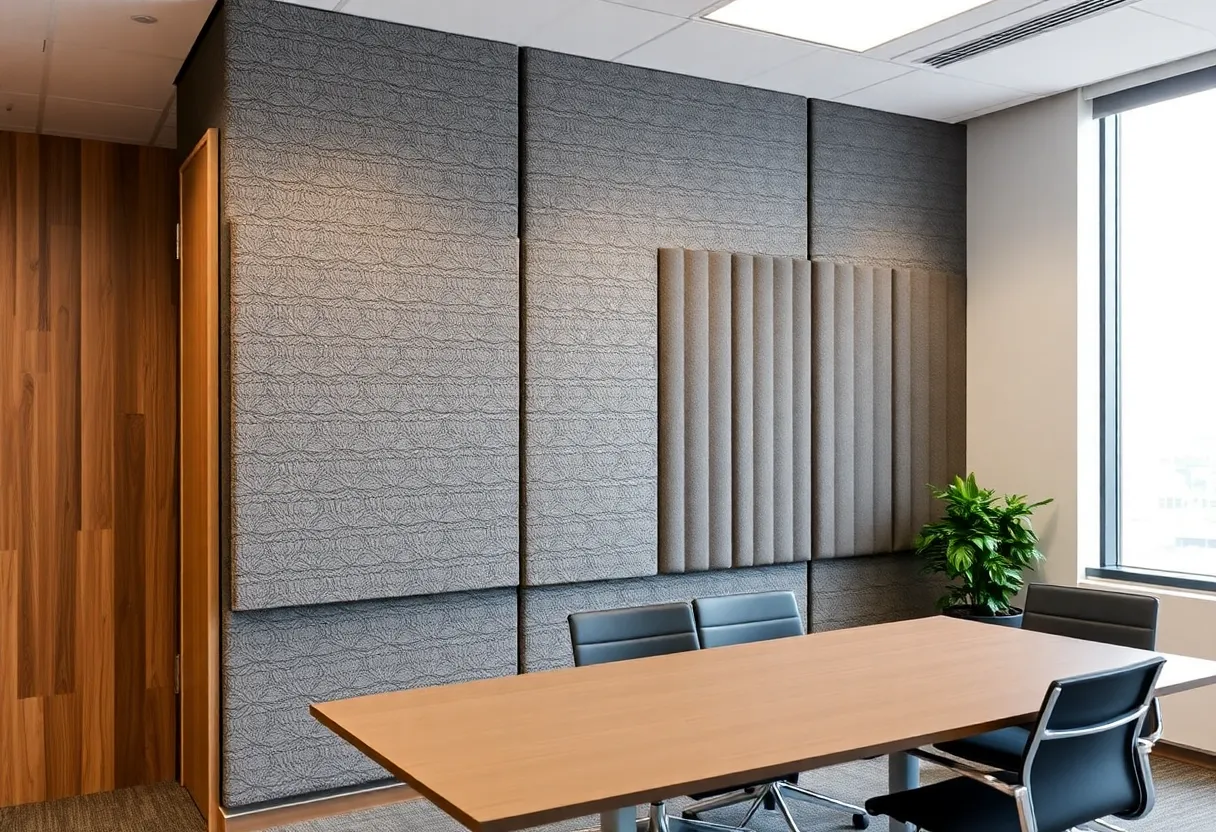
The structural approach in quality pods layers multiple mechanisms: dense outer panels (mass for blocking), acoustic insulation between panel layers (absorption within the structure), internal surface treatment (absorptive fabric or foam to reduce internal reverberation), and door seals designed to eliminate air gaps (critical because sound, like air, passes through any gap). A pod that looks acoustically impressive but has poor door seals performs substantially worse than its panel specifications suggest—sealing is one of the most common failure points in both pods and building acoustic partitions.
Ventilation is a genuine engineering challenge in sealed acoustic pods. An airtight pod in a climate-controlled building can become stuffy and uncomfortably warm within minutes of occupancy, which defeats the purpose of providing a concentration environment. Quality pods integrate HVAC systems with acoustic baffles—lined ducts that route air through directional changes to reduce sound transmission along the duct path—or use low-velocity ventilation distributed through multiple small openings rather than a single large vent that would admit more noise.
Most pods also incorporate internal lighting designed for video call quality (even, frontal lighting that reduces facial shadows in camera views) and power access. These aren’t acoustic features, but they reflect that the market has converged on the video call as the primary use case for private enclosures in modern hybrid offices.
The Gap Between Rating and Reality
Pod manufacturers typically provide acoustic performance ratings from laboratory testing under controlled conditions. Installed performance in real offices consistently falls short of laboratory ratings for several reasons: real office environments have different acoustic boundary conditions than test chambers; installation quality matters (a pod sitting on a hard reflective floor will perform differently than one on carpet); and the pod’s acoustic effectiveness depends on what surrounds it—a pod near a hard glass wall will have higher ambient noise ingress than one in the centre of a carpeted space.
The ISO 23351 standard, introduced in 2020, provides a standardised rating specifically for office pods that attempts to better reflect installed performance conditions. Ratings under this standard (a “pod A-weighting reduction” value) are lower numbers than the laboratory STC or Rw values manufacturers often cite, which makes comparison across products more informative and more honest.
Designing Acoustic Spaces in Buildings
For new office construction or significant renovation, acoustic design begins at the architectural level—before any specific products are specified.
Room geometry affects acoustic performance significantly. Parallel hard surfaces create standing waves at specific frequencies—resonance conditions where sound at particular wavelengths builds up rather than dissipating. Acoustic engineers break up parallel surfaces with angled panels, vary ceiling heights, and position absorptive elements to prevent resonant modes in spaces where sound quality matters.
HVAC systems are a major source of office noise independent of human activity. Ductwork that’s too small for the required air volume creates turbulence noise; fan mechanical noise transmits through duct paths; supply and return grilles generate noise at the air velocity required for temperature control. Acoustic consultants working on office design routinely review HVAC specifications alongside architectural layouts, specifying duct sizing, lining materials, duct routing, and grille selection to meet noise criteria.
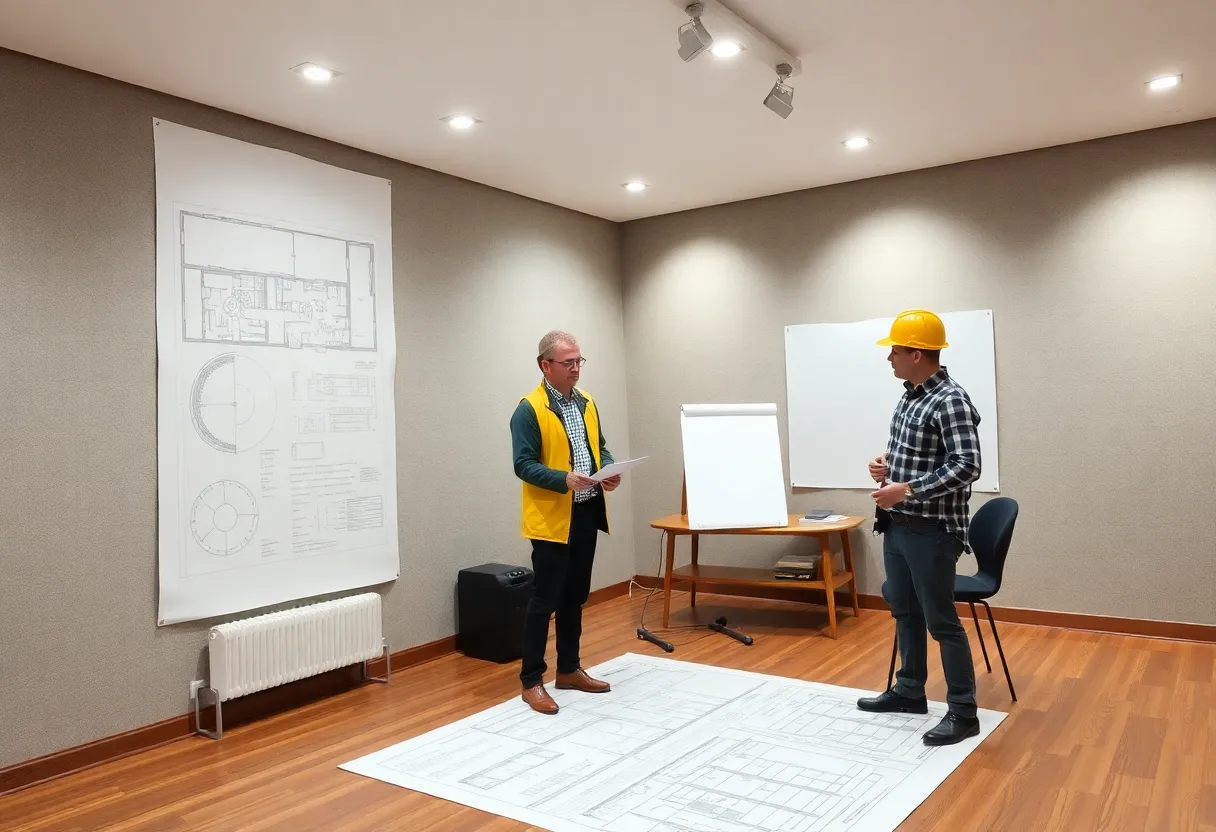
Floor, ceiling, and wall assembly specifications determine transmission loss between rooms. A building’s acoustic performance is significantly determined by structural choices made before finishes are applied: concrete slab versus raised access floor, plasterboard ceiling versus exposed concrete soffit, curtain wall glazing versus solid exterior walls. Changing acoustic performance after construction is expensive because it typically requires adding mass (more layers) or decoupling (isolating surfaces from structure), both of which are substantially harder to retrofit than to build in originally.
Speech Privacy: The Specific Problem in Open Offices
Speech privacy—preventing unintended listeners from understanding conversation—is a specific acoustic target that differs from general noise reduction. The key measure is Articulation Index (AI) or Speech Intelligibility Index (SII): the fraction of speech a listener can understand given the ambient noise level and the speech level at their position.
An AI of 0.0 means speech is completely unintelligible; an AI of 1.0 means speech is fully clear. For speech privacy (meaning a nearby conversation doesn’t distract you or reveal confidential content), an AI below 0.05 at a listener’s position is the target—this is “confidential” speech privacy where speech is not reliably understandable. Achieving this in an open office typically requires either physical distance from conversations, acoustic barriers that reduce transmitted speech energy, or sound masking that elevates the ambient noise floor enough to drive the AI into the unintelligible range.
Sound masking is often the most cost-effective single intervention in existing open offices precisely because it directly targets the speech intelligibility problem without requiring construction. A well-designed sound masking system can reduce speech privacy problems throughout an office for a fraction of the cost of physical partitioning—though it doesn’t reduce overall noise levels and may add ambient noise that some occupants find uncomfortable, particularly in initially quiet environments where the masking sound itself becomes noticeable.
Where the Research Points
The body of workplace acoustics research consistently identifies similar factors as most disruptive to cognitive work: intermittent, unpredictable sounds are more disruptive than constant sounds at similar energy levels; speech is more disruptive than non-speech noise at equivalent volume; nearby intelligible conversation is the single most reported acoustic distraction across studies.
This research shapes the focus pod market: the pod exists specifically to create an environment where nearby speech is not intelligible and where the occupant can control their acoustic environment rather than being subject to the ambient conditions around them. Whether through physical isolation, absorption, or masking, the engineering goal is the same: make the speech of strangers disappear, so the occupant can hear only their own thinking.