Why Wind Power’s Transmission Problem Is Harder Than the Turbine Problem

Jordan Lee
July 7, 2026
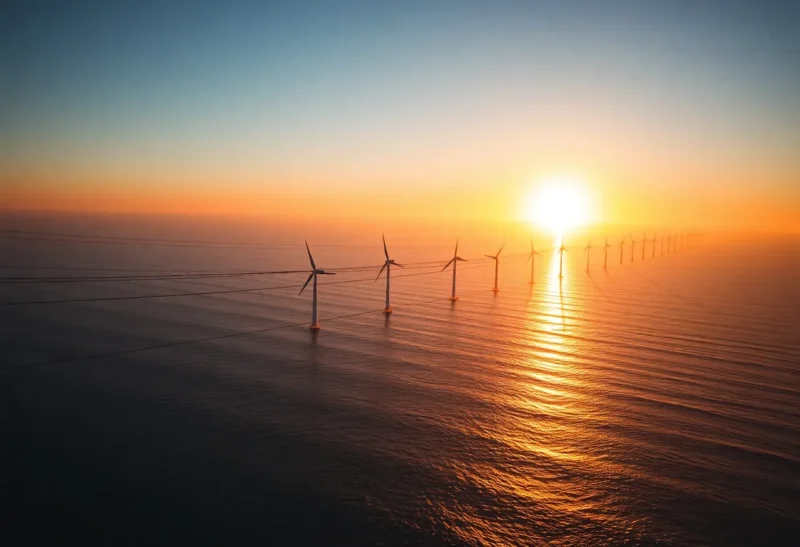
Wind turbine technology has matured remarkably over the past two decades. Capacity factors (the ratio of actual output to maximum possible output) for onshore wind in good locations have risen from around 25% in 2000 to 35–45% today. Offshore wind turbines now have rotor diameters exceeding 200 metres and individual nameplate capacities above 15 MW. The cost of generating wind electricity—measured as levelised cost of energy—has fallen by roughly 70% since 2010 and is now among the lowest of any generation technology in good wind regions.
The turbines are working. The problem is what happens after the electrons leave the generator.
Getting wind power from where the wind blows to where the electricity is consumed requires transmission infrastructure—high-voltage power lines, substations, and grid management systems—that is more difficult, more expensive, and takes longer to build than almost anyone outside the energy industry appreciates. This transmission bottleneck is the primary constraint on wind deployment in much of the world, and it’s a harder problem than building better turbines.
The Geography Mismatch
The fundamental issue is that good wind resources are usually not where most people live. The highest-quality onshore wind in the United States is concentrated in the Great Plains—Kansas, Oklahoma, Texas, Iowa, the Dakotas. The major electricity demand centres are on the coasts: the Northeast corridor, Southern California, the Great Lakes industrial belt. Connecting these wind resource regions to these demand centres requires long-distance transmission lines measured in thousands of kilometres.
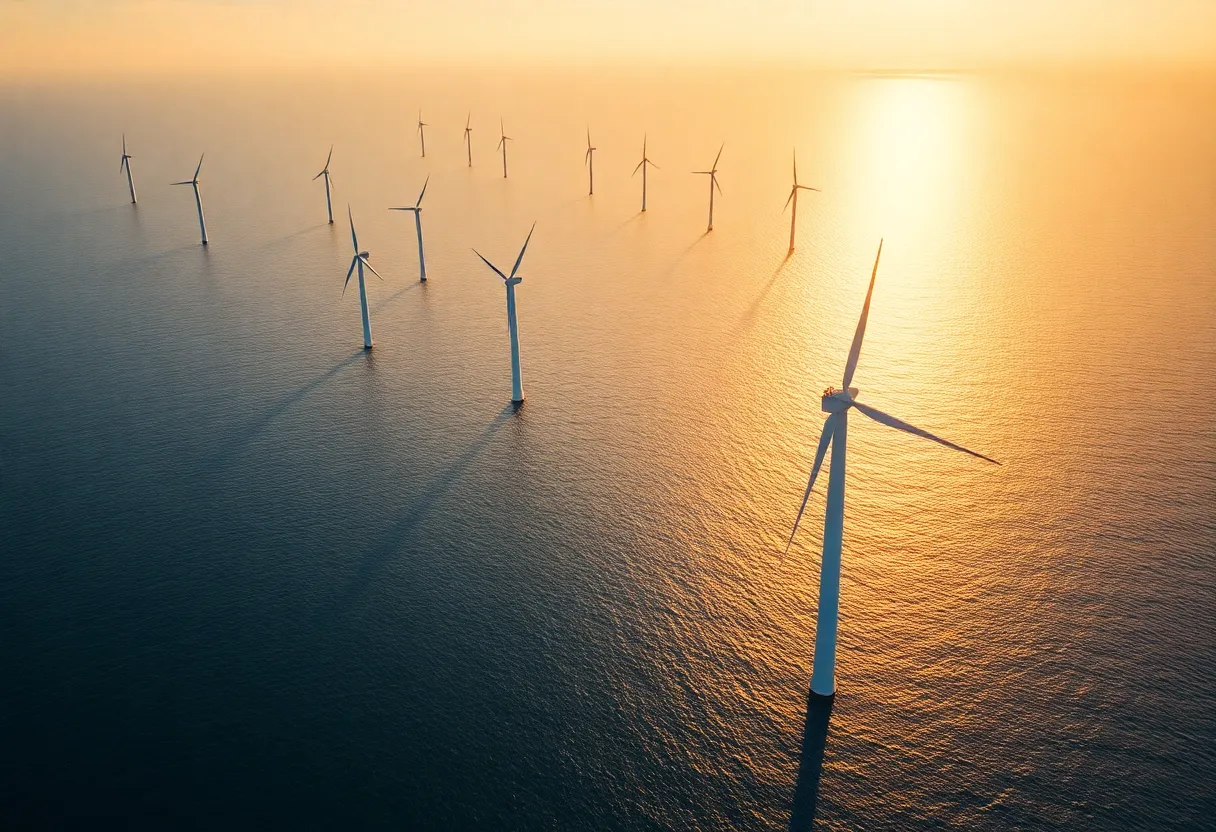
Offshore wind avoids some of this geography problem—the wind resource is offshore from the coast where population concentrates—but creates others. Offshore cables are more expensive to install and maintain than onshore lines, and bringing offshore power to shore requires landing points, onshore substations, and connections to the existing grid that may require their own permitting and construction work.
In Europe, the offshore wind resource in the North Sea is excellent but connecting it to Southern European demand centres across multiple national grid systems creates cross-border interconnector challenges that are as much political and regulatory as engineering. The UK’s North Sea wind requires cables to shore and then transmission south. Denmark’s wind surplus needs routes to Germany, France, and beyond. Building sufficient cross-border interconnection has been a decades-long project and remains incomplete relative to the transmission capacity needed for high wind penetration.
How Long It Takes to Build Transmission
The timelines for transmission infrastructure projects are long enough to be surprising even to people familiar with large infrastructure generally:
In the United States, the Federal Energy Regulatory Commission (FERC) has tracked large transmission project timelines, finding that from initial interconnection request to in-service completion, the average large transmission project takes 7–10 years. Landmark projects illustrate this: the TransWest Express, a 3,000-kilometre HVDC line planned to carry Wyoming wind to the Southwest, was in development for over 15 years before breaking ground in 2024. The SunZia Wind Transmission project in New Mexico, designed to carry 3,500 MW of wind generation to Arizona and California, was in permitting for over a decade before reaching final approval in 2022 and beginning construction.
Wind turbines take 2–4 years from site selection to operation. The transmission infrastructure to connect them to market takes 7–15 years. This sequence means that wind generation capacity can be built faster than the grid can absorb it—which is exactly what’s happening in several US regions. The Midcontinent Independent System Operator (MISO) had a queue of over 300 GW of proposed generation projects in 2023, most of which could not be connected for years due to transmission constraints. Projects are approved and partially built while they wait for the transmission capacity that allows them to sell power.
The Permitting Problem
Transmission permitting is multi-jurisdictional in a way that almost no other infrastructure category matches. A long-distance transmission line crosses multiple states, each with its own siting process, environmental review requirements, and timeline. A line that needs approvals from five state public utility commissions plus federal permitting from the Bureau of Land Management for any sections crossing federal land, plus separate environmental reviews under NEPA, plus FERC interconnection approval, is not running these processes in parallel—earlier approvals are often prerequisites for later ones, and any single jurisdiction can delay the whole project.
The National Environmental Policy Act (NEPA) review process, which applies to federal permits for transmission lines, has been a consistent source of delay. Environmental impact statements for large transmission projects routinely take 3–5 years and run to thousands of pages. This isn’t purely regulatory obstruction—large transmission lines do have real environmental impacts (bird and bat mortality from lines, habitat fragmentation, viewshed concerns) that require genuine assessment. But the process is slow enough to be a binding constraint on deployment speed.
Permitting reform has been a priority in energy policy for years and has made some progress. The Inflation Reduction Act and the FAST-41 process accelerated some federal environmental review timelines. FERC Order 1977 has attempted to reform the grid interconnection queue process. These reforms are meaningful but haven’t yet transformed the fundamental timeline—streamlining a 10-year process by 20% still produces an 8-year process, which remains slow relative to wind turbine deployment cycles.
Right-of-Way: The Land Problem
Beyond permitting, transmission lines require physical right-of-way—the strip of land along which the line is built and maintained. For a 500 kV AC line, this right-of-way is typically 60–90 metres wide. For a multi-GW HVDC line, it can be wider. For a line running thousands of kilometres across agricultural land, forests, suburbs, and private property, acquiring right-of-way requires negotiating with or using eminent domain against thousands of individual landowners.
Landowner opposition to transmission line right-of-way is a meaningful practical obstacle. Agricultural landowners often accept easements with appropriate compensation. Residential landowners near suburbs and exurbs frequently oppose lines on property value and aesthetic grounds. In some cases, organised opposition from landowner groups has delayed or rerouted transmission projects significantly. The Grain Belt Express, a 2,500-kilometre HVDC line planned to carry Kansas and Oklahoma wind to the Midwest and East, faced sustained landowner opposition in Missouri that delayed the project by years.
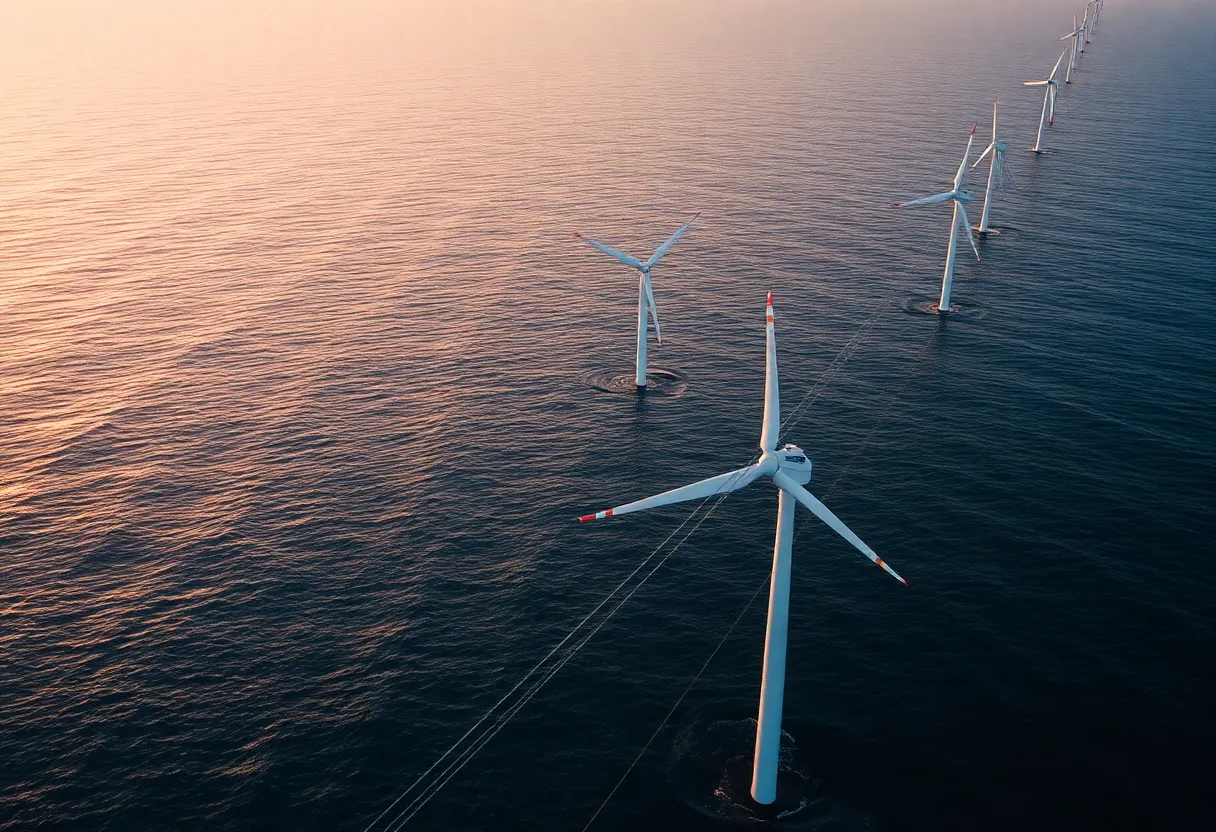
This is one of the areas where offshore transmission has a genuine advantage: submarine cables in the open ocean don’t face private property right-of-way issues (they do have to navigate fishery and maritime use areas, but the permitting complexity is different). The Champlain-Hudson Power Express, a submarine HVDC line bringing hydro and wind power from Canada to New York City, was able to route most of its cable length underwater specifically to reduce right-of-way acquisition difficulty.
Curtailment: What Happens Without Enough Transmission
When wind generation exceeds what the transmission system can carry, grid operators “curtail” the excess—shut down some generators that are physically capable of producing power because there is no way to route it to where it’s needed. Curtailment is economic waste: the fuel is free (wind), the capital to build the turbine is already spent, and the electricity is being thrown away.
Texas’s ERCOT grid, which has the most wind generation capacity of any US grid, has experienced significant curtailment historically—particularly in West Texas, where wind resources are excellent but transmission out of the region was historically constrained. Texas has been more aggressive than most US states about building transmission to solve this (the Competitive Renewable Energy Zones, or CREZ, transmission programme added $7 billion of transmission specifically to connect West Texas wind to demand centres), and West Texas curtailment has fallen significantly as a result. But even with CREZ, curtailment occurs when wind is high and demand is low.
In Europe, Denmark and Ireland—both with high wind penetration relative to their demand—have curtailment rates that are partially managed by exports to neighbouring countries. The North Sea Wind Power Hub project, which proposes building artificial islands as power hubs connecting offshore wind arrays to multiple countries simultaneously, is specifically designed to reduce curtailment by providing more flexible routing of offshore wind output to wherever demand is highest at a given moment.
HVDC: The Technical Solution That Requires Political Will
High-voltage direct current (HVDC) transmission is the technology that makes very long-distance transmission practical. AC power loses energy over distance through resistive heating in proportion to the square of the current; for distances above roughly 800 kilometres, HVDC becomes more efficient than AC despite the higher cost of converter stations at each end. HVDC can also carry more power per unit of right-of-way width (important for the land acquisition problem) and enables asynchronous interconnection between separate grid regions that would otherwise require precise frequency synchronisation.
The technology works. China has deployed over 30 HVDC lines, many exceeding 2,000 kilometres, as part of its strategy to connect wind and solar resources in its western and northern regions to demand in its eastern and southern population centres. The technology has been demonstrated at scale.
In the US and Europe, HVDC deployment has been slow relative to need—not because the technology doesn’t work, but because the permitting, right-of-way, and cost allocation challenges apply equally to HVDC as to AC transmission. An HVDC line costs more per kilometre than AC (the converter stations are expensive), which makes the economic case challenging when the planning and permitting system treats each line individually rather than as part of a coordinated national transmission strategy.
Grid planning reform—moving toward a more coordinated, system-level approach to transmission investment rather than project-by-project reactive planning—is widely identified by grid economists as the most impactful policy change available. The US does not have a national grid planning process that could develop and prioritise a national HVDC overlay. Regional grid operators do long-term planning, but their mandate stops at regional boundaries. The coordination problem is institutional as much as technical.
What This Means for Wind Energy Timelines
The transmission constraint creates a timing problem that will shape wind deployment for the next decade. Projects in development today are well-positioned; projects that need transmission that hasn’t yet been permitted are on 10–15 year timelines. The gap between announced wind capacity and wind capacity that can reach markets is a transmission gap as much as a technology gap.
Solving the transmission problem requires simultaneously addressing technology deployment (more HVDC, better grid management), institutional coordination (national or regional transmission planning that crosses jurisdictional boundaries), permitting reform (faster and more coordinated federal and state review), and political will for the cost allocation decisions that transmission investment requires (someone has to pay for the line, and that “someone” determination is contentious).
The turbine problem is largely solved. The physics works, the engineering is mature, the costs are competitive. The harder problem now is everything that comes after the turbine—the infrastructure, institutions, and politics of getting wind power to the people who need it. That problem is slower-moving and less glamorous than better turbine design, which is why it gets less press. But it’s where the constraint on wind deployment actually is.