Haptic Feedback Beyond Vibration: What Display and Wearable Tech Is Getting Right

Priya Sharma
July 7, 2026
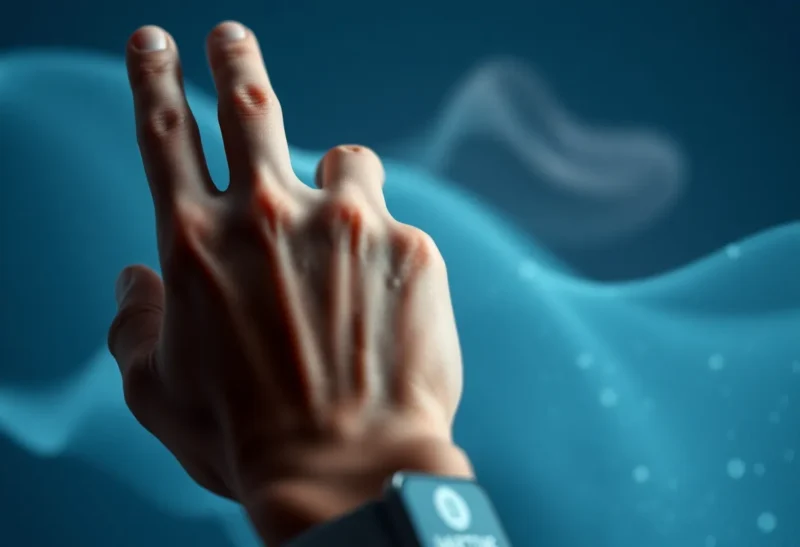
The vibration motor that buzzes in a smartphone is technically a haptic actuator, but calling it “haptic feedback” in the same breath as current-generation linear resonant actuators (LRAs) or piezoelectric devices is a bit like calling a landline and a smartphone both “telephones”—technically accurate, practically misleading. The gap between the basic ERM (eccentric rotating mass) vibration motors of early phones and the haptic systems in current Apple Watches, high-end VR controllers, and emerging display technologies is substantial, and the consumer hardware that’s getting haptics right is doing something meaningfully different from buzzing a notification.
Here’s what the current state of haptic technology looks like across devices, what distinguishes genuine advances from marketing language, and where the next generation of haptic interfaces is heading.
The Physics of How Haptics Produce Sensation
Human tactile perception—the sense of touch—is mediated by multiple types of mechanoreceptors in the skin: Meissner corpuscles (sensitive to light touch and texture, optimised for frequencies around 20–50 Hz), Pacinian corpuscles (sensitive to vibration, optimised around 200–300 Hz), Merkel discs (slow-adapting receptors for sustained pressure and fine detail), and Ruffini endings (sensitive to skin stretch). Any haptic system that aims to produce more than simple “vibration felt” needs to engage these receptors in specific, controlled ways.
Early ERM motors produce a roughly constant frequency buzz during operation with slow ramp-up and ramp-down times—they cannot produce sharp, crisp individual taps or nuanced textures because the rotating mass produces a continuous sinusoidal-like vibration that can’t be gated quickly. They also cannot easily vary frequency to target different receptor types.
Linear resonant actuators (LRAs) operate on a completely different principle: a coil and magnet system that moves a mass linearly (back and forth rather than rotationally) at a resonant frequency. LRAs can be driven with much more precise timing, can produce sharp impulses with fast attack and decay, and can be designed for specific resonant frequencies to target specific mechanoreceptor types. The difference in perceptual quality is significant—an LRA can simulate a button click convincingly, while an ERM cannot.
Piezoelectric actuators take precision further still. Piezoelectric materials deform when voltage is applied, allowing actuators with extremely fast response times, broad frequency ranges, and the ability to be constructed in thin, flat geometries that are useful for display-surface haptics where space is constrained. Piezoelectric haptics are found in some premium touchpads, specific smartphone implementations, and the leading-edge display haptic systems.
Apple’s Taptic Engine: What It Got Right
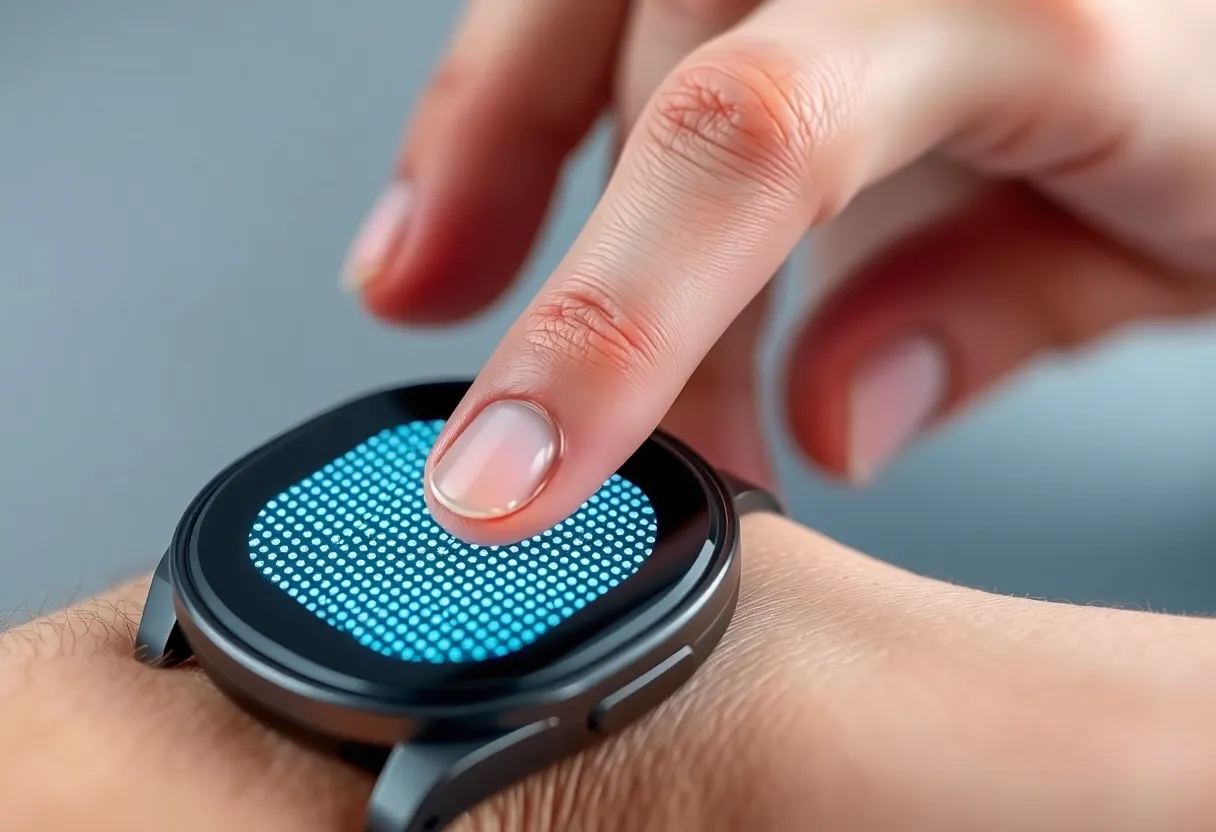
Apple’s Taptic Engine—introduced in the Apple Watch in 2015 and subsequently deployed in iPhone, MacBook trackpads, and iPad—is the most significant mainstream implementation of LRA-based haptics and remains the reference point for consumer haptic quality.
The Taptic Engine’s key innovation was not just the LRA hardware but the software-hardware integration: the Apple Watch introduced “taptic notifications” designed specifically to communicate different meanings through different haptic patterns, not just “something happened.” A wrist tap for a message, a turn-by-turn navigation tap on the wrist before a turn, a heartbeat pattern for Digital Touch. The goal was creating a haptic vocabulary—a set of distinguishable tactile signals that users would learn to interpret without looking at the screen.
The MacBook’s Force Touch trackpad is a showcase implementation that demonstrates what haptics can do beyond notification: the trackpad has no physical button. It doesn’t move. The click sensation you feel when pressing it is entirely synthesised by the Taptic Engine—a haptic impulse timed to create the perception of a click that doesn’t physically occur. Disable the Taptic Engine on a MacBook and the trackpad feels like pressing on glass, even though the physical surface is identical. This is haptics used to create a perceptual illusion that improves UX.
The iPhone’s home button on the iPhone 7 and 8 made the same point: a solid-state “button” with no moving parts, whose click sensation is synthesised. Many users couldn’t tell it was haptic until informed—the fidelity of the simulation is high enough to pass as mechanical under normal use.
VR and Game Controller Haptics: The HD Rumble Approach
Nintendo’s HD Rumble (introduced with the Joy-Cons in 2017) was the first widely adopted implementation of high-fidelity LRA haptics in gaming controllers, and it demonstrated—and subsequently oversold—what this class of haptics could do. The Joy-Con actuators can produce multiple simultaneous frequencies with independent amplitude control, enabling the simulation of distinct sensations that simple rumble motors cannot: the feel of ice cubes rolling in a glass, the sensation of individual marbles, the “twang” of a plucked string.
The capability is genuinely remarkable compared to previous controller rumble. The practical uptake in games has been mixed—most games use it for basic impact feedback rather than the nuanced environmental simulation Nintendo’s launch demos suggested was coming. Designing reliable, meaningful haptic feedback for interactive experiences requires deliberate haptic design work that most game developers don’t currently resource, and players rarely cite haptics as a significant evaluation criterion when buying games.
PlayStation 5’s DualSense controller represents the most ambitious consumer gaming haptic system, combining dual LRA actuators in the handles with adaptive triggers—motors in the trigger mechanism that provide variable resistance, simulating the feel of drawing a bowstring, firing a weapon with recoil, or riding a vehicle over different terrain textures. The adaptive triggers are the more innovative element because they engage force feedback (resistance to motion) rather than just vibration, adding a dimension that previous controllers lacked.
The DualSense’s haptic quality in well-implemented games (Astro’s Playroom, the Horizon series, Gran Turismo 7) is the current ceiling of consumer controller haptics—it delivers tactile information that genuinely adds to the sensory experience of play rather than simply punctuating it with buzzes.
Display Surface Haptics: Where the Technology Is Still Emerging
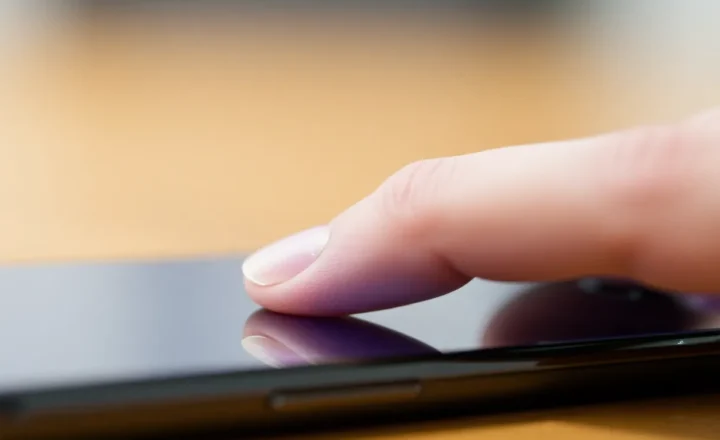
The most ambitious frontier in haptic technology is display surface haptics—systems that can produce the sensation of texture across a flat touchscreen, allowing users to feel “raised” buttons, rough textures, or the edge of an interface element without any physical topology change on the surface.
Two main approaches have commercial traction:
Electrotactile stimulation (used in Tanvas and similar systems) applies small electrical currents through the display surface to stimulate fingertip tactile receptors directly, without mechanical actuation. The electrical signals modulate friction between the fingertip and screen in ways that the touch receptors perceive as surface texture. This approach can create spatially-varying textures—the sensation of rough versus smooth areas at different screen positions—which purely mechanical approaches struggle to match at display scale. Tanvas has integrated this technology in commercial automotive infotainment systems and industrial touchscreens where texture feedback improves usability.
Ultrasonic levitation and mid-air haptics (used by Ultrahaptics/Ultraleap) uses phased arrays of ultrasound transducers to create acoustic pressure patterns that stimulate tactile receptors in a finger held above the surface—without the finger touching anything. The finger feels localised pressure at specific coordinates that can move and change in intensity. This enables tactile feedback for AR/holographic interfaces and gesture-based interaction without physical contact. The sensation is subtle compared to contact haptics and requires specific finger positioning, but the technology works and is deployed in automotive and retail contexts.
Neither technology has made it into consumer smartphones or tablets yet. The engineering constraints—cost, power consumption, and durability requirements for pocket-carried devices—are significant. Display surface haptics are more advanced in automotive, medical simulation, and industrial contexts where the form factor constraints are looser and the value case for enhanced feedback justifies the cost.
Wearable Haptics Beyond the Wrist
Smartwatch haptics are the most mature consumer wearable haptic category, but the research and development landscape extends significantly further. Haptic vests, gloves, and suits for VR applications are commercial products aimed at enterprise training and high-end consumer VR markets. The goal is full-body tactile feedback that enhances VR presence—feeling a simulated hit, sensing the texture of a virtual object in a gloved hand, feeling the spatial direction of a sound source through a haptic vest.
Haptic gloves for hand tracking in VR (from companies like HaptX and Manus) represent the most technically sophisticated consumer-adjacent haptic systems—they can provide per-finger force feedback strong enough to resist grasping a virtual object, combined with vibrotactile feedback for surface texture. These are used in enterprise VR training contexts (medical simulation, industrial assembly training) where the fidelity justifies the cost, which is currently in the thousands of dollars per unit.
Neurological and medical haptic applications—systems that provide tactile feedback for prosthetic limbs, or that restore sensation through peripheral nerve stimulation—represent the most technically demanding frontier. Sensory restoration through nerve stimulation has achieved laboratory demonstrations that suggest the nervous system can adapt to artificial tactile signals; clinical deployment at scale remains years away but represents a category of haptic application where the capability gap between current technology and what would be transformative is motivating substantial research investment.
What Good Haptic Design Actually Requires
The pattern across the implementations that work well—Apple’s Taptic Engine, the DualSense’s adaptive triggers, high-quality notification haptics in premium smartwatches—is that haptic quality depends as much on design as hardware. The actuator is necessary but not sufficient; the way haptic signals are composed, timed, and matched to the interaction context determines whether they feel informative or arbitrary.
Haptic design is an emerging discipline without the decades of established best practices that visual design has. The principles that seem to hold: haptic signals should be distinctive and learnable (different signal types should feel meaningfully different), they should be temporally precise (timed accurately to the interaction event), and they should match the physics or metaphor of the interface action (a firmer press should produce a different signal than a light tap). Where haptics feel cheap or annoying, it’s usually because the signals are arbitrary, imprecise, or mismatched to the interaction.
The trajectory for consumer haptics is toward more sophisticated actuators in more device categories, combined with increasing attention to haptic design as a distinct discipline. The feeling of interacting with well-implemented haptic interfaces—the MacBook trackpad click, the DualSense trigger tension, the Apple Watch’s navigation tap—is genuinely different from what was possible a decade ago, and the best implementations demonstrate that touch is an underutilised information channel in digital interfaces that haptic technology is only beginning to exploit.