What Fiber Internet Deployment Really Costs and Why Your Street Keeps Getting Skipped

Halima Okafor
July 7, 2026
The press releases from telecom companies make fiber internet sound like it’s everywhere—or at least coming soon to your neighbourhood. The reality is more complicated. Billions of dollars in government subsidies have been announced, construction crews are actively laying conduit in some areas, and at the same time, millions of homes remain stuck on cable or DSL connections that were aging a decade ago and haven’t improved since.
The gap between what fiber rollouts are announced and what actually gets built comes down to economics that the industry rarely explains clearly. Here’s what fiber deployment actually costs, why some streets get it and others don’t, and what the infrastructure situation really looks like in 2026.
The Real Cost Per Passing
The telecom industry measures fiber deployment in “passings”—the number of homes or businesses a fiber network passes, regardless of how many actually subscribe. The cost to deploy a fiber network is quoted per passing, and the range is wider than most people expect.
In dense urban areas—apartment-heavy downtown cores, commercial districts—fiber can cost $500–$1,000 per passing to deploy. The high density means the cost is shared across many potential subscribers in a small geographic area. The economics often work even at modest take rates (the percentage of passings that actually subscribe).
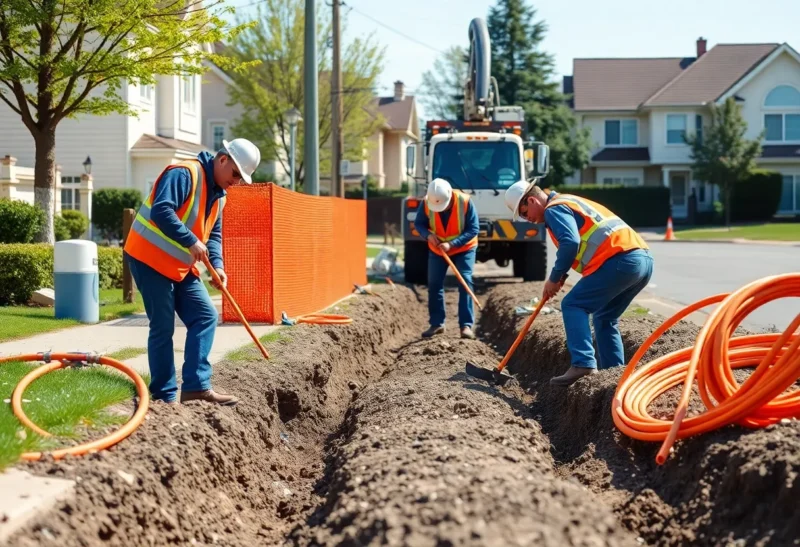
In suburban areas, the cost per passing rises to $1,000–$2,500. Homes are further apart, requiring more cable per subscriber reached. Roads are wider and harder to permit. The density of potential customers per mile of trench drops, which means you need higher take rates to break even.
In rural areas, costs per passing can reach $5,000–$15,000 or higher. The physics are simple and brutal: a rural road might have three homes per mile versus fifty in a suburban neighbourhood. You’re still digging the same length of trench, still pulling the same cable, still paying the same permitting and construction crews—but splitting that cost across far fewer potential subscribers. Without subsidies, the math simply doesn’t work for a private company seeking a reasonable return on capital.
Why the Take Rate Is Everything
A fiber network doesn’t generate revenue from passings—it generates revenue from subscribers. A company might build fiber past 10,000 homes, but if only 30% subscribe, the economics look very different than if 60% subscribe. The internal financial model for every fiber build project is driven by take rate assumptions, and those assumptions are where projects quietly die.
Incumbent cable and phone companies—Comcast, Charter, AT&T—have a structural advantage in take rate discussions: they already have subscribers paying for slower service. When Google Fiber or a regional ISP builds fiber into an area and prices it at $60–$80/month for gigabit, the incumbent can respond by cutting prices to retain customers. The incumbent’s existing infrastructure is already paid off; they can price aggressively on the margin to protect market share without needing to worry about capex recovery.
This dynamic is one reason why overbuilding—building fiber where cable already exists—often produces lower take rates than projected. The cable company drops its prices, adds a promotional discount, and retains a significant fraction of potential customers who don’t have a strong enough reason to switch. The fiber overbuild project ends up with 25% take rate where 40% was assumed, and the economics become marginal or worse.
The Permitting Problem Nobody Talks About
The second major obstacle to fiber deployment—after raw capital cost—is permitting. Laying fiber in a public street requires permits from local governments, and in many jurisdictions, the process is slow, expensive, and unpredictable.
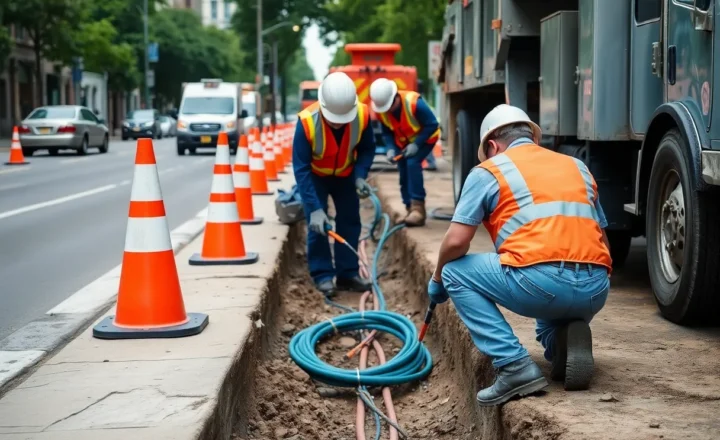
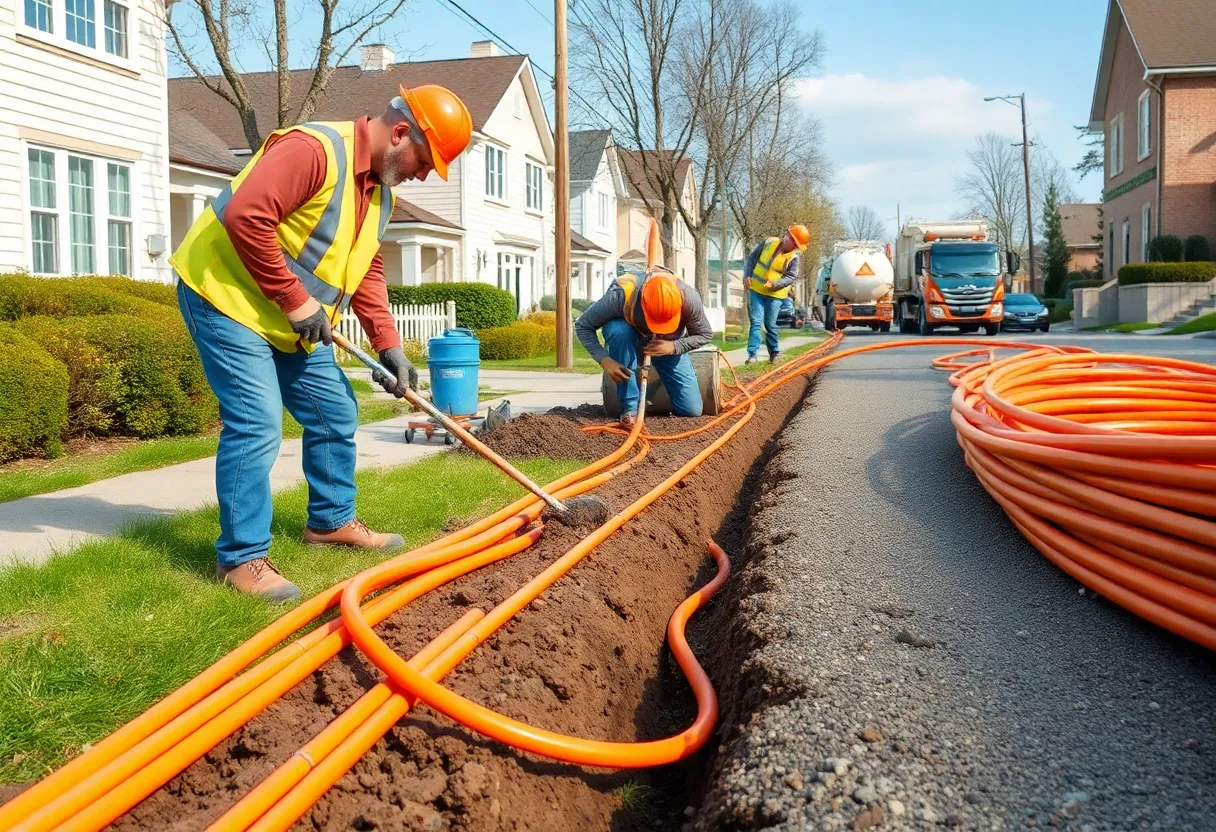
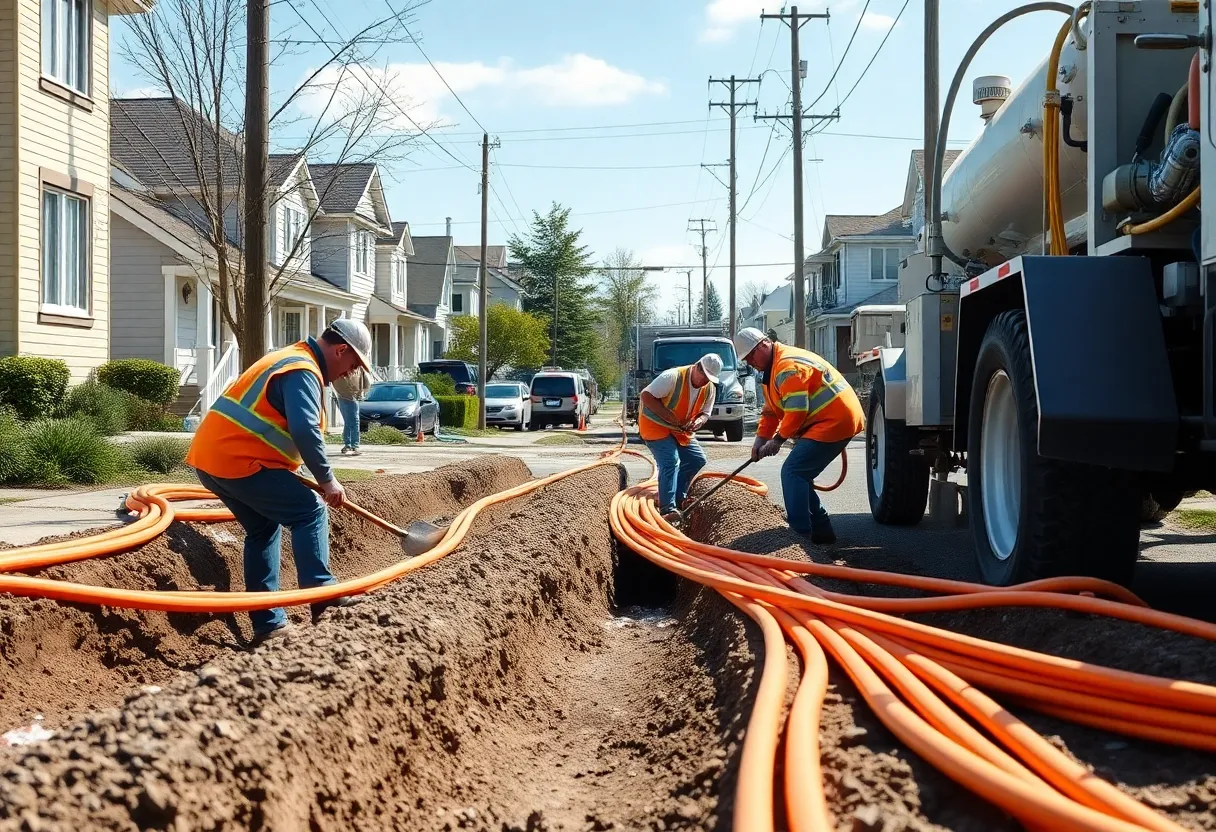
A fiber build requires digging up streets, which means coordinating with water, gas, electric, and sewer utilities to avoid hitting their infrastructure. It requires traffic management permits. It may require separate permits for each section of street crossed—and in some cities, each permit application sits in a queue for weeks or months. In states where the permitting process is fragmented across hundreds of local jurisdictions, a single regional build can involve thousands of separate permits.
The CHIPS and Science Act and the Infrastructure Investment and Jobs Act (passed in 2021) allocated $65 billion for broadband expansion in the US, with a significant portion directed toward fiber. But the money flows more slowly than the headlines suggest, and a meaningful fraction of it gets eaten by environmental review requirements, permitting delays, and the administrative overhead of the grant programmes themselves. An ISP that applies for broadband subsidies in 2022 might not break ground until 2025 and not complete the build until 2027.
Buried conduit is also more expensive and more disruptive than aerial deployment (stringing fiber on existing utility poles), which is why some areas—particularly older suburbs with overhead utilities—see faster fiber deployment than areas where underground construction is required. Where utilities are already buried, you can’t string aerial fiber; you have to trench, which costs more and takes longer.
Cherry-Picking and Redlining
Private fiber providers prioritise the most economically attractive areas first. This isn’t surprising—it’s how capital works—but the practical effect is that well-off suburban areas often get fiber while lower-income urban neighbourhoods, rural communities, and tribal lands remain underserved for years after announcements are made.
This pattern is sometimes called “digital redlining,” and it’s the subject of ongoing legal and regulatory disputes. Several major ISPs have settled FCC investigations related to deployment practices that systematically excluded lower-income neighbourhoods from infrastructure upgrades.
The BEAD (Broadband Equity, Access, and Deployment) programme attempts to address this by requiring states to prioritise unserved and underserved locations before funding overbuilds of already-connected areas. But defining “unserved” is contentious—the FCC’s broadband maps have historically been challenged for overstating coverage, since the maps have relied on self-reported data from ISPs with an incentive to claim broad coverage. The updated maps (built on more granular location data) are more accurate but still imperfect.
What the Infrastructure Investment Has and Hasn’t Built
By mid-2026, the picture is mixed. The BEAD programme has distributed initial allocations to all 50 states, but actual construction is behind the optimistic timelines from 2022. Labour shortages in the construction trades—specifically the shortage of fibre splicers, directional drilling operators, and OSP (outside plant) engineers—have slowed builds across the industry. The supply chain for conduit, optical cable, and splicing equipment tightened during the post-pandemic infrastructure boom and has only partially recovered.
The good news: ISPs have collectively passed more than 100 million homes with fiber since 2020, representing a significant expansion from the 2019 baseline. AT&T, Verizon, Lumen, Windstream, and a cohort of regional providers have all accelerated fiber buildouts, partly driven by competitive pressure from new entrants and partly by the availability of subsidy dollars.
The bad news: somewhere between 20 and 30 million US homes remain without access to broadband meeting the FCC’s updated 100 Mbps download / 20 Mbps upload threshold—a number that hasn’t fallen as fast as the money spent would suggest it should. Rural areas account for the majority of underserved homes, but pockets of urban underservice persist in every major city.
Why Your Street Specifically Might Be Skipped
Several factors make specific streets or neighbourhoods lower priority for fiber deployment:
Overhead vs buried utilities. Areas with underground utilities require trenching rather than aerial deployment, which is slower and more expensive. If your neighbourhood had utilities buried in the 1970s as part of an aesthetic improvement programme, you may paradoxically be harder to serve with fiber than an area with overhead lines.
Dense tree cover. Aerial fiber drops from utility poles to homes can be blocked by trees. ISPs sometimes deprioritise areas where aerial drops would require extensive tree trimming, which adds cost and requires additional permits.
Incumbent cable strength. If your area has a well-maintained cable network with high customer satisfaction scores and strong pricing power, the economic case for a competitive fiber overbuild weakens. The cable company isn’t going to give up subscribers easily.
HOA and private road complications. Gated communities and private roads require easement negotiations with HOAs or private property owners. These negotiations can take months and sometimes fail entirely, which removes those streets from a build plan even when surrounding streets are served.
Building age and riser infrastructure. Older multi-unit residential buildings often have inadequate internal wiring infrastructure. Getting fiber to a 1960s apartment building sometimes requires rewiring the building’s risers, which requires landlord cooperation and negotiation over cost-sharing.
What You Can Actually Do
If your street doesn’t have fiber and you want it, the most effective actions tend to be collective rather than individual.
Neighbourhood-level demand aggregation—where a group of residents pre-commit to subscribing—can move a street to the top of a build queue. Several ISPs, including Ting (now Dish) and regional fiber providers, have operated demand aggregation programmes where they commit to building if enough households pre-register. This works, and it works faster than waiting for organic expansion.
Local government advocacy matters more than many residents realise. A city that streamlines permitting, establishes a dig-once policy (requiring conduit to be laid whenever streets are opened for any reason), and negotiates right-of-way terms proactively can meaningfully accelerate fiber deployment. If your city council hasn’t passed a dig-once ordinance, that’s a concrete policy ask worth raising.
Filing an FCC broadband map challenge is worth doing if your ISP claims to offer service at a speed they don’t actually deliver. The new challenge process allows individuals to dispute coverage claims, and enough challenges can affect the funding allocation for an area.
In the meantime, fixed wireless internet—using 4G LTE or 5G signals to deliver home broadband without physical fiber—has improved significantly and offers a viable bridge for many households that can see a tower. Speeds of 100–300 Mbps are achievable in good coverage areas, which meets most households’ actual requirements even if the theoretical ceiling is lower than fiber.
The Long View
Fiber deployment at scale is a fifteen-to-twenty-year project in any large country, not a three-to-five-year sprint. The infrastructure investment underway in the US, UK, and EU will deliver meaningful improvements—but the gap between announcement and availability is measured in years, not months, and the households that need it most are often last in line for economic and structural reasons that policy interventions only partially address.
Knowing why your street gets skipped doesn’t make the wait more bearable, but it does clarify where the pressure should be applied: local permitting reform, demand aggregation, and making noise with regulators when coverage maps overstate what’s actually available. The infrastructure buildout won’t accelerate without advocacy from the people who need it.