Asteroid mining has been a staple of sci-fi and startup pitch decks for years. The idea is simple: near-Earth asteroids hold metals and minerals worth trillions at current prices, so why not go get them? The catch is that “worth trillions” assumes you can get the stuff back to Earth (or to orbit) and sell it at something like today’s prices. Once you add the cost of getting there, extracting anything, and bringing it home, the economics collapse. Here’s why asteroid mining still doesn’t work—and what would have to change for it to ever do so.
The Promise and the Prices
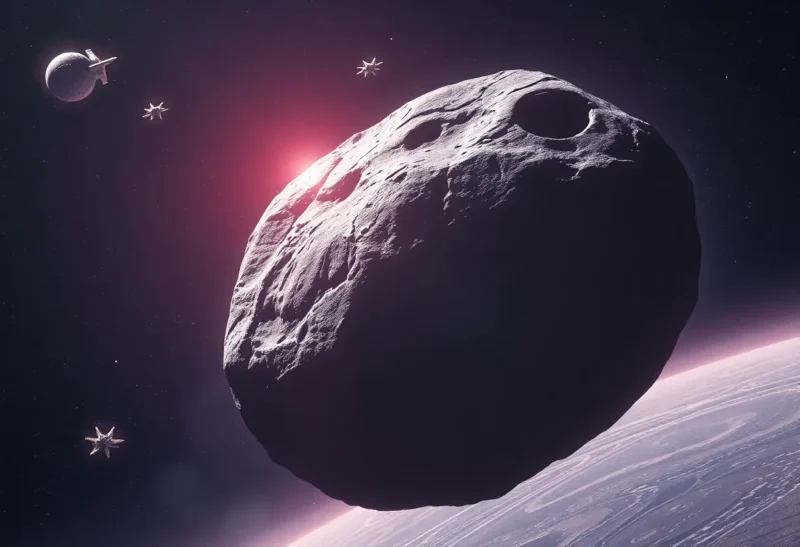
Some asteroids are rich in platinum-group metals, rare earths, iron, nickel, and water (as ice). Water is especially interesting for space-based use: you can split it for propellant, support life support, or use it for radiation shielding. So the dream has two branches—bringing precious metals back to Earth, or using water and other materials in space to fuel and supply operations beyond Earth. Both run into the same problem: cost.
On Earth, platinum and rare earths are expensive because they’re scarce in mineable concentrations and extraction is energy-intensive. In space, the “concentration” is spread across millions of kilometres and the “extraction” requires getting there, landing or anchoring, processing regolith in microgravity, and then either returning cargo to Earth or delivering it to a customer in orbit. Every step is expensive. Launch costs have dropped with reuse and competition, but they’re still in the thousands of dollars per kilogram to low Earth orbit. Going to an asteroid, mining it, and coming back is orders of magnitude harder and more expensive than putting a satellite in LEO.
Why “Trillions” Doesn’t Mean Profit
When people say an asteroid is “worth” trillions, they’re multiplying the mass of metal (or water) by current market price. That ignores several things. First, bringing large amounts of material back to Earth would flood the market and crash the price. Platinum is valuable partly because supply is limited; if you could drop hundreds of tonnes of it into the market, the price would fall. So the “value” of the asteroid is not the same as the revenue you’d get from selling what you bring back.
Second, the cost of the mission is enormous. Designing, building, and flying a spacecraft that can reach an asteroid, operate there for months or years, and return with useful mass is a multi-billion-dollar endeavour. No one has yet demonstrated autonomous mining and processing in microgravity at scale. The technology is still at the level of probes that grab a sample and come home—not industrial extraction. So even if the theoretical value of the ore is high, the cost to retrieve it exceeds what anyone would pay, especially once your own supply would depress the market.
Third, time. Round trips to near-Earth asteroids take years. Capital is tied up for a long time; something could go wrong; and in the meantime, terrestrial mining and recycling might reduce demand or increase supply for the same materials. The risk and the delay make the investment hard to justify on a spreadsheet.
The In-Space Use Case
Using asteroid-derived water and materials in space—for propellant depots, life support, or construction—avoids the “bring it home” problem and the market-flood issue. You’re not selling platinum on Earth; you’re selling propellant or water in orbit to other space operators. The problem is that there’s almost no market for that yet. The number of spacecraft that need to refuel in orbit is tiny. Until there’s a sustained demand for hundreds or thousands of tonnes of propellant or water in space, there’s no one to buy what you’d produce. So the in-space economy has to grow first—more satellites, more lunar or orbital infrastructure, more human activity—before asteroid mining has a clear customer. Right now it’s a solution in search of a problem.
Who’s Trying and What They’re Doing
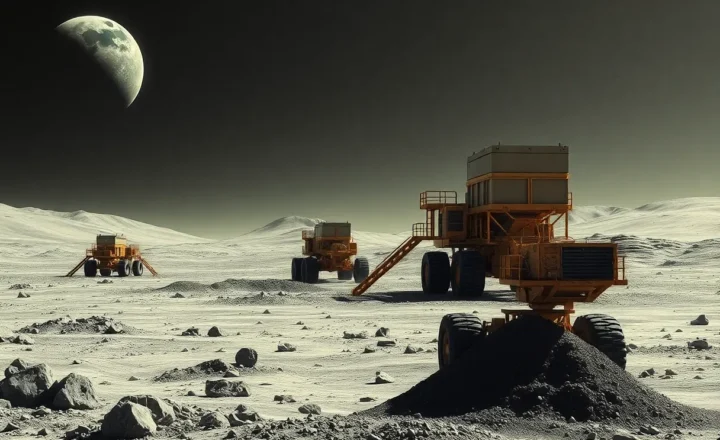
Several companies and initiatives have aimed at asteroid or lunar resource use. Most have shifted focus to lunar ice or regolith—closer to Earth, easier to reach, and still relevant for in-space propellant and construction. The Moon is a stepping stone: if you can mine and process there, you learn the technical and operational lessons that might later apply to asteroids. So the near-term “mining” story is really about the Moon and possibly Phobos/Deimos, not the main belt. Asteroids remain a later phase, once launch and in-space infrastructure are cheaper and the demand for off-Earth resources is real. Until then, the economics of asteroid mining stay in the realm of speculation and long-horizon R&D.
What Would Have to Change
For asteroid mining to make economic sense, several things would need to be true. Launch costs would have to fall much further, or the mining and return would have to be largely autonomous and cheap. Technology for extracting and processing regolith in microgravity would have to be proven at scale. And either terrestrial demand and prices would have to stay high enough (and supply constrained enough) that returning metal pays, or the in-space market would have to be large enough that selling water and propellant in orbit pays. We’re not there yet. That doesn’t mean we never will be—but today, the economics still don’t work. Asteroid mining remains a long-term bet, not a near-term business.