Why Your Smart Speaker Could Be a Liability When the Cloud Goes Down

Ryan Collier
March 1, 2026
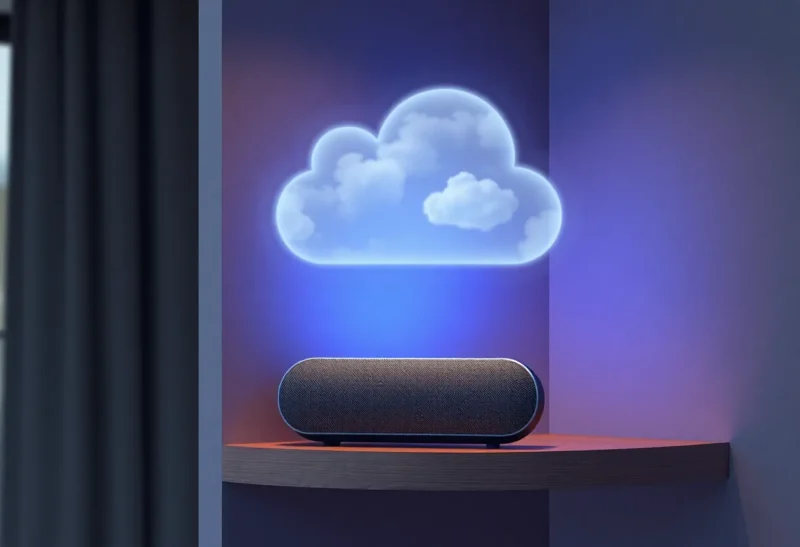
You ask your smart speaker to set a timer. Nothing happens. You repeat yourself—louder, slower. Still nothing. Then you remember: the internet went down an hour ago, and your voice assistant has gone dumb. That sleek cylinder on your counter is now little more than an overpriced Bluetooth speaker. It can’t tell you the weather. It can’t control your lights. It can’t even confirm that it heard you. For millions of people, that scenario isn’t hypothetical—it’s a recurring frustration that reveals a deeper problem: we’ve built our homes around devices that only work when someone else’s servers are up.
The Convenience Trap
Smart speakers sold us on convenience. Say a phrase, get a result. No screens, no keyboards, no friction. That pitch worked. Amazon Echo, Google Nest, and Apple HomePod have found their way into tens of millions of homes, and for everyday use—timers, music, simple questions—they’re genuinely useful. The trade-off was subtle at first: these devices don’t think for themselves. They ship your voice off to the cloud, process it there, and send back a response. As long as the pipeline works, you never notice. When it breaks, everything stops.
The cloud dependency isn’t a bug; it’s the design. Voice recognition, natural language understanding, and even basic command parsing happen on remote servers. Your speaker is a microphone and a speaker with just enough local smarts to stay connected. That architecture keeps costs low and updates seamless, but it also means your smart home has a single point of failure: the internet.
Early voice assistants like Siri and Google Now were designed around the same model: lightweight clients, heavy servers. The logic was sound—speech-to-text and natural language understanding required more compute than a $50 device could realistically house. But that trade-off has stuck, even as chips have gotten cheaper and more capable. Today’s smart speakers could handle more locally; the industry has chosen not to, partly for cost, partly for control. Every command that goes to the cloud is another data point for improving models and locking users into ecosystems.
When the Cloud Fails, So Does Your Home
Outages happen. ISPs hiccup. Cloud providers have bad days. In 2021, Amazon Web Services went down and took Ring doorbells, smart lights, and Echo devices with it. Users couldn’t unlock doors, adjust thermostats, or ask Alexa anything. That kind of cascade is rare but not unprecedented. Smaller outages—region-specific, provider-specific, or just “the internet’s slow today”—hit more often than most people realize. Each one turns your smart speaker into a brick.
The problem compounds when you’ve wired more of your home into the system. Smart locks, thermostats, lights, and cameras often depend on that same cloud pipeline. When your speaker goes dumb, your whole setup can go with it. You can’t say “turn off the bedroom lights” if the assistant can’t reach the server. You might not even be able to use the companion app if it also relies on cloud authentication. The more connected your home, the more you’re betting on someone else’s infrastructure staying up.
Some devices do offer local control as a fallback. Philips Hue bulbs can be driven by a local hub without internet. Zigbee and Z-Wave devices often route through a hub that doesn’t require cloud access for basic commands. But the dominant pattern in the market—especially for voice assistants—is cloud-first. That’s convenient when it works. When it doesn’t, you’re left hunting for workarounds you may not have set up in advance.
Privacy and Control
Cloud dependency isn’t just a reliability issue—it’s a control issue. Every voice command you make is recorded, transmitted, and processed on servers you don’t own. Amazon, Google, and Apple have access to a steady stream of audio from your home. They’ve improved privacy controls over the years—local processing for some commands, deletion options, transparency reports—but the fundamental model remains: your voice goes to them. If their servers are compromised, your data is exposed. If they change their policies, you have no say. If they discontinue a product line, your devices become e-waste.
Local-first alternatives exist, but they’re niche. Open-source projects like Home Assistant can run voice assistants on your own hardware. Mycroft and Rhasspy offer privacy-focused options that process audio locally. The catch: they’re harder to set up, less polished, and lack the ecosystem integration of Alexa or Google Assistant. For most people, the convenience of a cloud speaker still outweighs the trade-offs. That’s understandable—but it’s worth knowing what you’re giving up.
The control gap extends beyond privacy. When a cloud service changes its terms, limits free tiers, or deprecates features, users have no recourse. Smart speaker manufacturers have killed products before—remember Google’s original Home, or the first-generation Echo? When they do, the devices don’t just stop getting updates; they can stop working entirely. Your investment in a smart home becomes contingent on corporate goodwill. That’s a long-term risk most people don’t think about when they unbox their first voice assistant.
What You Can Do Today
If you’re not ready to rip out your smart speakers, there are still steps you can take to reduce your exposure. First, diversify. Don’t put critical functions—locks, thermostats, security—behind voice-only control. Make sure you can operate them manually or through a local interface if the cloud goes down. Second, invest in a reliable local network. A good router, wired backhaul where possible, and a UPS for your networking gear can keep you online through minor power blips. Third, know your fallbacks. When the internet dies, can you still get into your house? Adjust your heat? Turn off your lights? If the answer is no, you’ve built a dependency you might regret.
Longer term, the industry is slowly moving toward more local processing. Apple’s HomePod can handle some Siri requests on-device. Google has pushed more intelligence to the edge. These shifts won’t eliminate cloud dependency overnight, but they’ll soften the blow when the connection drops. In the meantime, treating your smart speaker as a convenience—not a necessity—is the healthiest mindset. Use it for timers and music. Think twice before you lock your front door to it.
The Bigger Picture
Smart speakers are a microcosm of a broader trend: we’ve outsourced more and more of our digital lives to the cloud. That’s enabled incredible things—instant access, seamless sync, powerful AI—but it’s also created fragility. When the cloud goes down, our homes, our work, and our routines can stall. Understanding that trade-off is the first step toward building a setup that works for you, not one that works until it doesn’t.
Your smart speaker isn’t evil. It’s useful, when it works. But it’s worth remembering that it’s only as reliable as the connection it depends on—and that connection is someone else’s responsibility. The next time it goes dumb in the middle of an outage, you’ll know exactly why.