
If you’ve ever added a smart bulb, a thermostat, or a door sensor and then watched it fight with everything else in your house, you know the feeling: the promise of a connected home is great until you’re stuck in app soup, with one device on Wi‑Fi, another on Zigbee, and a third that only talks to its own brand. In 2026, the hub you choose—or whether you use one at all—still shapes what you can do, how fast it responds, and how much of your life runs through someone else’s cloud. This isn’t abstract. A bad hub choice means delayed automations, devices that go dumb when a company pivots, and a router that groans under the weight of dozens of Wi‑Fi endpoints. Get the hub right, and the rest of the smart home falls into place.
Why the Hub Isn’t Just Another Box
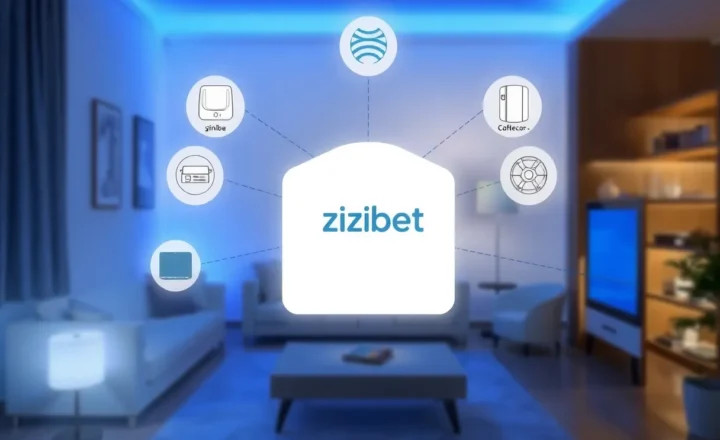
Smart home devices fall into a few camps. Wi‑Fi‑only gadgets plug straight into your router and chat with the internet. They’re easy to set up but often depend on a manufacturer’s app and servers. Every Wi‑Fi device is another client on your network: more IPs, more traffic, and when something goes wrong, more mystery. Thread, Zigbee, and Z‑Wave devices use different radios and need a border router or hub to translate between them and your network. That extra box isn’t redundancy; it’s the brain that keeps lights, sensors, and locks talking without round‑tripping through the cloud. The hub handles the mesh, the routing, and the logic. Your router stays focused on internet; the hub owns the home.
Picking a hub used to mean locking yourself into one ecosystem—SmartThings, Wink, or a vendor walled garden. Today it’s more about which standards you want to bet on, how much you care about local control, and whether you’re okay with a vendor deciding when your automations keep working. The hub is the single point where you make that bet. Choose wrong and you’ll be replacing it—and re-pairing every device—sooner than you think.
Protocols and Ecosystems: Matter and the Rest
Matter has been the big story for a couple of years—one standard, IP‑based, meant to work across brands and hubs. In practice, Matter adoption is still uneven. New devices often ship with Matter support; older Zigbee and Z‑Wave gear keeps running on the hubs that already support them. So in 2026 your “hub” might be a dedicated hub, a smart speaker with a built‑in Thread border router, or a combination. The hub choice decides which of those worlds you can plug into. Matter runs over Thread and Wi‑Fi; a Thread border router (built into many Echo, Nest, and HomePod devices) can be enough for a Matter‑only setup. But if you want Zigbee sensors or Z‑Wave locks—still widely used and often cheaper—you need a hub that speaks those protocols.
If you go hub‑less and stick to Wi‑Fi‑only devices, you’re trading simplicity for dependence. When a company sunsets an app or a product line, those devices can become dumb or useless. We’ve seen it with Revolv, with Insteon, and with countless white‑label gadgets. A hub that speaks Zigbee or Z‑Wave gives you access to a huge range of sensors, relays, and switches that often cost less and last longer than their Wi‑Fi equivalents. Battery‑powered sensors on Zigbee or Z‑Wave can run for years; many of them keep working even when the vendor’s cloud doesn’t. The hub becomes the stable layer; you can swap individual devices without redoing your whole setup.
Local vs. Cloud: Where Your Automations Live
This is where hub choice really pays off. Hubs that run logic locally—like Home Assistant, Hubitat, or certain modes on SmartThings—can keep your “when the door opens, turn on the hall light” rules working even when the internet is down or a company’s servers are slow or gone. The rule is evaluated on the hub; the hub talks to the devices on your LAN or mesh. No round trip to AWS or Google. Cloud‑dependent setups are convenient until they’re not: a delay, an outage, or a discontinued product can break the behavior you rely on. Anyone who’s had a “smart” routine pause for five seconds while a server responds knows the difference.
In 2026, more people are asking whether their routines run at home or in a data center. If you care about responsiveness and resilience, a hub that supports local execution isn’t overkill; it’s the difference between automations that feel instant and ones that sometimes just don’t run. Local execution also matters for privacy: sensor data and triggers stay on your network instead of being sent to a third party for processing. For security‑sensitive automations—locks, alarms, presence—keeping logic local is often the right call.

Picking the Right Hub for Your Setup
Your ideal hub depends on what you already have and what you want to add. If you’re deep in one ecosystem—Apple, Google, Amazon—their built‑in Thread border routers and Matter support might be enough for a mostly‑Thread, mostly‑Matter setup. You’ll still need to confirm that the automations you care about run locally; not every “Works with Google” or “Works with Alexa” flow is local. If you have a mix of Zigbee sensors, Z‑Wave locks, and the odd Wi‑Fi device, a multi‑protocol hub (or a dedicated hub plus a smart speaker for Thread) keeps everything in one place. That way you’re not juggling three apps and three clouds.
Consider upgrade path and longevity. Some hubs get years of updates; others are abandoned when the vendor pivots. Wink and Insteon users learned that the hard way. Open‑source and local‑first platforms like Home Assistant tend to have a longer tail because the community can keep them running. That might mean a bit more setup—YAML, integrations, maybe a Raspberry Pi or a dedicated NUC—but for a core piece of home infrastructure, it’s often worth it. You’re not betting on a single company’s roadmap.
Finally, think about scale. A handful of devices can work with a smart speaker and a few Wi‑Fi plugs. Once you’re past a dozen or so devices, or once you want cross‑device automations (e.g. “when the motion sensor in the hall fires and it’s after sunset, turn on the kitchen and living room lights”), a real hub starts to earn its keep. It centralizes logic, reduces latency, and gives you one place to back up and restore your configuration.
Bottom Line
Your smart home hub isn’t just a dongle. It decides which devices you can use, how fast and reliably your automations run, and how much of your home depends on someone else’s cloud. In 2026, choosing a hub that fits your protocol mix, supports local execution where you need it, and has a credible long‑term story will save you from redoing everything in a year or two. Pick with that in mind, and your future self will thank you.