Why the 3D Printing Community Became the Right-to-Repair Movement’s Secret Weapon

Jamie Torres
July 7, 2026
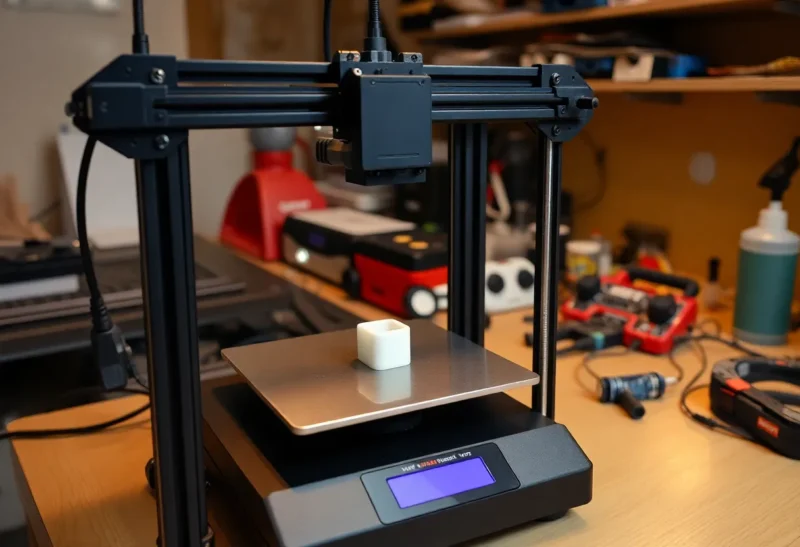
The right-to-repair movement operates on multiple fronts simultaneously—legislative lobbying for repair-friendly laws, public pressure on manufacturers to release schematics and sell parts, and the practical work of actually fixing things. The legislative and advocacy work gets most of the coverage. But there’s a quieter, distributed layer of the repair ecosystem that has grown more capable every year: the 3D printing community, which has been solving one of repair’s most stubborn problems—the unavailability of discontinued or manufacturer-controlled parts—with a combination of consumer hardware, open repositories, and collective technical knowledge.
The relationship between 3D printing and repair has matured significantly since the early days of brittle, dimensionally unreliable FDM prints that broke before they could fix anything. Consumer 3D printers in 2026 produce parts in materials—PETG, ASA, TPU, nylon—that are genuinely appropriate for structural and functional applications. The communities around platforms like Printables, Thingiverse, and GitHub-hosted design repositories have accumulated hundreds of thousands of repair-specific models. And the combination of a cheap printer and a functional print file has allowed individuals to fix things that manufacturers declared unfixable because they stopped selling the part.
What 3D Printing Actually Enables for Repair
The most immediate and widely applicable repair use case for 3D printing is replacement of discontinued or expensive small plastic parts—clips, brackets, housings, knobs, latches, buttons, hinges, and structural components that break under normal use but that manufacturers either no longer sell or sell at prohibitive prices.
Washing machine pump filters with broken covers. Vacuum cleaner wheel axle brackets. Refrigerator door shelf clips. Dishwasher rack tine tips. Air conditioner vent sliders. These are not glamorous engineering problems—they’re small injection-moulded parts that wear out, break, or become unavailable years after a product’s manufacture. Each one historically represented a repair dead end: the part is discontinued, a service technician would charge a minimum call-out fee to replace it, and the machine itself is otherwise functional for years of additional service.
A 3D-printed replacement in PETG or ASA—materials with good heat resistance and impact strength—serves this function well. The dimensional precision of current consumer FDM printers is sufficient for most snap-fit, friction-fit, and fastener-secured replacement parts. The print isn’t injection-moulded quality, but for a part that clips into a dishwasher rack, “good enough” is genuinely good enough.
The ecosystem that makes this work isn’t the printer alone—it’s the design libraries. Printables.com (Prusa’s platform) has become a primary repository for repair-specific models, with a dedicated “repair” category that indexes replacement parts by appliance manufacturer and model number. When you search for “Bosch dishwasher rack clip” or “Dyson DC35 trigger spring housing,” you find models uploaded by other owners who faced the same problem, designed the solution, and published it for free. This collective design intelligence is what transforms a general-purpose fabrication tool into a repair infrastructure.
The Material Science That Made This Practical
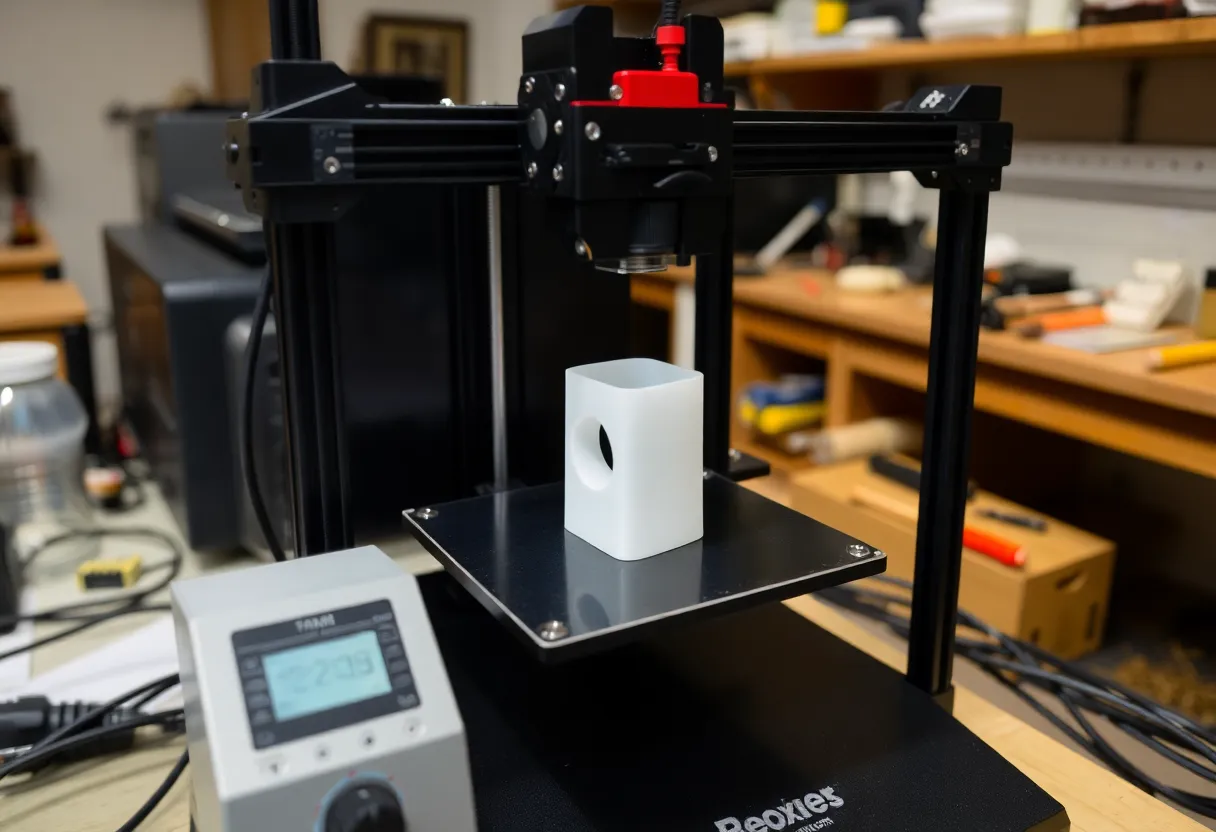
Early consumer FDM printing in PLA—the default beginner material—produced parts that were dimensionally accurate but brittle, temperature-sensitive, and poor for load-bearing applications. A PLA replacement bracket in a car door would deform in summer heat. A PLA gear would crack under torque. This made early 3D printed repairs a curiosity rather than a genuine maintenance option.
The materials landscape for consumer printers has changed substantially. PETG has become the standard workhorse for functional parts—better impact resistance than PLA, decent heat resistance (up to ~70°C continuous, ~80°C short-term), and good layer adhesion that produces parts with real structural integrity. ASA (the UV-stable variant of ABS) handles outdoor and high-temperature applications that PETG doesn’t. TPU and TPE flex materials enable gaskets, seals, and components that need to flex rather than snap. Nylon variants with or without carbon fibre reinforcement push mechanical properties further for demanding applications.
Dual-extrusion printers that can print soluble support material have also expanded the geometry of printable parts significantly. Complex interior geometries—snap fits, living hinges, hollow structural sections—that required support removal that damaged surface finish on single-material machines can now be printed cleanly with dissolvable supports. This matters for replacement parts that have specific internal geometry requirements.
Resin printing (SLA/MSLA) has found a specific niche in the repair ecosystem: small, dimensionally precise parts with fine surface detail that FDM can’t match. Hearing aid housings, camera body components, small gears, and intricate clips where FDM resolution is insufficient benefit from resin’s finer layer heights. Consumer resin printers have dropped in price to the point where they’re viable alongside an FDM machine for a workshop that handles a variety of repair cases.
Where 3D Printing Is a Better Repair Solution Than the “Real” Part
There are cases where the printed part is actually preferable to the original. This sounds counterintuitive but follows logically from the design freedom that printing offers.
An original part may have failed because of a design flaw—a stress concentration point, too-thin walls, insufficient material at a load-bearing feature. A community-designed replacement, informed by feedback from multiple people who have broken the original and analysed the failure mode, often incorporates design improvements. The Prusa community’s handle redesigns for various appliances frequently document exactly this: “I strengthened the wall here where the original cracks” or “I added a reinforcement rib at the hinge point.” The crowd-revised design is sometimes more reliable than the product the manufacturer sold.
The material choice can also be improved. If the original part was injection-moulded in a polypropylene variant that’s appropriate for mass production but borderline for the stress it’s subjected to, replacing it in PETG or nylon may produce a longer-lasting part despite the lower manufacturing precision. This is a genuine case where the repair is an improvement.
For external cosmetic or ergonomic parts—handles, grips, covers, dials—3D printing also enables personalisation that the original product didn’t offer. A custom grip designed for a specific hand size, a handle with a better ergonomic profile, a knob that can be operated with gloves on—these are improvements that incidentally come with the repair.
The Legal and IP Landscape
The intersection of 3D printing, repair, and intellectual property is where the picture gets complicated. Manufacturers have used patent and design rights to challenge the printing and sharing of spare parts, though enforcement against individual hobbyists is rare and legally contentious.
Functional parts are generally less protectable than ornamental designs—the exact mechanism of a snap-fit clip may be unprotectable once the original patent has expired, but a distinctive aesthetic shape might have design patent protection. The 3D printing community operates in a pragmatic grey area: most repair models are shared freely and used privately, which makes enforcement against individual users essentially impractical and commercially unappealing for manufacturers.
The right-to-repair advocacy organisations—iFixit, the Repair Association, and similar groups—have explicitly argued that the ability to print replacement parts is an extension of the right to repair, and that creating and sharing functional repair models should be protected under fair use or similar doctrines. This argument hasn’t been tested extensively in court, but the cultural momentum is in its favour—both in legislative contexts (where right-to-repair laws in California, Colorado, and elsewhere have been signed) and in consumer expectations.
The Skill Floor and Where It Still Matters
3D printing for repair isn’t free of friction. The barrier to using existing models from design repositories is lower than it used to be—download, slice, print—but still requires owning a printer, knowing basic slicing parameters, and having some tolerance for failure iterations when the first print doesn’t fit correctly. This is considerably more accessible than it was in 2015 but still beyond many households.
Designing a new part from scratch for something that doesn’t have a model yet requires CAD skill—Fusion 360, FreeCAD, or similar tools—and the ability to measure the broken original precisely enough to produce a dimensionally accurate replacement. This is where the skill floor rises considerably. Basic caliper measurement and simple extrusion modelling can produce replacement brackets and clips; complex curved surfaces, organic shapes, or tight-tolerance mechanical components require more skill than most casual users have.
Community solutions for this gap include: repair cafés and makerspaces where skilled volunteers help others design and print parts, online communities where people post photographs of broken parts and request model assistance, and paid design services for one-off parts where the repair economics justify it (an $800 appliance with a $15 print is worth the design time; a $40 appliance isn’t).
What the Repair Movement Gains From the Maker Community
The right-to-repair movement’s legislative wins matter—laws requiring manufacturers to provide repair documentation and sell parts are genuine progress. But laws create rights that still require tools and skills to exercise. A legal right to repair your washing machine is meaningless if the part is on a 12-week backorder at $45 shipping minimum.
The 3D printing community addresses the practical gap directly. It doesn’t require manufacturer compliance, legislative action, or part availability—it requires that someone has previously encountered the problem, designed a solution, and shared it. This distributed, resilient approach to parts availability is fundamentally different from depending on supply chains, and it’s why the intersection of making and repair is more significant than either community alone.
The trajectory is toward more coverage, not less. As printer access increases through libraries, schools, and makerspaces, as design repositories grow, and as AI-assisted CAD tools lower the modeling skill barrier, the fraction of repair situations that can be addressed with a printed part will expand. The printer on the workbench is becoming a first-line repair tool rather than a niche enthusiast project—and that shift has implications for product longevity, waste reduction, and the practical economics of owning things that break.