
Solid-state batteries are supposed to be the next big thing: safer, denser, and faster-charging than today’s lithium-ion packs. They’ve been “a few years away” for more than a decade. Car makers and startups keep announcing breakthroughs—and then the timeline slips. The idea is simple: replace the liquid electrolyte with a solid one, and you get rid of flammability, enable higher energy density, and potentially unlock much faster charging. The execution is anything but simple. Here’s why solid-state batteries are harder than they look.
The Promise: What Solid-State Is Supposed to Deliver
In a conventional lithium-ion battery, ions move between the electrodes through a liquid (or gel) electrolyte. That liquid is flammable and limits how much you can pack in and how fast you can push current. A solid electrolyte—a ceramic, polymer, or composite—would be non-flammable, could allow a lithium-metal anode (which would boost energy density), and might support higher power without the same degradation. The result, in theory: batteries that store more energy per kilogram, charge in minutes, and don’t catch fire. For EVs and consumer electronics, that’s the holy grail.
So far, lab cells have demonstrated many of these traits. The gap is between a small cell in a lab and a large, cheap, long-lasting pack that can be manufactured at scale. That gap is where the difficulty lives.
Conductivity and Interfaces: The Physics Problem
Solid electrolytes don’t conduct ions as well as liquids—at least not at room temperature. So you need materials that are good ion conductors, stable over thousands of cycles, and compatible with the electrodes. Many promising ceramics are brittle and hard to make thin and uniform. They also form poor interfaces with the anode and cathode: cracks, gaps, or chemical reactions that increase resistance and kill performance over time. Fixing one problem often creates another. A material that conducts well might be unstable; one that’s stable might conduct poorly. The research is a long game of trade-offs.
Lithium-metal anodes add another layer. They offer the highest theoretical energy density, but they grow dendrites—needle-like structures that can short the cell or crack the solid electrolyte. Preventing dendrites while keeping the anode stable and the interface low-resistance is a fundamental challenge that dozens of teams are still working on. Progress is real, but it’s incremental.
Manufacturing: From Lab to Gigafactory
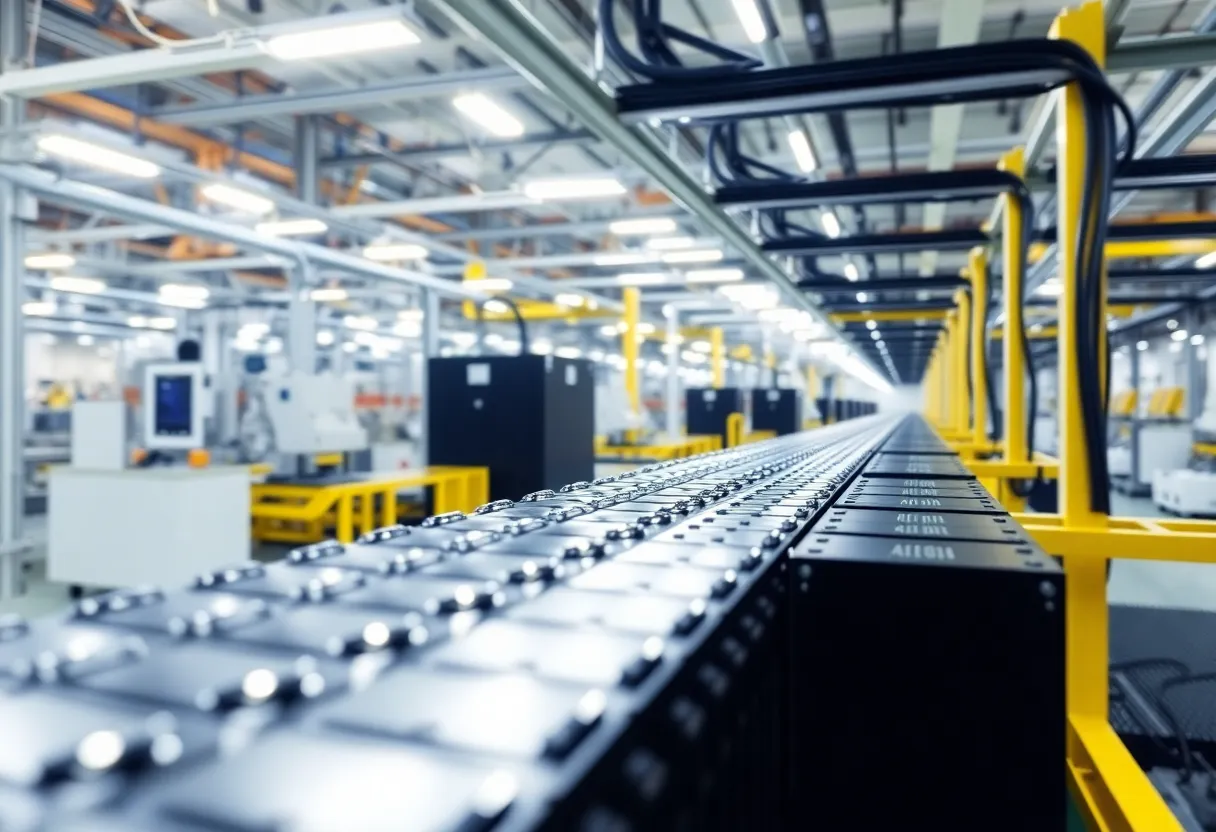
Even when a solid-state chemistry works in a small cell, scaling it is brutal. Solid electrolytes often need to be processed at high temperature or pressure. Coating large electrodes uniformly, avoiding defects, and stacking or winding them into packs without damaging the brittle layers is an engineering nightmare. Yield rates in pilot lines are often low; cost per kilowatt-hour is high. The industry has decades of experience optimizing lithium-ion manufacturing; solid-state production is still in its infancy. Moving from “we made 100 cells that work” to “we can make millions at a competitive price” is a multi-year, capital-intensive jump.

Why the Timeline Keeps Sliding
Announcements from automakers and battery startups tend to be optimistic. “Production in 2025” becomes “pilot in 2027” when interface stability or manufacturing yield doesn’t pan out. That’s not necessarily bad faith—it’s the nature of applied research. Solid-state is harder than lithium-ion was at the same stage because the materials are more demanding and the manufacturing playbook doesn’t exist yet. The fact that it’s hard doesn’t mean it won’t happen; it just means betting on a specific date is risky.
In the meantime, lithium-ion keeps improving: better cathodes, silicon anodes, and smarter pack design are squeezing more range and faster charging out of today’s chemistry. Solid-state will need to clear a high bar to be worth the switch. When it does—and the consensus is “when,” not “if”—it’ll be because the physics and the factories finally aligned. Until then, “harder than they look” is the honest summary.